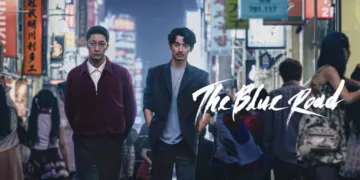
























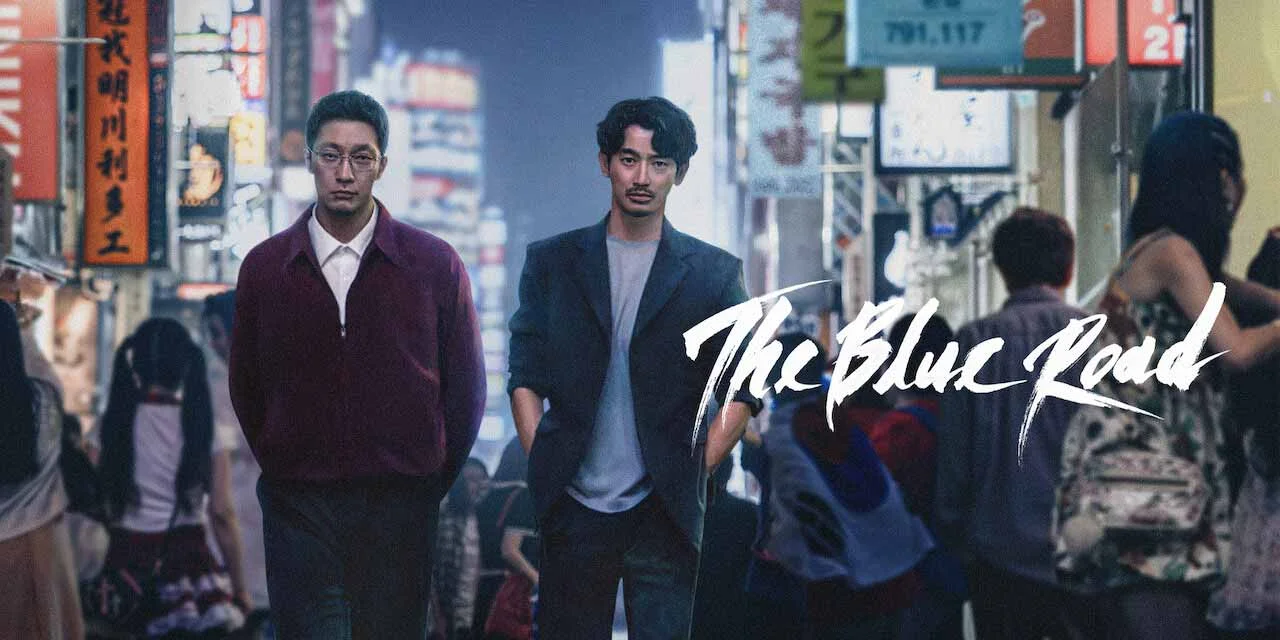

The Blue Road is a remarkably persuasive argument for international television productions built around genuine creative collaboration. Netflix’s eight-episode Korean-Japanese crime thriller understands something that many globally marketed series seem to overlook: putting actors from different countries on the same screen means little unless their perspectives genuinely shape the story.
Director Han Jun-hee and co-writer Cho Yu-jin make that collaboration essential to a disturbing investigation involving two nations whose relationship remains burdened by historical violence. The result is an intelligent, visually accomplished thriller that earns its emotional weight through the uneasy partnership of its central detectives. Its occasional narrative complications are frustrating, but the ambition behind them produces some of the series’ strongest material.
The decision to set the story during the 2002 FIFA World Cup is particularly effective. South Korea and Japan are jointly hosting an international celebration of cooperation, presenting an image of regional unity to the world. Away from the festivities, however, the discovery of a horribly mutilated woman in Tokyo exposes a much less comfortable reality.
Her body has been twisted into an unnatural position, and a message written in Korean appears at the crime scene. A similar murder in South Korea involves Japanese writing, immediately turning the investigation into an international affair. Streaming platforms frequently celebrate their ability to remove borders. Apparently, the harder part is acknowledging what remains on either side of them.
Son Suk-ku plays Korean detective Kim Seok with an unsettling degree of restraint. He is observant, determined, and clearly capable of taking control of an investigation, yet his confidence never feels entirely secure. Small disruptions reveal the instability beneath his professional exterior.
An unexplained jingling sound, someone calling his name, and moments of apparent disorientation suggest a man carrying experiences he cannot comfortably acknowledge. His questionable documentation and reluctance to share information with his Japanese counterpart deepen that uncertainty. These details acquire significance as the investigation progresses, allowing Suk-ku to develop Seok’s psychological condition through behavior rather than relying entirely on explanatory dialogue.
Eita Nagayama approaches Inspector Inose Hiroshi from almost the opposite direction. Inose is expressive, approachable, occasionally humorous, and perfectly capable of being irritating. His informality contrasts sharply with Seok’s guarded behavior, beginning with their chaotic first encounter during a pursuit through Tokyo.
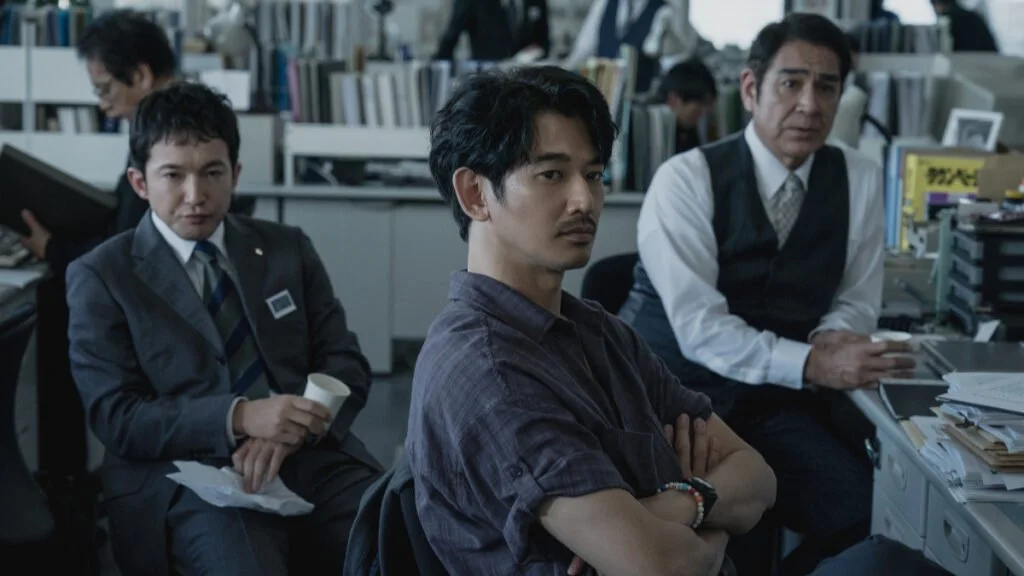
Inose initially mistakes the Korean detective for a suspect, establishing their conflicting approaches to authority and communication. Nagayama’s performance becomes especially valuable during the darker episodes because his humor emerges from recognizable human behavior. His frustrations and occasional stubbornness prevent the character from becoming an uncomplicated representative of goodwill.
Their developing relationship is where the series makes its strongest argument about cooperation. Both detectives are skilled investigators who notice details others overlook, giving them professional reasons to respect each other before personal trust becomes possible.
Seok’s secrecy repeatedly tests that relationship, and Inose must decide how much confidence to place in someone who seems to be conducting a separate investigation. The writing allows each man to retain his perspective, with differences in language and nationality complicating encounters that are already difficult enough.
That choice carries particular significance for a Korean-Japanese co-production. Han, adapting the 2002 comic by Keishi Edogawa and Kwon Kaya, places characters from both countries in positions of investigative authority. Neither detective possesses a complete understanding of the crimes or the social history surrounding them. Their partnership requires contributions from both sides, and the actors’ contrasting performances make the gradual development of mutual confidence believable.
The investigation becomes considerably darker as its historical implications emerge. The grotesque arrangement of the victims’ bodies and the cryptic messages initially suggest a conventional serial killer mystery, albeit one staged with unusual brutality. The sounds accompanying the murders are especially distressing, with the cracking associated with the violence contributing to the physical horror.
Those sounds acquire investigative importance, demonstrating how carefully the series integrates sensory details into the mystery. The possibility of a connection involving Zainichi Koreans, ethnic Koreans living in Japan, further complicates the assumption that nationality provides a straightforward explanation for the crimes.
The first half of the season is exceptionally controlled. Its disturbing murder scenes, dangerous encounters, and gradual accumulation of evidence sustain an atmosphere of uncertainty. An early antagonist makes a memorable impression, providing the investigation with a frightening immediate threat. Around the fifth episode, however, the narrative undergoes a significant transformation.
An important part of the serial killer mystery reaches its resolution, and the story redirects attention toward murders committed during the 1980s. The change initially risks weakening the suspense established by the opening episodes. Once the connections between the earlier crimes and Seok’s personal history become clearer, the decision begins to justify itself.
The later episodes are concerned with the consequences of historical violence, particularly the danger of preserving resentment until it becomes an inherited obligation. References to Japan’s colonial treatment of Korea sit alongside older conflicts, including the sixteenth-century Imjin War.
These references matter because the crimes and the investigators’ assumptions are shaped by competing understandings of the past. The mysterious Seo Hyeon-tae, played by Jung Jae-young, becomes important to the connections between earlier events and the present investigation. Seok’s encounters with him bring the detective’s concealed experiences into sharper focus, transforming his personal instability into a significant part of the narrative.
There is a risk in approaching such material through the conventions of a serial killer thriller. Historical suffering can become another collection of sinister clues, reducing political violence to an elaborate mechanism for generating suspense. The Blue Road largely avoids that problem by making the consequences visible in how its characters understand one another.
Seok’s struggle involves confronting painful information and deciding how much authority the past should retain over his actions. The series recognizes the importance of historical responsibility and the destructive potential of transferring collective blame onto individuals, particularly through the detectives’ changing assumptions about each other.
The second half is not entirely successful. The expanding historical connections and movement between timelines occasionally make the investigation difficult to follow. Some revelations demand considerable attention simply to establish where particular events belong in the larger chronology. The final episode includes a sentimental callback that feels less carefully earned than the evolving relationship between the detectives. These shortcomings matter because the opening episodes establish such a high standard for narrative precision.
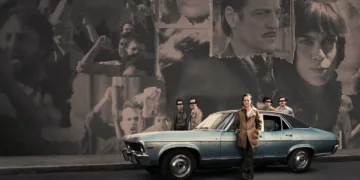
Han’s direction gives the material an equally distinctive physical character. The 2002 production design establishes a recognizable period through its environments and carefully selected props, while the limitations of communication technology make the investigation feel different from a present-day procedural. Bright urban environments give way to abandoned buildings and oppressive interiors.
Black-and-white flashbacks use pronounced contrasts in lighting to distinguish earlier periods from the present investigation. These visual transitions help organize the historical material, even when the complicated relationships between events still require concentration. Some of the age-altering effects involving Jung Jae-young are less convincing, creating occasional artificiality within an otherwise carefully constructed visual world.
The action sequences are equally accomplished, particularly a prolonged confrontation in a deteriorating corridor that places Seok against numerous attackers. The confined space makes the physical imbalance immediately apparent, and the intensity of the choreography reinforces the detective’s vulnerability.
Other encounters employ unstable camerawork and aggressive angles to communicate disorientation. Seok’s body absorbs considerable punishment throughout the investigation, a physical extension of the psychological pressures Suk-ku establishes in quieter scenes. The violence has a recognizable function because the series has invested so carefully in the people experiencing it.
Perhaps the most revealing aspect of The Blue Road as a Netflix production is how little it accommodates distracted viewing. Its multilingual dialogue, historical references, shifting chronology, and recurring sensory clues demand sustained concentration. The streaming industry has become remarkably efficient at delivering stories that audiences can consume with minimal effort, yet this production finds its strengths in the connections viewers must actively make.
The eight-episode structure gives its writers room to develop the central relationship and reconsider the investigation’s meaning, although the denser later episodes occasionally strain that freedom. Even the unsettling sounds introduced around the earliest murders eventually require attention for reasons extending beyond their immediate capacity to disturb. The viewer is encouraged to reconsider details that initially seemed incidental, following the investigators back through events whose consequences remain visible decades later.
The Blue Road premiered in the On Screen section of the 31st Busan International Film Festival on October 7, 2026, before releasing globally on Netflix on November 20, 2026, where all eight episodes are available to stream. Adapted from the 2002 Korean-Japanese manhwa by Keishi Edogawa and Kwon Kaya and directed by Han Jun-hee, the series follows detectives from South Korea and Japan as they form an uneasy alliance to track a cross-border serial killer leaving cryptic messages across both nations.
Where to Watch The Blue Road Online


Full Credits
Title: The Blue Road (푸른길)
Distributor: Netflix
Release date: October 7, 2026 (31st Busan International Film Festival), November 20, 2026 (Netflix global release)
Running time: ~35–57 minutes per episode (8 episodes)
Director: Han Jun-hee
Writers: Cho Yu-jin, Han Jun-hee, Keishi Edogawa, Kwon Kaya
Producers and Executive Producers: Kim Myung-jin, Yoon Hyun-ki, Kim Dong-min
Cast: Son Suk-ku, Eita Nagayama, Kim Shin-rok, Choi Sung-eun, Jung Jae-young, Kentaro Sakaguchi, Sōya Kurokawa, Kim Ji-an, Kwon Dong-ho, Kim Jung-ho, Takashi Ukaji, Yosuke Asari, Yōsuke Kubozuka, Asami Mizukawa, Ok Ja-yeon
- Composer: Primary
The Review
The Blue Road
The Blue Road makes a convincing case for Korean-Japanese collaboration through an intelligent, disturbing crime thriller. Son Suk-ku and Eita Nagayama deliver excellent performances, turning institutional distrust into a believable partnership. Han Jun-hee's striking direction and the series' examination of historical violence give the investigation considerable depth. The increasingly complicated timelines and an unearned sentimental moment weaken the later episodes. Still, this is ambitious, emotionally rewarding television that demands attention and richly repays it. Netflix's recommendation algorithm may struggle with that concept.
PROS
- Excellent chemistry between the two leads
- Thoughtful treatment of Korean-Japanese history
- Striking cinematography and brutal action
- Meaningful international storytelling collaboration
- Intelligent use of sound and historical clues
CONS
- Occasionally confusing timeline shifts
- Sentimental finale callback feels unearned
- Some unconvincing age-altering effects