



























A gifted surgeon should be the most reassuring person in an operating room. Yet Jason Park’s Transplant makes that expertise feel increasingly dangerous, turning a place designed to save lives into somewhere you desperately want to escape. The anxiety comes from watching professional authority become indistinguishable from personal arrogance, especially when everyone in the room knows that challenging the person in charge could have terrible consequences. The surgical procedures are graphic enough to make you uncomfortable, but the man holding the instruments is considerably scarier.
That man is Dr. Edward Harmon (Bill Camp), a celebrated heart transplant surgeon whose reputation makes him an irresistible mentor for Jonah Yoon (Eric Nam). A disciplined Korean-American surgical resident, Jonah hopes to follow in his deceased father’s footsteps and establish himself among the best in his profession. He actively seeks an opportunity to train under Harmon, believing that extraordinary ability must come with extraordinary wisdom.
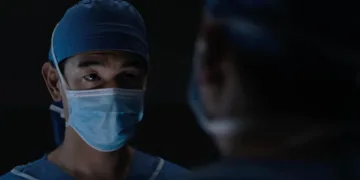
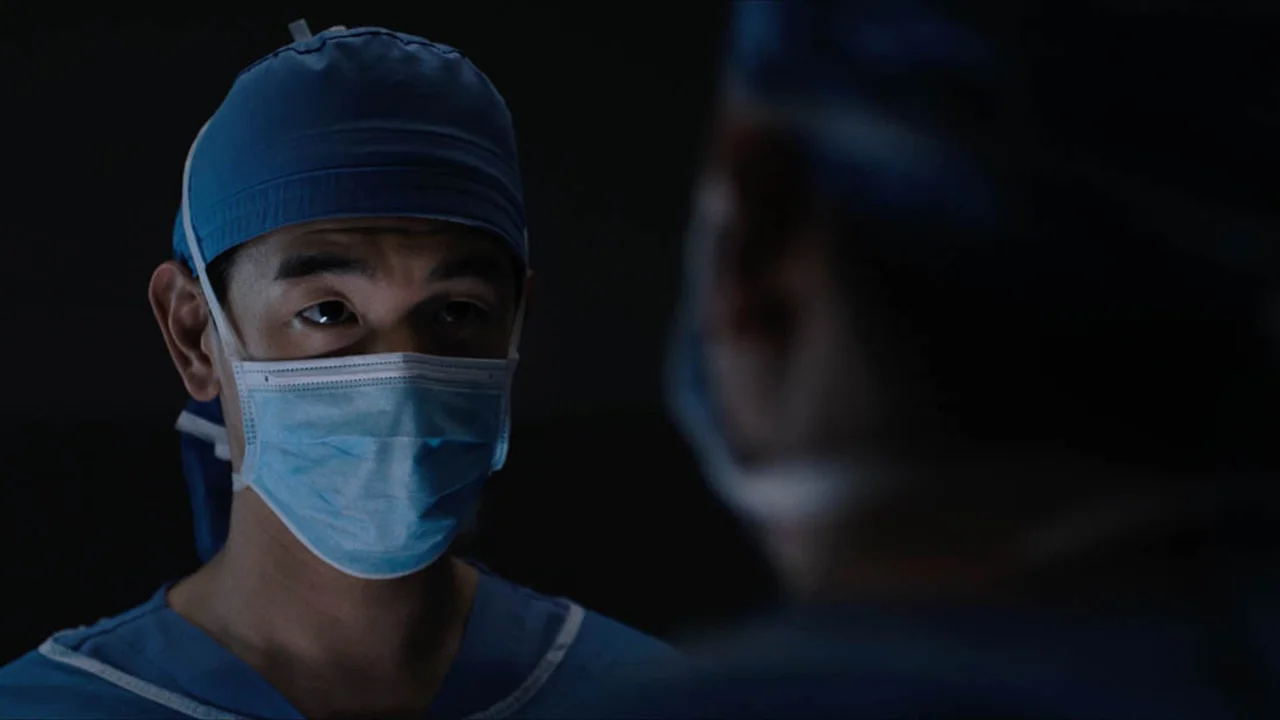
The illusion begins to crumble when a nurse brings the wrong set of forceps into an operation. What should be a minor correction becomes an exercise in humiliation, with Harmon demanding Jonah’s obedience despite his obvious reservations. The patient lies exposed on the operating table as the surgeon uses the occasion to establish who holds the power.
It’s an unnerving scene, and an excellent example of why this modest independent thriller deserves attention. Park understands that the threat of violence can be frightening even when nobody raises a weapon. In Transplant, a surgeon’s professional authority becomes the means of intimidation. The film occasionally rushes Jonah’s development and struggles to make its supporting environment convincing, but its central relationship produces enough psychological tension and genuine emotion to make it an easy recommendation.
Camp is tremendous as Harmon, partly because he understands how frightening a pleasant person can become when that pleasantness is conditional. His character possesses undeniable skill, and he knows precisely how valuable that makes him to the hospital. He can appear almost welcoming before abruptly switching to contempt, treating mistakes as personal insults and hesitation as evidence of weakness. The changes in his behavior keep the audience uncertain about his next reaction. Even his moments of apparent generosity carry an uncomfortable possibility that some fresh humiliation is coming.
Eric Nam, making his feature acting debut, provides an effective contrast. His Jonah initially seems reserved, careful, and painfully eager to satisfy the expectations surrounding him. Nam’s relatively subdued performance gives Camp room to dominate their exchanges, but it also makes Jonah’s discomfort easier to recognize.
You can sense the young doctor’s determination to endure another insult because he believes something valuable awaits him on the other side. What makes the relationship disturbing is that Jonah has volunteered for it. He wants Harmon’s approval badly enough to begin accepting behavior he would previously have questioned.
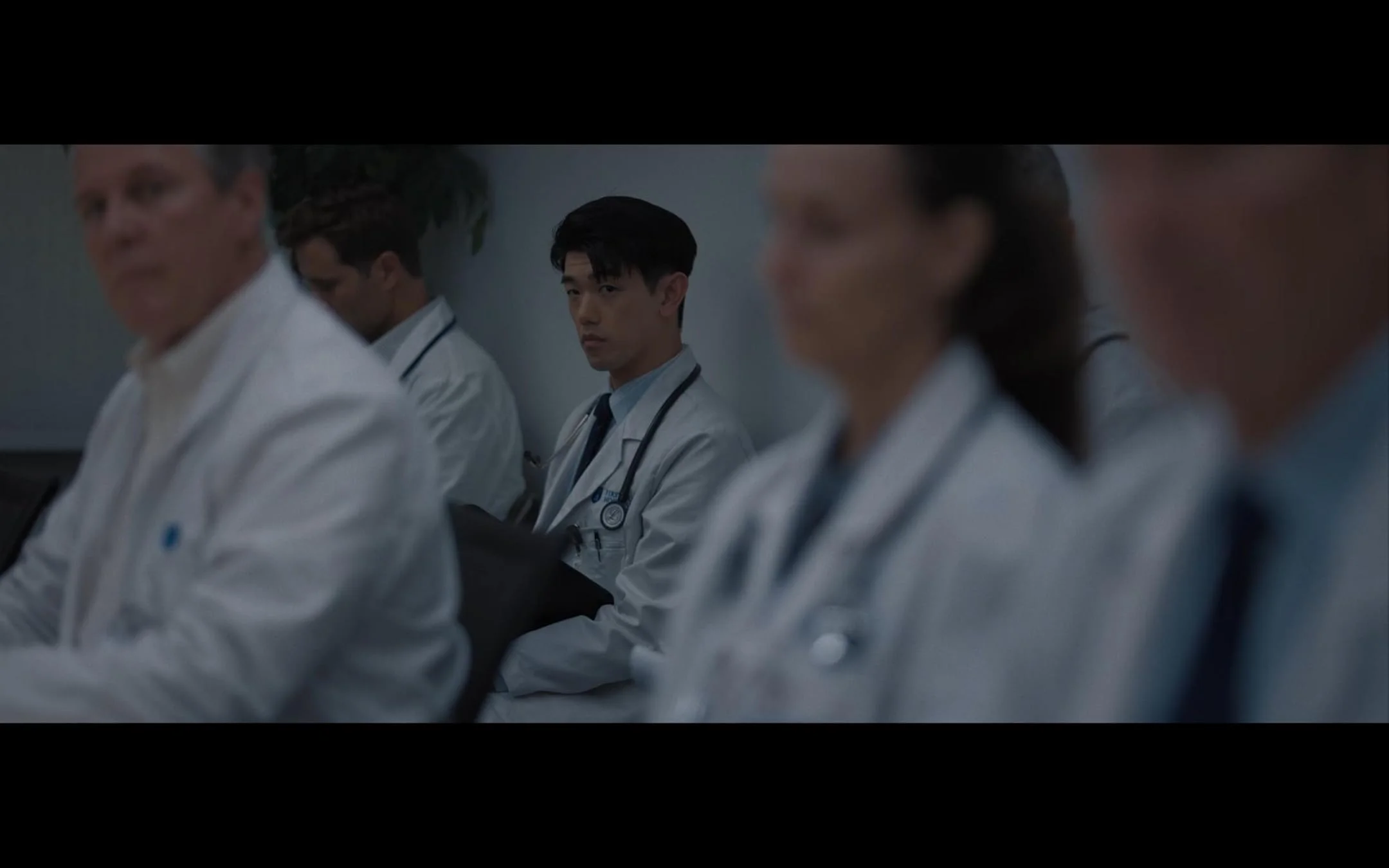
The film grows increasingly uncomfortable as Jonah starts absorbing his mentor’s worst qualities. His patience deteriorates, his confidence becomes harder to separate from arrogance, and his willingness to question instructions gives way to more impulsive behavior.
Nam gradually introduces a sharper temperament into a character whose early appeal depended on his composure. The transformation has a believable emotional foundation, even if the screenplay sometimes hurries its progression. Jonah’s developing surgical competence arrives with a speed that makes parts of his professional rise feel less convincing than his psychological deterioration.
The real emotional surprise, however, comes from Jonah’s relationship with his mother, Minah, played beautifully by Michelle Okkyung Lee. She takes enormous pride in her son’s accomplishments, happily celebrating his growing professional standing. Yet she is far less enthusiastic about continuing treatment for her own kidney problems.
That contradiction gives their relationship an immediate tenderness and frustration. Jonah may understand medical procedures better than almost anyone around him, but his professional knowledge cannot guarantee that his mother will follow his wishes. Their scenes together reveal a young man whose desire for control comes partly from love and fear.
Lee brings a welcome warmth to these exchanges. Her interactions with Nam feel lived-in, particularly when maternal pride comes into contact with Jonah’s concern for her health. An emotional monologue from Minah gives the family relationship additional depth, allowing her personal anxieties to emerge from behind the expectations she places on her son.
These moments are especially effective because Park allows the performers to carry the emotion through relatively restrained exchanges. The film’s Korean-American family dynamic introduces recognizable pressures surrounding achievement, parental sacrifice, and filial obligation, all tied to specific choices these two people make.
The comparison to Whiplash is unavoidable, and reasonably helpful. Both films examine ambitious young people who submit themselves to abusive mentors because they believe greatness requires suffering. But the medical setting changes the emotional stakes. A demanding music instructor can damage a student’s confidence and mental health; a reckless surgeon can endanger the person lying on the table. Park uses that difference to make Harmon’s obsession with perfection particularly troubling. His ability to perform extraordinary operations seems to have convinced him that his judgment deserves exemption from ordinary scrutiny.
This becomes especially significant when a patient files a lawsuit involving treatment provided by Harmon and Jonah. Hospital director Dr. Scarlett Marks (April Grace) subsequently speaks privately with Jonah, warning him that “uncontrolled ambition is a killer.” The scene gives Jonah a clear opportunity to examine the professional identity he is developing. His growing resemblance to Harmon is no longer simply a matter of personality. The consequences are beginning to reach the patients they are supposed to protect.
Still, this is where the screenplay reveals some of its limitations. The mentor-protégé conflict occupies so much attention during the middle portion that certain confrontations begin repeating an already established pattern. Harmon asserts his authority, Jonah resists or hesitates, and the resulting humiliation reinforces their unequal relationship.
These sequences remain tense because Camp is so effective, but the story could have spent additional time examining the hospital culture that permits Harmon to behave this way. The lawsuit and Marks’s intervention suggest a larger institutional problem that never receives the same depth as the central relationship. Jonah’s position as a Korean-American resident seeking acceptance within that hierarchy provides another promising direction that the film touches on too briefly.
Fortunately, Park’s command of the operating-room sequences makes much of this familiar material feel immediate. Cinematographer Eric Lin uses confined framing and atmospheric lighting to emphasize the restrictive environment surrounding the surgeons.
With surgical masks concealing much of their faces, the actors’ eyes become particularly expressive. An exchange of glances can reveal hesitation, anger, or an attempt to establish dominance. Park repeatedly places these restrained human reactions alongside explicit images of open-chest procedures, making the difference between the surgeons’ apparent composure and the patient’s vulnerability almost unbearable.
The practical surgical effects deserve considerable praise. Exposed organs and detailed operations create a convincing physical environment, making the consequences of the characters’ decisions impossible to ignore. Colin Benders’ electronic score introduces a pulsating nervous energy that suits the increasingly oppressive atmosphere, and Zoé Kraft’s editing maintains the pressure through the surgical confrontations. If you’re the sort of viewer who enjoys medical thrillers, these scenes deliver the procedural intensity you might expect, with an additional psychological menace created by the relationship between the two surgeons.
The contrast between these sequences and the film’s less accomplished material is noticeable. Some hospital interiors appear strangely empty, exposing the limitations of the production’s resources. Occasional exchanges outside the operating room also lack the natural rhythm found in Jonah’s conversations with his mother.
Park is clearly most comfortable when concentrating attention on a small group of characters, particularly when their professional duties prevent them from escaping an argument. A few awkward supporting scenes diminish the illusion of a functioning medical institution, though the film’s approximately 93-minute running time prevents these shortcomings from becoming overwhelming.
That unevenness makes Transplant particularly interesting as a feature debut. Park has already developed a strong instinct for turning limited environments into emotionally charged spaces. The forceps confrontation demonstrates what can be achieved through a specific dramatic situation, carefully positioned cameras, and actors who understand the tension between obedience and resistance.
There are flashier medical productions with larger casts and considerably greater resources, but few advantages of scale could improve the unease Camp creates through a sudden change in attitude during surgery. This smaller film has earned its place among the psychological dramas worth seeking out.
The relationship between Jonah and Minah gives that technical confidence a welcome emotional dimension. Nam’s performance becomes especially affecting when professional ambition collides with the responsibility he feels toward his mother. Her reluctance to continue treatment presents a problem he cannot solve simply by becoming a better surgeon, and Lee makes that conflict painfully human. As Jonah grows increasingly influenced by a man who equates professional success with absolute authority, his mother’s choices confront him with the limits of that belief. All his medical knowledge may still be insufficient to protect the person whose pride means so much to him.
Transplant had its festival run beginning in fall 2024 before arriving in select U.S. theaters and on digital on demand via Vertical Entertainment on November 20, 2026. Directed by Jason Park and starring Eric Nam alongside Bill Camp, the psychological thriller follows an ambitious surgical resident pushed to dangerous extremes under the demanding tutelage of a renowned heart transplant surgeon who values absolute loyalty above all else.
Full Credits
Title: Transplant
Distributor: Vertical Entertainment
Release date: October 2024 (festival run), November 20, 2026 (U.S. select theatrical and digital release)
Running time: 1 hour 33 minutes (93 minutes)
Director: Jason Park
Writers: David Joohun Lee, Jason Park
Producers and Executive Producers: Nina Yang Bongiovi, Forest Whitaker, Jason Park, Michael Y. Chow, Kevin M. Lin, Jason A. Lin, Bill Camp, Ivan Kraljevic, Michael J. Urann
Cast: Eric Nam, Bill Camp, Michelle Okkyung Lee, April Grace, Adam Arkin
Director of Photography (Cinematographer): Eric Lin
Editors: Zoe Kraft
Composer: Colin Benders
The Review
Transplant
Transplant makes you fear the person holding the scalpel as much as the operation itself. Bill Camp's frighteningly unpredictable performance and Eric Nam's sympathetic portrayal turn a familiar abusive mentorship story into something genuinely unsettling. Jason Park's confident surgical sequences generate tremendous tension, but Jonah's tender relationship with his mother gives the film its lasting emotional impact. Some rushed character development, repetitive confrontations, and modest production limitations hold it back. Still, this is an impressive independent thriller that deserves a wider audience.
PROS
- Bill Camp's intimidating, unpredictable performance
- Convincing and intensely suspenseful surgical sequences
- Touching mother-son relationship
- Effective cinematography, editing, and electronic score
- Eric Nam's sympathetic feature acting debut
CONS
- Jonah's professional development feels rushed
- Repetitive mentor-protégé confrontations
- Underdeveloped hospital hierarchy and cultural tensions
- Sparse hospital interiors and occasional awkward dialogue