























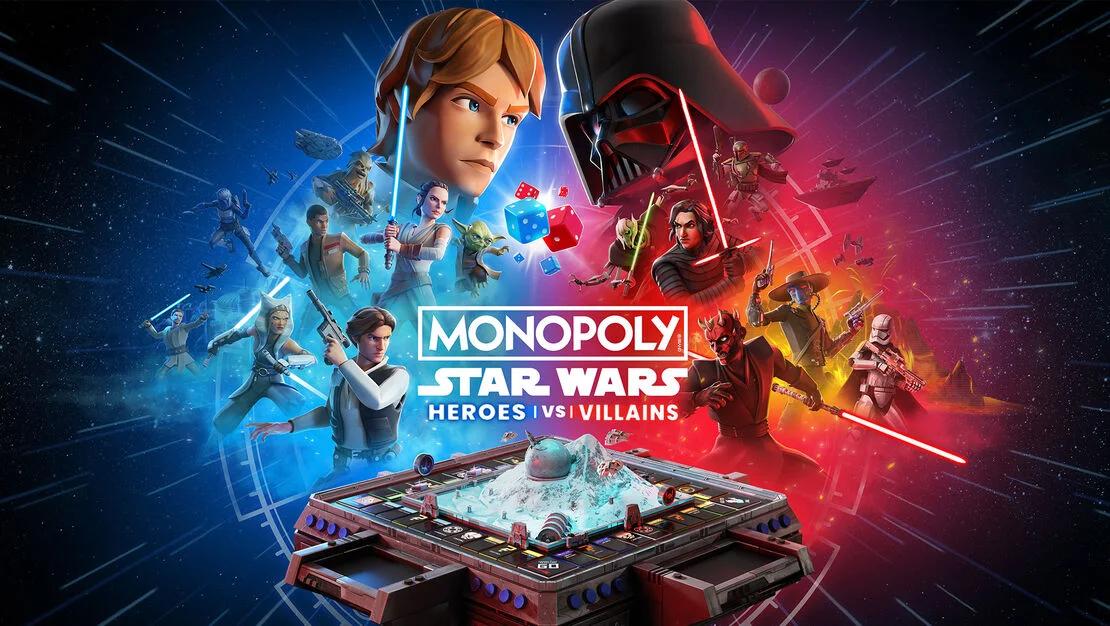

Traditional Monopoly makes you fiercely protective of your little property empire. Someone lands on your most expensive square, and their misery becomes your entertainment. Monopoly: Star Wars Heroes vs. Villains replaces that personal satisfaction with something surprisingly communal.
Capturing territory feels better when your teammates share the victory, and losing it becomes a collective disappointment. There’s genuine excitement in that change, especially when familiar Star Wars characters give every confrontation a little personality. Unfortunately, the game has a habit of making you feel deeply invested in outcomes you can barely influence.
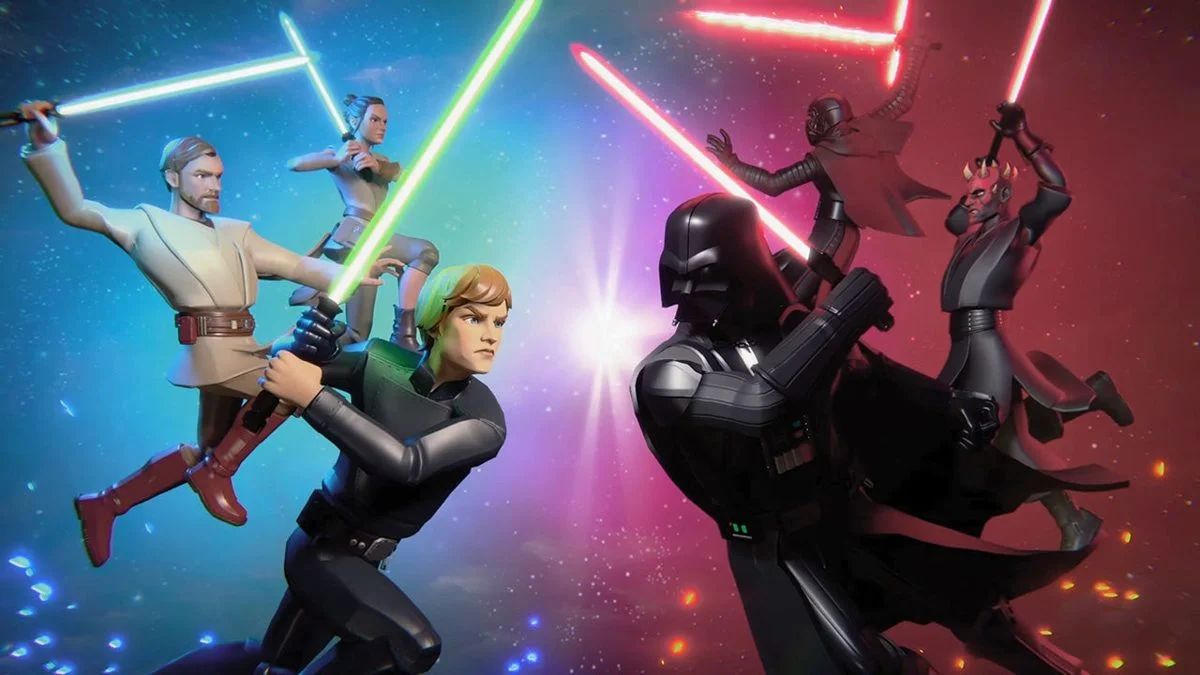
Ubisoft’s reinterpretation divides players into Light Side and Dark Side factions, with teams of two or three competing for control of the galaxy. Much of Monopoly remains recognizable. You roll dice, purchase locations, collect rent, and occasionally find yourself imprisoned.
But credits and properties are shared between teammates, and bankrupting your opponents is no longer the primary objective. Instead, you’re collecting Influence Points through territorial control and special events. Houses and hotels have become outposts and bases, offering stronger defenses for valuable properties. Rival players can capture locations, so ownership can change repeatedly throughout a match.
I can see this becoming a favorite for occasional game nights, particularly among friends who love Star Wars. The presentation is delightful, and the teamwork gives familiar mechanics an entertaining new purpose. Yet the heavy reliance on luck, uneven character abilities, and painfully slow stretches make it difficult to recommend as a regular pastime, especially for anyone playing alone.
Perhaps the most immediately enjoyable sensation is the excitement of recognizing something familiar in miniature. The board sits inside a cantina, presented as a holographic Dejarik-style game, with recognizable Star Wars locations materializing in its center.
These little recreations give each property an identity that ordinary Monopoly squares rarely possess. Characters have their own movement animations and introductions, and C-3PO provides commentary alongside R2-D2. The cartoony visual style makes the competition resemble an elaborate tabletop attraction that could plausibly exist somewhere in the Star Wars universe.
The special GO Events take that affection for the franchise further. One might recreate Anakin’s attack on the droid control ship, while another revisits Yoda lifting Luke’s X-Wing from the swamps of Dagobah. Seeing these scenes recreated gives a simple board game an unexpectedly cinematic personality.
Familiar sound effects and character voices help, even if the absence of John Williams’ iconic music is noticeable. Yet a dramatic scenario appears, the imagery creates anticipation, and then you’re asked to resolve the action through another dice challenge. These events look like opportunities to participate in Star Wars history, but your contribution usually amounts to hoping the dice produce the required result.
The playable characters initially offer something resembling the control these events lack. There are 28 characters, evenly divided between Heroes and Villains, each equipped with an active or passive ability. Chewbacca can use Wookie Rampage to move to the next opposing location and initiate combat.
Pairing him with Mace Windu, whose ability provides allied players with an additional combat die, creates an aggressive combination. Darth Vader can deploy a stormtrooper to seize a nearby location. Chewbacca’s aggression and Vader’s territorial control suit their personalities, making character selection feel like a chance to bring a little of the franchise into your decisions.
Unfortunately, choosing your favorite character can leave you feeling strangely powerless. Some abilities depend heavily on circumstances that players cannot reliably create. Stealing credits from an enemy you happen to pass sounds useful, but that opportunity might rarely appear. Other powers can send opponents to jail or capture valuable territory with far fewer conditions. The difference becomes frustrating when a rival character repeatedly delivers meaningful advantages and your own ability remains practically useless. Certain combinations offer stronger opportunities than others, encouraging players to favor efficiency over affection for particular characters.
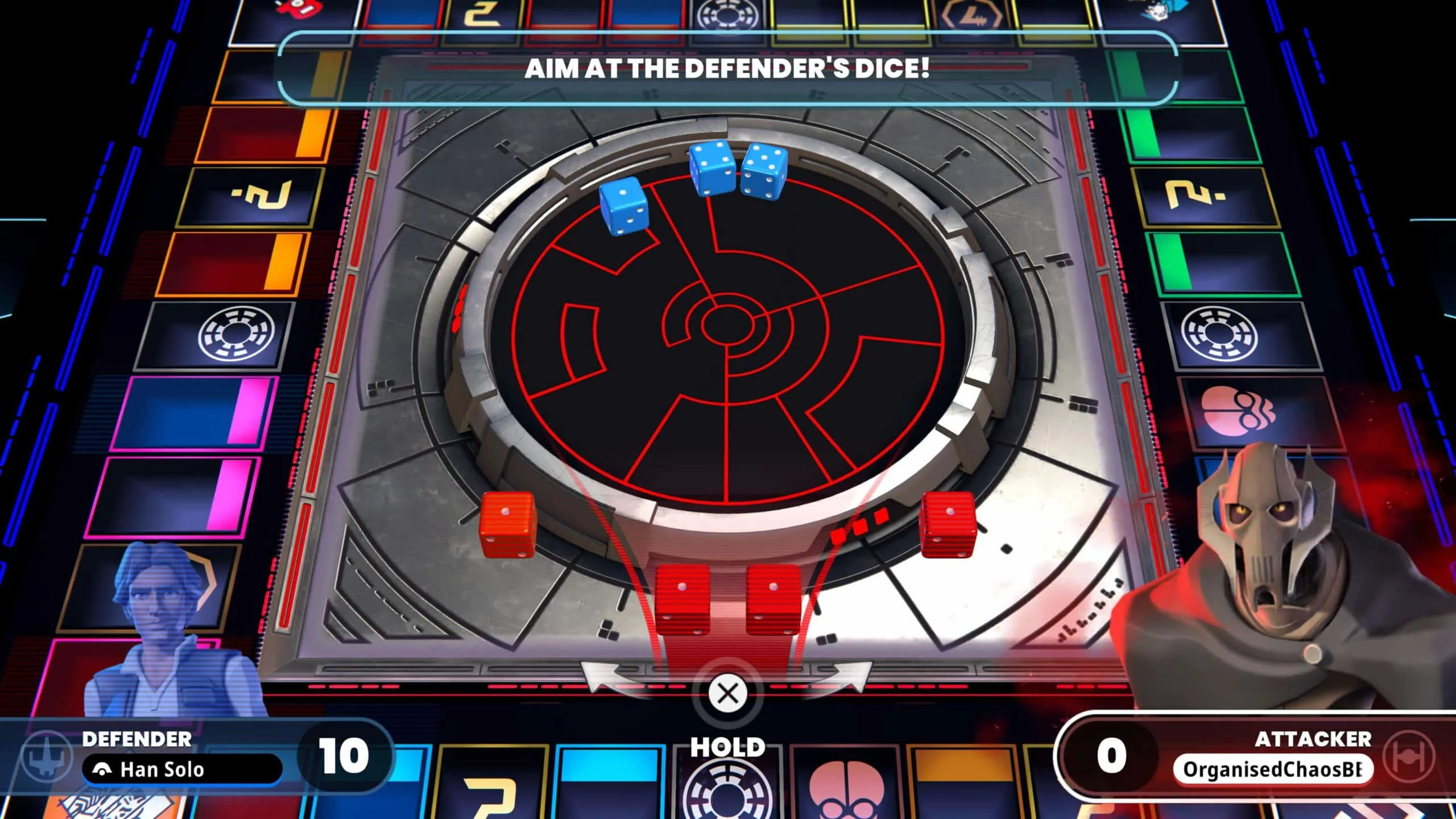
Combat suffers from a related problem. When opposing players meet, the defender rolls dice first, and the attacker has an opportunity to strike those dice and alter their values. It’s an amusing physical twist, and winning can transfer credits or control of a location. But imagine choosing Darth Vader or Luke Skywalker, entering a confrontation that could change the balance of power, and realizing that the decisive action consists of watching dice bounce around. There’s tension in waiting for the result. There’s considerably less satisfaction in earning it.
The biggest example comes from the GO Events themselves. Each time someone reaches or passes GO, an event can trigger, awarding substantial Influence Points through a dice-based challenge. Matches end after a selected number of these events, with eight as the maximum, typically lasting around 40 to 80 minutes.
That defined endpoint is welcome compared with traditional Monopoly sessions that drag on indefinitely. However, one faction can repeatedly reach GO and benefit from opportunities the other side never receives. A team might spend considerable effort purchasing and defending locations, only to watch the opposition build a commanding lead through event rewards. With plentiful credits and matches sometimes ending before expensive improvements pay off, developing property feels less important than it should.
The first time someone gets imprisoned in carbonite, the animation is an amusing reference to Han Solo’s fate. By the fifth or sixth viewing, the amusement has faded considerably. Character introductions, dice movements, combat sequences, and other animations repeatedly interrupt the flow. Many cannot be skipped, leaving players watching elaborate presentations of actions that require only a few seconds of actual input. Even C-3PO’s commentary, initially an enjoyable reminder of the setting, becomes repetitive after numerous turns.
This becomes especially exhausting because matches require at least four participants. If you’re playing alone, AI characters fill the remaining positions, and you spend much of the session observing computer-controlled players roll dice and complete their actions.
Your own turn might involve a quick property purchase or a decision to activate an ability, followed by several minutes of waiting. Three-versus-three matches make that delay even longer. Occasionally, imprisonment leaves you with almost nothing meaningful to do when your turn finally arrives. Those lovely holographic locations, which initially made the board feel alive, start looking like elaborate decorations surrounding an automated process.
Playing with friends improves matters considerably, and I wouldn’t dismiss the experience simply because its mechanical shortcomings are so obvious. Human company gives otherwise uneventful turns a purpose. Watching someone lose an important location can provoke laughter or disbelief. A disastrous dice roll becomes something the entire group remembers, and a lucky victory can inspire celebrations that the actual mechanics barely deserve.
The ability to compete locally with up to six players, alongside online multiplayer and cross-platform support, makes these shared experiences accessible. Different character combinations provide additional reasons to return. For casual board-game players and Star Wars devotees alike, there’s something worth defending in the way this game turns individual setbacks into shared stories.
That leaves a peculiar problem for anyone hoping to enjoy a spontaneous match. A group of friends might happily arrange another evening of galactic rivalry, remembering the ridiculous victory that came down to a single Influence Point or the character ability that ruined someone’s plans.
Returning alone means replacing those conversations with AI turns, familiar animations, and another round of C-3PO explaining proceedings you’ve already watched dozens of times. The next hologram still looks lovely as it appears above the board, but you may find yourself checking how many turns remain before you can actually do something.
The Review
Monopoly: Star Wars Heroes vs. Villains
Monopoly: Star Wars Heroes vs. Villains captures the excitement of sharing galactic victories with friends, thanks to charming holographic locations, familiar characters, and entertaining team abilities. Unfortunately, that excitement fades when luck decides major confrontations and repetitive animations leave players waiting through long stretches of inactivity. The uneven character abilities further undermine meaningful strategy. With friends, these frustrations can become part of the fun. Playing alone exposes just how little involvement the game sometimes demands. It's an enjoyable occasional party game for Star Wars fans, but its appeal depends heavily on good company.
PROS
- Charming Star Wars presentation and holographic locations
- Team-based competition creates memorable shared moments
- Character abilities reflect familiar personalities
- Local, online, and cross-platform multiplayer
CONS
- Excessive reliance on luck
- Poorly balanced character abilities
- Repetitive, often unskippable animations
- Tedious solo experience dominated by AI turns