




























Most youth basketball movies measure growing up in points scored and games won. Last Shot is much better at measuring the space between a grieving boy and a mother he barely knows. I expected the basketball to carry Andy Palmer’s film, especially with former NBA player Baron Davis among the cast. Instead, I found myself most engaged when the game fell into the background and the story made room for a child who cannot simply practice his way out of loss.
That difference becomes clear in what basketball cannot restore for twelve-year-old Caden (Dylan Friedman): his father, Darren (Michael Rapaport). Darren’s sudden death removes both his closest source of support and the stability surrounding the sport. Caden is sent to Nashville to live with Lexi (Jaime Pressly), his estranged mother, a successful music executive whose career has left little room for parenting.
Her early reluctance to take him in is painful because it comes at the moment he most needs someone to choose him. The film understands that a change of address can be devastating when it also means leaving teammates, friendships, and the routines that once made home recognizable.
Palmer and writer Todd M. Friedman sometimes reach for familiar melodrama, and the screenplay eventually becomes crowded. Even so, I would recommend Last Shot to families looking for a sports drama willing to take a young person’s grief seriously. Its strongest moments are found in watching Caden’s anger complicate every attempt to give him a fresh start.
One of the film’s best choices is to let Darren remain present after his death through brief memories of happier times with Caden. This is where its editing deserves particular attention. Associative editing connects images through their emotional relationship rather than simply placing events in chronological order. Here, glimpses of father and son enjoying time together interrupt Caden’s difficult adjustment to his new life, allowing the past to change how we understand his present behavior. I especially liked that these memories give Rapaport’s limited role weight without requiring a long account of the father-son relationship. The happy moments matter precisely because Caden cannot return to them.
Friedman makes Caden’s difficult behavior understandable even when it is hard to like. He withdraws, lashes out, and looks for ways to avoid thinking about what has happened. The performance works because those reactions are not tidied into a single lesson about being brave. Basketball gives Caden something to do with his energy, but his skill cannot solve the problem waiting for him off the court. That tension makes him a recognizably frustrated twelve-year-old rather than a miniature professional athlete written to deliver wisdom.
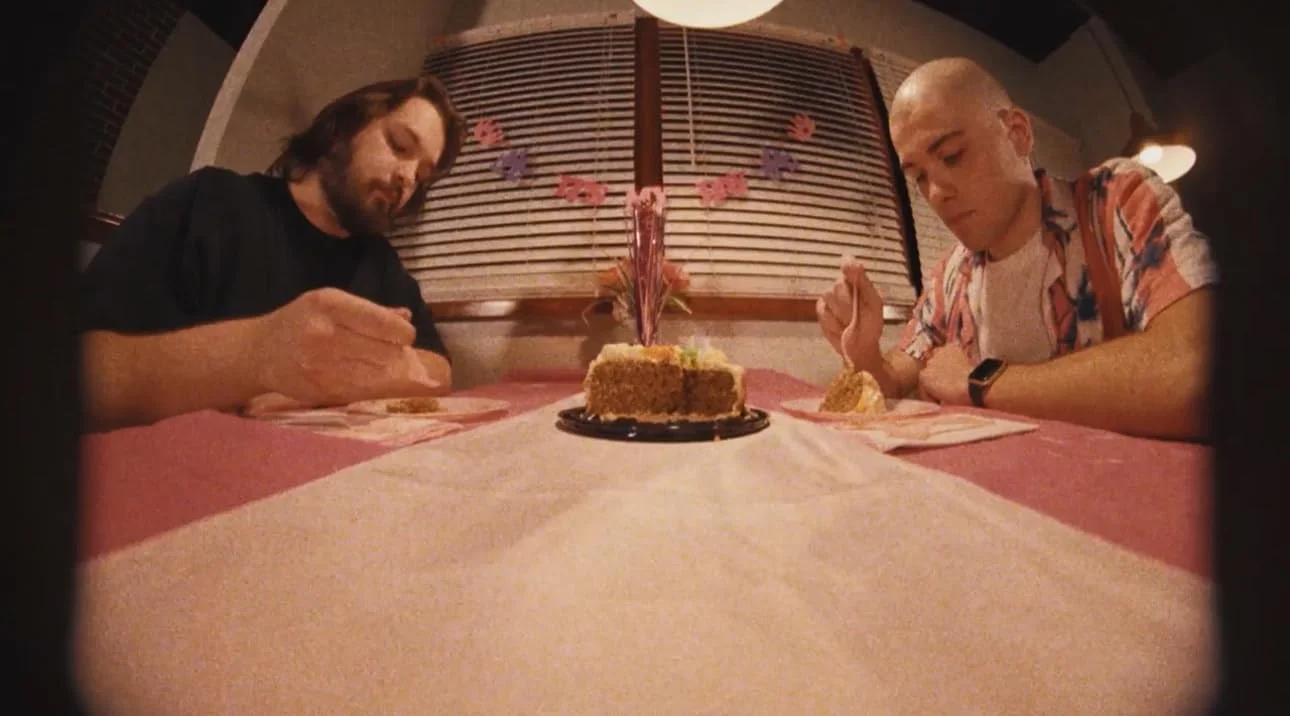
Pressly has a harder assignment than the film sometimes seems to realize. Lexi begins perilously close to a stock character: the successful, distant mother whose career has crowded out everything else. Her initial rejection of Caden leaves damage that a sudden change of priorities cannot easily repair.
Pressly gives Lexi’s guilt and uncertainty enough force to suggest a woman who does not know how to become the parent her son needs, even once she wants to try. I found their uneasy adjustment far more affecting than the expected sporting rivalry. Neither of them can resume a relationship they never properly built, and Caden is being asked to cooperate in that rebuilding at the worst possible time.
Johnny Simmons, as Lexi’s assistant and romantic partner, helps make that family situation credible. He steps into a stabilizing role when Lexi is occupied by work and unsure how to reach her son. It is a useful character function, though it also exposes one of the screenplay’s shortcuts: practical care often comes more readily from the adult standing beside the mother than from the mother herself. The film has to persuade us that Lexi is learning to take responsibility rather than merely allowing someone else to absorb it. The relationship benefits from Simmons’s steadier presence, but the problem it creates for Lexi deserves as much attention as the comfort he brings Caden.
Once Caden joins an elite team, the film acquires a second set of expectations. There are new friends, rivals, demanding adults, and the pressure placed on children whose talent encourages everyone around them to think about results. Davis makes a welcome impression as Caden’s coach and mentor. His authority feels at home in a basketball setting, and he offers the boy a connection to the sport at a time when its meaning has changed. I enjoyed seeing a former professional player used for guidance rather than as a distracting celebrity appearance. The role fits the film’s interest in the adults who shape a young athlete’s experience.
The basketball itself is less consistent. Friedman’s experience as a player helps sell Caden’s attachment to the game, and the emphasis on real attempts gives the action an appealingly unpolished quality. There are also passages where the young players’ movements look awkward and the competition lacks the urgency that sports movies usually manufacture through close contests and mounting pressure. I can appreciate that these are children playing basketball; I do not always feel the excitement the film wants their games to generate. Its more persuasive sporting detail is the strain of expectations, which follows Caden even when the court should offer relief.
The larger difficulty is how many strands Todd M. Friedman’s script tries to sustain across 105 minutes. Caden’s grief, Lexi’s working life, their fragile connection, the supportive boyfriend, new friendships, team rivalries, and coaching pressures all compete for attention. Editor Stephanie Neroes helps maintain forward movement, yet a film can move briskly and still feel scattered.
The shifts between family conflict and sporting ambition compress Caden’s emotional development, particularly given the damage created by Lexi’s initial rejection. Palmer is on firmer ground with the remembered father-son moments and the uncomfortable early distance between Caden and Lexi. Their estrangement carries the painful knowledge that Caden’s surviving parent initially did not want him living with her, a wound the film sometimes hurries past in its eagerness to put him back on the court.
Last Shot was released on October 2, 2026, through Hemlock Circle Productions and is available to stream on Angel as well as digital platforms such as Apple TV. Directed by Andy Palmer and written by Todd M. Friedman, the sports drama follows 12-year-old basketball prodigy Caden (Dylan Friedman) as he moves in with his estranged mother (Jaime Pressly) in Nashville following his father’s death, navigating grief, identity, and a fresh start on a new team.
Where to Watch Last Shot (2026) Online



Full Credits
Title: Last Shot
Distributor: Hemlock Circle Productions, Angel
Release date: October 2, 2026
Rating: PG
Running time: 1 hour 45 minutes (105 minutes)
Director: Andy Palmer
Writers: Todd M. Friedman
Producers and Executive Producers: Jaime Pressly, Warner Davis, Todd M. Friedman, Kelly Brown
Cast: Dylan Friedman, Jaime Pressly, Baron Davis, Michael Rapaport, Laraine Newman, Johnny Simmons, Dominic Lopez, Reinaldo Faberlle, Anthony B. Jenkins, Neil Green
Director of Photography (Cinematographer): Filip Vandewal
Editors: Stephanie Neroes
Composer: Andrew Scott Bell
The Review
Last Shot
Last Shot finds its greatest strength away from the basketball court, where Dylan Friedman and Jaime Pressly make a fractured family relationship genuinely affecting. Andy Palmer handles Caden's memories of his father with sensitivity, and Baron Davis brings welcome warmth to the sporting side. I appreciated the film's willingness to let a young character express grief through anger and withdrawal. The crowded screenplay, predictable developments, and uneven basketball sequences weaken its impact, but there is enough sincerity and emotional substance here to make it a worthwhile family drama.
PROS
- Affecting father-son flashbacks
- Convincing performances from Friedman and Pressly
- Baron Davis's natural mentoring presence
- Sensitive portrayal of childhood grief
CONS
- Too many competing subplots
- Predictable family-drama conventions
- Basketball sequences lack consistent excitement
- Caden's emotional recovery sometimes feels rushed