





















• Latest
  • Trending
Steps of the Scientific Method

What Are the Steps of the Scientific Method?

4 years ago
Woman Unknown

Venice’s Only Female-Directed Film Premieres Amid Gender Gap Backlash

36 minutes ago
No Paradise If You Are Killed by a Woman

Iraq Sends Kurdish Sniper Drama to the Oscars

41 minutes ago
Queer Edward II Review

Queer Edward II Review: Derek Jarman Refuses to Become a Museum Piece

Mr. Nelson, Did You Kill People? Review

Mr. Nelson, Did You Kill People? Review: War Without the Protective Myth

Aggelos 2 Review

Aggelos 2 Review: Old-School Adventure Finds a Second Form

Furies Review

Furies Review: Lebanon’s Financial Crisis Becomes a Crime Thriller

Jupiter Review

Jupiter Review: Nuclear Deterrence Becomes a Pressure Chamber

Falling House Review

Falling House Review: Locked Doors and a Dying House

The Girl in the River Review

The Girl in the River Review: The Case Solves Itself

Box Knight Review

Box Knight Review: Corporate Hell Has Excellent Art Direction

Earle Meets World Review

Earle Meets World Review: TikTok Fame Hits the 40-Minute Wall

Wild Horse Nine Review

Wild Horse Nine Review: John Malkovich Faces the End of the Line

  • Home
  • Privacy Policy
  • Terms and Conditions
  • Gazettely Review Guidelines
Sunday, September 6, 2026
GAZETTELY
  • Home
  • Movie and TV News
    Woman Unknown

    Venice’s Only Female-Directed Film Premieres Amid Gender Gap Backlash

    No Paradise If You Are Killed by a Woman

    Iraq Sends Kurdish Sniper Drama to the Oscars

    Jane Fonda David Ellison

    Jane Fonda Slams Paramount-Warner Merger, Even as She Praises Ellison

    Mike Leigh

    Mike Leigh’s Likely Final Film Draws Oscar Buzz at Telluride

    Ink 5b0c8c

    Danny Boyle Confirms AI Was Used to Animate Photos in “Ink”

    Primetime

    Jeff Zucker Plays Himself in A24’s “Primetime” — and Loved It

    images 1

    Oasis Documentary Gets 8-Minute Standing Ovation at Venice

    Robert Pattinson

    Robert Pattinson Is “Extraordinary” as Chris Hansen, Critics Say

    Ben McKenzie

    Ben McKenzie Says He’d Return for “The O.C.” Revival

  • Movie and TV Reviews
    Queer Edward II Review

    Queer Edward II Review: Derek Jarman Refuses to Become a Museum Piece

    Mr. Nelson, Did You Kill People? Review

    Mr. Nelson, Did You Kill People? Review: War Without the Protective Myth

    Furies Review

    Furies Review: Lebanon’s Financial Crisis Becomes a Crime Thriller

    Jupiter Review

    Jupiter Review: Nuclear Deterrence Becomes a Pressure Chamber

    Falling House Review

    Falling House Review: Locked Doors and a Dying House

    The Girl in the River Review

    The Girl in the River Review: The Case Solves Itself

    Earle Meets World Review

    Earle Meets World Review: TikTok Fame Hits the 40-Minute Wall

    Wild Horse Nine Review

    Wild Horse Nine Review: John Malkovich Faces the End of the Line

    By Any Means Review

    By Any Means Review: Sunlit Noir With Blood on Its Hands

  • Game Reviews
    Aggelos 2 Review

    Aggelos 2 Review: Old-School Adventure Finds a Second Form

    Box Knight Review

    Box Knight Review: Corporate Hell Has Excellent Art Direction

    NBA 2K27 Review

    NBA 2K27 Review: The NBA Experience Still Travels Well

    Aliens: Fireteam Elite 2 Review

    Aliens: Fireteam Elite 2 Review: Four Marines Against an Old Threat

    Nioh 3 Hell Rising Review

    Nioh 3 Hell Rising Review: Building New Paths Through Edo

    Theropods Review

    Theropods Review: Prehistory Meets Science Fiction One Puzzle at a Time

    Grim Trials Review

    Grim Trials Review: Death Is Only the Training Phase

    The Blood of Dawnwalker Review

    The Blood of Dawnwalker Review: Every Hour Has a Price

    Onimusha: Way of the Sword Review

    Onimusha: Way of the Sword Review: Ten Seconds From Perfection

  • The Bests
No Result
View All Result
  • Home
  • Movie and TV News
    Woman Unknown

    Venice’s Only Female-Directed Film Premieres Amid Gender Gap Backlash

    No Paradise If You Are Killed by a Woman

    Iraq Sends Kurdish Sniper Drama to the Oscars

    Jane Fonda David Ellison

    Jane Fonda Slams Paramount-Warner Merger, Even as She Praises Ellison

    Mike Leigh

    Mike Leigh’s Likely Final Film Draws Oscar Buzz at Telluride

    Ink 5b0c8c

    Danny Boyle Confirms AI Was Used to Animate Photos in “Ink”

    Primetime

    Jeff Zucker Plays Himself in A24’s “Primetime” — and Loved It

    images 1

    Oasis Documentary Gets 8-Minute Standing Ovation at Venice

    Robert Pattinson

    Robert Pattinson Is “Extraordinary” as Chris Hansen, Critics Say

    Ben McKenzie

    Ben McKenzie Says He’d Return for “The O.C.” Revival

  • Movie and TV Reviews
    Queer Edward II Review

    Queer Edward II Review: Derek Jarman Refuses to Become a Museum Piece

    Mr. Nelson, Did You Kill People? Review

    Mr. Nelson, Did You Kill People? Review: War Without the Protective Myth

    Furies Review

    Furies Review: Lebanon’s Financial Crisis Becomes a Crime Thriller

    Jupiter Review

    Jupiter Review: Nuclear Deterrence Becomes a Pressure Chamber

    Falling House Review

    Falling House Review: Locked Doors and a Dying House

    The Girl in the River Review

    The Girl in the River Review: The Case Solves Itself

    Earle Meets World Review

    Earle Meets World Review: TikTok Fame Hits the 40-Minute Wall

    Wild Horse Nine Review

    Wild Horse Nine Review: John Malkovich Faces the End of the Line

    By Any Means Review

    By Any Means Review: Sunlit Noir With Blood on Its Hands

  • Game Reviews
    Aggelos 2 Review

    Aggelos 2 Review: Old-School Adventure Finds a Second Form

    Box Knight Review

    Box Knight Review: Corporate Hell Has Excellent Art Direction

    NBA 2K27 Review

    NBA 2K27 Review: The NBA Experience Still Travels Well

    Aliens: Fireteam Elite 2 Review

    Aliens: Fireteam Elite 2 Review: Four Marines Against an Old Threat

    Nioh 3 Hell Rising Review

    Nioh 3 Hell Rising Review: Building New Paths Through Edo

    Theropods Review

    Theropods Review: Prehistory Meets Science Fiction One Puzzle at a Time

    Grim Trials Review

    Grim Trials Review: Death Is Only the Training Phase

    The Blood of Dawnwalker Review

    The Blood of Dawnwalker Review: Every Hour Has a Price

    Onimusha: Way of the Sword Review

    Onimusha: Way of the Sword Review: Ten Seconds From Perfection

  • The Bests
No Result
View All Result
GAZETTELY
No Result
View All Result
Steps of the Scientific Method

It Takes Two Review

The Ultimate 2022 Projector Buying Guide

Home Science

What Are the Steps of the Scientific Method?

All you should know about the scientific method!

Gazettely Editorial by Gazettely Editorial
4 years ago
in Science
Reading Time: 7 mins read
A A
0
Share on FacebookShare on TwitterShare on PinterestShare on WhatsAppShare on TelegramSummarize with ChatGPTSummarize with Perplexity

To understand and explain reality in physics, chemistry, and life and earth sciences, the scientists use a method called the scientific method or approach. Which are its main principles? Which tools are used to set up logical reasoning? What are the steps of the scientific method? Find out the essentials about the scientific method.

What Is the Scientific Method?

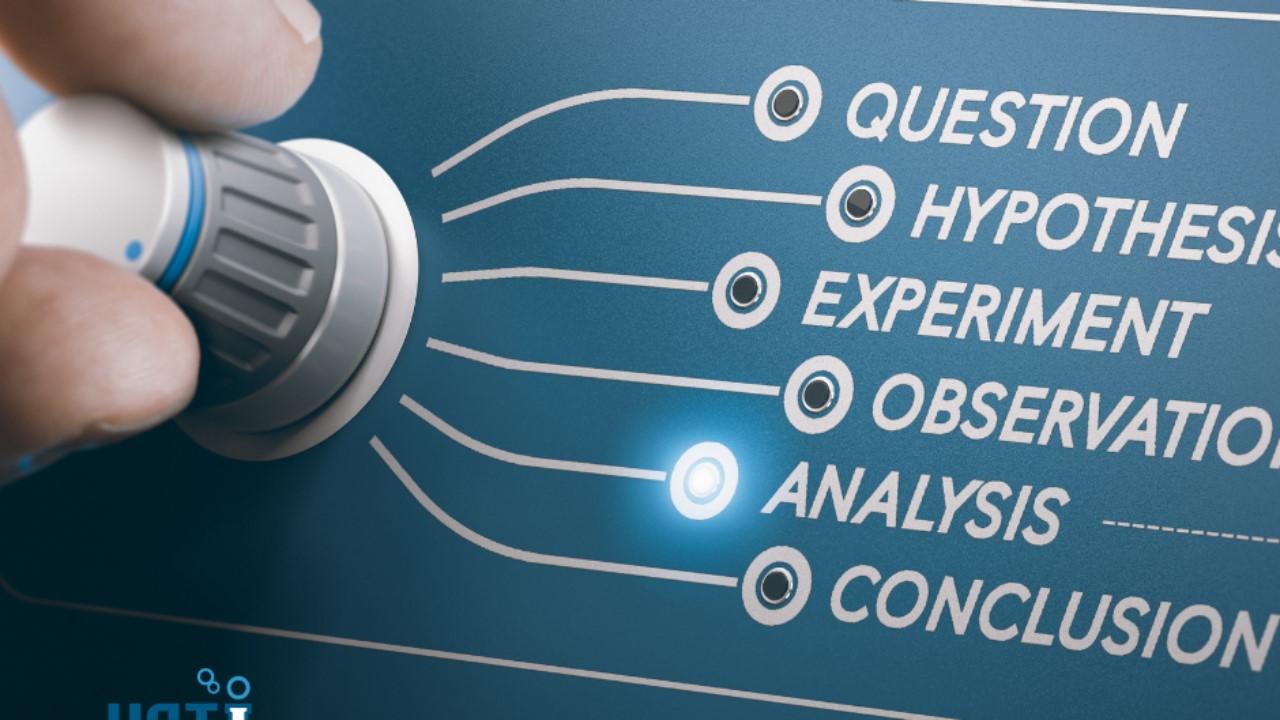
The scientific method is the method used by scientists to understand and explain the world around us. To simplify things, the scientific method consists of several steps: starting from observing a phenomenon and formulating a problem, various hypotheses are put forward, then tested and either invalidated or confirmed; a model or theory is built from this confirmation. Observations and experiments are the means to test the different hypotheses put forward.

Key Concepts

  • A hypothesis is considered valid as long as no observation or experiment shows that it is false.
  • Scientific reasoning consists of testing hypotheses to show whether or not they are false and keeping only those that are consistent with all observations and experiments.
  • The falseness of a hypothesis is certain, whereas its scientific validity is temporary and subject to the evolution of knowledge.

Steps of the Scientific Method

Evolution of the scientific method over time

From antiquity to the present day, the ways of investigating the world have evolved to arrive at an approach whose foundations are common to all the natural sciences (physics, chemistry, life and earth sciences).

In antiquity, Hippocrates, a Greek physician, brought novelty in his treatise “The Prognosis”, which details a procedure for diagnosing patients for the very first time. This is one of the first scientific texts.

The seventeenth century was the golden age of instruments. From then on, the experience was at the heart of scientific practice: we talk about the Scientific Revolution. Besides observations, the hypotheses can also be tested by experiment. Furthermore, with the invention of instruments such as the microscope, it became possible for scientists to observe elements that were previously invisible to the naked eye, such as the cells discovered by Robert Hooke in 1665.

Starting in the 20th century, science has been done collectively. The scientific studies are submitted to the judgment of “peers”, that is to say to other scientists. All the experiments must be detailed to be reproducible by other teams. In exchange, publishing in international journals and on the Internet since the 1990s enables researchers worldwide to increase the notoriety of their ideas and facilitates access to science for the general public.

Steps of the Scientific Method

However, with the advent of computers, not only communication has changed, but the scientific method has also been transformed. It is becoming easier to sort large amounts of data and build statistical studies. However, we must be careful to select the relevant criteria, as technological progress brings researchers immense quantities of information, called Big Data.

The Various Steps of the Scientific Method

In this section of our article, we will take a look at some different steps of the scientific method. Stay tuned!

Observing and formulating a problem

At the base of any scientific method, there is initially an observation of a phenomenon and the formulation of a problem.

For instance, since ancient times, certain scientists have been convinced that the Earth is immobile at the center of the universe and that the Sun revolves around it: this is the hypothesis of geocentrism. This assumption was made because, at the time, all the observations were made with the naked eye.

Viewed from the Earth, the sun could show that it revolves around us because it rises on the eastern horizon and sets on the western horizon. But this was only an intuition because, at this stage, no true scientific method was undertaken.
Steps of the Scientific Method

Later on, as astronomers observed the motion of the planets, they realized that the motion of some planets sometimes forms a loop in the sky, which is not compatible with a strictly circular motion around the Earth. This problem was solved by making the model more complex: A planet moves on a circle whose center moves on a circle. This is the theory of epicycles.

Hypothesis and the construction of a model

In the 15th century, Nicolas Copernicus put forward a new hypothesis. He believed that the Sun was at the center of the universe and that all the planets, including Earth, orbit around it. This assumption is called “heliocentrism”. Of course, the model accounts for planetary retrogrades but still has epicycles to describe their motions more accurately.

In the winter of 1609-1610, Galileo pointed his telescope at the sky and discovered the phases of Venus and the satellites that revolve around the planet Jupiter. These observations led him to invalidate the geocentric hypothesis and to adhere to heliocentrism.

Gradually, this approach became general. A hypothesis is considered valid as long as no observation or experiment shows that it is false. The longer it withstands the test of time, the better it becomes as a description of the world. However, a single contrary observation is enough for the hypothesis to collapse, and in that case, it is final. We must then change our hypothesis.

Steps of the Scientific Method

Copernicus’ heliocentrism was first imposed by the quality of the planetary ephemeris that was derived from it more than by the strength of his hypothesis, which was more practical than the geocentric hypothesis but was not directly confirmed. For this, we had to wait a few more years until the quality of the observation instruments progressed.

The observation and the experimentation

If the earth is moving around the sun, we should see a parallax effect, that is to say, the variation of the relative positions of the stars throughout the year. The lack of a measurable parallax was used against heliocentrism.

In 1727, the English astronomer James Bradley discovered another effect, star aberration, which he showed could only be caused by the Earth’s revolution around the Sun. The first measurement of parallax, by the astronomer Friedrich Bessel in 1838, put an end to the debate.

The Earth’s rotational motion was only proven later. The physicist Léon Foucault conducted a spectacular public experiment in 1851: A large pendulum was hung on the vault of the Pantheon in Paris, and the slow revolution of its oscillation plane revealed the rotation of the Earth on itself.

Steps of the Scientific Method

Here we find another characteristic of the scientific method. Once the model has been developed based on observations that justify it, it is necessary to draw predictions from it, that is to say, as yet unobserved consequences of the model.

This allows us to make new observations or to build new experiments to test these predictions. If the predictions are wrong, then the model that gave rise to them is inadequate and must be reformed or forgotten. If the predictions are correct, the model is strengthened because it is descriptive and predictive.

Communication

Nowadays, “peer review” makes it possible to control the scientific method of a new discovery by an independent college of scientists. Suppose observations and experiments are in the same direction and do not contradict each other. In that case, the proposition is declared suitable for publication in a scientific journal.

Also Read:

  • 10 Things That You Probably Didn’t Know About Stephen Hawking
  • What Is Quantum Physics?
  • How Chemistry Is Used in Everyday Life

What Tools to Decipher Science?

The scientific method is based on the construction of logical and argued reasoning. It is based on the foundations of formal logic: induction and deduction.

The induction

The induction seeks to establish a general law based on observing a set of particular facts (sample).

For example, it is used in biology. To study cells in an organism, it is not possible to observe all of them, as there are too many. The scientists study a small sample and then generalize their observations to all the cells. They then establish hypotheses and models whose predictions must be tested by subsequent observations and experiments.

The deduction

The deduction links propositions, known as premises, with a proposition, known as a conclusion, ensuring that if the premises are true, so is the conclusion.

A classic example of deduction: All men are mortal, so Socrates is a man, so Socrates is mortal. The deduction is often used in physics or mathematics when demonstrating a law or a theorem.

Steps of the Scientific Method

Reasoning from Modus Ponens and Modus Tollens

The Modus Ponens and the Modus Tollens are used by scientists in their reasoning. The Modus Ponens is, in Logic, reasoning that states that if a proposition A implies a proposition B, then, provided that A is true, B is true.

However, if the implication is true, then its opposite is also true (same truth value according to the rules of formal logic). That means that “the negation of B implies the negation of A” (contraposed to “A implies B”).

Modus Tollens is the following reasoning: if statement A implies a statement B, stating that B is false allows us to affirm that A is false.

For example, it is known that all fish breathe underwater. Salmon is a fish; therefore, it breathes underwater (Modus Ponens). The original proposition can be stated under another equivalent proposition (contraposed): if “I cannot breathe underwater, then I’m not a fish”. This allows us to construct the following reasoning: All fish breathe underwater, yet I do not breathe underwater, so I am not a fish (Modus Tollens).

These tools of formal logic make it possible to check the logical coherence of an argument and to detect faulty arguments. With these tools and keeping a good critical mind and checking the origin of the information disseminated, it is easier to spot an unscientific or pseudo-scientific discourse.


Tags: Science Experiments
Previous Post

It Takes Two Review

Next Post

The Ultimate 2022 Projector Buying Guide

0 0 votes
Article Rating
Subscribe
Connect with
Login
I allow to create an account
When you login first time using a Social Login button, we collect your account public profile information shared by Social Login provider, based on your privacy settings. We also get your email address to automatically create an account for you in our website. Once your account is created, you'll be logged-in to this account.
DisagreeAgree
Notify of
guest
Connect with
I allow to create an account
When you login first time using a Social Login button, we collect your account public profile information shared by Social Login provider, based on your privacy settings. We also get your email address to automatically create an account for you in our website. Once your account is created, you'll be logged-in to this account.
DisagreeAgree
guest
0 Comments
Oldest
Newest Most Voted

Try AI Movie Recommender

Gazettely AI Movie Recommender

This Week's Top Reads

  • Is This Seat Taken? Review

    Is This Seat Taken? Review: A Satisfying Mental Workout

    1106 shares
    Share 0 Tweet 0
  • Trust Review: Squandered Potential and an Incoherent Plot

    6 shares
    Share 0 Tweet 0
  • The Airport Chaplain Review: Melbourne Airport Finds Its Resident Fixer

    0 shares
    Share 0 Tweet 0
  • Just Play Dead Review: Samuel L. Jackson Takes It Easy in the Canary Islands

    0 shares
    Share 0 Tweet 0
  • Director Recalls “Dark Energy” Around Hayden Panettiere Before Her Death

    0 shares
    Share 0 Tweet 0
  • Four Hands, Two Sonatas Review: Rivalry Sounds Better With Four Hands

    0 shares
    Share 0 Tweet 0
  • Mousetrap Review: When the System Erases a Man

    0 shares
    Share 0 Tweet 0

Must Read Articles

By Any Means Review
Movies

By Any Means Review: Sunlit Noir With Blood on Its Hands

14 hours ago
Fall 2 Deadpoint Review 1
Movies

Fall 2: Deadpoint Review: The Sequel Climbs Into Busier Territory

2 days ago
Ink Review
Movies

Ink Review: The Newspaper Revolution That Changed the Rules

3 days ago
Mayday Review
Movies

Mayday Review: Ryan Reynolds and Kenneth Branagh Make an Unlikely Alliance Work

3 days ago
The Paper Season 2 Review
TV Shows

The Paper Season 2 Review: The Newsroom Finds Its Punchline

3 days ago
Loading poll ...
Coming Soon
Which of Alfred Hitchcock's 1960s thrillers is your all-time favorite?

Gazettely is your go-to destination for all things gaming, movies, and TV. With fresh reviews, trending articles, and editor picks, we help you stay informed and entertained.

© 2021-2026 All Rights Reserved for Gazettely

What’s Inside

  • Movie & TV Reviews
  • Game Reviews
  • Featured Articles
  • Latest News
  • Editorial Picks

Quick Links

  • Home
  • About US
  • Contact Us
  • Advertise with Us
  • Review Guidelines

Follow Us

Facebook X-twitter Youtube Instagram
No Result
View All Result
  • Gazettely | Movie, TV & Game Reviews, News, and Rankings
  • Movies
  • Entertainment News
  • Movie and TV Reviews
  • TV Shows
  • Game News
  • Game Reviews
  • Contact Us

© 2024 All Rights Reserved for Gazettely

wpDiscuz
0
0
Would love your thoughts, please comment.x
()
x
| Reply