
















Imagine Tokyo a hundred years from now as a huge, neon-lit metropolis divided into three distinct districts—West Tokyo, East Tokyo, and Mid Tokyo—each separated by towering “digital walls.” These divisions are more than physical obstacles; they represent sharp societal and economic inequalities in this futuristic city.
The original citizens live in West Tokyo, enjoying relative privilege and comfort. East Tokyo, on the other hand, is home to newer inhabitants who have had to start over in this hyper-connected society. Mid-Tokyo, as the name implies, is in the midst of combining the two populations into a chaotic, seething mix where societal flaws are most obvious.
At the center of this world lies technology—a comprehensive monitoring system that monitors every move, breath, and choice its residents make. Hoverboards glide silently across the streets, self-driving automobiles navigate automated highways, and drones dart between buildings, carrying anything from food to supplies with terrifying accuracy.
But this is not the utopia that the administration portrays. Instead, it’s a “post-privacy” society in which personal freedom is second to optimization. Every citizen is tagged with a digital identity that tracks their movements, provides access to services, and keeps them connected to the system. Those without tags, or the “untagged,” are rendered invisible, deprived of their rights, and cast out as non-entities.
This so-called “post-scarcity” society promises prosperity and efficiency, but at what cost? Beneath the gleaming surface lurks a dystopia in which individuality is sacrificed for control, and those who oppose the system are driven into the background. Tokyo Override vividly depicts this conflict, depicting a gorgeous and unsettlingly repressive world.
Rebels in the Digital Storm: Plot and Characters in Tokyo Override
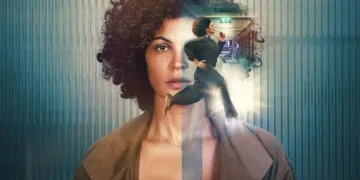
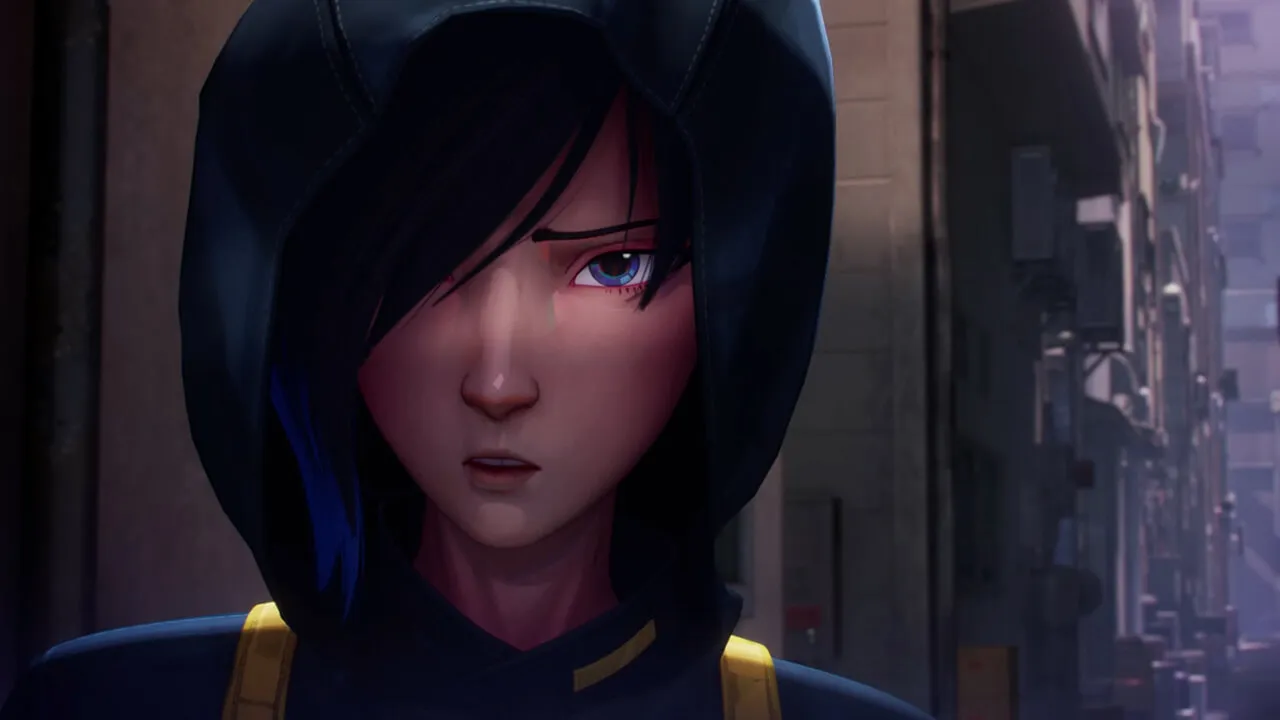
At the center of Tokyo Override is Kai, a teen hacker navigating a hyper-surveilled Tokyo. Kai isn’t your typical protagonist; she’s an “untagged” person who exists outside the city’s repressive digital system. Her life is one of seclusion and disobedience, distinguished by a quiet defiance of a world that considers her invisible.
With a brilliant mind and unrivaled hacking abilities, Kai seeks survival and a sense of purpose in a society where the weight of optimization crushes uniqueness. Her goals are intensely personal, driven by her outsider position and a desire to change the system that marginalizes her. Throughout her trip, Kai’s contacts with others—particularly the Suma Garage members—help her transform from a solitary figure to one who understands the significance of trust and community.
Suma Garage, the ragged group of rebels Kai joins, is the story’s pulsating heart. Each member offers something unique to the table: Hugo, the fatherly mentor with a flair for uniting the squad; Watari, the bright leader burdened with responsibilities; Spoke, the aloof yet fiercely loyal rider; and Yukio, the humorous relief who balances the group’s darker moments.
On the surface, they work as couriers. Still, their true objective is considerably more dangerous: they smuggle supplies, safeguard the untagged, and fight back against the city’s oppressive authority. The ensemble has a strong synergy, with each personality reflecting off the others authentically. The group’s newest member, Kai, challenges the established quo, adding tension and friendship.
The plot moves at a breakneck pace, transporting viewers to a world of high-stakes chases, audacious heists, and smoldering conspiracy theories. The series’ pulse-pounding action begins with Kai’s escape from the city’s law enforcement, the NARCs. Her initial contact with Suma Garage, a mission to evacuate vulnerable untagged youngsters, and uncovering a horrifying reality about Tokyo’s technological utopia all serve as watershed moments. As the tales intersect, the stakes escalate, pushing Kai and the rebels to confront not only their adversaries but also their limitations. Twists and surprises keep the story moving, culminating in a thought-provoking and action-packed outcome.
In Tokyo Override, characters and plot are inextricably connected, creating a story that is both emotionally and physically spectacular.
The Digital Dystopia of Tokyo Override: Themes and Reflections
Tokyo Override’s central theme is the difficult balance between technological development and human freedom. The series delves deeply into the conflict between convenience and autonomy, presenting a world where sleek hoverboards, self-driving automobiles, and drone-delivered ramen have supplanted effort and personal responsibility.
But this ease comes at a high cost: privacy and personal agency. In this hyper-optimized Tokyo, every inhabitant is tagged, and their every movement is tracked and reported in the name of sustaining efficiency. It’s a sobering reminder of how readily individuals trade freedom for comfort, only to find themselves stuck in a system prioritizing control over humanity.
The series also sharply portrays surveillance and tyranny. The government’s Digital Ministry monitors every individual, enforcing harsh restrictions to create a flawless society. This post-privacy world is a playground for AI-powered law enforcement, such as the unstoppable NARCs, who smash opposition with brutal precision.
The show does not shy away from the realities of living under such a dictatorship, where the veneer of tranquility conceals the iron grasp of fascism. Rebellion is at the center of the story in this repressive setting. Kai and the Suma Garage crew represent the spark of resistance—individuals struggling to restore their lives and identities in the face of a system that attempts to eradicate them.
Beyond its dystopian viewpoint, Tokyo Override reflects modern capitalism and materialism. The city’s gleaming neon lights and immaculate streets conceal a society where technological developments benefit only the elite. In a machine created to benefit from exclusivity, the untagged, excluded from this system, are cast aside like disposable components. The show examines this mismatch, revealing how consumerism-based institutions frequently increase societal gaps while selling the idea of equality.
Finally, Tokyo Override is more than a sci-fi adventure; it’s a stinging critique of the risks of unbridled technical power, as well as the human cost of putting profit and control before humanity and freedom.
A Neon Symphony: Animation and Action in Tokyo Override
Tokyo Override captivates with a visual style that exudes energy and innovation. The animation combines 3D models with impressionistic 2D textures, lending the series a bright, almost tactile sensation. Bright neon colors—electric blues, scorching yellows, and vibrant pinks—illuminate each shot, making the futuristic cityscape feel both overwhelming and captivating.
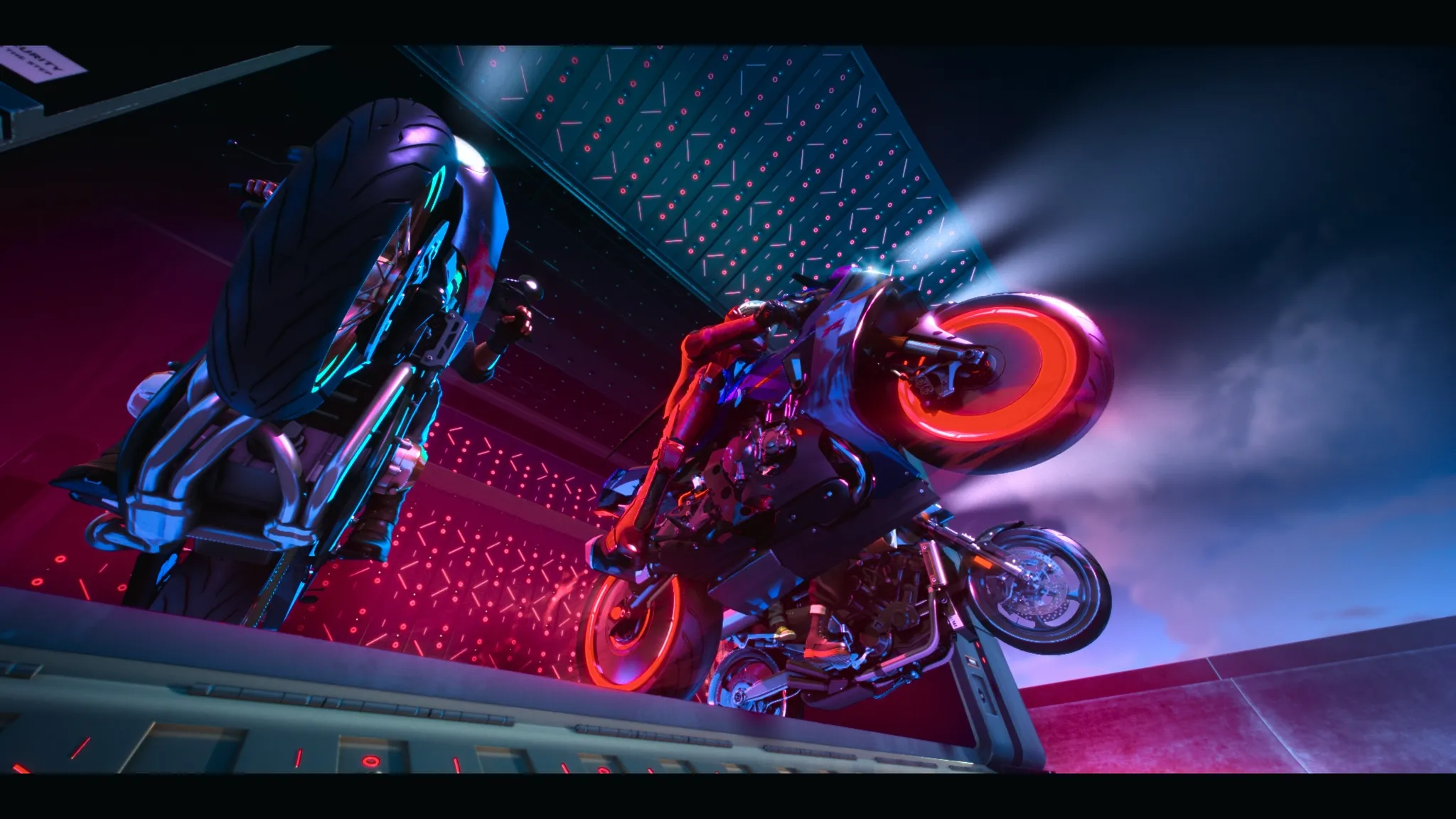
It’s tough not to detect the impact of films like Spider-Man: Into the Spider-Verse and Puss in Boots: The Last Wish since the show uses frame rates and flashy visual effects to communicate movement and emotion. As a result, the environment feels dynamic and realistic, with every detail—from the glittering city lights to the holographic displays—drawing you deeper into its bleak future.
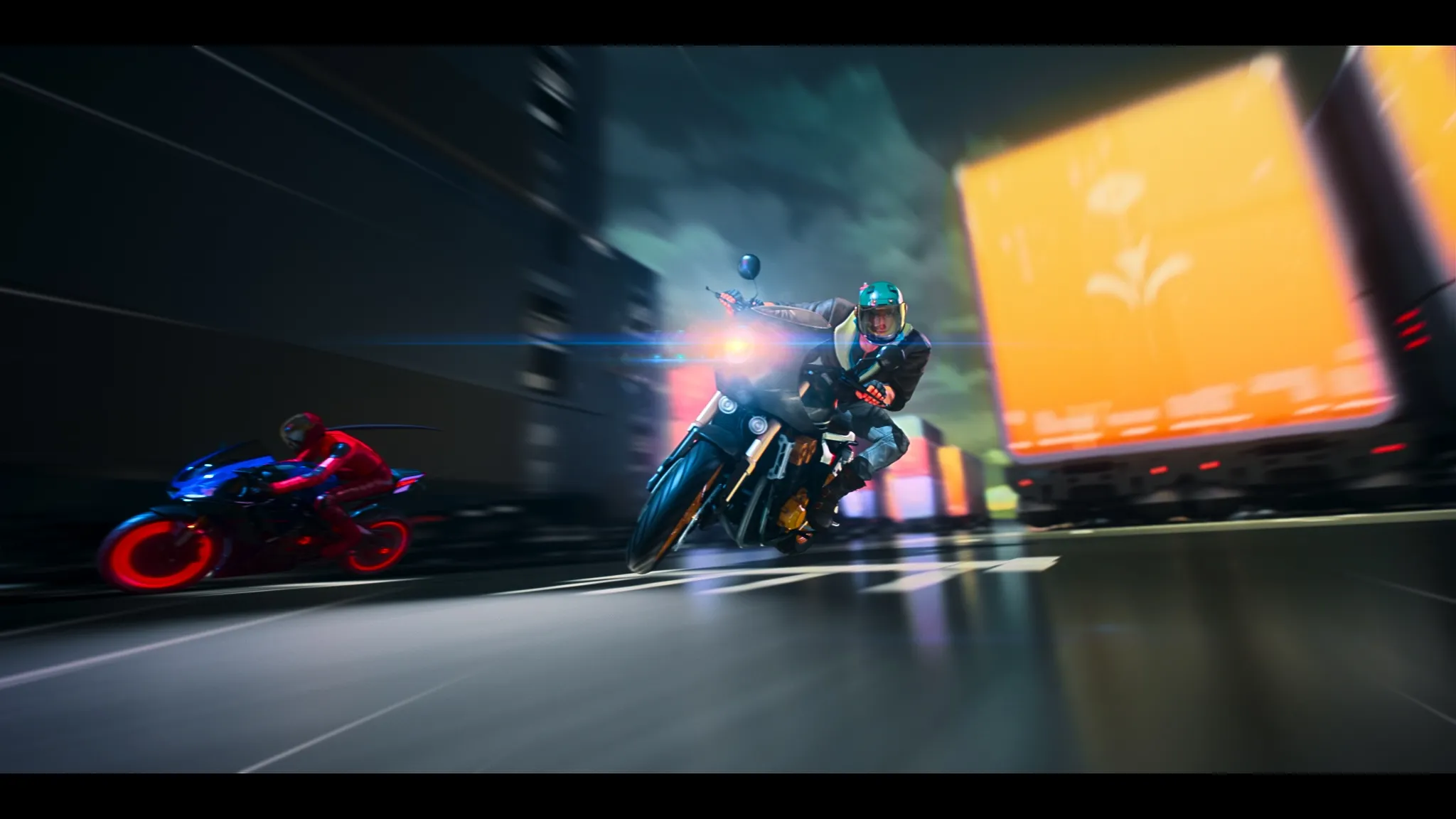
The action portions are where Tokyo Override shines. The show transforms into a kinetic thrill ride as soon as the motorcycles start. The pursuit scenes are expertly orchestrated, mixing flowing animation with excellent camera technique to convey a sense of speed and danger. One standout is the Tokyo Warp Grand Prix, a high-stakes race through the city’s winding streets that is as thrilling as visually gorgeous. The combination of hacking, high-speed maneuvers, and daring stunts makes these sequences visually appealing, solidifying the show’s status as a must-see for action fans.
While Tokyo Override succeeds at visual storytelling, the pacing can feel hectic. The six-episode format gives little room for the story to breathe, frequently racing past critical events that could have been explored more deeply. As a result, the plot sometimes feels cramped, with explanation competing for space with the action.
This hasty approach affects the characters as well. While Kai’s transformation from a loner hacker to a dedicated rebel is captivating, the supporting cast does not receive the same attention. Characters such as Watari, Hugo, and Spoke have unique personalities. Still, their arcs are sometimes overlooked in favor of progressing the main storyline.
Nonetheless, Kai’s evolution is a highlight of the series. Her journey serves as the show’s emotional basis, and her difficulties with identity and purpose are carefully addressed. Her interactions with the Suma Garage team, whether tense confrontations or quiet bonding, lend emotional weight to the fast-paced story. However, some subplots, such as the NARCs’ objectives or broader societal issues, appear underdeveloped, leaving viewers wanting more explanation and depth.
Despite its limitations, Tokyo Override is an entertaining trip. Its unrelenting speed may obscure some subtleties, but the intense action and beautiful animation more than compensate, resulting in an unforgettable experience.
Struggling to Keep Up: Pacing and Character Depth in Tokyo Override
One of Tokyo Override’s most notable challenges is its fast-paced gameplay. With only six episodes to tell a complex story, the plot feels like racing against the clock. Key moments that could have given emotional depth or world-building are rushed, giving the story little room to breathe.
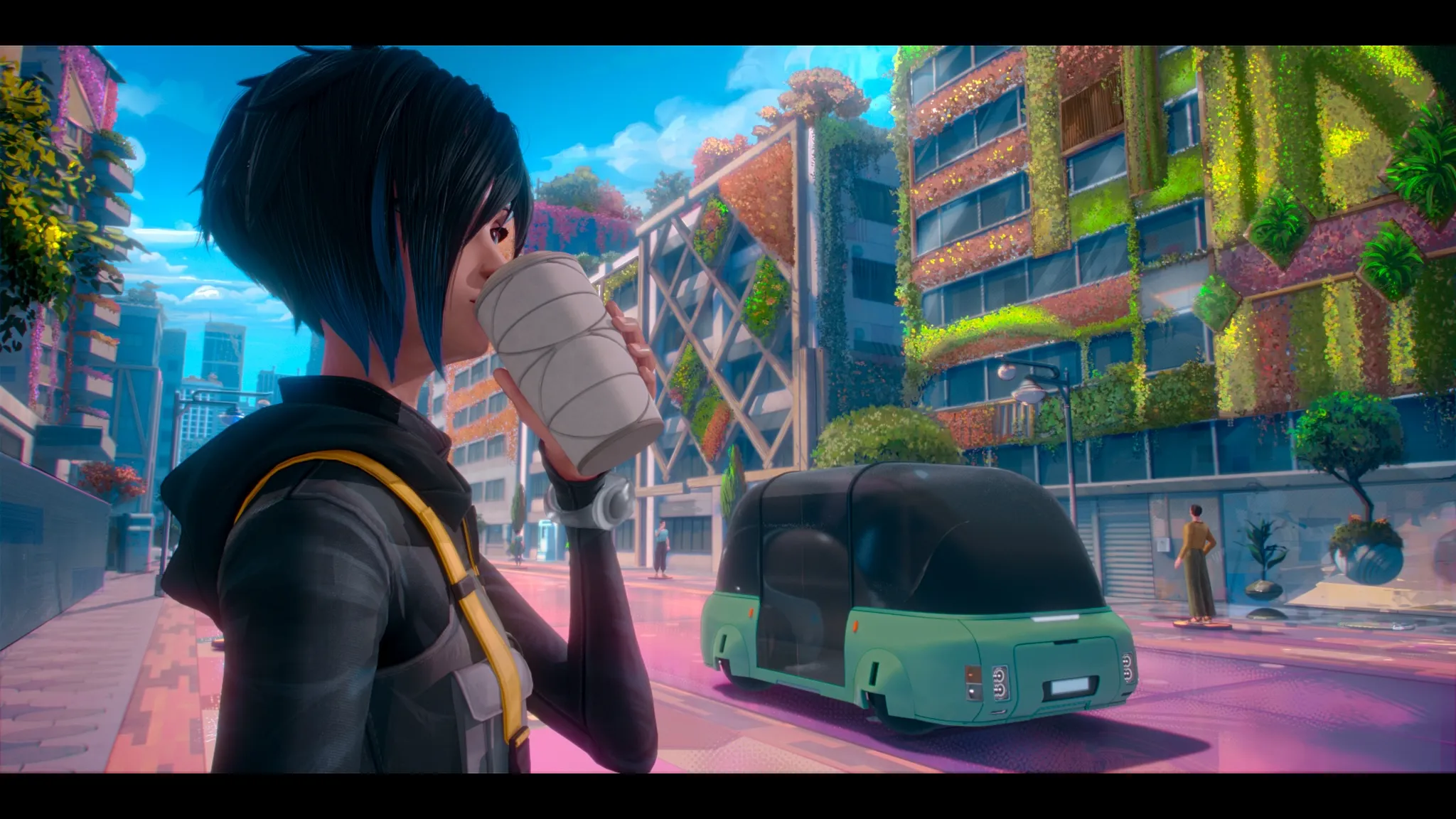
For example, the complex interactions between the city’s three districts—West, East, and Mid Tokyo—are introduced but not completely explored. Similarly, crucial events, like the rebels’ operations or the discovery of Tokyo’s buried secrets, frequently feel rushed, giving viewers just enough to keep up but not enough to truly immerse themselves in the stakes. This faster tempo compromises some emotional weight that may have made the story more powerful.
The pacing also influences character development, particularly among the supporting cast. While Kai’s storyline is undeniably the story’s focal point, her transformation from a solitary, moody hacker to a major member of the resistance is somewhat too quick to seem fully natural. Her motivations are fascinating, particularly as she fights to connect her rebellion with the greater fight for freedom. Yet, the quickness with which she joins the Suma Garage crew feels too convenient.
While bright and distinct, the supporting characters are not given enough time to develop. Hugo, the trustworthy mentor, hints at a deeper backstory but is mostly defined by his function as the team’s moral compass. Watari exudes leadership, although her fear and psychological issues are briefly discussed.
Spoke’s aloofness and Yukio’s wit give the group color, but their arcs never fully materialize. These characters are full of potential but frequently feel like passengers in a story that values action over analysis.
Despite its flaws, Tokyo Override produces poignant moments, particularly when the team’s togetherness comes through. Kai’s interactions with her new comrades hint at a deeper bond that could have grown stronger, given additional time. While the pacing may obscure some nuances, the show’s characters and quest for freedom remain compelling, if only on a surface level.
Crafting a Futuristic Vision: Technical and Creative Highlights
One of Tokyo Override’s best strengths is its amazing voice cast. Fairouz Ai performs as well as Kai, expressing the character’s gloomy despair and internal strife with nuanced emotional depth. Her portrayal strengthens Kai’s development from a solitary hacker to a determined rebel. Hugo is played by Ryota Takeuchi, who exudes a warm, powerful presence and represents the team’s steadfast guidance.
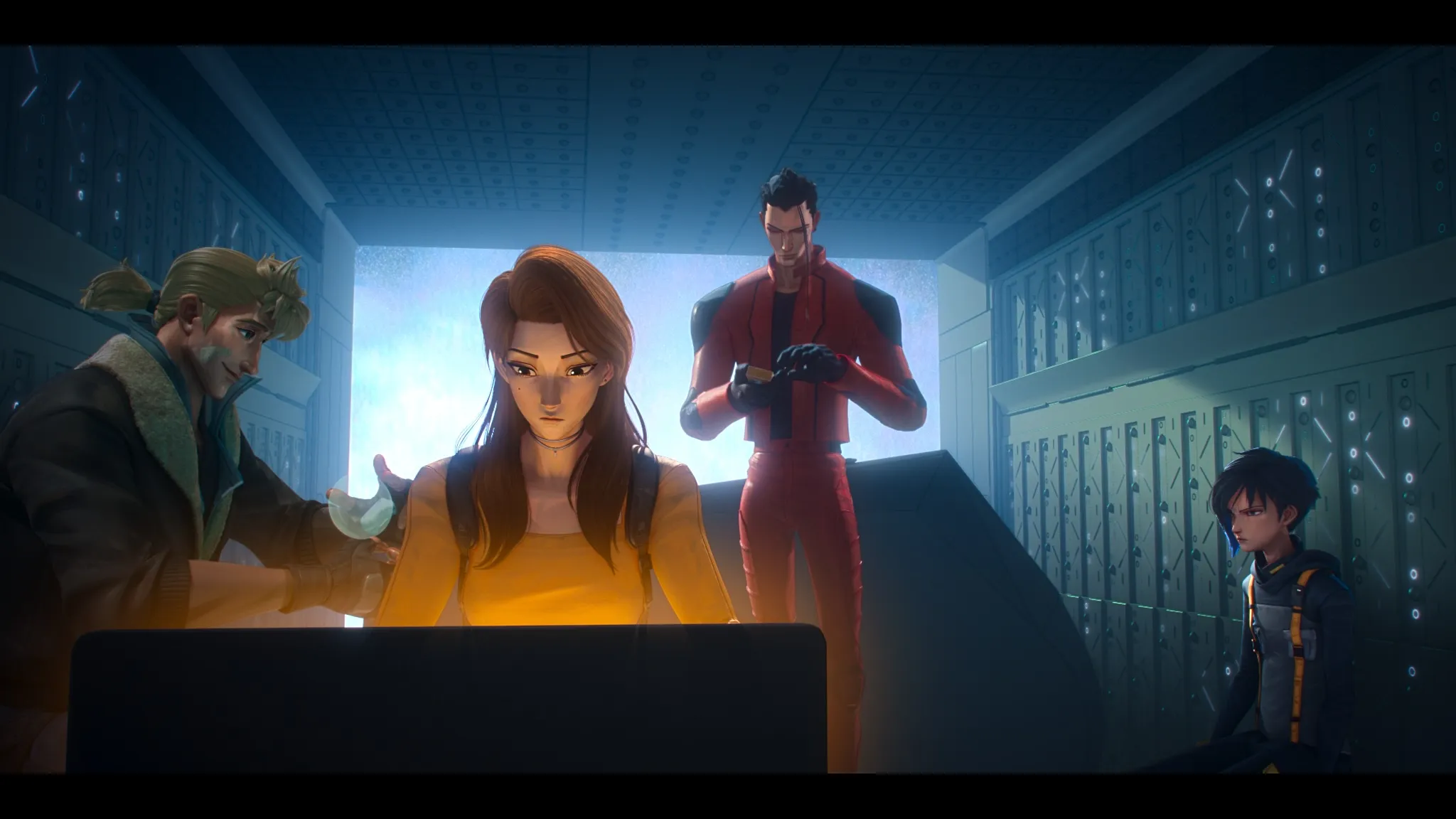
Mariya Ise shines as Watari, expertly blending her character’s leading role with a hint of vulnerability. Meanwhile, Tomoaki Maeno’s Spoke and Shigeru Chiba’s Yukio provide personality and depth to the group, with their performances creating distinct personalities. Hochu Otsuka’s portrayal of the frightening Kageyama is particularly noteworthy. His voice oozing with authority and malice makes every interaction with the NARC leader unsettling.
Tokyo Override shines creatively in terms of world creation. The series depicts a colorful, dystopian, futuristic, and frighteningly plausible Tokyo. The combination of hyper-optimized technology and repressive surveillance creates a disturbing backdrop. At the same time, the concept of tags and the exclusion of the untagged provides a scathing critique of modern society’s rising obsession with data and exclusivity.
Thematically, the show addresses serious issues such as freedom, revolt, and the cost of technological innovation, smoothly blending them into the action-packed story. Tokyo Override stands out for its colorful, neon-soaked visuals and innovative action scenes, making it a rich, thought-provoking experience that is both amusing and educational.
A Thrilling Ride Through a Digital Dystopia
Tokyo Override is a visually gorgeous and thought-provoking trip through a futuristic Tokyo drenched in neon and plagued by the horrors of unrestrained technology. Its strengths include bright animation, exhilarating action sequences, and daring world-building, all of which bring to life a civilization torn between convenience and freedom.
While the show’s pacing can sometimes feel rushed, leaving certain supporting characters underdeveloped, Kai, the major protagonist, grounds the story with a gripping arc of rebellion and self-discovery.
Tokyo Override is a must-see for sci-fi and anime fans, particularly those who enjoy cyberpunk revolt ideas and slick, high-octane imagery. It’s a brief, action-packed series that has enough style and depth to leave an impact. Stream it.
The Review
Tokyo Override
Tokyo Override is a visually engaging and action-packed journey into a dystopian future, combining superb animation with high-energy storytelling. While the magnificent world-building and exhilarating pursuit sequences make it an entertaining watch, the rushed pacing and underdeveloped supporting characters prevent it from realizing its full potential. Despite these weaknesses, the series provides a fascinating narrative for sci-fi and anime fans, packed with social commentary and spectacular action that makes an impact.
PROS
- Stunning and vibrant animation with a neon-soaked, futuristic aesthetic.
- Thrilling, high-octane action sequences, especially the chase scenes.
- Thought-provoking themes that explore technology, surveillance, and societal control.
- Creative world-building that makes Tokyo’s dystopian future immersive and believable.
- Strong voice performances, especially from Fairouz Ai as Kai and Hochu Otsuka as Kageyama.
CONS
- Rushed pacing that leaves little room for deeper exploration of key themes.
- Supporting characters lack development, limiting their emotional impact.
- Some subplots feel underexplored or abruptly resolved.
- The six-episode format compresses the narrative, sacrificing complexity.
- Moments of emotional depth are overshadowed by the focus on action.