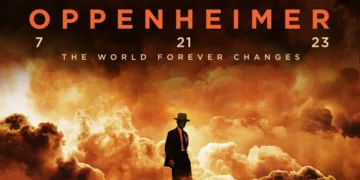



























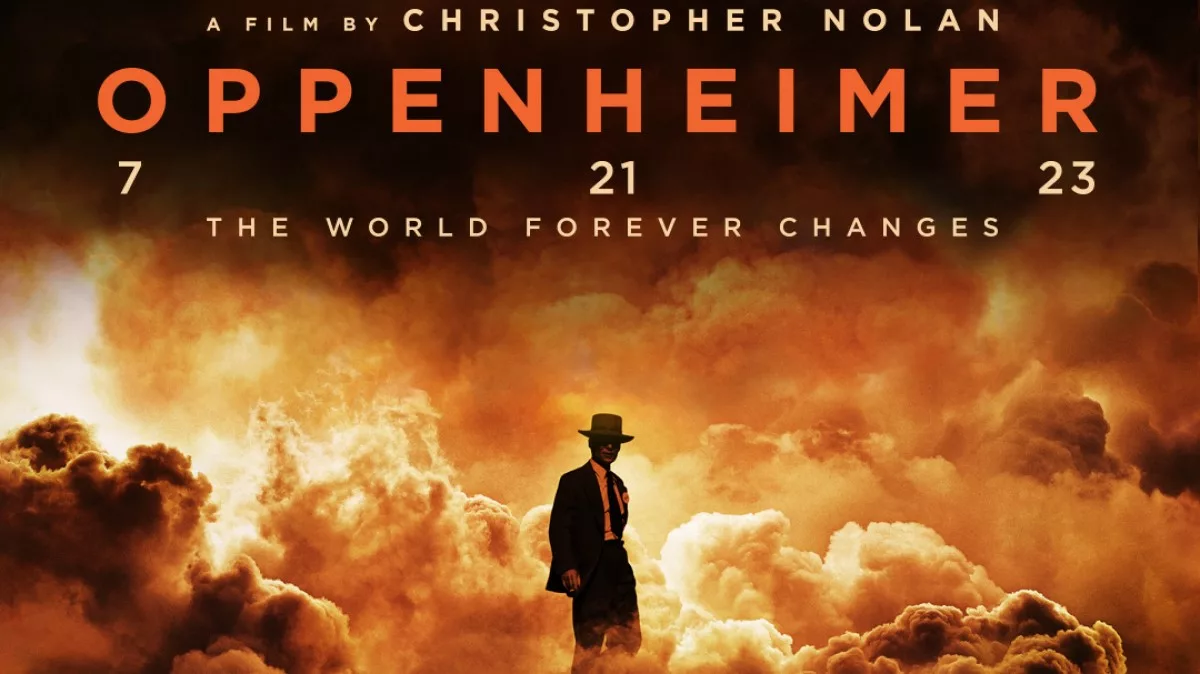

At the helm of his latest cinematic venture, acclaimed director Christopher Nolan brings to the big screen a story rooted in stark reality. Presenting a departure from his earlier works that have danced between the surreal and fantastic, Nolan embarks on an expedition to translate the true story of J. Robert Oppenheimer into a vivid cinematic masterpiece. Known as the father of the atomic bomb, Oppenheimer is a figure both fascinating and complex, making him an ideal protagonist for a narrative drama that Nolan has yet to tackle till now.
Opening on July 21st, “Oppenheimer” promises a deep dive into the life of this pivotal figure, wrapped in a cloak of Nolan’s signature storytelling style. The film, which is adapted from the Pulitzer-prize winning biography, “American Prometheus,” weaves together threads of history, science, politics, and personal drama.
At the heart of this ambitious undertaking is Irish actor Cillian Murphy, entrusted with embodying the character of Oppenheimer. The impressive ensemble cast includes household names such as Emily Blunt, Kenneth Branagh, and Robert Downey Jr., each bringing their unique flair to this complex tale.
While the film stands tall on the pillars of historical importance and compelling subject matter, it is also supported by a director renowned for his knack for stunning storytelling and creating riveting cinema. The world waits with bated breath as Nolan steps into the uncharted terrain of a fact-based character drama. Will he be able to maintain his awe-inspiring momentum, or will this new venture chart a different course for the famed director? Only time will tell. Stay tuned for our Oppenheimer review.
Treading the Timeline: The Story of “Oppenheimer”
Christopher Nolan’s “Oppenheimer” serves up an intimate, tightly woven narrative that unfurls around the enigmatic and intriguing figure of J. Robert Oppenheimer. The film meticulously follows the trajectory of Oppenheimer’s life, gradually exposing his transformation from a curious student captivated by the realm of quantum physics to the respected academic whose intellect would be a key in unlocking the secrets of the universe.
The film’s narrative, adapted from the Pulitzer-Prize winning biography, “American Prometheus,” seeks to shed light on the unexplored corners of Oppenheimer’s life. At the heart of the tale is the tension of a man whose profound curiosity about the universe’s core aspects leads him to discover an instrument of unparalleled destruction – the atomic bomb. Yet, his achievement comes wrapped in the grim reality of its potential for devastation, introducing a moral quandary that shadows Oppenheimer’s legacy.

Nolan paints a panorama of Oppenheimer’s life, starting from his early days as an outstanding, albeit troubled, student. The story subsequently evolves to depict his rise as a respected academic and eventually leads us to his most contentious role yet – the chief architect of the atomic bomb. Alongside Oppenheimer’s journey, we meet other notable physicists of the time like Niels Bohr, portrayed by Kenneth Branagh, and Werner Heisenberg, played by Matthias Schweighöfer. These interactions give a broader perspective of the relentless arms race during the era.
A significant subplot of the film navigates Oppenheimer’s tumultuous personal life. It showcases his complex relationship with Jean Tatlock, a Communist psychiatrist portrayed by Florence Pugh, and his eventual marriage to Kitty, brought to life by Emily Blunt. Through these relationships, we get to see the fallible man behind the atomic bomb – a glimpse that is both intriguing and crucial to understanding his character.
As we proceed towards the film’s climax, the narrative meticulously constructs the tense moments leading up to the historic test of the atomic bomb in the deserted expanses of New Mexico. Yet, Nolan doesn’t stop at the detonation. The aftermath is just as critical in shaping Oppenheimer’s life, a period marked by political intrigue, backroom dealings, and an eventual fall from grace, as portrayed in his 1954 security hearing. Nolan’s “Oppenheimer” is a complex tapestry of the man, the physicist, the lover, and the tragic hero, offering viewers an intricate view of one of history’s most compelling figures.
“Uncover the moral conflicts faced by one of history’s greatest minds in our Einstein and the Bomb review. Delve into the complexities of Einstein’s role in the development of the atomic bomb and the profound impact on his conscience.”
Delving Deep into the Characters: A Study of “Oppenheimer’s” Performances
The true measure of any film’s success lies not just in its storytelling but in the performances that bring the story to life. In “Oppenheimer,” Christopher Nolan has assembled an exceptional ensemble of talented actors who, through their masterful performances, breathe life into their respective characters, illuminating the narrative’s many intricate layers.
Cillian Murphy as J. Robert Oppenheimer
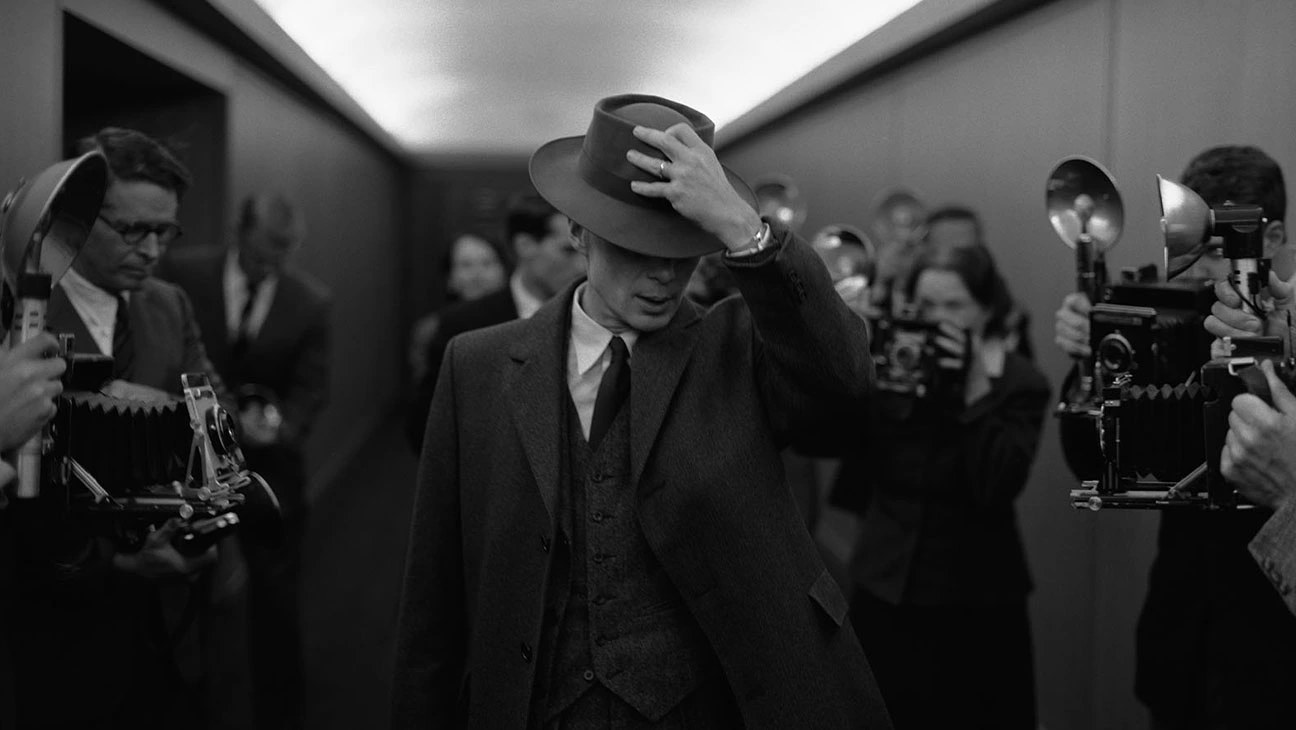
At the center of the film’s universe is the character of J. Robert Oppenheimer, flawlessly brought to life by Cillian Murphy. His portrayal of Oppenheimer is deeply nuanced, capturing the paradoxical essence of the physicist with commendable skill. Murphy’s Oppenheimer is not only a genius who grapples with profound ideas that reshape human understanding of the universe, but also a fallible man burdened by the weight of his own monumental discovery.

Murphy’s performance is a masterclass in character study. He succeeds in channeling the eerie, commanding aura of Oppenheimer, deftly walking the tightrope between a man haunted by the potential consequences of his work and one consumed by the pursuit of knowledge. As Oppenheimer, Murphy navigates the character’s varying emotional landscapes, showcasing the scientist’s intellectual fascination with the unknown and his inner turmoil with remarkable credibility.
Florence Pugh and Emily Blunt
The women in Oppenheimer’s life are just as pivotal to the narrative. Florence Pugh’s Jean Tatlock is a Communist psychiatrist with whom Oppenheimer shares a complicated love affair. Pugh’s Tatlock is a fiercely independent woman, and her performance lends depth to the character, serving as a complex foil to Murphy’s Oppenheimer. The pair’s chemistry underscores the tumultuous nature of their relationship, adding a captivating layer to the film.
Emily Blunt as Kitty, Oppenheimer’s wife, offers a performance as a woman battling loneliness and alcohol, yet remaining deeply invested in her husband’s evolving legacy. Blunt imbues Kitty with strength and vulnerability, making her a formidable presence in Oppenheimer’s life and the narrative as a whole. Together, Pugh and Blunt create a compelling duality that helps to further unravel the character of Oppenheimer, preventing the film from veering too far into cerebral abstraction.
The Ensemble Cast
Rounding out the cast are performances by notable actors like Josh Hartnett, Matt Damon, and Benny Safdie, who each leave their distinctive mark in the narrative. As part of Oppenheimer’s team, they bring to life the fervor, intrigue, and tension that marked the epoch-defining journey of building the atomic bomb. Their performances capture the blend of determination, fear, and moral conflict that permeated this monumental period in history.
Robert Downey Jr. as Lewis Strauss
Last but not least is Robert Downey Jr.’s gripping portrayal of businessman and Atomic Energy Commission chair Lewis Strauss. Downey Jr. successfully embodies the insidious nature of Strauss, adding a layer of high-stakes political maneuvering to the film. His performance in the final quarter of the film, where the narrative shifts from the scientific to the political, amplifies the tension and complexity of the story, accentuating the intricate intertwining of science and politics.
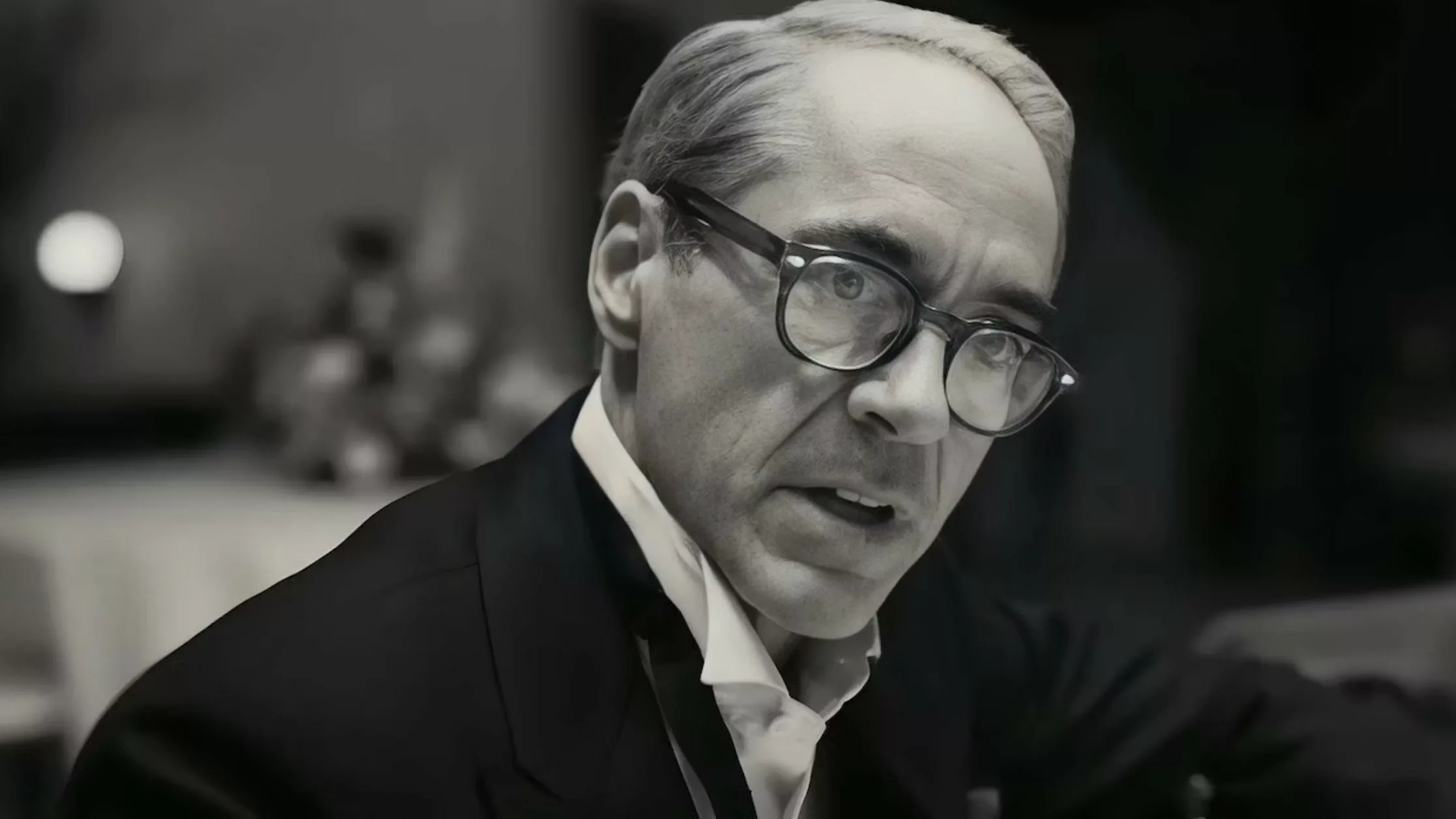
The cast of “Oppenheimer” delivers an ensemble performance that is nothing short of remarkable. Each actor meticulously breathes life into their character, offering a multi-faceted exploration of the narrative. Their performances form a captivating mosaic, contributing to the film’s insightful and thought-provoking exploration of one of history’s most influential figures, J. Robert Oppenheimer.
The Art of Visual Storytelling: Cinematography and Score in “Oppenheimer”
While a film’s narrative and performances form its heart and soul, it’s the cinematography and score that shape its aesthetic backbone, tying the story and characters together in an audiovisual symphony. In “Oppenheimer,” these elements – meticulously crafted by Hoyte van Hoytema and Ludwig Göransson respectively – elevate the narrative to an entirely new plane, lending the film a unique rhythm and vibrancy that leaves a lingering impression.
The Power of the Lens: Hoyte van Hoytema’s Cinematography
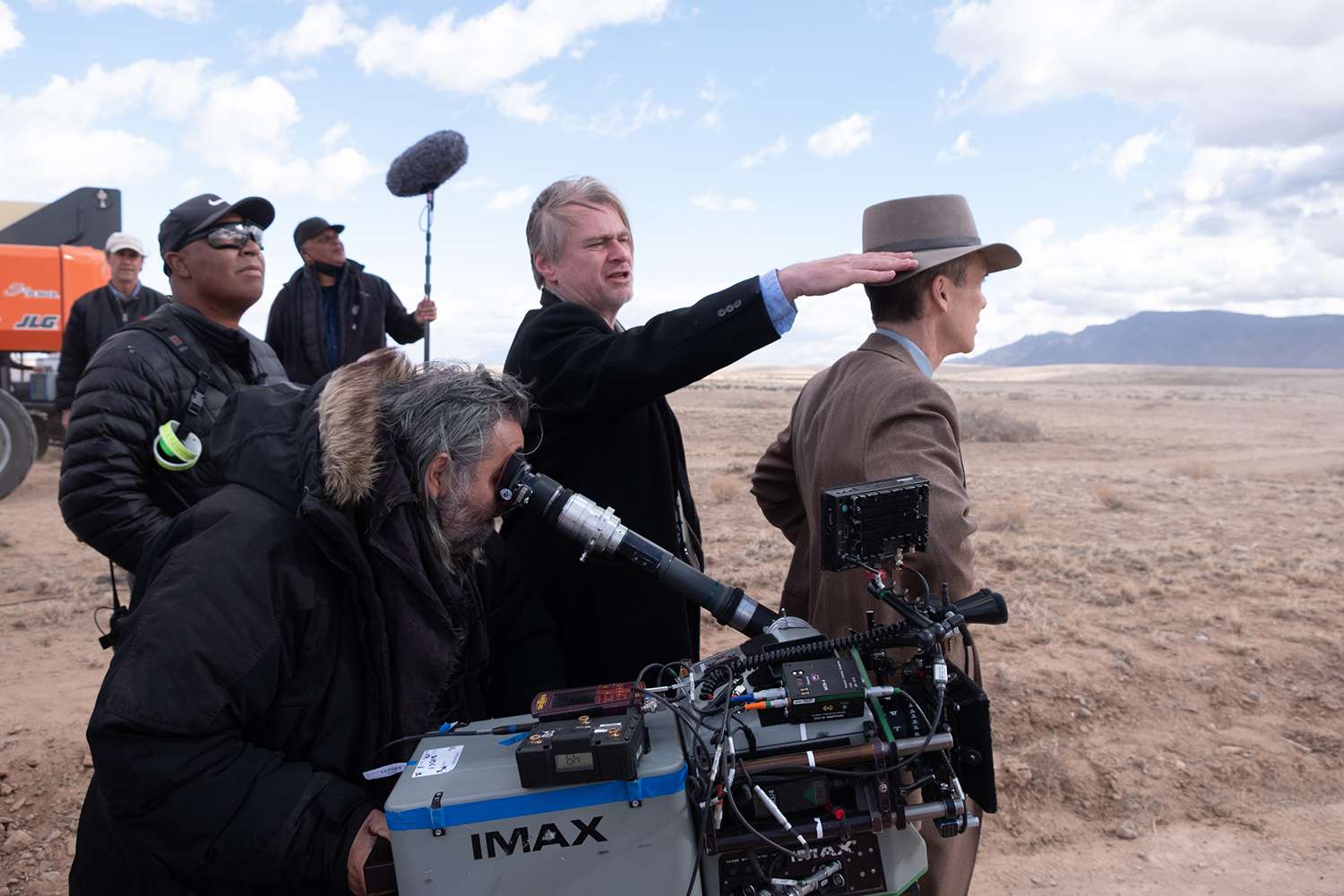
The visual presentation of “Oppenheimer” is spearheaded by none other than Hoyte van Hoytema, a regular collaborator of Christopher Nolan. Van Hoytema’s camerawork is an essential character in itself, playing a crucial role in shaping the viewer’s perception of the story.
Van Hoytema’s cinematography captures the essence of Oppenheimer’s life, drawing the viewer into the narrative with its whirlwind presentation of key scenes. From the hushed intensity of the university lecture halls to the high-stakes tension of clandestine meeting rooms, the film’s visual style is immersive and evocative. The camera darts, dips, and dives, masterfully capturing the atmosphere of relentless progress and impending doom that pervades the narrative.
The cinematography takes us through a journey from the bustling intellectual hubs where ideas are born to the stark, lunar-like deserts of New Mexico where those ideas take a terrifying physical form. The visual aesthetic of the film encapsulates the stark contrast between the world of the mind and the harsh realities that these minds create, and van Hoytema’s work becomes a pivotal part of the storytelling.
The Melodies of Drama: Ludwig Göransson’s Score
Complementing the captivating visuals is Ludwig Göransson’s riveting score. His music punctuates the narrative, heightening the emotional stakes and underscoring the narrative arcs with a pulsating rhythm that mirrors the film’s escalating tension.
Göransson’s score is a character in its own right. It throbs with the pulse of the film, swells with the grandeur of the scientific discoveries, and diminishes into quiet murmurs in moments of personal introspection. It ebbs and flows with the story, setting the tone and pace of the narrative. From the intellectual exhilaration of scientific discovery to the dread-filled realization of its consequences, the score forms the emotional undercurrent of the film, binding the narrative threads together.
The cinematography and score of “Oppenheimer” serve as a testament to the power of visual and auditory storytelling. Together, they form an integral part of the film’s narrative fabric, contributing to the viewer’s immersion in Oppenheimer’s complex world. With Hoyte van Hoytema’s visually arresting cinematography and Ludwig Göransson’s evocative score, “Oppenheimer” becomes an engaging cinematic experience that resonates on multiple levels.
Connecting the Past and the Present: Historical Context and Framing in “Oppenheimer”
Every film, especially those based on true stories, carries the weight of history within its narrative. “Oppenheimer” is no exception, as it meticulously weaves the personal journey of J. Robert Oppenheimer into the fabric of one of humanity’s most transformative epochs – World War II and the genesis of the atomic bomb.
The film makes a deliberate choice to place Oppenheimer’s story against the larger backdrop of a world at war. The fear of Nazi Germany achieving atomic power before the Allies infuses the narrative with an inescapable urgency, lending an almost tangible weight to the scientific endeavors of Oppenheimer and his colleagues. These external pressures, combined with Oppenheimer’s internal torment, create a layered exploration of the ethical and moral implications of science in service of war.
One of the film’s most powerful narrative tools is its framing device – the 1954 security hearing that saw Oppenheimer stripped of his security clearance. This historical event serves as a poignant punctuation in the film, enabling it to delve deeper into the aftermath of Oppenheimer’s contribution to the war and how it impacted his life. Through this, “Oppenheimer” effectively weaves the personal and the historical, offering a comprehensive view of the era, its hero, and the profound ethical questions his actions sparked.
The film doesn’t shy away from showcasing the tense political maneuvering prevalent during this time, particularly the machinations of businessman and Atomic Energy Commission chair Lewis Strauss. By making space for these narratives, “Oppenheimer” manages to provide a multifaceted perspective on a historical period often reduced to its most explosive outcome.
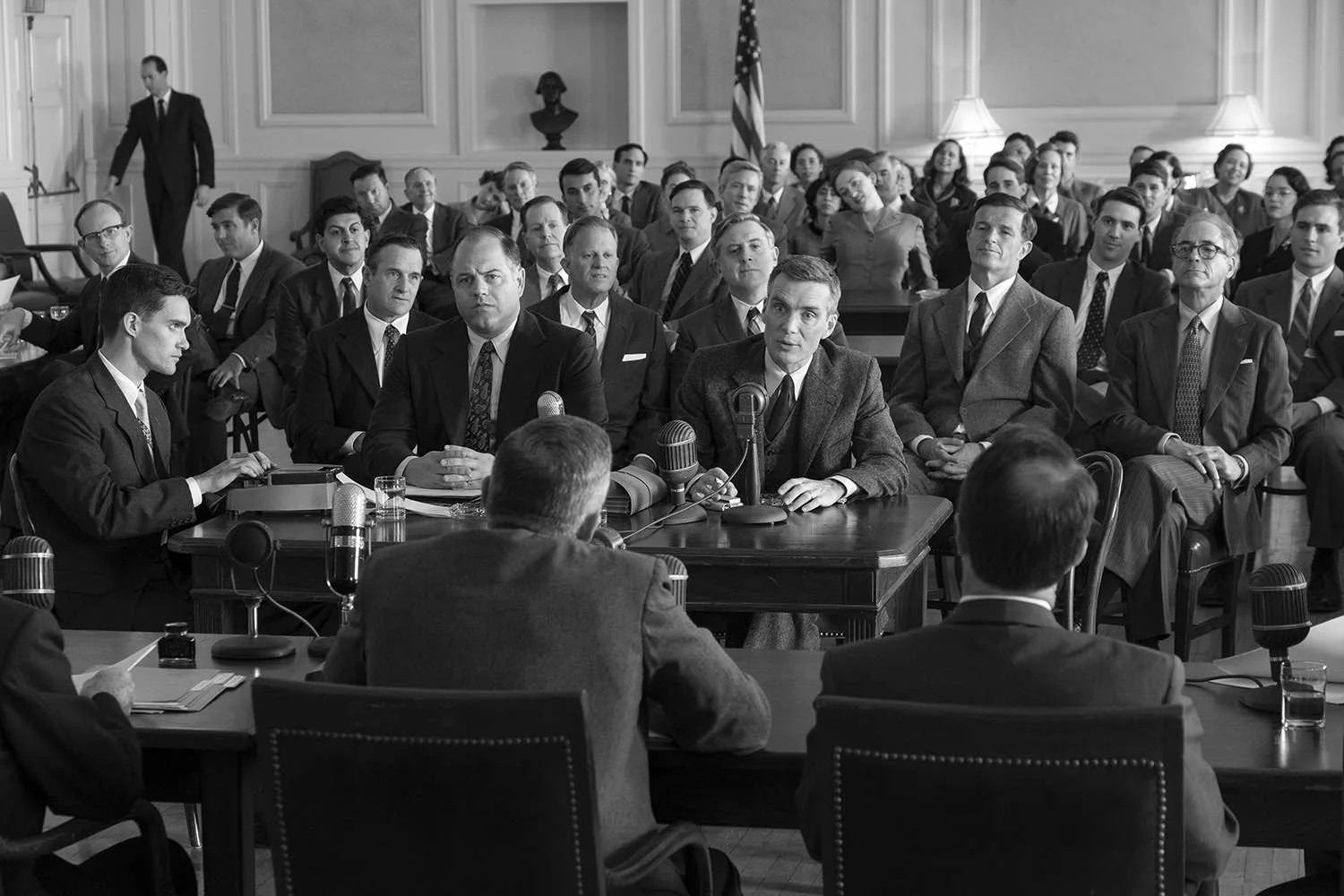
In this way, “Oppenheimer” serves not only as a biopic but also as an incisive exploration of a critical chapter in human history. By seamlessly intertwining Oppenheimer’s story with the broader narrative of World War II and the dawn of the atomic age, the film offers a profound examination of how personal ambitions, scientific breakthroughs, and global politics collide to shape our collective history.
Exploring Ethical Labyrinths: Themes and Implications in “Oppenheimer”
Christopher Nolan’s “Oppenheimer” is a film ripe with introspection and ethical dilemmas, serving as a mirror to society’s moral complexities. The film doesn’t shy away from confronting one of history’s most provocative quandaries – is the pursuit of scientific discovery justified, even when it leads to the creation of something as deadly as the atomic bomb?
From Oppenheimer’s inner struggles to the ideological conflicts among his team and the political machinations in the backdrop, the film raises thought-provoking questions about the essence of scientific endeavor. How much can we stretch our moral compasses in the name of progress? And what price are we willing to pay for that progress?
These deep-seated issues form the heart of “Oppenheimer”. The film’s examination of the ethical implications of creating the atomic bomb helps highlight the double-edged nature of scientific progress, a theme that resonates as much today as it did during World War II. The invention of the atomic bomb, a monumental scientific achievement, also ushered in an era of unprecedented destruction, forever altering our relationship with technology and progress.
Nolan masterfully navigates the delicate balance between celebrating the ingenuity behind such a transformative discovery and acknowledging its devastating consequences. By doing so, he implores the audience to grapple with these ethical conundrums and reevaluate their understanding of progress and its true cost. It’s this thoughtful exploration of moral dilemmas that makes “Oppenheimer” not just a biopic, but also a compelling philosophical inquiry into the human condition.

Contrasting Canvases: “Oppenheimer” in Comparison with Nolan’s Filmography and Other Historical Dramas
In a career that has taken audiences from the labyrinthine depths of the human mind to the furthest reaches of outer space, Christopher Nolan’s “Oppenheimer” represents a refreshing departure from his previous works. Known for his spectacle-driven narratives, Nolan’s exploration of the human condition in “Oppenheimer” is far more introspective and grounded. Instead of immersing us in twisting timelines or cerebral puzzles, Nolan presents us with a character-driven tale that trades visual spectacle for psychological depth.
“Oppenheimer” is Nolan’s first foray into the domain of historical biopics, a genre that stands apart from his previous offerings. Nolan’s signature approach, however, remains intact. Just like in his mind-bending masterpieces such as “Inception” or “Interstellar”, Nolan continues to challenge his audience. But the questions posed in “Oppenheimer” are not about the nature of reality, but about the nature of morality, progress, and the human spirit.
Comparing “Oppenheimer” to other historical dramas of similar gravity, a parallel can be drawn to Oliver Stone’s “JFK”. Both films venture into the intricate web of politics and personal turmoil, meticulously probing the depths of their protagonists’ psyche. Like “JFK”, “Oppenheimer” doesn’t merely recount historical events; it dissects them, casting a critical eye on the motives and machinations that underscore them.
Yet, where Stone and Nolan diverge is in their narrative focus. While Stone’s “JFK” hinges heavily on the political intrigue and conspiracy, “Oppenheimer” juxtaposes political drama with an intimate portrait of a man ensnared by his own brilliance. Nolan’s emphasis on Oppenheimer’s internal struggles and relationships provides a more humanistic perspective that complements the film’s grander historical narrative. This duality makes “Oppenheimer” a unique addition not only to Nolan’s filmography but to the canon of historical dramas.
Final Reflections: “Oppenheimer” and Its Lasting Impression
As the curtains close on Christopher Nolan’s “Oppenheimer”, we are left with a profound sense of respect – respect for the tremendous human spirit encapsulated in the film, respect for the immense burden borne by those in the eye of historical tumult, and respect for the power of cinema to depict such intense human experiences with profound authenticity.
“Oppenheimer” isn’t a film that will merely dazzle with spectacular visuals or tantalize with plot twists. Instead, it will challenge you, provoke you, and make you grapple with difficult questions about morality, humanity, and progress. It is a film that unfolds with the nuance of a novel, each scene layered with intricate meaning and deep sentiment. It’s a narrative rich in context, steeped in history, and replete with all the complexities of human nature.
In many ways, “Oppenheimer” underscores Nolan’s flexibility and range as a filmmaker. Known for his surrealistic science fiction and complex thrillers, Nolan effortlessly traverses into the realm of historical drama, demonstrating that his directorial prowess knows no bounds. His exceptional storytelling, coupled with the evocative performances by the ensemble cast, has resulted in a film that holds its audience captive from the opening scene to the closing credits.

On a larger scale, “Oppenheimer” renews the conversation about the role and responsibility of cinema in shaping our understanding of history. Through its detailed depiction of Robert Oppenheimer’s life and the ethical complexities surrounding the atomic bomb’s creation, the film pushes audiences to grapple with history’s darker shades. It provokes reflection not just on past events, but also on how these events continue to echo in our present realities.
Moreover, “Oppenheimer” contributes to the ongoing dialogue about the evolving nature of biopics. While conventional biopics have often focused on providing an overarching view of a subject’s life, “Oppenheimer” digs deeper, presenting a complex portrait of a man caught in the maelstrom of world-changing events. Its focus on personal struggles and moral dilemmas as much as historical events serves as a potent reminder of the potential depth and complexity that biopics can achieve.
In essence, “Oppenheimer” stands as a testament to the power of cinema to explore and illuminate the depths of the human condition. It’s a masterclass in film-making that demonstrates how a historical drama, much like any other genre, can leave a lasting impression. The impact of “Oppenheimer” extends beyond the walls of the cinema, resonating within the minds and hearts of the audience, making us ponder on the complexities of history and the human spirit.
The Review
Oppenheimer
"Oppenheimer" is an artistic triumph, a film that combines the meticulousness of historical research with the subtlety of emotive storytelling. Under Christopher Nolan's expert guidance, it becomes a memorable cinematic journey into a pivotal chapter of human history, revealing both the triumphs and tragedies that lay therein. Bolstered by remarkable performances, captivating visuals, and a haunting score, it's a film that invites us to reflect, question, and understand our past in profound new ways. "Oppenheimer" is more than a movie—it's an experience, a masterful ode to the human spirit that lingers long after the credits roll. An absolute must-watch!
PROS
- Compelling Storytelling: Christopher Nolan's skillful storytelling keeps the audience engaged throughout "Oppenheimer," blending historical events with personal struggles to create a captivating narrative.
- Exceptional Performances: The film boasts an outstanding ensemble cast, with Cillian Murphy delivering a nuanced portrayal of J. Robert Oppenheimer. The performances by Florence Pugh, Emily Blunt, and the supporting cast add depth and complexity to the characters.
- Meticulous Cinematography: Hoyte van Hoytema's cinematography is visually stunning, effectively capturing the contrasting settings and emotional tones of the film. The cinematography adds an immersive quality to the storytelling.
- Evocative Score: Ludwig Göransson's score enhances the film's emotional impact, effectively punctuating key moments and capturing the tension and drama of the narrative. The score complements the storytelling and elevates the viewing experience.
- Thought-Provoking Themes: "Oppenheimer" delves into deep ethical dilemmas surrounding scientific progress and the consequences of the atomic bomb. The film prompts introspection and sparks meaningful conversations about the human condition and our collective history.
- Historical Context and Framing: By placing Oppenheimer's story within the broader historical context of World War II and the atomic age, the film provides a comprehensive exploration of the era and its implications. It successfully weaves personal and historical narratives together.
CONS
- Slow Pacing: Some viewers may find the film's deliberate pacing to be slow, especially in the exploration of Oppenheimer's personal life. The film's measured approach may not resonate with those seeking a faster-paced narrative.
- Lack of Spectacle: Compared to Christopher Nolan's previous works known for their grand spectacles and mind-bending concepts, "Oppenheimer" takes a more subdued approach. This may disappoint audiences expecting a similar level of visual spectacle.
- Limited Character Development: While the film offers glimpses into Oppenheimer's personal life and struggles, some characters, particularly the supporting cast, may feel underdeveloped. This limits the emotional connection viewers may have with certain characters.
- Lack of Historical Depth: While "Oppenheimer" touches upon the ethical implications of the atomic bomb's creation, some viewers may desire a more extensive exploration of the historical and political context surrounding Oppenheimer's work and its impact on the world stage.