


















Iconoclastic filmmaker Abel Ferrara is no stranger to pushing boundaries. Known for gritty urban tales like Bad Lieutenant and Ms .45, his cinema blends religious obsession and moral ambiguity. Turn in the Wound sees Ferrara bringing his idiosyncratic lens to the war in Ukraine. Teaming with punk priestess Patti Smith, he crafts an unorthodox patchwork, juxtaposing Smith’s haunting performances with first-hand testimonies from the frontlines.
It’s an odd pairing on paper. Yet through jagged montage, Ferrara makes it work – mostly. Smith’s otherworldly presence gives the film its anchor. Reciting Rimbaud and Artaud, she transforms the performance space into a shadowy underworld. Her gnomic vocals accompany combat footage and interviews with shell-shocked soldiers.
The effect is hypnotic and unsettling. As Ferrara cuts between art and life, poetry and death, he questions what role creation can play amidst suffering. Can beauty provide relief, redemption, a ray of hope? Or is it helpless to salve humanity’s wounds? Ferrara offers no easy answers. But in rubbing our faces in war’s chaos, he compels us to confront its hardest truths. Audacious and ambiguous, Turn in the Wound captures a daring director at his most provocative.
Patti Smith: Punk Shaman, War Poet
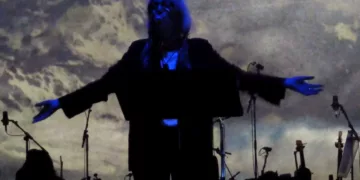
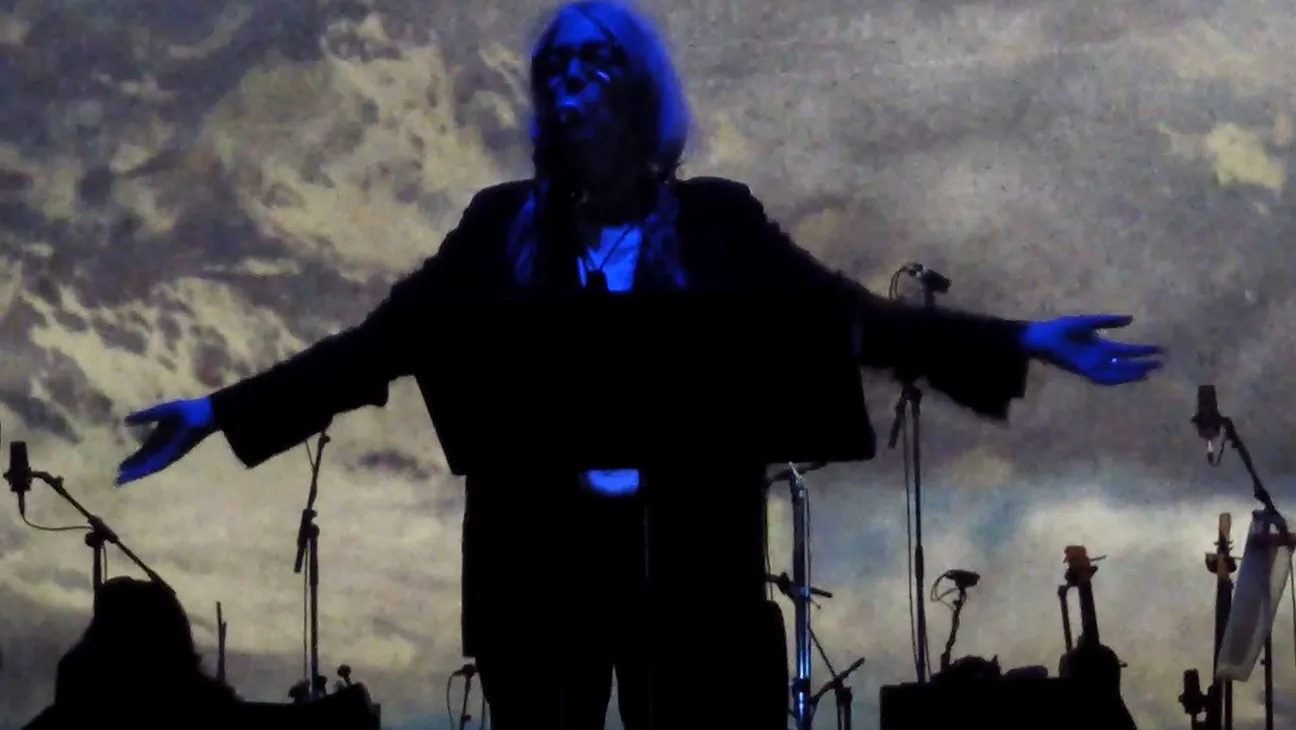
Patti Smith has always blurred lines. Poet, musician, rebel icon – her protean talent transcends categories. In Turn in the Wound, the punk godmother is shaman and soothsayer, channeling spirits amidst the fog of war. Performing alongside daughter Jesse Paris Smith, Smith transforms the stage into a ritual space. Through hypnotic vocals and abstract imagery, she opens an oneiric portal to funds depths of humanity’s psyche.

Her voice careens from melodic incantation to rhythmic sprechgesang. As she chants poems by Rimbaud and Artaud, Smith inhabits language, rendering words primal and incantatory. She unleashes guttural yelps, ghostly whispers, sing-song refrains. It’s a dizzying verbal tapestry, believers lifting attendees into a trance state.
The setlist mirrors the film’s chaotic rhythms. Smith often interrupts verses to speak extemporaneously on art and suffering. “What can we do in the face of this misery?” she asks. Her response: create beauty from devastation, seek grace notes amidst the cacophony. Performing Daumal’s Le Contre-Ciel, she explores transcendence as a counterforce to war’s brutality. Even as humanity writhes in its own filth, the artist must “turn away” from the torment, crafting peace from within.
As she recites, fractured projected visuals swirl behind her. Abstract patterns kaleidoscope into nightmare images of combat, then resolve into tranquil waterscapes. The instability mirrors the film’s own restless montage, its unmoored dance between art and life.
The most powerful juxtaposition comes as Smith performs her acclaimed hit “Because the Night.” Crooning its romance-drenched lyrics, she provides eerie counterpoint to a soldier’s interview. As he describes Russian corpses clogging rivers, Smith serenades us with promises of eternal passion. Initially disorienting, the layering provokes us to search for connectivity between extremes of intimacy and inhumanity. It captures Smith’s mystic message: one must seek beauty amidst horror, else be devoured by darkness.
In mystic punk ceremony, Smith pays homage to creativity’s power while eulogizing war’s victims. Channeling vampiric intensity, she floods the screen with poetic consciousness. Part rapturous prayer, part anarchic assault, her performance is a raised fist clutched round a rosary – wielding art’s transformative force against mankind’s basest instincts.
Dive into the complex dual identity of a Vietnamese spy with our The Sympathizer review. This series adapts Viet Thanh Nguyen’s Pulitzer Prize-winning novel, exploring the intertwined layers of cultural conflict and personal turmoil through its protagonist, The Captain, as he navigates the aftermath of the Vietnam War in 1970s Los Angeles.
Raw Truth: Dispatches from the Front Lines
While Smith probes transcendence, Ferrara grounds us in conflict’s harsh realities. His interviews with soldiers and civilians relay harrowing tales of survival amidst bombardment. Bereft of context, these sequences parachute us into war’s fray, conveying its traumas in blunt detail.
Ferrara’s approach intensifies the immediacy. Opting for lo-fi video, he forgoes slick aesthetics for grains and blotches. The visual artifacts – digital noise, blown-out contrast, blurred motion – place us in the scene’s chaos. Unlike combat documentaries with polished cinematography, this textural roughness echoes footage from shaken bodycams and cell phones.
The rawness extends to the setting itself. Backdrops are nondescript rubble, interviews conducted hastily amidst ruined structures. Ferrara’s crew is visible, rigging up makeshift mics and cameras on the fly. The artlessness drives home the urgency as witnesses unburden themselves between bombardments.
Their accounts spared no devastation: cities leveled beyond recognition, rivers choked with floating corpses, grandmothers turned militia fighters. Yet even amidst cataclysm, resilience endures. As an elderly woman declares, “We stand firmly and believe in our armed forces.”
While the testimonials shock in their bluntness, their unvarnished texture speaks to deeper truths about documenting struggle. Stripped of ornamentation or agenda, the footage’s crude directness captures war’s psychological imprint: the hollowness in soldiers’ eyes, the abject defeat in mothers’ voices. It’s a rendering of conflict through broken signals and glitching bytes – as if exposing digital technology’s inability to neatly package such extreme human experiences.
Rawness also marks Ferrara’s brief interview with Volodymyr Zelenskyy. Shot with low-grade video in the presidential quarters, it forgoes stately cadences for urgency. Zelenskyy speaks passionately about national unity, praising his people’s defiant resilience. Avoiding easy hero worship, Ferrara presents him as one weary fighter among many raging against the dying of Liberty’s light.
Delve into the captivating life of a cinema icon with our Faye 2024 review. Explore Faye Dunaway’s storied career, personal struggles, and lasting impact on Hollywood. Gain insight into her journey from theater to the silver screen and the roles that defined an era.
Ferrara’s Cinéma Vérité Chaos
Ferrara fashions raw truth through unvarnished means. Bucking polished aesthetics, he opts for jagged, lo-fi images captured on consumer devices. It’s a dogme-esque approach – eschewing slick packages for snippets of unmediated reality.
Camerawork is largely handheld, with compositions framed hastily amidst shuddering movement. Visuals ache with distortion from low-grade phone cameras struggling at their limits. Shadows crush blacks as spontaneous zooms lose then regain focus. Entire sequences feel snatched on the fly, unhindered by craft or caution.
This rampant immediacy departs from Ferrara’s early expressionist canvases like Bad Lieutenant. Gone are meticulously staged depths and tenebric shading. Instead, digital artifacts and pixels flicker with anxious energy. Visuals throb as if overexposed x-rays, laying society’s jagged nerves bare.
The director frequently exposes the camera itself – lenses and mics intrude into frames that blur and strobe with scanning imprecision. Ferrara even cuts interviews to show himself mid-setup, rigging equipment while making small talk. In moments, the apparatus disappears and subjects resume their grievous confessions.
By revealing process, Ferrara conjures the fragility of capturing conflict’s truth. Each shot feels snatched from the brink, preserved through equal parts intent and chance. Chaos is given reign, validated as the most fitting means to relay war’s discord. Perhaps only through such reckless abandon can cinema authentically channel the irrationality of violence on this operatic scale.
In the mayhem, Ferrara finds his authorial voice. His presence offers existential ballast amidst the hysteria, providing humanity’s puzzled face staring quizzically at its own capacity for self-inflicted suffering. His restless camera thus serves as our extention, hunting comprehension that likely can never come.
Where Poetry and War Collide
In its patchwork structure, Turn In The Wound probes the division between art and life. Smith’s performance pieces counterpoint interviews from the front, sandwiching us between beauty and devastation. Within this dialectic lies Ferrara’s central question – what purpose can creation serve against the meaningless chaos of war?
The juxtaposition jars our sensibilities. As a soldier describes his comrade burning alive inside an APC, Smith moans romantic lyrics equating passion with immolation. When an elderly woman cries for her vaporized neighbors, Smith celebrates the transcendent freedom of the artistic spirit. The contrasts perplex rather than enlighten, suspensions without resolution.
Gradually, oblique connections emerge. Surveying shelled buildings, Ferrara observes “I have no answers, I’m more confused than ever.” Accordingly, his film abandons explanations for impressions, seeking truth in the spaces between extremes.
Smith herself addresses art’s limitations amidst suffering, questioning whether creativity distracts from reality or provides vital catharsis. Through Daumal and Artaud’s words, she explores how engaging darkness often yields light – that we must “turn away” from torment toward imagination’s refuge.
This offers tentative insight on the film’s dialectical design. Neither Smith’s abstractions nor Ukraine’s agony alone provide meaning. But in their provocative juxtaposition, the film engenders new consciousness, forged in the fire of their friction. Thematically both halves thus cohere through discordance rather than consistency.
In its daring dialectic, Turn In The Wound suggests art and life, politics and poetry, chaos and creation can never be neatly separated. Smith herself embodies these entanglements as war poet and mystic punk. Through jarring edits and hybridized imagery, Ferrara capturing truth where divisions dissolve. His film thus resonates most in borderlands – the liminal spaces where we turn inward to salve outward wounds.
Explore a heartfelt story of love, loss, and artistic expression in our Adrianne & The Castle review. Shannon Walsh’s documentary delves into the enchanting world of Havencrest Castle and its grieving steward, Alan St. George. Click here to read and immerse yourself in this poignant tribute.
Out of the Wreckage, A Warning Cry
Turn in the Wound bleeds with thorny ambiguity. As Ferrara roams art and conflict’s blurred battlegrounds, clear truths prove elusive. Yet from the rubble, a cautionary message takes shape. By revealing humanity’s contradictory extremes with unblinking candor, the film cries out against complacent moralities.
In the gulf between Smith’s reverie and soldiers’ nightmares, the madness of war resounds. That such spheres coincide in our reality indicts any philosophy blind to life’s multifaceted mysteries. Linear narratives of saints and villains fail before suffering’s raw injustice.
Thus Ferrara takes war’s senseless wreckage as his departure point. No propagandist, he articulates no solutions through one-dimensional heroes or villains. Instead he channels the absurd, insisting we confront conflict’s inconsistencies and internalize its lessons.
Turn In The Wound thus suggests a humbler faith in art and truth. As Smith repeats in refrain, “the most beautiful and difficult generosity is to smile.” Her words ring as both elegy and call to action. While the film lays humanity bare through its darker angels and higher instincts, it is the smile – the grace that transcends righteousness – that redeems all.
This is Ferrara’s gospel testament, his howl into the abyss. It asserts no knowledge but resonates with wounded hope – that beyond good and evil, life and death, sense and chaos, the smile endures. Haunted, crazed and imperfect, Turn In The Wound compels us toward compassion as an anti-thesis to war’s insanity. For in the smile lay the heart’s truths, bloodied but unbowed.
The Review
Turn in the Wound
Turn in the Wound bleeds with jagged poetry. Ferrara has crafted a jarring tone poem that provokes more than it explains. While its discordant rhythms won't suit all tastes, the film's daring ambition and hypnotic intensity make for a uniquely visceral experience. At its best, the hallucinatory montage pierces conscience and consciousness alike. Though Ferrara risks sensory overload, the salvos ultimately hit home, leaving viewers moved, disturbed and enlightened. Even when it blurs into confusion, Smith's shamanic performance provides enough gravitational pull to keep one locked into the descent. Is the journey utterly cohesive? No - but it was never meant to be. In its loose, abstract odyssey through life's darkest domains, Turn in the Wound casts a spell that's messy, chaotic and unforgettable.
PROS
- Raw, visceral filmmaking style and imagery
- Brave juxtaposition of art and reality
- Intense, hypnotic performance by Patti Smith
- Unique perspective on the war in Ukraine
- Poetic voice offers relief amidst the chaos
CONS
- Disjointed structure and pacing
- Jarring tonal shifts between segments
- Overreliance on graphic combat footage
- Ferrara's presence risks self-indulgence
- Thematic links can feel forced