

























Miguel Gomes takes us on a fascinating adventure through time and space with his film Grand Tour. The story follows a British man named Edward and his fiancée Molly as they travel across Asia in 1918, just after World War 1.
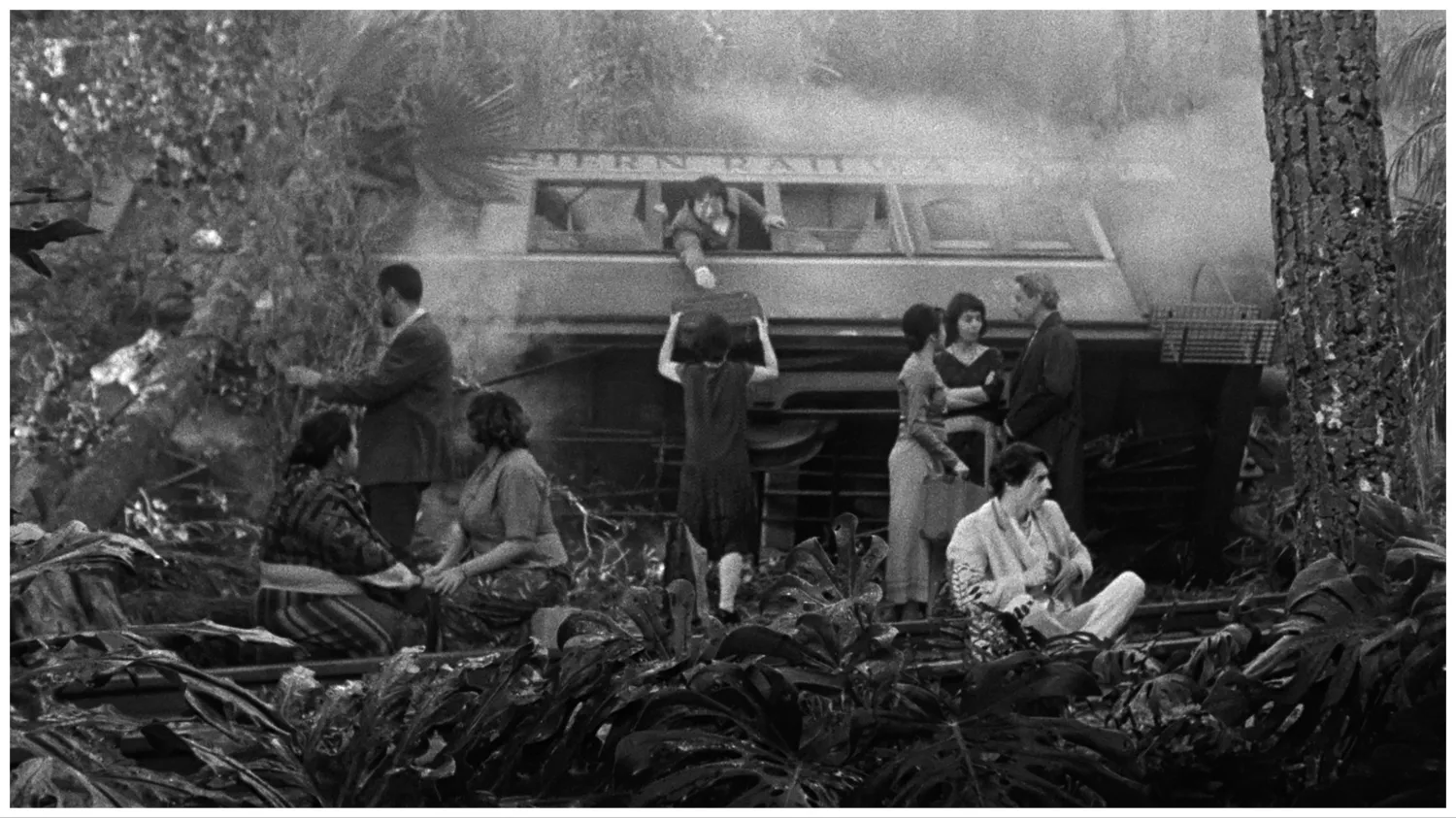
Though they planned to marry after seven years apart, Edward gets cold feet upon Molly’s arrival in Burma. He flees aboard a train that soon derails, and from there, Edward’s unorthodox journey truly begins. He winds his way through locations like Singapore, Bangkok, and beyond in a search to outrun his impending nuptials.
Meanwhile, the tenacious Molly is determined to find her wayward fiancé. She picks up Edwards’ trail and takes on an epic pursuit that exposes her to new experiences and cultures. In time, even Molly’s mission evolves as she develops an intriguing bond with a Vietnamese companion. Director Gomes alternates between portraying their story through period dramatizations and contemporary footage from the very places Edward and Molly tread a century ago.
Through its wandering lovers and hybrid blend of forms, the Grand Tour offers a one-of-a-kind viewing experience. Presented in competition at Cannes, the film is an experimental work by innovative Portuguese filmmaker Miguel Gomes. It explores colonialism and changing perspectives through its characters’ journeys across time and Asia. Their adventure promises insights into history, culture, and our evolving views of both.
Grand Tour’s Cross-Temporal Canvas
Miguel Gomes crafts a dynamic viewing experience through his mixing of black-and-white period scenes and vibrant modern documentary footage. Scenes set in 1918 in Southeast Asia are rendered in monochrome, immersing us in the colonial era. But these are woven between scenes of the very same locales as they appear today: bustling metropolitan areas with modern technologies, fashions, and sights.

The film toggles fluidly between the past and present without segue. One moment we follow Edward aboard a steamship in crisp period costume, and the next streets teem around us in living color. Intentional anachronisms further enrich this tapestry—period scenes soundtracked by contemporary songs, mobile devices appearing amid bamboo forests. Gomes combines these textures deliberately, blurring lines between eras.
His hybrid style comments profoundly on our perceptions of history. Vivid documentary images remind us how notions of the exoticized “East” envisioned in colonial fantasies diverge from the realities of thriving Asian cultures today. Through this interweaving, Gomes muses on time’s effects. How do places evolve while retaining roots, and how do our views of the past transform in relation to them?
Achieving this aesthetic required Herculean effort. Cinematographers filmed documentary footage on locations from Myanmar to China, sometimes with Gomes directing remotely. He also meticulously recreated period interiors on Portuguese soundstages for fictional scenes. Together, these capture a panoramic, border-blurring vision of travel through space and time on the Grand Tour.
East Asian Odyssey
The main characters in Grand Tour are Edward Abbot and Molly Singleton, a British couple whose engagement from seven years ago is finally coming to fruition in 1918 Southeast Asia. Civil servant Edward is set to reunite with fiancée Molly upon her arrival by ship in Rangoon, but gets cold feet at the last moment and jumps on a train headed anywhere else.
Thus begins Edward’s winding journey across locations like Singapore, Bangkok, Saigon, and beyond. The film follows his unconventional travels through voiceover and documentary footage of these modern East Asian cities. But Gomes isn’t focused on the inner reflection of Edward, who remains rather aloof. His storyline sees him interacting with an assortment of eccentric people along the way.
Halfway through, the film switches perspectives on Molly. Learning of Edward’s departure, she resolutely takes up the chase. From Rangoon, Molly’s quest mirrors her fiance’s path, revisiting the same places. We see a more spirited side of the character as she makes new acquaintances and faces various challenges. But like Edward, Molly’s inner life receives little attention from Gomes.
Both characters’ narratives have a spontaneous, journey-before-destination quality. Gomes seems more interested in soaking up the sights of locations than diving into the protagonists’ psyches. Their parallel quest structures start to generate tension as their paths slowly converge in cities like Shanghai. But the film offers minimal character development, focusing instead on experiences over introspection as two souls move across East Asia.
The main characters in Grand Tour are Edward Abbott and Molly Singleton, a British couple whose seven-year engagement comes to a head in 1918 Southeast Asia. Civil servant Edward is set to reunite with fiancée Molly upon her arrival in Rangoon, but panic strikes, and he flees aboard the first outgoing train.
Thus begins Edward’s unconventional travels across locations documented in voiceover and footage showing Singapore, Bangkok, Saigon, and beyond as they appear today. Through him, we are meant to absorb each place rather than delve within. His tale is one of movement, interaction, and sights over insight.
Halfway through, the film switches to follow Molly as she stubbornly gives chase from Rangoon, mirroring Edward’s path city by city. We find in her a more spirited guiding presence, though still one whose inner life goes largely unplumbed. Both characters exist to experience travel rather than self-reflection as their quests converge in Shanghai and beyond.
Gomes seems less interested in psychology than peripatetics. Edward and Molly are vessels transmitting us from one vivid setting to another with an undercurrent of encroaching togetherness but lacking depth. Their stories privilege encounters over interiority in a film less about characters than the changing scenery they temporarily inhabit.
Grand Illusions
Miguel Gomes’ latest film takes viewers on a vivid journey across Asia, interweaving past and present in intriguing ways. Grand Tour follows a British man and woman in 1918 as they trace similar paths from Burma to western China, yet the story is told in a nonlinear style, combining historical footage with contemporary scenes.

We experience each new location through both the characters’ eyes in black-and-white recreations and a modern lens in living color. Voiceovers in local languages offer insights from these places today, creating distance from colonial-era tales. This challenges traditional Western perspectives of the exoticized “East” by juxtaposing them with realistic portraits of dynamic modern societies.
Rather than stay fixed in the past, Gomes’ characters seem altered by every change in scenery. Sights like bustling cities, festivals, and puppet shows leave more of an impression than interactions between the detached protagonists. Time has moved on, yet impressions linger, just as colonial-era fictions still shape preconceptions corrected by present-day realities.
By blurring chronological lines and giving various cultural viewpoints equal voice, Grand Tour explores how perceptions of people and places evolve. Memories take on new shapes as environments transform and diverse stories emerge, much like the evocative images that drift in and out of focus. Gomes leads us gracefully through richly detailed portraits of change, where illuminating glimpses of both history and modern life prompt fresh thought about what we see.
Grand Visions of Southeast Asia
Miguel Gomes crafts subtle yet impactful commentary in his latest film. The Grand Tour follows a British man and woman trekking across Asia in 1918, with key aspects challenging colonial-era mindsets.
Gomes presents an intriguing anachronism: all British characters speak Portuguese throughout. This refocuses nostalgia for Britain’s imperial past, giving modern Portuguese viewers ownership. Meanwhile, Western audiences are reminded of how European powers occupied other lands and imposed their languages.
The film contrasts recreations of 1918 with documentary footage of modern Asian cities. Skyscrapers and bustling streets depict thriving societies rather than the “Eastern” mystique of Western literature. Gomes brings viewers to places like Tokyo, Shanghai, and Saigon as they are today, transforming the foreign into the familiar.
Motifs like puppetry add commentary, showing storytelling as a shared human trait across cultures. While styles differ, each performance connects audiences through shared creativity. Gomes highlights our commonalities despite differences in time, place, or language.
Overall, he explores the fluidity of perception. Places and people seen as exotic become everyday with perspective and understanding. Imperial notions of superiority fade against empowering portraits of dynamic Asian communities. Gomes nurtures political curiosity—not accusations—by gently challenging preconceptions through artistry and insight into diverse societies he depicts with great care, nuance, and respect. Viewers glimpse a vision of cultural exchange enriching all.
A Wandering Glimpse of Perspectives Past and Present
Miguel Gomes’ “Grand Tour” takes viewers on a trip unlike any other. We follow two souls, Edward and Molly, as they wander Southeast Asia during and after World War One. Yet Gomes presents their story in a dreamlike, experimental way. He mixes lush black-and-white recreations of their past journey with glimpses of the vibrant, modern places they traveled through.

Through this unique blend of time periods and styles, Gomes offers thoughtful insights. We see how the realities of today contrast with exoticized views from decades past. His characters seem adrift, disconnected from their classical British roots amid today’s bustling streets. Meanwhile, the timeless human traits they encounter, like puppetry or festivals, show our shared spirit across eras.
By embracing “Grand Tour’s” nonlinear style, viewers may find themselves just as lost in reflection as Edward and Molly wander the landscape. But there are rewards for open-minded travelers. Gomes invites us to meditate on the legacies left by the past within our rapidly changing present. How much do outdated views still shape us? What persists in other cultures as the world transforms around them? Through its winding yet visually striking story, the film provides a quiet place to ponder how perspectives evolve across generations and lands. For those willing to get lost in its observations, “Grand Tour” offers a thoughtful glimpse into the passage of time.
The Review
Grand Tour
Miguel Gomes' "Grand Tour" is a cinematic adventure unlike any other. Through its experimental blend of time periods, settings, and styles, the film offers a thoughtful glimpse into how perspectives of place and culture can evolve across generations. While unorthodox and not for those seeking a conventional narrative, Gomes' visually striking story rewards open-minded viewers with vivid snapshots of humanity's shared spirit and the legacies we leave behind us.
PROS
- Unique blending of time periods and documentary/fiction gives insightful perspective on how views change.
- Visually stunning black-and-white cinematography and epic journey across Asia
- A thought-provoking examination of colonial legacies and cultural understanding
- Experimental style invites reflection on the experience of place versus outdated, exoticized views.
CONS
- Nonlinear format and lack of subtitles may frustrate some who want traditional narrative.
- Complex interweaving of times may leave some viewers feeling lost or distant from characters.
- Ponderous pace and cryptic plot details won't appeal to all mainstream audiences.