




























Cyborg: A Documentary is a groundbreaking investigation of human potential. It focuses on Neil Harbisson, a rare individual who turned his color blindness into a breakthrough sensory experience. Carey Born directs this documentary, which transports viewers to a world where technology and human biology intersect in extraordinary ways.
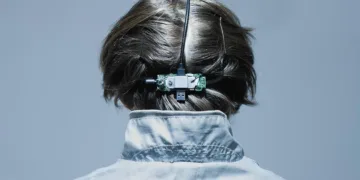
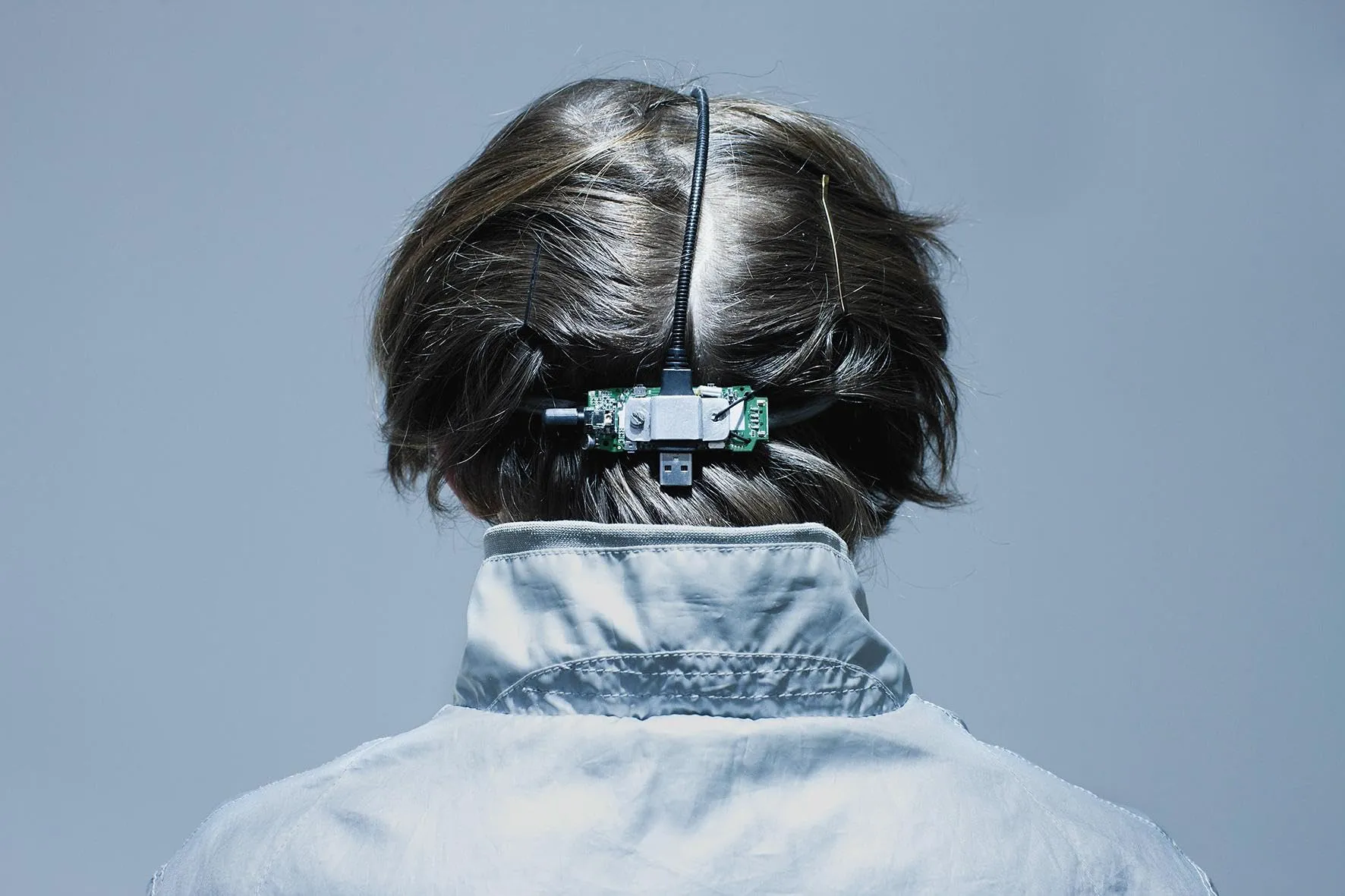
Harbisson, born with achromatopsia, only perceives the world in black and white. Instead of accepting this constraint, he took a bold step: surgically implanting an antenna that translates colors into sound frequencies. This device does more than merely compensate for his handicap; it introduces a new sensory dimension, allowing him to “hear” colors in nuanced, distinct tones.
The film is more than a biographical portrait; it profoundly reflects human adaptation and technical progress. Born creates a narrative that connects Harbisson’s journey to larger themes about our species’ capacity for transformation. The documentary encourages viewers to reconsider the boundaries between human perception and technological advancement through dynamic cinematography and intriguing interviews.
The film weaves a stunning visual tapestry by combining historical science fiction films with modern interviews, exploring Harbisson’s personal story and the emerging frontier of cyborg technology. It’s a movie experience alternating between scientific study, creative expression, and philosophical reflection.
The documentary does more than tell Harbisson’s story; it pushes viewers to reconsider their understanding of human skills, sensory perception, and the ever-changing interplay between biology and technology.
Breaking Perceptual Barriers: One Man’s Sensory Revolution
Neil Harbisson’s life exemplifies human endurance and technical ingenuity. Harbisson was born with achromatopsia, a rare genetic disorder that causes the world to appear in black and white. He refused to accept the restrictions of his visual sense. Where others may have seen a hurdle, he saw an opportunity for profound reform.
From infancy, Harbisson has been captivated by color theory, devouring books and mentally delving into the subject. However, the experience of color remained tantalizingly out of grasp. His breakthrough came from a unique solution: a surgically implanted antenna that translates color frequencies into sound, allowing him to “hear” colors.
The method was not uncomplicated. Following a bioethics committee’s first refusal, an unidentified surgeon carried out the breakthrough procedure. Harbisson thinks the antenna, which protrudes from his skull and loops over his head, is an organic part of himself rather than a medical device. 2004, he became the first legally acknowledged human cyborg, defying conventional understandings of human sensory experience.
This journey had a major personal cost. Harbisson suffered severe scrutiny, misunderstanding, and even death threats, prompting him to emigrate from New York to Barcelona. Despite these hurdles, his vision remained intact. Instead, they spurred his desire to discover and increase human sensory potential.
Harbisson and Moon Ribas, another cyborg artist, co-founded the Cyborg Foundation in 2010. Their common purpose is to explore, develop, and promote cyborg technology that will profoundly alter human perception and capacities.
His artistic work shows this distinct viewpoint. Harbisson makes sound pictures of notable figures by transforming their color palettes into audio experiences. He sees individuals in nuanced shades of orange rather than black and white. This metaphor goes beyond visual perception to a deeper knowledge of human complexity.
Harbisson’s story is more than just a personal success; it’s an intriguing examination of human potential, asking us to go beyond our existing constraints and conceive new ways of perceiving the world.
Sensing Beyond Limits: The Science of Cybernetic Perception
Harbisson’s antenna is a cutting-edge sensory interface transforming how humans experience the world. The device is an elaborate translator, transforming light wavelengths into specific sound frequencies. Each color generates a distinct tone, allowing Harbisson to interpret chromatic information via sound rather than visual signals.
Physically, the antenna is surgically implanted in his skull, emerging from the occipital bone and stretching across his head. It’s not just an external device; it’s an osseointegrated organ communicating directly with his cerebral circuits. The antenna may also link to the internet via Bluetooth, allowing him to receive phone calls and broaden his sensory talents beyond color perception.
While exciting, not all cyborg technologies are equally innovative. Take the “North Sense” device, a skin-mounted gadget that vibrates while facing north. Critics rightly question its utility, pointing out that smartphones and traditional compass apps perform the same function more efficiently.
The bigger vision goes much beyond the existing implementations. Harbisson and other cyborg pioneers envisage technologies that will radically alter human perception. They hypothesize about genetic alterations that could enable future generations to organically incorporate technological advancements. Consider youngsters born with enhanced sensory capacities that perceive infrared or ultraviolet spectrums as naturally as we see visible light.
These technologies aim to reimagine human potential rather than simply providing functionality. The goal is not to replace human biology but to broaden its scope, resulting in new ways of perceiving and interpreting our surroundings.
What is the most exciting aspect? These technologies are becoming more accessible. With open-source designs and 3D printing, cybernetic upgrades have the potential to democratize sensory expansion, making remarkable perceptual experiences accessible to everyone, not just the wealthy or technologically privileged.
This isn’t science fiction anymore. It represents the emerging reality of human technological advancement.
Chromatic Symphonies: Redefining Artistic Expression
Neil Harbisson transforms art into a holistic experience in which colors sing and visual perceptions dance to unexpected rhythms. His artistic work is more than just creating; it transforms reality into a new sensory language.
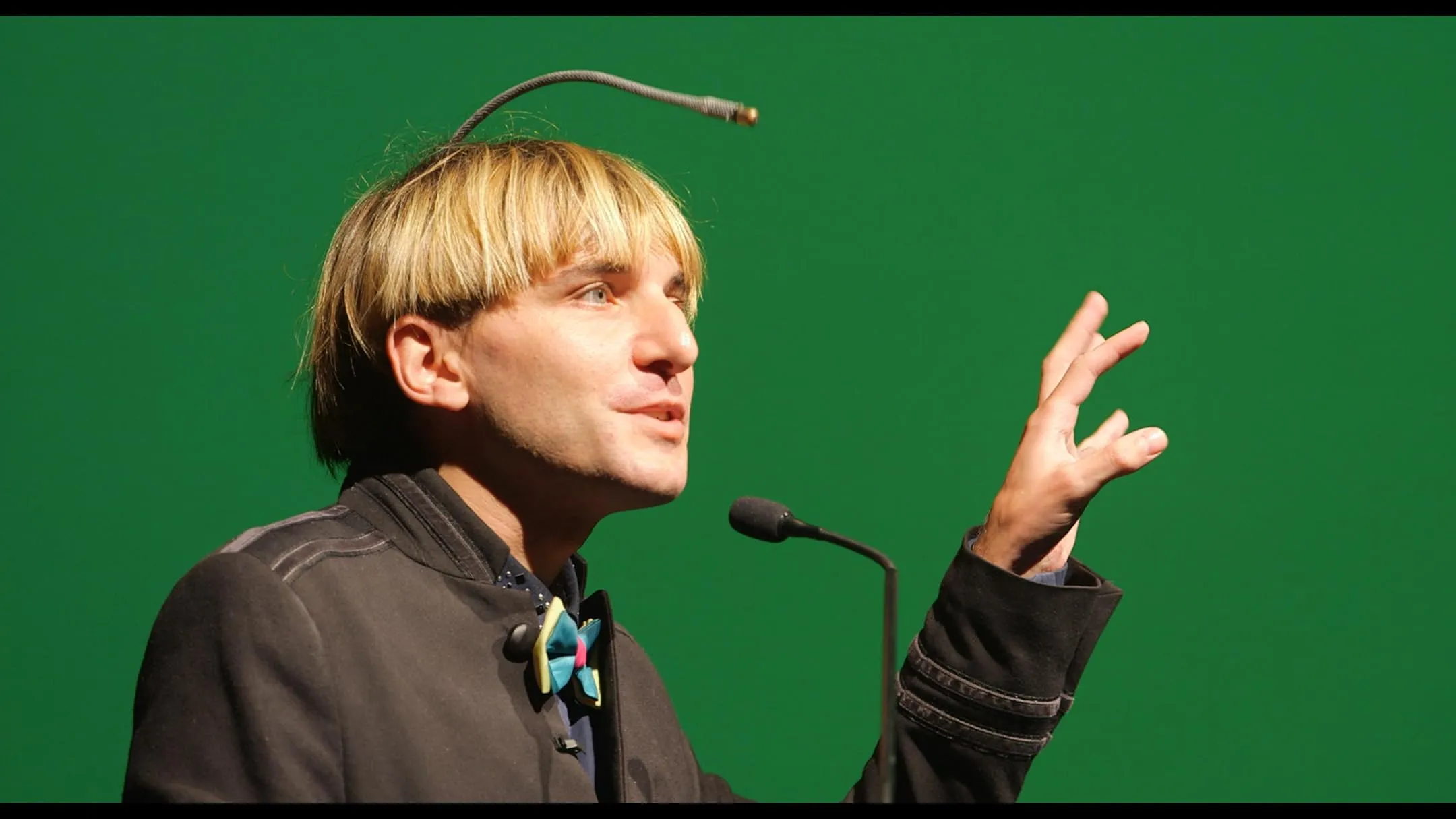
Consider creating sound portraits of public figures that capture their colorful essence rather than typical visual representations. Harbisson has developed musical interpretations of individuals such as Prince Charles, Nicole Kidman, and Al Gore, translating their colors into distinct audio worlds. Each portrait transforms into a tonal symphony, exposing dimensions that would otherwise be invisible.
His artistic approach extends beyond individual portraits. Harbisson transforms complete musical works and renowned speeches into color compositions, resulting in elaborate sound, color, and meaning translations. His cyborg antenna allows him to receive layers of information that others cannot see when he encounters art or experiences optical illusions.
Perhaps most provocatively, Harbisson questions our basic concept of human perception. His artwork illustrates that humans exist in complex shades of orange rather than merely “black” or “white” – a symbolic and literal deconstruction of racial and visual categorizations.
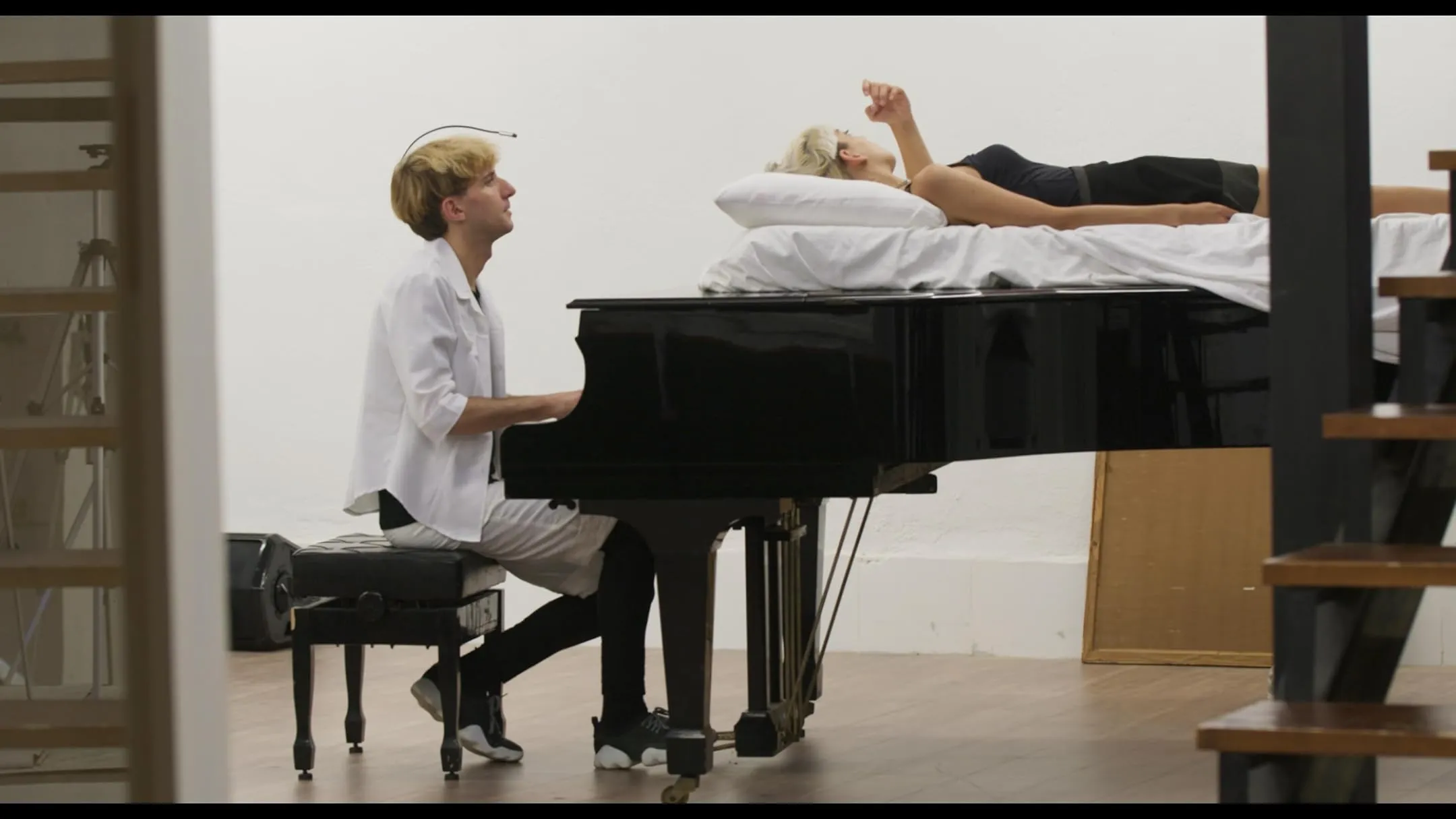
Harbisson collaborates with Moon Ribas, his partner, and fellow cyborg artist, to expand this artistic exploration through the Cyborg Foundation. They approach technology not as a cold scientific pursuit but as a dynamic artistic tool for enhancing the human experience.
Their work distinguishes performance art, technology innovation, and sensory investigation. Each piece becomes a living experiment, forcing audiences to rethink the boundaries of human perception and imagination.
In Harbisson’s world, art is experienced through a completely new sensory dimension rather than only seen or heard.
Redefining Humanity: Navigating Technological Frontiers
Neil Harbisson’s quest is more than just a personal development; it’s a startling challenge to the societal limits of human potential. His cyborg existence has sparked heated ethical arguments, requiring us to confront fundamental issues about technological enhancement and human identity.

Harbisson has elicited a diverse range of reactions from the people. Television interviews reflect a similar reaction: polite curiosity combined with underlying suspicion. People are both captivated and uneasy, with facial expressions indicating a struggle to understand his lived experience. Some consider him a visionary, while others see him as a controversial performance artist pushing human experience’s limits.
The most visceral obstacles came from direct threats. Harbisson and his partner Moon Ribas were forced to quit New York following constant cyberstalking, eventually finding safety in a windowless Barcelona basement. These threats were more than physical; they reflected a deeper societal aversion to significant technological transition.
Bioethical panels have been especially conflicted. While first medical panels denied his antenna implantation, some practitioners saw potential. His grandmother’s viewpoint wonderfully expresses this cultural tension: “What God has made, must not be touched” – a notion that encapsulates the philosophical opposition to technological body modifications.
The scientific and medical communities remain divided. Is Harbisson a scientific experiment or a tech artist? He actively avoids traditional categorization, presenting himself as a trailblazer probing the fluid limits between human capabilities and technical innovation.
The debate extends beyond individual perceptions. Harbisson makes a startling claim that cyber-technological changes may become inheritable, posing difficult considerations regarding genetic evolution and human potential.
What emerges is not simply a personal narrative. Still, a bigger investigation of humanity’s connection with technology – where adaptability meets invention and human potential knows no bounds.
Visualizing the Invisible: Cinematic Exploration of Perception
Carey Born’s documentary goes beyond typical filmmaking, transforming “Cyborg” into a sensory experience reflecting Harbisson’s distinct perspective. The film is more than just a narrative; it’s a visual symphony that tests viewers’ perceptions of the human experience.

Born skillfully interweaves historic black-and-white clips from science fiction classics such as Frankenstein, resulting in an unsettling conversation between technological fantasy and modern reality. These archival moments are not merely decorative components but challenging cultural markers that place Harbisson’s voyage within larger histories of human development.
Matthew Akers’ Emmy-winning cinematography takes on a character of its own. Scenes are filled with brilliant colors that eventually fade into monochromatic landscapes, evoking Harbisson’s perceptual trip. Each frame is precisely designed to reflect what is seen and how it could be heard or felt.
Interviews are carefully planned to offer multiple perspectives. Born avoids heavy-handed editorializing, instead enabling guests – ranging from skeptical television commentators to exuberant technological pioneers – to create a complex narrative. The tempo feels natural, alternating between personal closeness and larger philosophical exploration.
The documentary’s title sequence becomes a symbolic statement, erupting with color before collapsing into stark black and white to represent the transformational power of technological innovation.
Born produced more than a documentary. This sensory manifesto encourages viewers to push the boundaries of human perception and technological potential.
Beyond Boundaries: Reimagining Human Potential
The Cyborg Foundation is more than just an organization; it represents a radical reinvention of human potential. Harbisson and Moon Ribas founded this movement, challenging our fundamental ideas about human identity, transformation, and evolution.
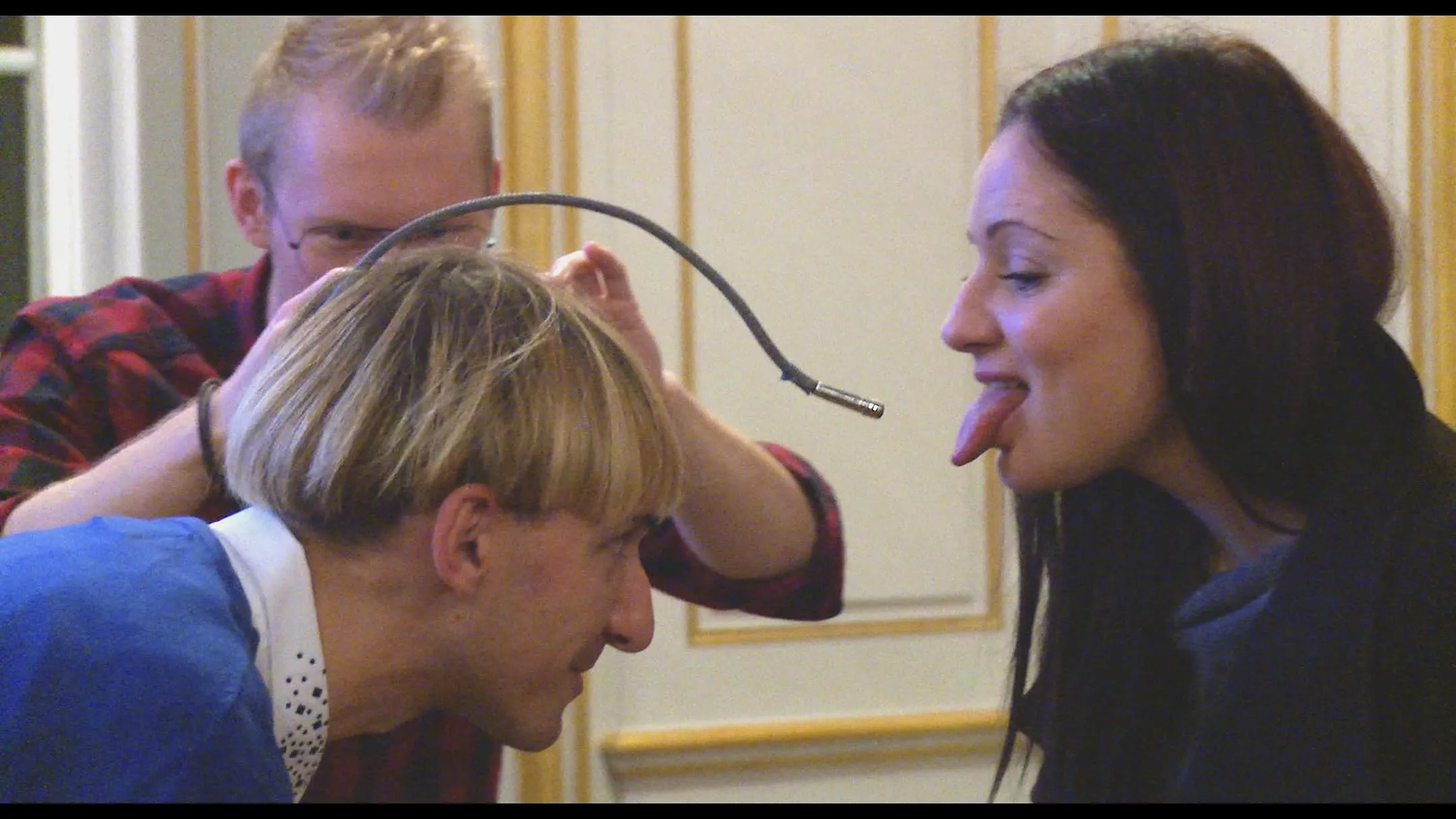
Their perspective goes well beyond Harbisson’s personal story. The Transpecies Society is a daring manifesto of self-design, advocating that humans should have the ability to customize their bodies beyond traditional biological constraints. It’s a philosophical revolution surrounded by technological innovation.
Imagine a future in which knowing north, hearing colors, and seeing infrared is as natural as breathing. Genetic alterations are more than just medical operations; they are expansions of the human experience. The documentary implies humans are on the verge of a significant evolutionary shift.
The ethical ramifications are astounding. Are we seeing the next stage of human development? Will future generations regard existing physical restrictions as primitive and restrictive, as we regard medieval medical procedures today?
Harbisson’s antenna is more than just a technological device. It’s a symbolic key that unlocks deeper consciousness, perception, and human adaptation concerns. The documentary does more than just tell a story; it makes us examine what it means to be human.
As technology advances, the distinction between humans and machines gets increasingly blurred. “Cyborg” is more than just a film about one man’s journey. It’s a startling invitation to see ourselves as dynamic, transformative beings capable of constant reinvention rather than fixed biological things.
This documentary suggests that the future is not something we experience. It is something we designed.
The Review
Cyborg: A Documentary
"Cyborg" is a captivating exploration of human potential that goes beyond standard documentary filmmaking. Carey Born's narrative is thought-provoking, challenging viewers to redefine the frontiers of human perception, technology, and identity. Neil Harbisson's astonishing journey is both intensely personal and universally meaningful, providing a look into a future in which imagination only limits human potential. The documentary expertly mixes scientific innovation, personal narrative, and philosophical investigation. It's more than just a film about a man with an antenna; it's a compelling reflection on what it means to be human in an era of rapid technological change. Born's direction produces a visually breathtaking and intellectually challenging experience that will make viewers reconsider their knowledge of sensory perception and human potential. While the film occasionally borders on the absurd, its true sincerity and Harbisson's riveting personal story provide a foundation for the more fantastical elements. It skillfully transforms what could have been a funny biographical sketch into a profound examination of human adaptability and technological progress.
PROS
- Innovative exploration of human technological potential
- Visually compelling cinematography
- Thought-provoking philosophical narrative
- Deeply personal storytelling
- Challenges traditional perceptions of human capability
- Expertly blends scientific explanation with emotional journey
CONS
- Some speculative moments might seem far-fetched
- Technical explanations can be occasionally dense
- Potential to overwhelm viewers with radical technological concepts