

























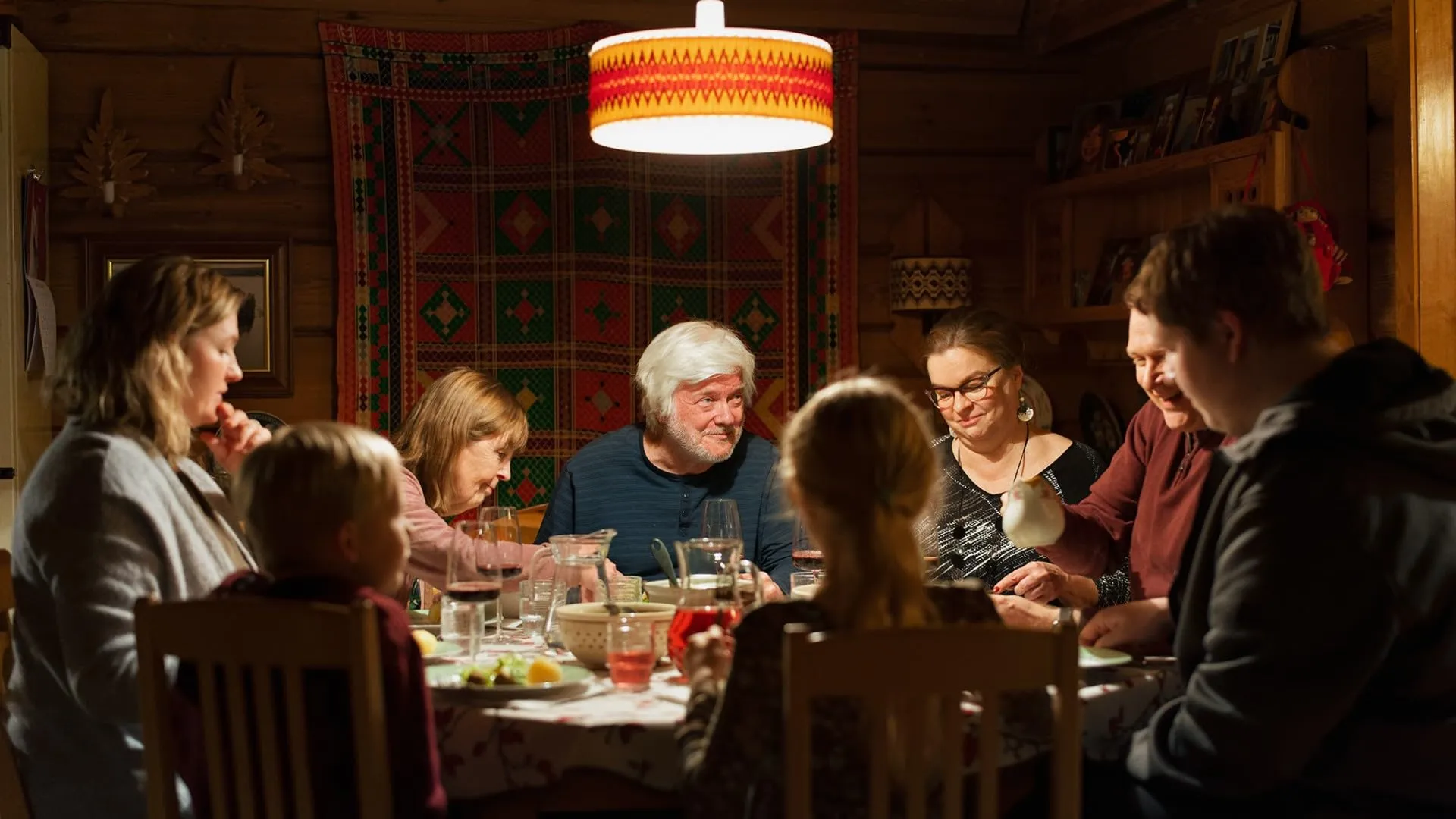

The film opens on a family reunion during Christmas, a gathering that shifts later to reveal individual stories. The setting is a secluded chalet, its modest interiors and sprawling, wintry surroundings suggesting both warmth and confinement (a setting that seems to mirror our own modern isolation).
The narrative unfolds slowly, observing everyday rituals with an almost forensic attention to detail. One cannot help but notice the interplay of humor and melancholy as familial tensions are displayed with an understated, almost clinical, air.
The director’s approach is one of quiet observation, capturing the unspoken moments that shape relationships. There is a certain dry wit that punctuates the proceedings, a reminder that life in confined spaces can be as absurd as it is tender.
Scenes of mundane exchanges invite comparisons to historical portrayals of domestic life, evoking echoes of past eras marked by rigid social structures and silent suffering.
This portrayal offers viewers a chance to reflect on the often unnoticed intricacies of family bonds and the subtle disconnections that define modern living.
Narrative Architecture and Rhythmic Cadence
The film unfolds in two distinct acts. The opening segment gathers a multigenerational family around a festive table, where the collective ritual of Christmas is meticulously observed. Later, the camera shifts focus to the lives each member leads once the holiday clamor subsides.
This dual structure (a kind of cinematic diptych) creates a dynamic interplay between communal celebration and personal solitude. The initial act brims with a sense of shared history—a family ritual rendered in static, lingering shots that seem to hold time in stasis.
In the subsequent act, individual moments—quiet, almost imperceptible—emerge from the backdrop of isolation (a nod to the way private lives often mirror public histories).
The pacing is deliberate. Extended takes and stationary compositions permit scenes to breathe, granting the viewer ample space to register subtleties in expression and movement.
The film’s tempo mirrors the cyclical nature of family gatherings—a slow, measured rhythm punctuated by brief interludes of sudden movement or unexpected silence.
One might call this a “micro-chronicle” approach, where even the opening of a door becomes a symbolic bridge between separate narrative worlds.
Subtle dialogue and the language of glances form the backbone of the storytelling. Transitional shots—simple visuals like a door swinging open—serve as quiet markers that stitch together the two narrative strands.
Each minor interaction, seemingly trivial, accumulates into a broader portrait of individual lives intertwined by familial duty and shared pasts (one might even say these moments echo episodes from historical family sagas).
There is a reflective air here—a cinematic conversation on how isolated routines and communal rituals can both mirror and refract the human condition.
Family Frictions and Individual Echoes
The film offers a close look at the interplay between generations, where the older figures are marked by a weary resilience, the middle-aged by restrained exasperation, and the young by a tentative search for identity.

The elders, with their silent endurance and quiet indignation, often serve as the anchors of a domestic ritual that feels both familiar and slightly askew.
The family gathering becomes a microcosm of society’s unspoken hierarchies (a sort of living diagram of generational discord), where the matriarch’s persistent oversight meets the patriarch’s distant stoicism.
A closer examination of individual character arcs reveals a spectrum of personal struggles. The long-suffering matriarch, burdened by years of subtle compromise, exhibits a quiet fortitude that is occasionally undercut by moments of unexpected humor (the kind that sneaks up on you like an offhand remark at a family dinner).
The aloof patriarch, meanwhile, drifts through his role with a detached nonchalance that hints at past glories and unspoken regrets.
Ambitious children, caught in the crossfire of familial expectation, show flashes of determination alongside palpable uncertainty, while the younger generation’s conflict is expressed in moments of silent rebellion and furtive observation.
Communication within the family is portrayed as a series of understated exchanges, where casual banter and terse remarks hint at deeper layers of meaning.
Heated discussions often give way to long pauses filled with unvoiced thoughts, creating a dynamic that is as much about what is unsaid as it is about spoken words.
Certain scenes—brief, almost accidental interactions—stand out for their dual capacity to evoke both a wry smile and a sense of poignant disquiet (imagine a momentary glance that speaks volumes).
Each interaction acts as a small mirror reflecting the complexities of everyday domestic life, inviting viewers to consider how personal histories intertwine with shared rituals.
Visual Verisimilitude: The Quiet Language of Frames
The film employs static long-shots and measured medium-long takes that evoke an almost archival quality. Each frame is composed with care—a front door becomes a recurring symbol, serving as both threshold and witness to the private dramas unfolding within.
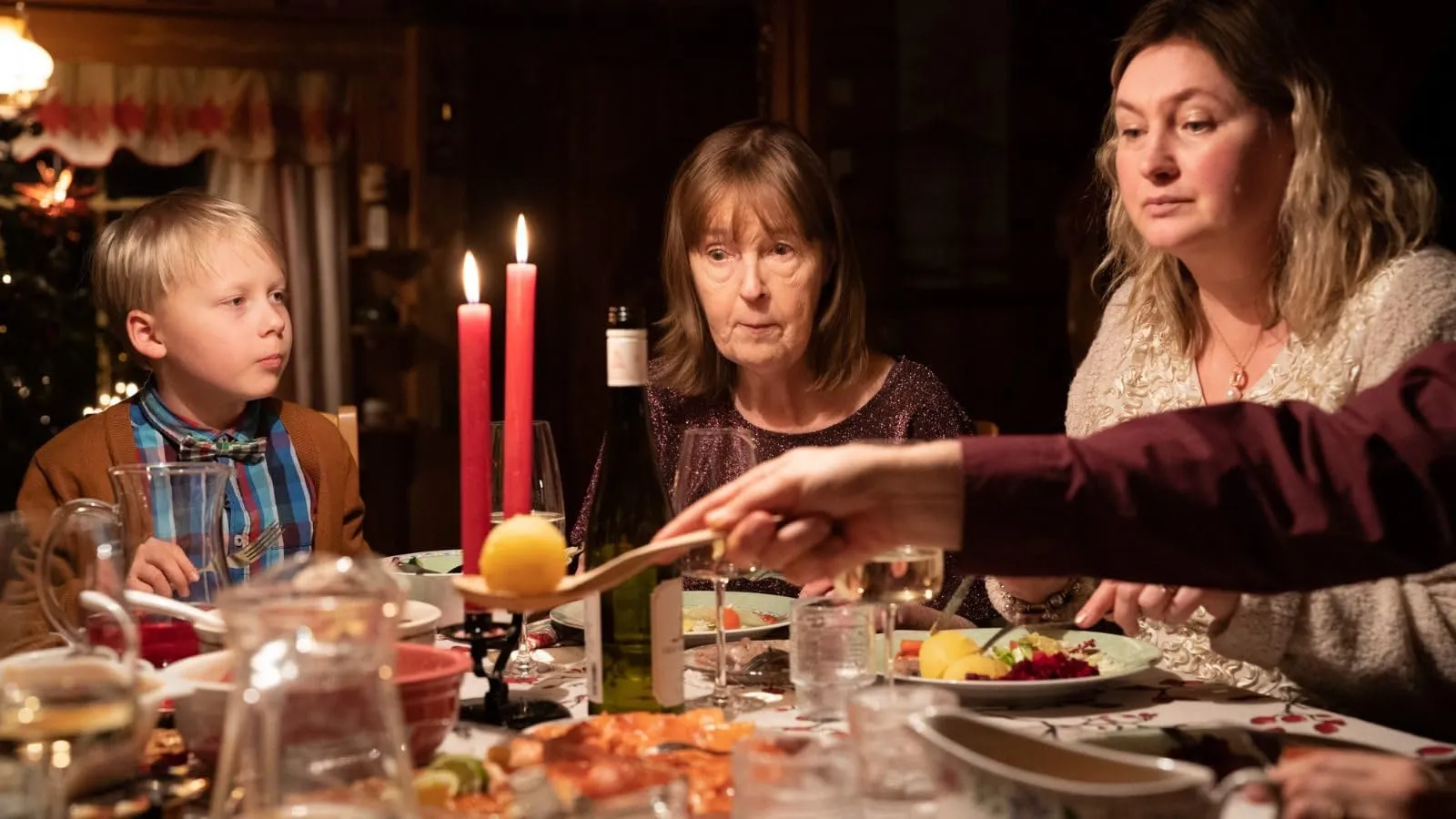
The unhurried camera work invites the audience to consider the significance of everyday objects (a subtle nod to how mundane details can reflect the fabric of social life, reminiscent of early documentary studies).
Within this carefully orchestrated visual space, the mise-en-scène is rich with intention. Christmas decorations and aged furniture clutter the screen, constructing an environment that is intimate yet slightly stifling.
This crowded composition (a sort of visual microcosm) mirrors the internal dynamics of the family gathering, where every misplaced ornament or faded photograph hints at stories of bygone eras.
The setting, while modest, carries an aura that questions the reliability of memory and tradition—a quiet commentary on how personal histories are interwoven with the artifacts of daily life.
Light, space, and sound play interdependent roles in crafting the film’s mood. Dimly lit, confined interiors contrast starkly with the expansive, snowy exteriors.
Ambient sounds—subtle echoes, the faint creak of settling wood, or the soft hum of distant conversation—act as gentle reminders of unseen narratives lurking just beyond the frame.
These auditory cues partner with the visuals to create a layered narrative experience (one that, at times, feels like a silent symposium on the interplay between presence and absence).
Each element, carefully balanced within the frame, suggests that silence and stillness can speak as powerfully as dialogue, offering a quiet yet profound commentary on the nature of domestic existence and its reflection of wider societal rhythms.
Domestic Paradoxes and Symbolic Resonance
At the heart of the film lies a contemplation on familial connection versus isolation. The narrative portrays the home as a double-edged emblem—a sanctuary that simultaneously provides comfort and restricts freedom (think of it as an allegorical living cell).

Every familiar detail—the creak of a timeworn door, the lingering presence of old photographs—serves as a quiet narrator, hinting at the weight of shared history and personal solitude. In this microcosm, the home mirrors broader societal structures where safety and confinement often coexist.
Repetitive family rituals punctuate the story, evoking a rhythm that is both reassuring and stifling. The holiday celebration, marked by predictable routines and measured exchanges, becomes a metaphor for the cycles that shape our lives.
The film subtly captures the tension between the permanence of tradition and the inevitability of change. This narrative shift—from the collective warmth of a festive gathering to the introspective dispersion of individual lives—acts as a micro-history of human experience, reflecting patterns observed in various historical periods when established norms began to erode under modern pressures.
Intermittently, the film introduces a dry, understated humor that finds its roots in the mundane. A slightly offhand gesture or a momentary lapse in decorum carries a quiet irony, inviting viewers to laugh at the absurdities embedded in everyday interactions.
Such moments (almost like visual haikus) underscore the bittersweet realities of family life and hint at a broader cultural dialogue about the contradictions of modern existence.
This interplay of humor and gravity cultivates a unique lexicon of symbols—a “domestic semiotics”—that not only dissects the intricacies of interpersonal bonds but also raises subtle questions about our collective past and present.
Performative Nuances and Crafted Interiors
The film’s cast offers an array of measured performances, each actor providing a quiet yet profound portrayal of their character.
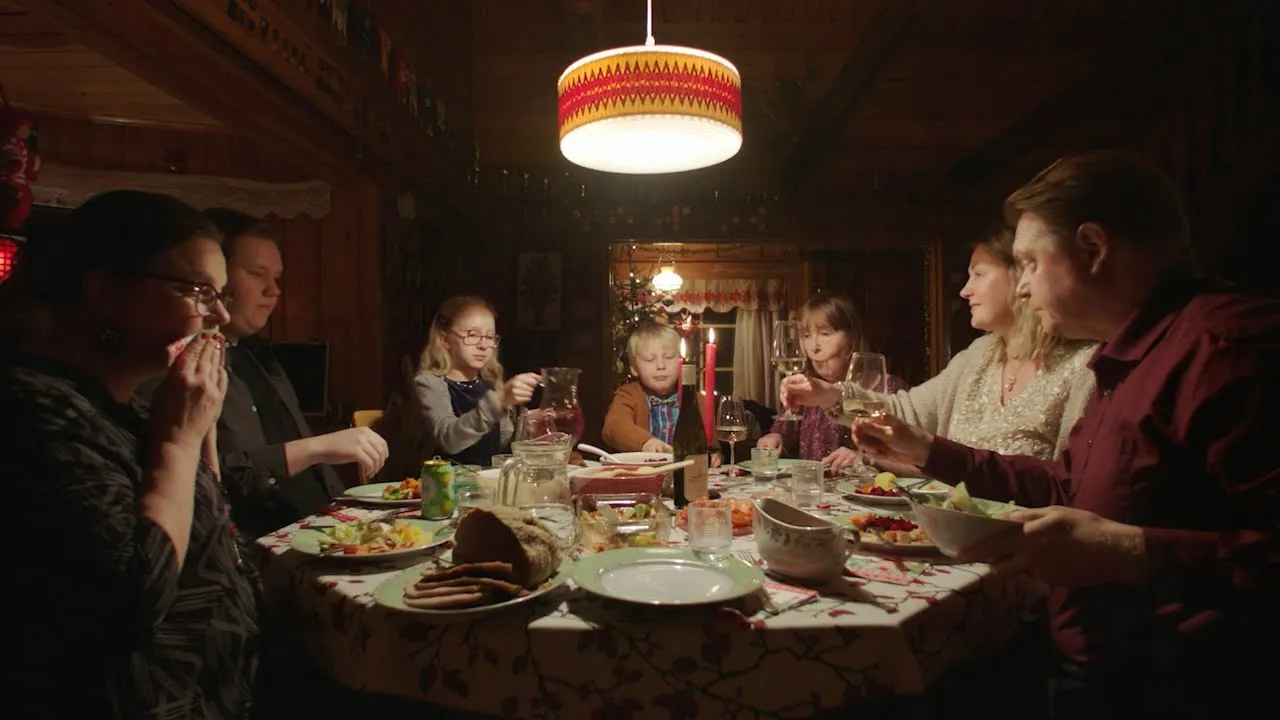
The long-suffering matriarch appears with a disarmingly subtle realism, while the patriarch presents as a study in detached reserve. Brief exchanges over a shared table or a fleeting glance across a crowded room convey unspoken emotion with the delicacy of a whispered secret (a sort of domestic shorthand).
In several scenes, natural interactions capture both tension and warmth in a manner that feels palpably genuine.
Attention to set details is notable throughout. The cramped living quarters and cluttered dining space, adorned with well-worn ornaments and timeworn furniture, evoke a dual sense of belonging and confinement.
Each object is deliberately placed, emerging as a silent narrator in its own right. This method of production design transforms the home into a stage where history, memory, and familial legacy coexist.
One might call this an exercise in “material storytelling”—an art form that translates physical artifacts into a visual record of personal experience.
The script employs everyday dialogue to reveal character nuances and interpersonal strains. Sparse, unpretentious lines lend an air of verisimilitude to each exchange.
The director opts for a tone that shuns excess drama, allowing the quiet force of a simple statement to carry unexpected weight (a rare quality in such portrayals).
The synthesis of acting, design, and dialogue produces a portrait that captures the intricate mosaic of family life. There is a subtle force in the interplay of personal narratives and shared spaces—a dynamic echoing historical accounts of domestic existence.
The minimalist storytelling approach invites a reflective mood, while sporadic moments of offhand humor offer brief respite from the film’s prevailing intensity.
The Review
Family Time
Family Time serves as a slow and measured meditation on the subtleties of familial connection and personal isolation. Its quiet rhythm and unadorned dialogue reveal hidden layers in everyday interactions, offering a reflective mirror of domestic existence. The film captures the interplay of memory and habit through a minimalist approach that may test some viewers’ patience, yet rewards those attuned to understated realism. Its unembellished narrative and carefully orchestrated design invite contemplation on shared histories and modern solitude.
PROS
- Subtle storytelling that invites reflective viewing.
- Strong ensemble performances marked by understated realism.
CONS
- Deliberate pacing that may test some viewers’ patience.
- Ambiguity in narrative transitions might confuse some audiences.