





























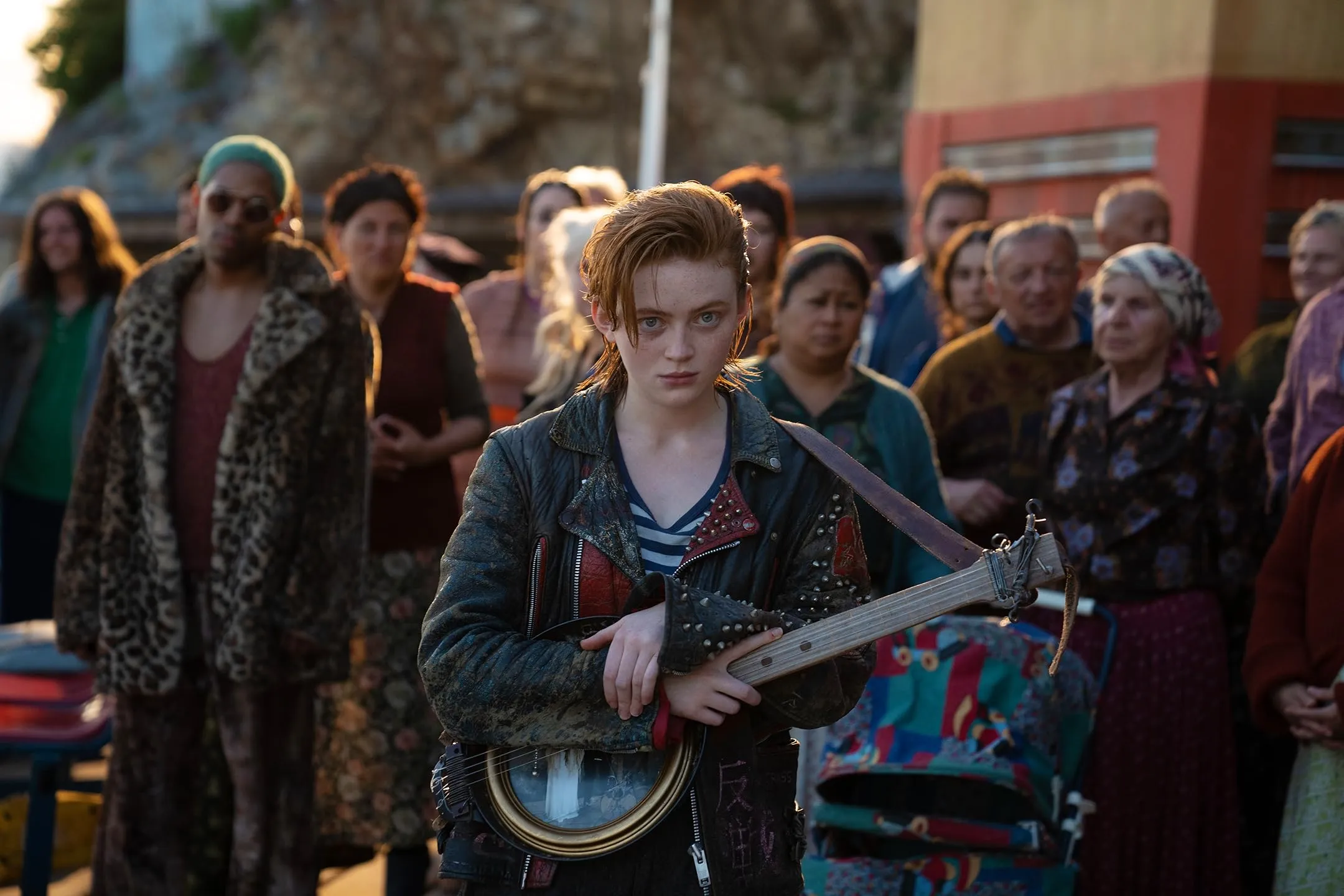

O’Dessa opens with an audacious reimagining of myth in a world where the remnants of rural life collide with the neon glare of a futuristic urban sprawl.
Director Geremy Jasper crafts a narrative steeped in legend and futuristic flair, presenting a tale of a young farm girl burdened by an ancient prophecy who dares to challenge an oppressive system armed only with her trusty, weathered guitar and a determined spirit (one might chuckle at the film’s blend of earnest idealism with a wry nod to its own theatrical excesses).
The stark contrast between pastoral simplicity and a metropolis alive with garish cyberpunk visuals creates a setting that is as richly detailed as it is steeped in symbolism. Here, the decay of a forgotten past meets the relentless flash of modernity, inviting viewers to reflect on recurring societal cycles and historical echoes.
Themes of personal transformation, the liberating power of song, and the fluid nature of identity emerge from every frame. With a narrative that oscillates between sincere ambition and a dry, almost self-aware humor, the film poses questions about cultural inheritance and the weight of destiny in a world that feels both fantastical and uncannily familiar.
Narrative Weave and Character Threads
The film unfolds from a modest rural setting—bare, unforgiving fields where life begins in quiet desperation—toward a sprawling metropolis bathed in neon and chaos, known as Satylite City. Its story borrows from ancient lore (a modern spin on the Orpheus and Eurydice saga) and recasts it amid a crumbling future.
A parent’s departure, a mystical guitar imbued with prophecy, and the ensuing scramble in a city overrun by corruption create a narrative that is both swift in its transitions and bold in its ambitions. Short bursts of high-idea scenes give the impression of watching a series of elaborate, almost episodic snapshots.
The screenplay oscillates between time-honored cinematic markers—a chosen hero, a love that sparks with instant chemistry, and a despotic figure ruling with a charismatic sneer—and moments that challenge these conventions (sometimes with a wink).
The film’s pacing suggests a careful balance between meticulously planned set pieces and spur-of-the-moment spectacle, though one might argue that the rapid-fire sequence of events leaves little room for lingering introspection.
Central to the film is O’Dessa, a determined figure shrouded in mystery, whose defiance and inner turmoil are as pronounced as her unconventional destiny (she sidesteps standard gender molds with a flair that might leave traditionalists scratching their heads).
Her internal strife—caught between the lure of personal redemption and the weight of societal expectations—offers a rare glimpse into the conflict between self-actualization and duty. In contrast, Euri appears as a reluctant luminary whose musical prowess is shadowed by an underdeveloped personal narrative. Their mutual attraction, brisk and somewhat superficial, becomes a microcosm of a larger commentary on fleeting modern connections.
Supporting figures, like the imperious Plutonovich and the cryptic Neon Dion, serve their roles with symbolic heft, contributing to an environment where every character seems designed to reflect aspects of contemporary social dynamics and historical power plays.
Visions in Neon and Decay
The film’s visual style is a feast of detail. Each frame is loaded with neon accents and textured grime. The interplay of harsh lighting and deep shadows conjures a mood reminiscent of a crumbling metropolis—a collision of classic film noir and futuristic intensity (one might smirk at the idea that chaos itself can be methodically arranged).

Satylite City emerges as a character unto itself, an urban dystopia whose crumbling facades seem to murmur secrets of a once-powerful civilization now surrendered to corruption. The sets evoke a palpable sense of history and disrepair, with each deteriorating wall and flickering lamp post hinting at an era when power was both absolute and precarious.
Costume design contributes richly to this visual narrative. O’Dessa’s wardrobe—a curious mix of soft butch rockabilly and defiant modern edge—sidesteps traditional gender molds. Other characters parade in ensembles that combine worn leather, sparking neon details, and stark makeup, signaling a personal revolt in a world stripped of order. These sartorial choices become visual shorthand for complex ideas about identity and social unrest.
Production details further intensify the tactile feel of the film. Practical effects mesh with painstaking set dressing to create spaces that are palpably lived-in and, at times, overwhelming. Overlapping layers of imagery and an almost obsessive visual density challenge the viewer to register every nuance.
The careful juxtaposition of these elements generates an atmosphere that invites repeated scrutiny. At moments, the visual overload may seem excessive, prompting the question of whether every detail was essential. Yet this very abundance mirrors the film’s own internal disarray—a visual commentary on societal decay rendered in neon and neglect.
Harmonic Forces: The Sonic Backbone
Music in O’Dessa functions as a narrative lifeblood—a driving force that moves the plot as seamlessly as it stokes emotional embers. The film takes on the character of a rock opera, where every song is a narrative pivot and every chord strikes as if echoing societal discontents.
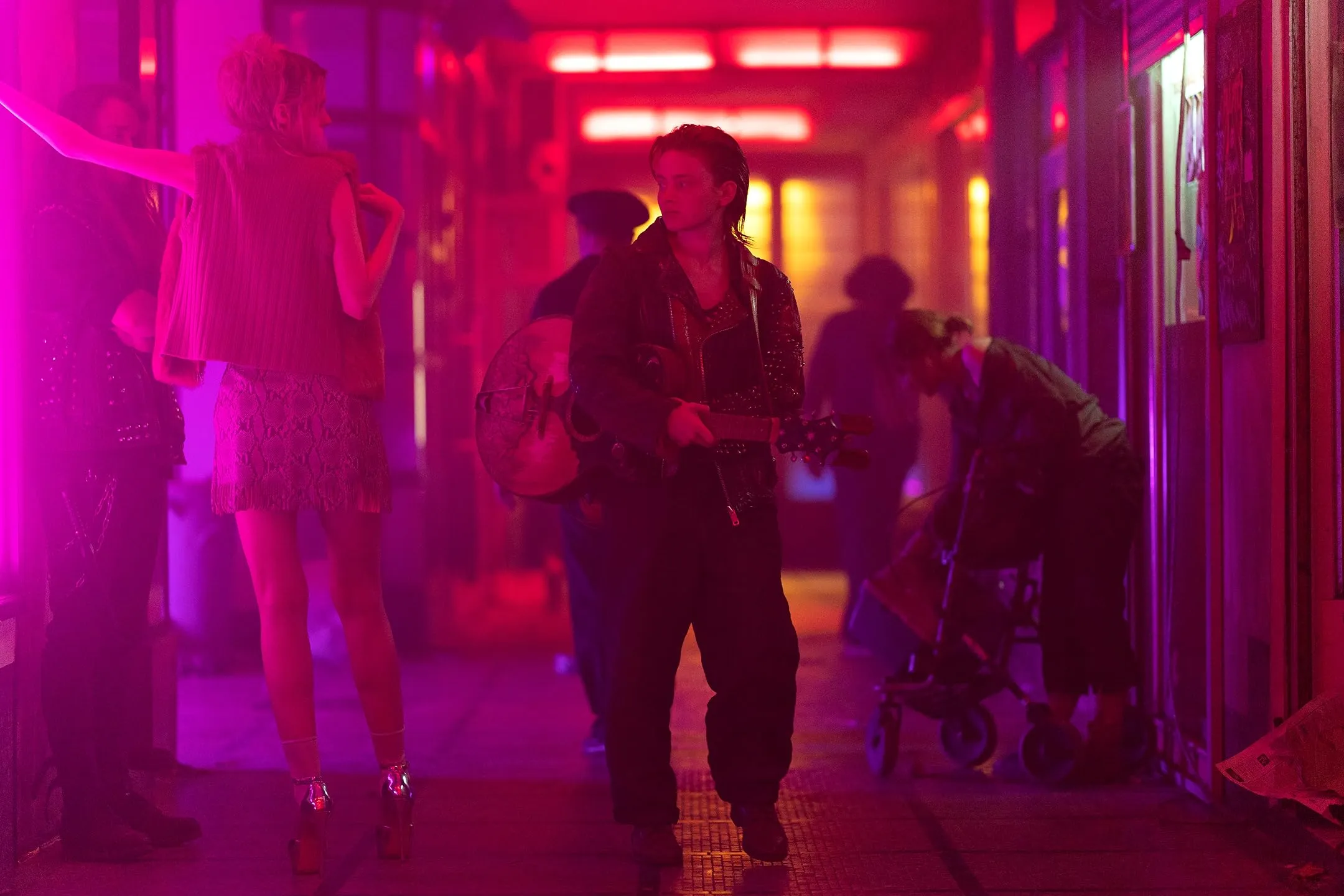
One might observe that each musical interlude mirrors historical rebellions or cultural shifts (a nod, perhaps, to the subversive power of sound in tumultuous times).
Original compositions span a curious mix of styles. There are moments of twang reminiscent of old country ballads and instances of electrifying, almost anarchic rock numbers.
Some segments boast funky interludes that inject levity amid chaos, each track serving as a metaphorical window into the characters’ innermost struggles. The music’s ability to articulate unspoken truths mirrors past protest anthems that once ignited social change.
Sadie Sink’s vocal performance provides an intriguing study in contrasts. Her delivery fluctuates between crystalline precision and a raw, undercut vulnerability, occasionally betraying the limits of her technical range (a fact that might raise eyebrows among purists). In duet sequences with her counterpart, an almost palpable chemistry surfaces, despite an overall brevity in the portrayal of personal conflict.
The soundtrack, intricately interwoven with visual sequences, punctuates the narrative with striking rhythmic shifts—whether capturing moments of reflective quiet or the burst of an insurrection rally.
This interplay between melody and mise-en-scène invites viewers to reconsider music’s role as a storyteller—a cultural force echoing both individual passions and the discord of the times.
Fated Frequencies: Themes, Identity, and the Pulse of Change
The film presents fate in a curious, almost paradoxical fashion. The “seventh son” myth is reinterpreted with a twist that unsettles standard expectations. Here, destiny acts as both a source of empowerment and a yoke that restricts the protagonist—a contradiction that raises questions about predetermination in a modern, gender-ambiguous setting (one might even call it a fate paradox).

The narrative invokes echoes of historical prophecies that once spurred revolutions, suggesting that destiny can be a catalyst for both liberation and submission.
A persistent undercurrent of defiance runs through the film—a response to corruption and tyranny that has clear echoes of past societal upheavals. Certain musical sequences shift from tender ballads to forceful, rallying cries, offering a sonic reflection of popular dissent and cultural protest.
These moments are not mere interludes but serve as cultural signifiers, reminiscent of anthems that once united masses against authoritarian rule.
Gender and identity receive a playful yet incisive treatment. Casting choices and sartorial decisions invert familiar roles, pushing audiences to rethink conventional heroism and vulnerability. O’Dessa herself, adorned in attire that straddles traditional binaries, embodies this tension.
Her struggle, both personal and symbolic, mirrors debates that have raged in public squares over the fluidity of identity—a discussion as old as time itself.
Symbolism permeates the film through distinct motifs. The heirloom guitar stands as a relic of a bygone era, a relic that carries with it the weight of familial legacy and the power to incite change.
Neon lights and the persistent residue of grime form a visual dialectic: neon radiates a dubious hope, while grime whispers of decay and forgotten histories.
Small, often unspoken details in the mise-en-scène hint at a critique of modern spectacle and the commercialization of rebellion, inviting the viewer to read between the vivid layers.
Echos of Ambition and Resonance
O’Dessa attempts an audacious synthesis of myth, music, and dystopia. Its creative vision blends ancient prophecy with futuristic decay. The film merges legendary tropes with a rock musical energy that is both striking and, at times, erratic. There is a deliberate interplay between high-minded conceptual themes and a visual flair that some may find invigorating while others may see it as overpacked.

The cinematic narrative draws on motifs from classic cultural upheavals and historical rebellions (think of those revolutionary anthems that once stirred public hearts). The visual and musical elements operate as more than mere embellishments; they serve as a mechanism to evoke deep-seated societal critiques.
One can detect a parallel between the film’s depiction of a crumbling, neon-drenched metropolis and the cyclical decay observed in historical empires. The ambition here is palpable—a drive to create an immersive experience that questions the weight of legacy and the cost of defiance.
The emotional and intellectual layers are unevenly distributed. Some sequences capture a raw intensity—a fleeting glimpse into the human condition, both isolated and collective.
Other moments, despite their polished presentation, skim past the substance required to truly engage the mind and heart. At times, the film delivers moments of biting wit (an occasional smirk at the absurdity of fate), and then quickly retreats into stylized grandeur.
There is a noticeable appeal for those who favor off-kilter, unconventional cinema. Its stylistic audacity may well secure a dedicated following among audiences inclined to embrace eccentric narratives.
The film makes noteworthy contributions to its genre by reimagining familiar story archetypes while questioning the modern mythos of heroism and rebellion.
Every frame, every note seems intended to spark conversation—a visual and auditory provocation aimed squarely at challenging conventional expectations.
The Review
O'Dessa
O’Dessa is an audacious cinematic experiment that marries myth, music, and dystopia with an uneven yet captivating execution. While its visual and sonic bravado provokes thought and sparks dialogue, its narrative and character depth sometimes fall short.
PROS
- Bold visual style
- Innovative musical integration
CONS
- Uneven narrative depth
- Inconsistent character arcs