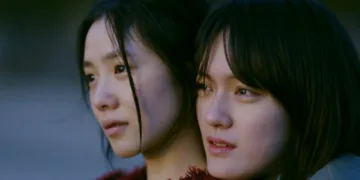


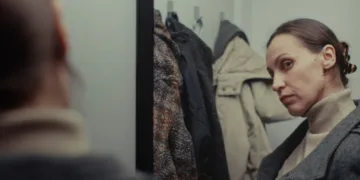
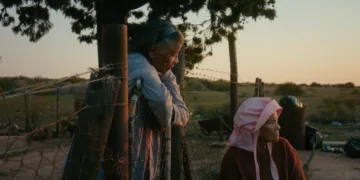


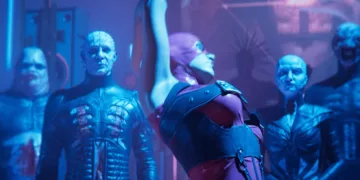





















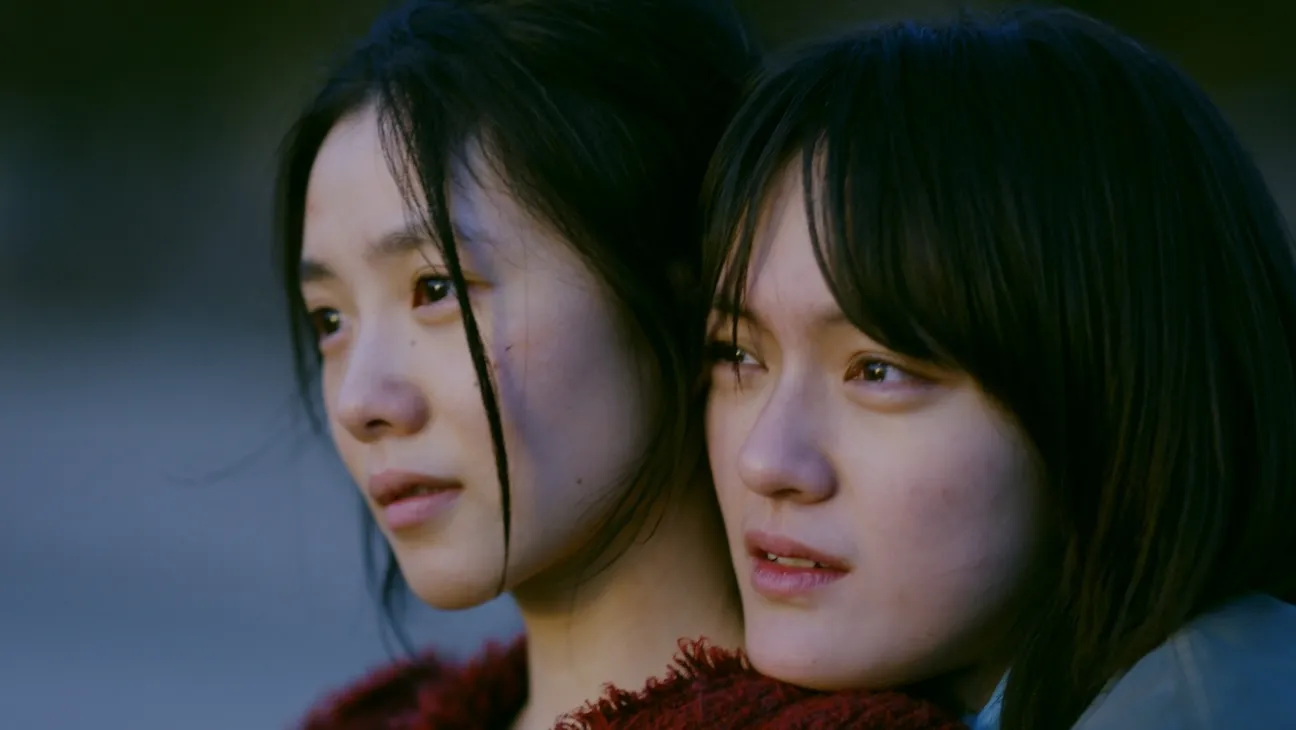

Tian Tian’s bloodied escape from captivity surfaces with harrowing immediacy: a dim tunnel drenched in red light, a razor-edge moment in which she severs both flesh and the cycle of addiction that has stalked her family for decades. Cut to Xiangshan Film City, where Fang Di, a steely stuntwoman, hurls herself through the air on precarious wires, sweat and bruises hidden beneath the sheen of faux martial-arts spectacle. These two threads—one urgent and raw, one choreographed yet perilously real—pull us into Vivian Qu’s latest, her follow-up to Angels Wear White and a standout at this year’s Berlinale.
At its core, Girls on Wire charts two cousins pulled apart by inherited debt and childhood trauma, now forced to reconcile or perish under the weight of mob-enforced loans. Qu shapes a tone that flickers between hard-edged crime thriller and intimate family portrait, punctuated by moments of dark humour when three hapless enforcers wander onto a wuxia set. The stakes could hardly be higher: emotional liberty balanced against the scars of addiction, survival pitted against the debts of the past. In this space between artifice and authenticity, we ask ourselves: can the bonds of memory ever truly set us free?
Shifting Timelines & Emotional Tension
Vivian Qu begins with Tian Tian’s frantic break-out from a dim cell, her silhouette bathed in crimson light. The next instant, we land in Xiangshan Film City’s polished chaos: Fang Di hurtling through the air on invisible wires. That abrupt cut sets a non-linear pattern, tracing childhood memories alongside present-day peril. Flashbacks arrive like echoes—cousins playing hide-and-seek among garment rolls, shared laughter in a cramped factory—then dissolve into their adult realities, where every glance and gesture carries the weight of old wounds.
In the present thread, Tian Tian appears at the studio gates, face bruised, resolve burning. Fang Di endures grueling stunt work—repeated plunges into icy water, take after take—while text reminders from debt collectors flicker on her phone. Their first reunion is muted: a terse nod, a parcel handed off, unease crackling beneath silence. Three loan-sharks trail them through soundstages, their menacing presence undercut by accidental comedy as they blend into background roles. Each moment ratchets tension higher, and small missteps—missed signals, a lingering shot—threaten to expose them.
Flashback segments follow a clear arc. Early bond shines through protective gestures: Fang Di covering Tian Tian’s ears during parental fights, racing through factory corridors. Then fractures form as the father’s addiction consumes the family’s earnings and the mother’s sacrifices go unrecognized. A pivotal flashback shows young Tian Tian’s pregnancy revealed and Fang Di’s agonizing decision to step away. That rupture becomes the emotional fault line around which both timelines pivot.
Qu times these revelations so each memory triggers a key decision: trust a stranger, confront a pursuer, risk everything for one another. Rising tension pushes the story forward until brief lulls invite reflection on how debt and guilt shape choices. Moments where the narrative stalls—waiting in an empty warehouse, scanning old photographs—feel as charged as gunshots. As past and present converge, one question hovers in the air: can these women reclaim their futures when every step is tethered to what came before?
Performing Truth: Faces and Furies
Wen Qi’s Fang Di carries the film on her bruised shoulders—literally and emotionally. Her stunt work isn’t spectacle only; each wire-swing, ice-water plunge and bruised cheek hints at the weight she hauls from years of debt. In one late sequence, as Fang Di executes a flawless flip, her eyes dart to a flashing debt-collector text—an unspoken cut that delivers more narrative punch than a shouted line. That blend of physicality and silent suffering recalls the grit of films like The Wrestler, where the body tells the story.
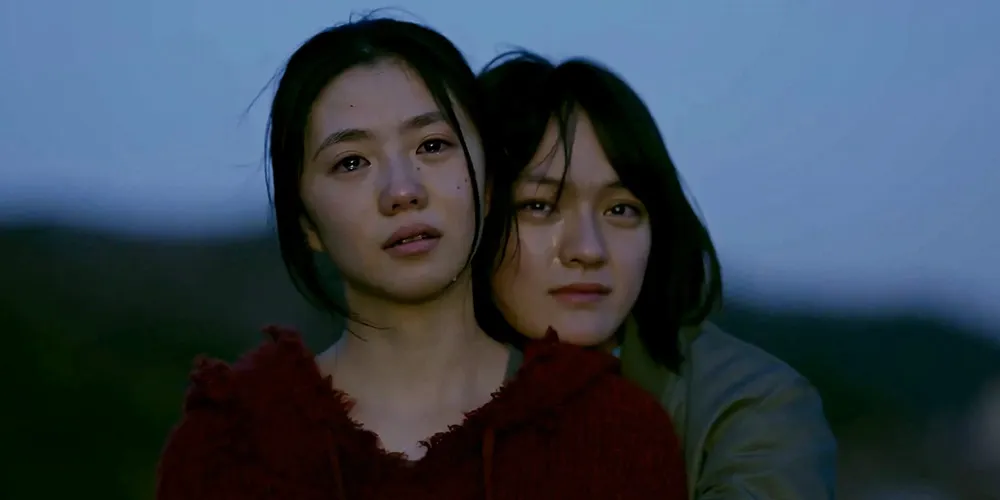
Liu Haocun’s Tian Tian shifts from wide-eyed child to wary single mother with fight-or-flight clarity. In their reunion’s first beat, her trembling hand on Fang Di’s forearm speaks desperation more vividly than tears. Later, when mobsters corner her in a warehouse, her sudden calm—eyes narrowing, breath steady—mirrors the tight pacing of a tension-driven game tutorial, each reaction both taught and visceral. That balance of taught instinct and raw emotion echoes narrative-driven indies such as Fish Tank, where youth grit powers the plot.
Peng Jing’s mother remains the stoic anchor amid chaos, her restraint giving scenes of familial fallout a lived-in weight. Opposite her, Zhou You’s addict father stumbles through scenes like an unpredictable boss fight: one moment pleading, the next lashing out, a volatile source of trauma that shapes both cousins.
The three gangsters arrive as oddball enforcers—part Lock, Stock humor, part lurking menace—illustrating how comic relief can heighten dread when they suddenly turn deadly. Meanwhile, the Film City director and crew loom like an impersonal AI system, pushing Fang Di through routines with little regard for her humanity.
Across flashbacks and studio floors, the cousins’ chemistry fractures tension: childhood embraces cut with abrupt distance in adulthood. Their silent apologies and charged silences sell loyalty and guilt in equal measure. As these performances layer onto Qu’s nonlinear narrative, one question lingers: can the truest connections survive when every act feels choreographed?
Wired Allegories & Inherited Shadows
Debt threads through Girls on Wire like the steel cables in Fang Di’s stunts—taut, unbreakable and carrying the weight of generations. The collapse of the family garment factory doesn’t stay confined to dusty archives; it resurfaces in every phone reminder and every bruised cheek. That moral ledger—of “paying off” sins passed down—reminds me of the indie film Frozen River, where economic desperation drags entire families into dire choices. Here, Qu makes obligation feel less like a plot device and more like a living presence.
Captivity takes two forms: Tian Tian’s literal imprisonment and Fang Di’s emotional tether to the past. When Fang Di soars on wires, the thrills hold a sting of guilt—the very rigging that frees her in the studio binds her to old scars. It’s a potent visual echo of games like Journey, where the means of progress double as reminders of how far one has come and what must be left behind.
Women carry much of the film’s burden. Stunt work, by design, is invisible—Fang Di’s bruises vanish under makeup, her heroics erased in the final cut. That mirrors Tian Tian’s subjugation, first by a drug-addled father, then by underworld muscle. Qu stages both domestic and criminal abuse without flinching, yet never lets victims slip into caricature.
Film City itself feels like a funhouse mirror: rain-drenched streets become backdrops for melodrama, but the tears are real. Layers of performance—actors playing mafia men playing extras—highlight how all of us perform roles scripted by history.
By fusing crime thriller tension, family drama stakes and unexpected humour, Qu asks us to ponder: can any rescue be truly free when the wires themselves carry the echoes of who we once were?
Blueprints of Tension: Visual and Aural Mechanics
Vivian Qu’s direction steers the film through sudden tonal shifts—one moment we’re in a blood-red Chongqing tunnel, the next we’re amidst the precise choreography of a wire-stunt shot. Her screenplay threads family drama and crime-thriller beats, yet dialogue can snap with blunt impact: a single line about inherited debt lands as hard as a final boss reveal in a narrative-heavy game. At times the exchanges feel scripted to hit emotional checkpoints, but those blunt moments serve as anchors amid more subtle thematic currents.
Zhang Chaoyi’s cinematography splits the palette. Tunnels glow in red-tinged shadows, evoking claustrophobic dread akin to a survival-horror title’s opening level. By contrast, the studio’s water-stunt sequences unfold under cool blues, each ice-cold plunge framed in wide compositions that recall the grand vistas of cult arthouse films. Hand-held camera work lends immediacy to present-day scenes—camera breathes with Fang Di’s exertion—while composed tableaux in flashbacks give childhood memories a dreamlike stillness.
Yang Hongyu’s editing strikes a rhythm that alternates pulse-pounding action with quieter reflection. Sharp cuts into chase-driven moments mirror the breakneck pacing of an action game’s combat sequences, then dissolve into slower transitions when the cousins sift through old photographs. That ebb and flow shapes our pulse: when pace flags, emotional stakes surface; when editing races ahead, tension spikes.
Sound design and score heighten immersion. Diegetic elements—water splashes, wire-clink echoes, factory machinery—immerse us in each environment. A sparse score threads through scenes, its low-register hums amplifying dread in pursuit sequences, then soft piano notes undercut flashbacks with bittersweet nostalgia. That interplay of sound layers narrative beats much like a game soundtrack cues boss phases and quieter exploration moments.
Production design turns Film City into a sprawling “dream factory,” each set piece a level in an open-world playground where reality and performance blur. Garment-factory flashbacks feel cramped and dusty, accented by period props that plant us firmly in the past. Costume details—rising blood streaks on stunt-gear, the faded cotton of civilian dress—signal emotional injuries without a word.
These technical choices assemble a world that feels lived-in yet heightened. They ask us to consider how much of our own memories are framed, edited and scored—and what happens when the final cut fades to black.
Playing with Tones: Crime, Drama, Laughter
Girls on Wire kicks off like a classic crime-thriller—think LA Noire without the detective badge—with Tian Tian ducking through shadowed tunnels as unseen pursuers close in. The film leans into cat-and-mouse tension: loan-shark footsteps echo like a game’s stealth section, each heartbeat magnified by sound design. Violence arrives unannounced—a sudden stab, a harsh gunshot—and suspense ripples through opening and pursuit sequences with director Qu’s uncompromising focus.
Then the narrative shifts gears into domestic drama territory. Flashbacks to factory corridors and childhood games rehearse emotional stakes in cousin bonds. These melodramatic pivots echo heart-sting moments in cult films such as Blue Valentine, where intimate revelations cut deeper than any bullet. When tears surface, pacing slows just enough for grief to register fully.
Comic relief arrives with three gangsters stumbling onto film sets, improvising extra roles in snippets that recall the misfit humor of indie gems like In Bruges. Their bumbling presence undercuts danger—yet laughter only sharpens anxiety when they suddenly turn lethal.
Those abrupt tonal jumps can jar—suspense looping into sorrow, then humor—but they inject unpredictability. Viewers ride waves of adrenaline, empathy, and laughter almost back-to-back. Such shifts test immersion: will you stay tethered to the cousins’ plight or get pulled into each new rhythm?
Echoes Beyond the Frame
Certain moments refuse to fade: Pang Di’s submerged stunt, gasping for air under floodlights, then snapping back upright—each shot lingers like a high-stakes boss fight etched into memory. A quieter memory surfaces when young Tian Tian clasps her cousin’s hand during a factory fight—simple touch charged with years of unspoken guilt. Those parent-child flashes and action-peril beats carry emotional weight long after the credits roll.
On another level, Girls on Wire functions as a window into Chinese film-production’s factory-like grind. Film City’s sprawling backlots stand in for the industry’s assembly lines, where women’s labour—both on set and at home—goes largely unseen. Qu builds on her work in Angels Wear White, trading festival mystery elements for broader-scale ambition and a shinier polish. The result hints at a director ready to navigate larger budgets without losing thematic depth.
Viewers may find themselves debating where this film sits: niche arthouse territory or mainstream thriller. Themes of debt, inherited trauma and the cost of escape invite conversation long after the screening. In spotlighting underexamined corners—stunt crews, indebted families, female resilience—Qu challenges us to ask: which stories remain wired out of sight, waiting for their moment to break free?
Full Credits
Director: Vivian Qu
Writer: Vivian Qu
Producers: Sean Chen, Hong Qin, Xu Jiahan
Cast: Liu Haocun, Wen Qi, Zhang Youhao, Zhou You, Peng Jing, Yang Haoyu, Liu Yitie
Director of Photography (Cinematographer): Chaoyi Zhang
Editor: Hongyu Yang
Composer: Zi Wen
The Review
Girls on Wire
Girls on Wire delivers potent portrayals of familial trauma set against a gritty crime backdrop, anchored by compelling performances and striking visuals. While shifts between drama and humour can disrupt momentum, the film’s emotional core and inventive staging hold attention. Qu’s ambition remains clear, hinting at richer terrain ahead.
PROS
- Compelling performances from Wen Qi and Liu Haocun
- Visually striking cinematography with vivid color contrasts
- Tension in stunt and chase sequences holds attention
- Thematic depth around debt, guilt and liberation
- Memorable interplay of humour and suspense
CONS
- Abrupt tonal shifts can disrupt pacing
- Occasional heavy-handed dialogue
- Comic relief moments sometimes undercut drama
- Flashback transitions feel uneven
- Mob subplot underexplored