




























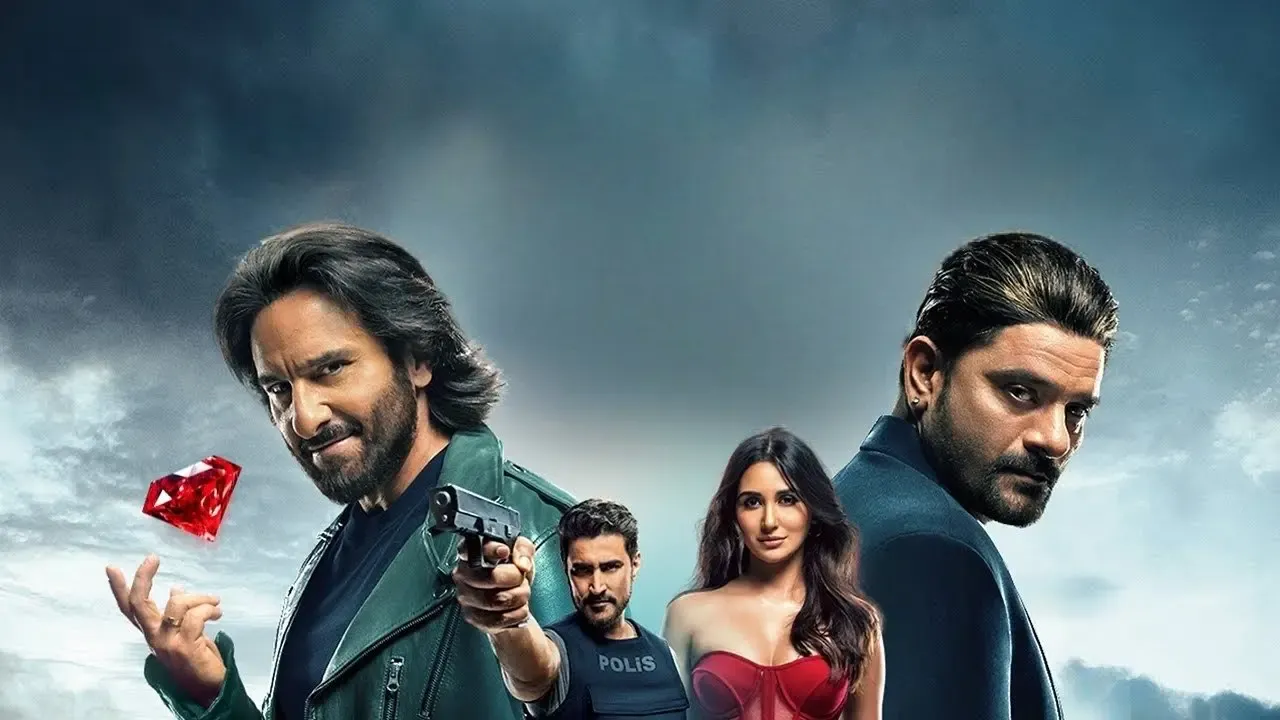

From its first frames, Jewel Thief: The Heist Begins announces itself as an East-meets-West heist thriller, merging Bollywood’s flair for spectacle with the disciplined tempo of global caper films. Saif Ali Khan embodies Rehan Roy, a charismatic burglar who’s lived abroad under a cloud of family disgrace. When crime lord Rajan Aulakh (Jaideep Ahlawat) threatens Rehan’s kin to secure his expertise, the stage is set for a contest of wit, loyalty and high-stakes robbery.
The film’s energy hinges on the tension between Rehan and Vikram Patel (Kunal Kapoor), an upright investigator whose respect for his quarry hints at comradeship beneath rivalry. Nikita Dutta appears as Farah, Rajan’s spouse, whose shifting devotion becomes a key fault line in the plot. Striking cinematography —notably a sequence where Rehan scales a museum wall— a score that pulses with orchestral underscores, and crisp editing unite to sustain forward momentum.
Jewel Thief explores familiar motifs—family bonds tested by greed, the allure of forbidden luxury—yet nods to international sensibilities through its urban landscapes, sleek costumes and measured action choreography. It stakes a claim for Bollywood’s place in the modern heist canon, aiming to satisfy viewers who expect both emotional depth and polished stunt work. In weaving references to India’s storied traditions of jewelry craftsmanship and the cinematic lineage of thievery, it positions itself at the intersection of regional folklore and contemporary style.
Mapping the Heist’s Rhythm
From the moment Rehan Roy (Saif Ali Khan) returns to Mumbai, the film stakes its claim on a familiar yet effective blueprint. Exiled after defying his family’s honor code, Rehan arrives under a cloud of paternal disapproval—a trope that harks back to Bollywood dramas of the 1970s but recast here in slick, modern hues. Rajan Aulakh (Jaideep Ahlawat) emerges amid gleaming art pieces, his cultured veneer concealing ruthless demands. When Rehan’s aging father receives threats, the stage for coercion is set: duty to blood ties outweighs any moral hesitation.
Soon the chase begins. Inspector Vikram Patel (Kunal Kapoor) pursues Rehan with a measured courtesy rare in Indian cinema’s typical cat-and-mouse narratives. Their exchanges—equal parts respect and one-upmanship—recall European thrillers where adversaries share an unspoken code.
Meanwhile, planning unfolds through methodical safe-cracking demonstrations and precise surveillance of the Red Sun diamond, a sequence framed with tight edits and low-light cinematography that nods to Noir influences without losing Bollywood’s penchant for spectacle. Amid these preparations, Farah (Nikita Dutta) stands at a crossroads: loyalty to her husband or fascination with Rehan’s roguish charm.
When execution day arrives, the film pivots into high-velocity mode. An airport escape employs long takes that track Rehan’s fluid movements through crowds—a style evocative of global blockbusters yet grounded in Mumbai’s bustle. Infiltrating the museum, he navigates infrared beams with balletic precision, recalling Mission: Impossible’s signature tension but filtered through Kookie Gulati’s bold shot compositions. Each near-miss—Rehan ducking beneath laser grids, guards arriving seconds too late—builds anticipations that rarely dissipate.
Tension peaks in a mid-air showdown: the Red Sun diamond disappears amid clouds, its glitter dwarfed by the expanse below. Here, editing sharpens every heartbeat, cutting between desperate faces and shifting alliances. The threat to Rehan’s family is lifted, yet subtle story threads remain untied—hints at a sequel whisper promises that “The Heist Continues.” In balancing classic Bollywood motifs with international heist conventions, this section of the film anchors its thrills in cultural resonance and kinetic precision.
Faces Behind the Heist
Saif Ali Khan brings a practiced lightness to Rehan Roy’s dangerous game. His Rehan thrives on adrenaline—Saif’s playful swagger during a rooftop escape recalls early Bollywood anti-heroes, yet he pauses mid-leap to reveal genuine concern when news of his father’s plight arrives.
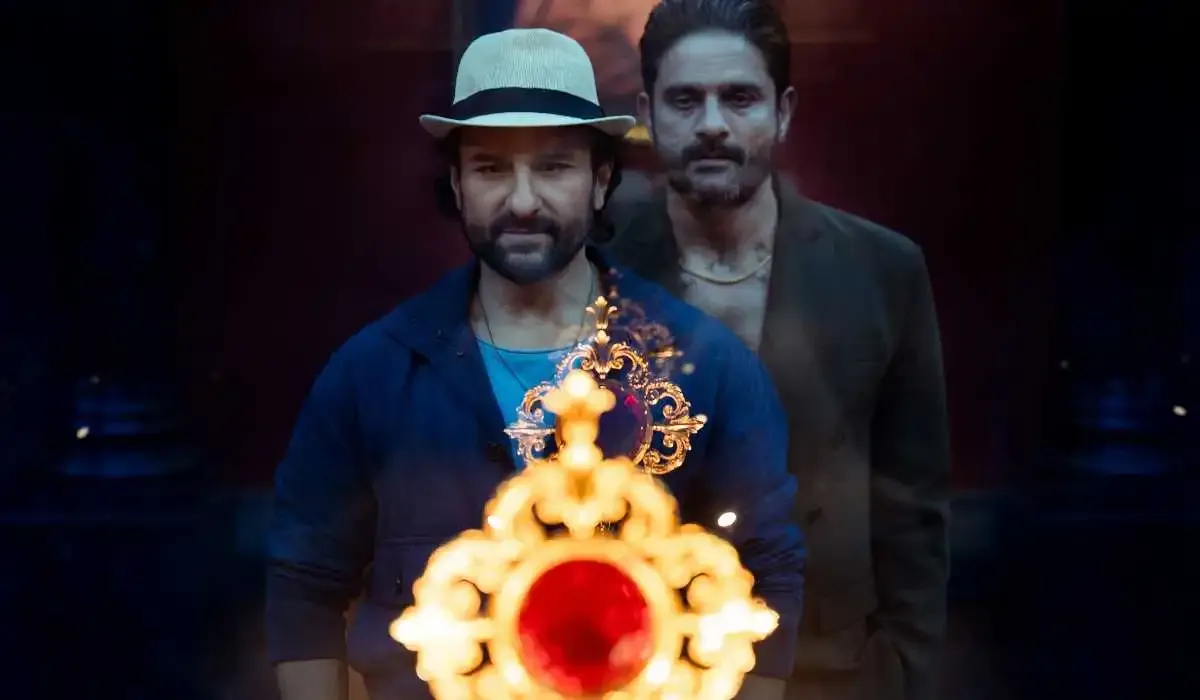
In moments of quiet menace—such as the close-up on Rehan’s narrowed eyes before cracking the Red Sun’s vault—Saif anchors the character’s moral ambiguity. His transformation from reluctant outlaw to decisive tactician unfolds through confident posture and clipped dialogue, offering a study in controlled charisma.
Jaideep Ahlawat establishes Rajan as a figure of cultured dread. Early scenes frame him among antique sculptures and oil paintings, visual cues that hint at refined taste turned corrupt. His measured monologues—delivered with slow precision—contrast sharply with sudden bursts of violence, underscoring a divided nature. While Ahlawat commands the frame whenever Rajan appears, the screenplay underuses hints at past trauma or ideological drive that might explain his ruthlessness, leaving a performance tantalizing but underexplored.
Nikita Dutta’s Farah is poised at a crossroads between duty and desire. When she and Rehan share a silent glance during the museum planning, the camera holds on her expression long enough to imply shifting loyalties. Yet moments intended to reveal inner conflict—her hesitation before slipping a keycard—often feel sketched in broad strokes. Dutta’s screen presence lends glamour to Farah, but the writing limits deeper emotional texture.
Kunal Kapoor invests Inspector Vikram Patel with a principled warmth. His exchanges with Rehan—half salute, half warning—capture a rapport that echoes buddy-cop films of Europe. Kulbhushan Kharbanda, as Rehan’s estranged father, offers quiet gravitas in a few tender scenes, heightening stakes when Aulakh’s threats land. Across minor roles—airport guards, tech experts—the cast forms a cohesive web of tension and empathy, giving the film’s set pieces a lived-in authenticity.
Framing the Heist in Light and Motion
The film bathes Mumbai’s streets in chiaroscuro, with deep shadows punctuated by neon signage that evokes both the city’s pulse and Hollywood’s noir heritage. Cityscapes shimmer under rain-slick pavements and spindly lampposts, while inside Rajan’s art showroom and the museum, warm amber tones signal luxury and hidden menace. These contrasting palettes—cool blues in back alleys, burnished gold in vault rooms—guide the viewer’s emotional response to each locale.
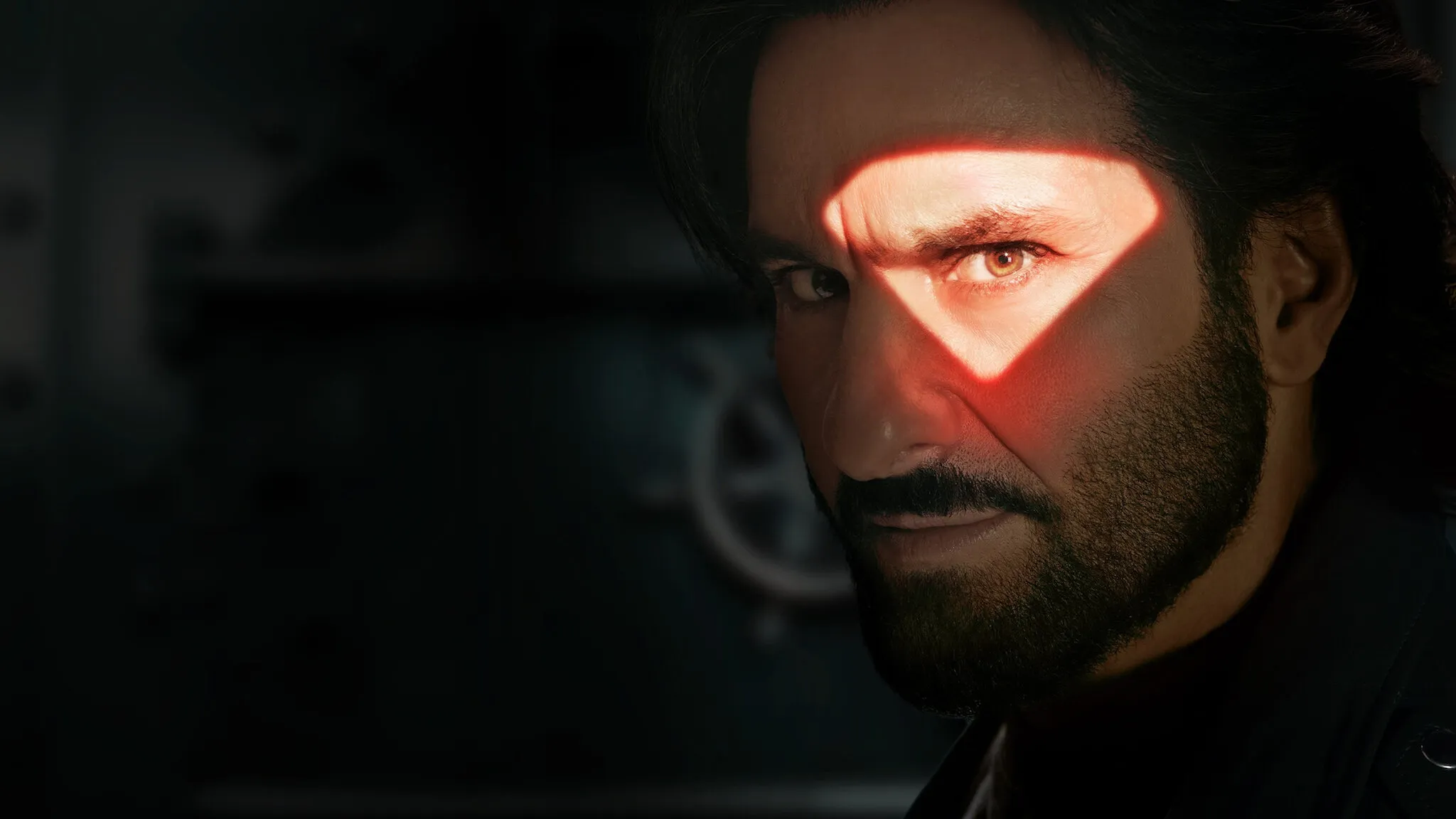
Director of Photography David Logan employs fluid tracking shots to accentuate Rehan’s agility. In the standout wall-walk sequence, the camera sticks close behind Saif Ali Khan, creating a vertiginous effect that recalls global action set pieces yet remains grounded in the cramped architecture of a historic Mumbai building. When tension mounts, tight close-ups on characters’ eyes or gloved hands cracking a safe inject personal stakes into mechanical tasks.
Production design leans into texture: Rehan’s tailored suits and crisp gloves underscore his professionalism, while Farah’s understated silk saris hint at her dual life. The museum’s polished marble floors and velvet-lined display cases contrast with the threadbare upholstery of Rehan’s family home, visual shorthand for class divides. Even the airport lounge—ornate screens and bronze fixtures—becomes an arena for high-stakes pursuit.
Choreographed stunts unfold with clear geography, avoiding disorientation. Editors splice wide establishing shots with swift inserts—timers ticking, laser beams slicing through corridors—to build urgency. Montage sequences accelerate planning phases with quick cuts between blueprints, tech readouts and Rehan’s rehearsals, mirroring techniques in Western capers while honoring Bollywood’s rhythmic storytelling pace. Together, these visual choices craft a cinematic language that speaks to both Indian traditions and trends in global thriller cinema.
Echoes of Intrigue
The original score weaves tension with emotional resonance. Sparse strings and low-register brass surface whenever Rehan plans a move, while a haunting woodwind motif signals Rajan’s calculated menace. These recurring themes guide viewers through suspenseful passages and quieter moments—Saif’s silent determination or Farah’s whispered crisis—mirroring techniques found in European thrillers where character leitmotifs heighten narrative depth.
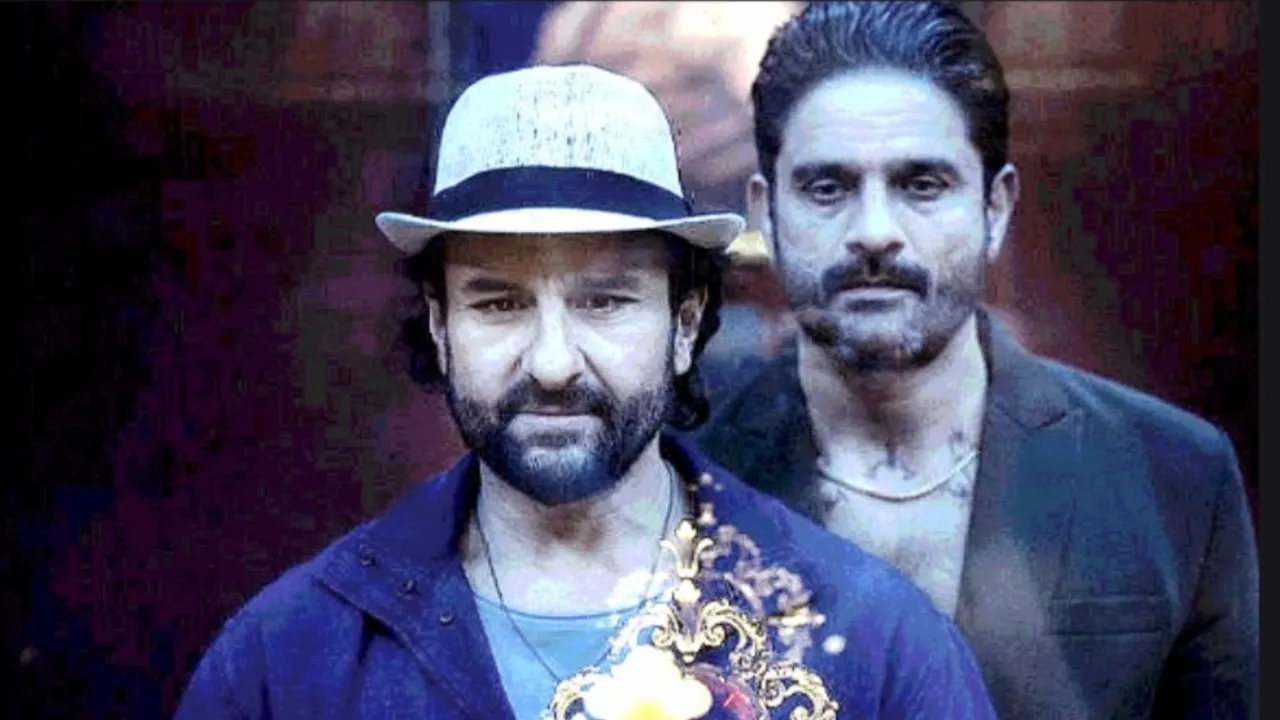
Bollywood’s signature song-and-dance tradition makes a subtle appearance: a brief nightclub sequence features diegetic music that blends contemporary electronic beats with tabla rhythms. The placement feels earned—characters navigate under its pulse—and then the score fades back into orchestral beats, avoiding abrupt tonal shifts common in older Hindi films.
Attention to foley work grounds each heist scene in tactile realism. The metallic click of tumbler pins, echoing in a cavernous vault, and the crisp snap of Rehan’s lock tools create a hands-on intimacy. Gunshots crack sharply against marble walls, while hushed footfalls on museum floors introduce a hushed dread. Ambient hums—air conditioning in the gallery, distant airport announcements—fill space without overpowering dialogue.
Mixing prioritizes clarity: spoken lines remain crisp over swirling background noise, ensuring cultural references or technical jargon land with impact. In moments of peak tension, the soundscape tightens, layering percussive pulses that ratchet anxiety. Occasionally, silence itself becomes a tool, cutting all sound before a sudden action beat—a tactic borrowed from global caper films to maximize surprise.
Threads of Deception and Duty
The film places family obligation above personal gain, reflecting India’s long-standing emphasis on kinship. Rehan risks everything to protect his father—his actions mirror stories in classic parallel cinema, where moral compromise serves a higher cause. Yet when he crosses the line into violence, viewers confront the cost of devotion.
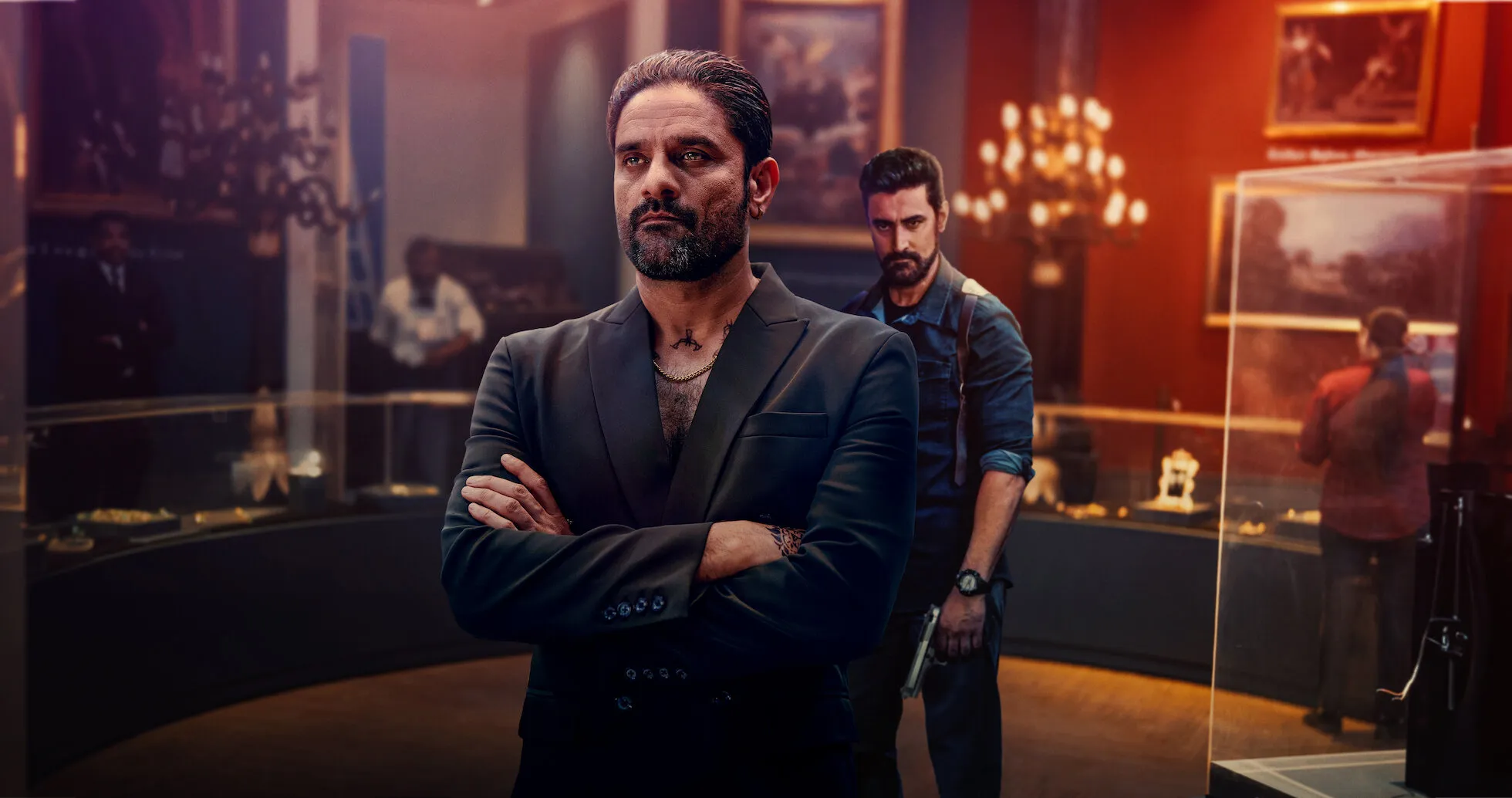
Shifting loyalties drive emotional tension. Farah’s silent allegiance to Rehan during the museum infiltration undercuts her marriage vows, echoing betrayals in global caper sagas like Heat. Meanwhile Vikram’s admiration for Rehan, born from years of pursuit, challenges traditional hero–villain dynamics.
Rehan embodies the exile’s paradox: a prodigal son living abroad, celebrated overseas yet cast out at home. Bollywood has long explored identity reinvention—from Don’s suave impostor to modern thrillers—yet here his two worlds collide in each meticulously staged heist.
Power plays emerge through manipulation of desire. Rajan uses fear of harm to control Rehan, evoking colonial-era exploitation of precious stones. Conversely, Vikram wields institutional authority with firm respect, suggesting law enforcement as a moral counterweight.
Beneath the film’s gleaming veneer—sumptuous sets, slick editing—lies an uneven emotional core. The diamond’s allure dazzles, yet character motivations sometimes feel sketched. This tension between spectacle and substance recalls broader debates in world cinema about form over feeling.
Momentum and Mechanics
While Jewel Thief surges ahead in its setup and elaborately staged planning, occasional dips in tension during dialogue-driven scenes remind viewers of Bollywood’s dramatic heritage. The film holds pace through swift cuts in the museum infiltration and the mid-air showdown, yet extended expository exchanges slow the rhythm, echoing the careful build of classic Hindi thrillers rather than the unrelenting push of modern capers.
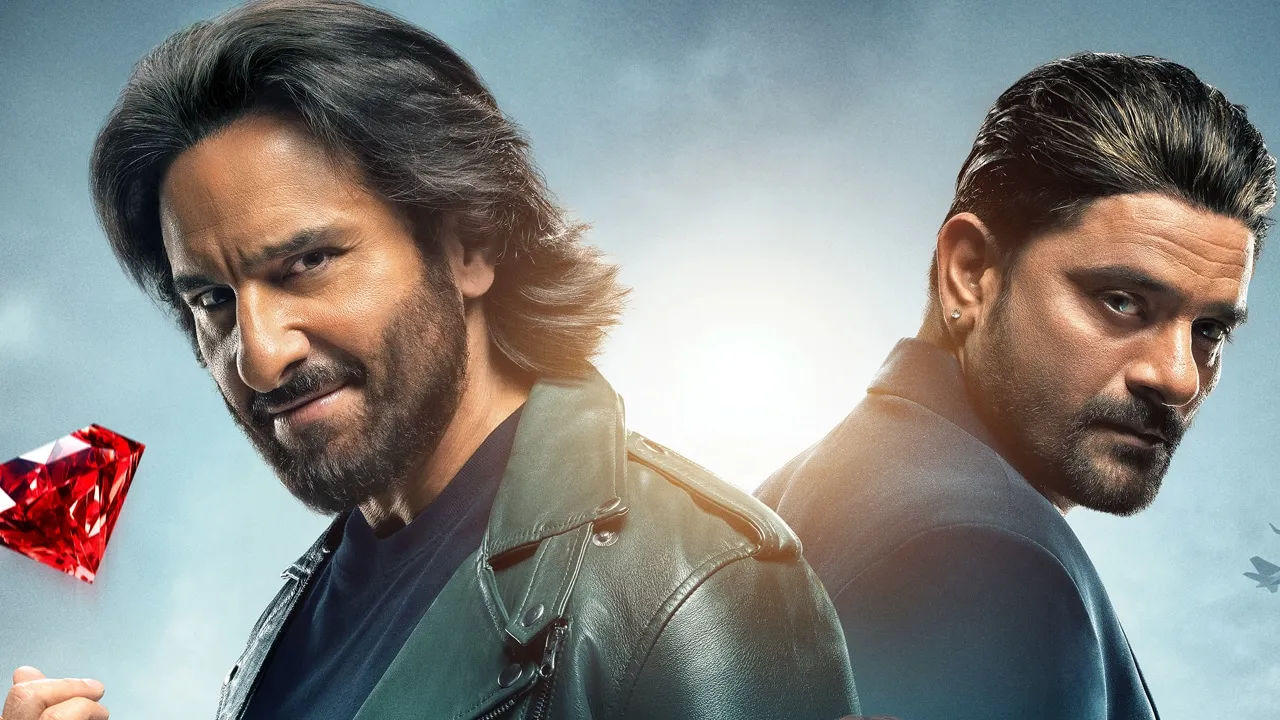
Editing stitches action and drama with smooth fades and straight cuts. Cross-cutting between Rehan’s calculated maneuvers and Vikram’s disciplined pursuit heightens suspense in key sequences—an approach borrowed from global thrillers—while transitions from high-octane chases to family moments generally feel seamless, though abrupt shifts occasionally jar tonal balance.
Character motivations stay coherent even when the plot leans on chance—like backup arriving just in time—to advance the storyline. Open-ended hints at Farah’s future and Rehan’s next caper lay groundwork for a sequel, planting just enough intrigue to draw audiences back while leaving central questions unresolved.
Full Credits
Directors: Kookie Gulati, Robbie Grewal
Writers: Sumit Arora (dialogue), Sambit Mishra (screenplay)
Producers and Executive Producers: Siddharth Anand, Mamta Anand, Anna Sesztakova, Amreesh Manjrekar
Cast: Saif Ali Khan, Jaideep Ahlawat, Nikita Dutta, Kunal Kapoor, Kulbhushan Kharbanda, Gagan Arora, Ravi Mariya, Loitongbam Dorendra Singh, Shaji Chaudhary, Sumit Gulati, Meenal Sahu, Varun Sharma, Ayaz Khan, Vinay Sharma, Chirjot Singh Kohli, Peter Muxka Manuel
Director of Photography (Cinematographer): Jishnu Bhattacharjee
Editor: Aarif Sheikh
Composers: Shezan Shaikh (score), Sachin–Jigar, OAFF–Savera, Soundtrek–Anis Ali Sabri (songs)
The Review
Jewel Thief
Jewel Thief: The Heist Begins offers a sleek fusion of Bollywood spectacle and international heist craft. Saif Ali Khan’s agile performance and Jaideep Ahlawat’s brooding menace anchor the film, while its polished stunts and vibrant visuals keep momentum high. Though emotional depth sometimes falters and a few narrative conveniences strain credibility, the movie delivers enough flair and tension to entertain.
PROS
- Dynamic action set pieces that maintain excitement
- Strong chemistry between Saif Ali Khan and Jaideep Ahlawat
- Visually striking cinematography with bold colour contrasts
- Engaging score and immersive sound design
- Smooth integration of Bollywood flair with international heist style
CONS
- Supporting characters feel underwritten
- Emotional stakes occasionally lack depth
- Plot twists follow familiar patterns
- Moments of pacing slowdown during expository scenes