

















Living the Land opens like a rural coming‑of‑age epic that traces one child’s shifting sense of belonging amid fields on the brink of transformation. Central is Xu Chuang, a ten‑year‑old left in his extended family’s care in Henan in 1991, as China’s social fabric begins to realign. The narrative follows a single cycle of spring, summer, autumn and winter, offering glimpses of four generations bound by ancestral ritual.
Huo Meng alternates between austere, muted frames of kilns and dry earth and brief bursts of lyricism, such as a vividly lit wedding procession punctuated by firecracker echoes. Funerals and festivals flow into one another, underscoring how life’s milestones carry equal weight.
When a lone tractor arrives, it stands out like an outsider challenging centuries‑old farming customs. For global viewers, there are hints of India’s parallel cinema—think the quiet observation of Ray’s Pather Panchali or the unvarnished humanism of Nihalani’s Aakrosh—yet Huo’s approach remains firmly rooted in local texture.
His patient pacing and observational camera recall art‑house films from South Asia to Europe that prize cultural authenticity. Through Chuang’s voice‑over drifting over each season, we witness a boy’s identity evolve within communal hardship, laying the groundwork for a deeply human portrait grounded in soil and memory.
Harvesting Change: Life in Henan’s Fields
Set in 1991 rural Henan, Living the Land captures a village on the cusp of China’s market‑economy surge. The film locates us amid cracked earth and low‑voltage wires, where four generations—great‑grandparents, parents, youth and children—share a cramped courtyard. This communal roof recalls the joint families of Indian parallel cinema, from Satyajit Ray’s humanist lens to Govind Nihalani’s social dramas, where communal bonds frame personal struggle.
Huo Meng weaves the one‑child policy into everyday life: local officials administer pregnancy checks on women, echoing how Bollywood’s socially conscious works have drawn attention to state control over private bodies. A tense scene of sterilization exams is shot with lingering close‑ups and natural light, underscoring the intrusion of policy into wombs and homes.
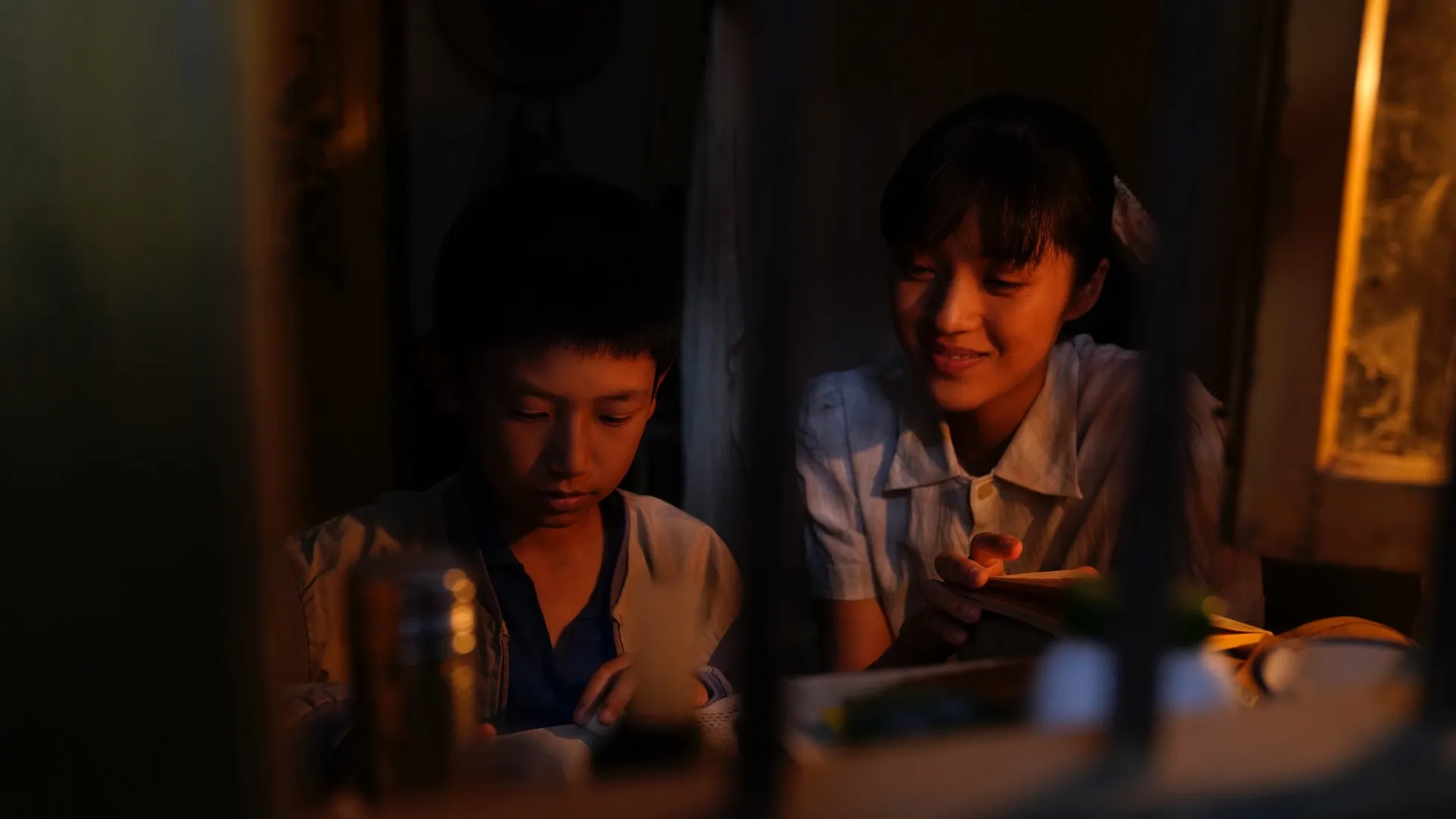
Economic hardship surfaces in details: villagers fire bricks in smoky kilns, some sell blood for cash, and kerosene lamps spill shadows in dim interiors. When a lone tractor rumbles into view, its gleaming metal cuts through hand‑tilled fields—an emblem of industrial forces encroaching on ancestral rhythms.
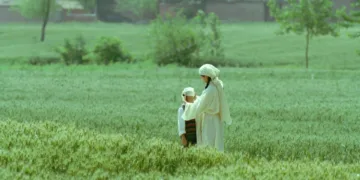
Huo structures the plot around four seasons. The flush of spring planting yields to the weight of winter frost, suggesting how hope and hardship cycle together. His editing marks these shifts in time with simple fades and silent interludes, while Guo Daming’s wide shots let us feel the land’s scale and the villagers’ smallness against history’s sweep.
Seasons of Change: Mapping the Film’s Rhythms
Huo Meng divides Living the Land into four seasonal chapters, each anchoring a key moment in village life. Spring opens with the matriarch’s funeral and the delicate exhumation ritual that brings Xu Chuang and his extended kin together. These early scenes introduce the main characters—the stern uncles, the chatterbox great‑grandmother, Aunt Xiuying’s distant smile—while setting a tone of sober ceremony reminiscent of Satyajit Ray’s respectful portrayals of rites in rural Bengal.
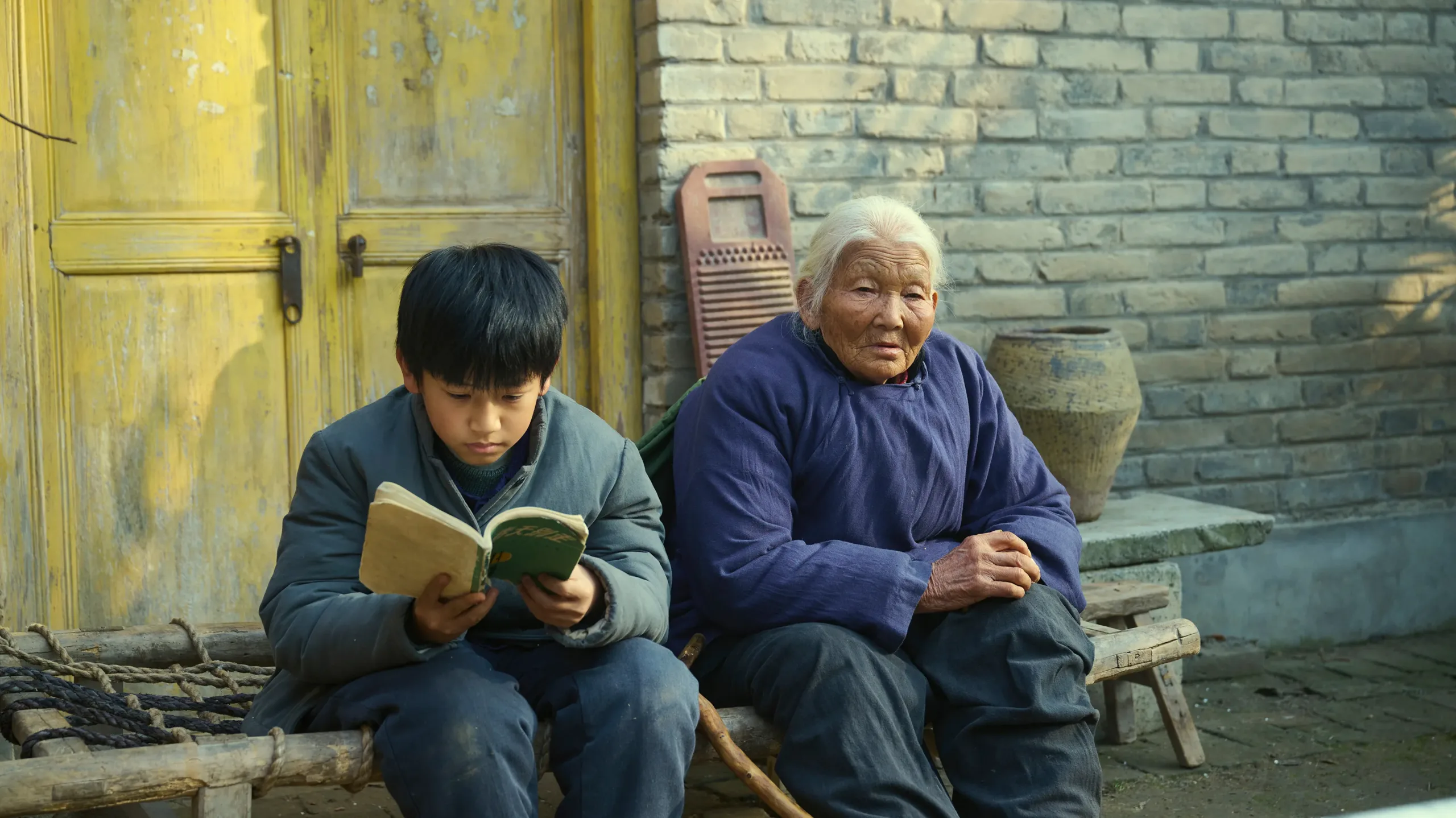
When summer arrives, weddings and folk festivals burst into the frame: women in bright scarves, firecracker snaps slicing through warm dusk, children dancing among lanterns. Here, subtle hints of outside influence emerge. A teacher’s note passed through Chuang’s schoolbook foreshadows tensions around arranged marriages, recalling the quiet defiance found in Ritwik Ghatak’s family dramas where personal longing collides with communal expectation.
By autumn, harvest scenes take center stage. Long takes of villagers bending over wheat stalks shift the mood to one of urgent labor. Conversations turn to rising costs, and the camera lingers on furrowed brows as technology knocks at the village boundary. The editing pace remains deliberate, allowing daily routines—milking goats at dawn, hauling grain—to speak to the tug between time‑honored methods and modern promise.
In winter, a gleaming tractor becomes a focal point. When it sinks into the mud, the extended family bands together to free it, forging an unexpected communion of muscle and resolve. This collective effort serves as the film’s emotional apex, uniting tradition and transformation in a single, mud‑caked tableau.
Throughout, Chuang’s first‑person narration—his uncertain surname, questions about his parents’ distant city—provides an intimate counterpoint to this measured pacing. Key turning points such as Aunt Xiuying’s arranged marriage and cousin Jihua’s ostracism over cognitive challenges ground the narrative in personal stakes. In place of conventional plot twists, Living the Land relies on the shifting interplay of seasons to chart change, inviting viewers to witness how a community’s roots adapt when new forces tip the landscape.
Faces of the Harvest: Performances Rooted in Reality
At the center of Living the Land is Xu Chuang (Wang Shang), whose combination of wide‑eyed innocence and private shame anchors the story. His bed‑wetting and schoolyard taunts reveal a child caught between vulnerability and an instinct to observe. Like Apu in Pather Panchali, Chuang carries the weight of a family’s hopes even as he struggles with small humiliations.

Zhang Chuwen’s Aunt Xiuying emerges as the film’s emotional catalyst. Her stolen glances at the village teacher and the secret note passed through Chuang’s schoolbook recall the quiet rebellions in Indian parallel films such as Mrinal Sen’s explorations of personal freedom. Xiuying’s gentle defiance during state‑mandated pregnancy checks speaks volumes about women’s agency under rigid social structures.
Zhang Yanrong’s great‑grandmother provides a bridge to the past. With a soft smile and tales of childhood mischief, she embodies matriarchal wisdom. Her final winter scene—eyes bright with both grief and acceptance—mirrors moments in Satyajit Ray’s later works, where elders offer solace amid sweeping change.
Jihua (Zhou Haotian) confronts stigma head‑on. His cognitive disability becomes a focal point for village derision, yet his presence forces each family member to reckon with shared responsibility. In one harvest‑time sequence, Jihua’s awkward laughter cuts through hushed whispers, underscoring how communal bonds can fracture under stress.
Supporting adults round out the tapestry. Chuang’s parents appear briefly, their quiet tears on the train platform hinting at pragmatic sacrifice. Uncles patrol the courtyard with stern authority, while mothers exchange anxious whispers about dwindling resources. These non‑professional actors bring genuine dialect and mannerisms to every scene, much like the cast of Rima Das’s Village Rockstars.
Together, this ensemble forms a living mosaic of rural life. Naturalistic exchanges—children chasing chickens, elders debating rituals—ground the narrative. The authenticity of language and gesture gives each encounter weight, drawing viewers into a world where every glance and gesture carries the echoes of history and hope.
Earth, Lens and Echo: Crafting the Village’s Rhythms
Guo Daming’s cinematography treats the Henan countryside with an almost anthropological detachment, echoing the observational clarity of Satyajit Ray’s Pather Panchali. Wide‑angle compositions foreground villagers against vast fields, each unvarnished frame emphasizing soil, kilns and that lone tractor. In spring, shoots glow vibrant green; by winter, the palette shifts to chalky whites and muted browns—visual cues of hope giving way to hardship.
Camera movement is judicious and unhurried. Slow pans drift across rippling wheat, while intimate close‑ups—Chuang’s anxious face as he hears distant firecrackers—feel earned. Tracking shots follow women hauling water, their silhouettes gradually dwarfed by the horizon. This balance of scale mirrors the subtle framing in Indian parallel films such as Shyam Benegal’s Ankur, where daily labor becomes cinematic poetry.
Production design reinforces authenticity: sun‑bleached mud walls, hand‑stitched tunics and period‑accurate schoolbooks ground every moment in 1991. There’s no artifice—no ornate sets or anachronistic props—just lived‑in spaces that resonate like a Rima Das village portrait.
Sound design by Li Tao weaves ambient textures into the film’s fabric. Footsteps crunch on harvested stalks, children’s laughter echoes across courtyards, and the distant pop of firecrackers signals both celebration and unease. Over the end credits, Wan Jianguo’s understated electronic score offers a modern punctuation that feels at once foreign and fitting, much as A. R. Rahman has introduced new sonic palettes to Bollywood’s roots.
Editing remains patient: gentle ellipses mark seasonal transitions, and occasional lyrical montages—like a harvest dance sequence—momentarily lift the film’s realist weight without breaking its spell. The result is a sensory tapestry where land, lens and sound belong inseparably to the story they tell.
Fields of Transition: Symbols and Sentiments
Huo Meng weaves tradition and modernity into every frame. The tractor’s gleaming steel stands alone in muddy furrows, offering villagers a chance at efficiency yet hinting at loss of ancestral rhythms. Similarly, the late‑’80s family‑planning inspections—cold clinical scenes of local officials checking women—remind us that state policy can reshape private life as forcefully as any machine.
Belonging feels fragile for Xu Chuang. His uncertain surname and the repeated reminder that “this is not your place” echo themes in Mira Nair’s The Namesake, where identity wavers between two worlds. Here, the land doubles as cradle and cage; Chuang’s voice‑over drifts over fields whose soil both sustains and confines him.
Through four generations, Huo tracks cultural erosion. Great‑grandmother accepts change with serene resignation, while younger adults trade field tools for fleeting curiosity about Shenzhen’s neon promise. This tension recalls the generational conflicts in Mrinal Sen’s Calcutta Trilogy, where youth yearn for escape while elders cling to memory.
Women in this village face another barrier. Aunt Xiuying’s arranged marriage unfolds with ritual pageantry that mirrors funeral rites—both communal displays of duty. That domestic ceremonies carry the same firecracker snaps and drumbeats underscores how power over bodies can feel indistinguishable from rites of passage.
Still, solidarity emerges in shared grief and celebration. When winter’s frost traps the tractor in ice, the entire family—children, elders and all—heaves together, a moment of collective resolve. These scenes pulse with the same communal heartbeat found in Rima Das’s Village Rockstars, where hardships become bonds rather than breaks.
In quiet interludes—a child’s tear, a final snowfall—lyricism seeps through hardship. The film’s emotional landscape lingers long after the credits roll, its beauty born of sorrow and solidarity.
From Quiet Fields to Distant Horizons
This film offers an unflinching look at rural life, combining plainspoken observation with moments of lyrical beauty. Its unvarnished honesty reveals the weight of generational rituals, while its subtle shifts in color and light carry deep emotional resonance. Guo Daming’s camera captures both the expanse of harvested fields and the close‑up vulnerability of Wang Shang’s Chuang, creating a visual poetry that stays with you long after each season passes.
Art‑house enthusiasts and coming‑of‑age devotees will find much to admire here, as will viewers drawn to social‑realist storytelling. Those curious about global parallels—whether in India’s parallel cinema or contemporary European village dramas—will appreciate how Huo Meng places his characters at the nexus of private longing and sweeping change.
Huo Meng’s move from a road‑movie debut to this intimate generational saga marks a significant step in his evolution as a filmmaker. Living the Land stakes its claim alongside China’s finest modern works, standing out for its restrained energy and deep sense of place. Its portrait of four generations negotiating tradition and progress resonates with cross‑border echoes of community‑focused narratives.
The final shot lingers on a winter landscape where villagers tug together on a mud‑stuck tractor, their silhouettes dwarfed by skeletal trees. Those same trees suggest the looming skyline of tomorrow’s cities—a powerful reminder that the old ways and the new world will continue to intersect.
I invite readers to step into this world of dust and frost, where each whisper of wind carries the promise and peril of what lies ahead.
Full Credits
Director: Huo Meng
Writer: Huo Meng
Producers: Zhang Fan
Executive Producers: Wang Jun, Jiang Hao, Yao Chen, Cai Yuan
Co-Producers: Xu Chunping, Liu Junhe, Liu Yi, Zeng Jiyuan
Cast: Wang Shang (Xu Chuang), Zhang Chuwen (Li Xiuying), Zhang Yanrong (Mrs. Li-Wang), Zhang Caixia (Sun Guilan), Cao Lingzhi (Wang Cuifang), Zhou Haotian (Jihua), Jiang Yien (Laidan), Wan Zhong (Tuanjie), Mao Fuchang (Gongchang), Yang Kaidong (Fuhe)
Director of Photography (Cinematographer): Guo Daming
Editor: Huo Meng
Composer: Wan Jianguo
Sound Design: Li Tao
Production Design: Yu Shuyao
Casting: Cui Yuanyuan
The Review
Living the Land
Living the Land paints a vivid portrait of generational bonds tested by change, pairing spare yet luminous visuals with deep emotional currents. Wang Shang’s Chuang guides us through rituals both tender and unforgiving, while Guo Daming’s camera honors the land’s rhythms. This quietly gripping study of tradition on the brink resonates long after the credits roll.
PROS
- Authentic portrayal of rural life and traditions
- Wang Shang’s nuanced performance as Xu Chuang
- Guo Daming’s evocative, season‑spanning cinematography
- Naturalistic sound design that grounds the film
- Rich thematic layers on change, family and belonging
CONS
- Deliberate pacing may feel slow to some
- Minimal narrative twists beyond slice‑of‑life moments
- Supporting characters receive limited development
- Sparse musical underscore might leave viewers wanting more