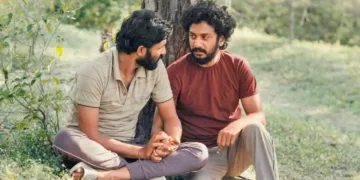






























Rohan Parashuram Kanawade’s debut feature, Sabar Bonda (also known as Cactus Pears), marks an important moment in Indian cinema. Set in the rural heartlands of Maharashtra, the film explores themes of grief, identity, and societal expectations through the tender relationship between two men, Anand and Balya.
Anand, a call-center worker from Mumbai, returns to his ancestral village after his father’s death to observe the ten-day mourning period—a traditional custom fraught with both personal and cultural tensions. As Anand reconnects with his childhood friend Balya, a farmer who also grapples with his own unspoken queerness, the film delves into the unvoiced emotional landscapes of rural India, where same-sex love remains a shadow of societal repression.
In a landscape that has been traditionally untouched by overtly queer narratives, Sabar Bonda stands as a rare and necessary exploration of LGBTQ+ lives in rural India. This nuanced portrayal brings much-needed visibility to the challenges faced by queer individuals within the confines of family expectations, rural traditions, and societal pressures.
The film’s significance is underscored by its selection for the Sundance Film Festival, where it not only captivated global audiences but also positioned Kanawade as an emerging voice in world cinema. Through its delicate narrative and the understated performances of its cast, the film offers a rare glimpse into the lives of men who are forced to live their truths in silence—yet find solace in the quiet moments of intimacy they share.
A Quiet Rebellion: Grief, Love, and Identity in Sabar Bonda’s Narrative
At its core, Sabar Bonda is a contemplative narrative that explores grief, identity, and societal constraints, set against the backdrop of rural Maharashtra. The film begins with Anand (Bhushaan Manoj), a 30-something gay man from Mumbai, returning to his ancestral village for the ten-day mourning period following his father’s death.
Also Read






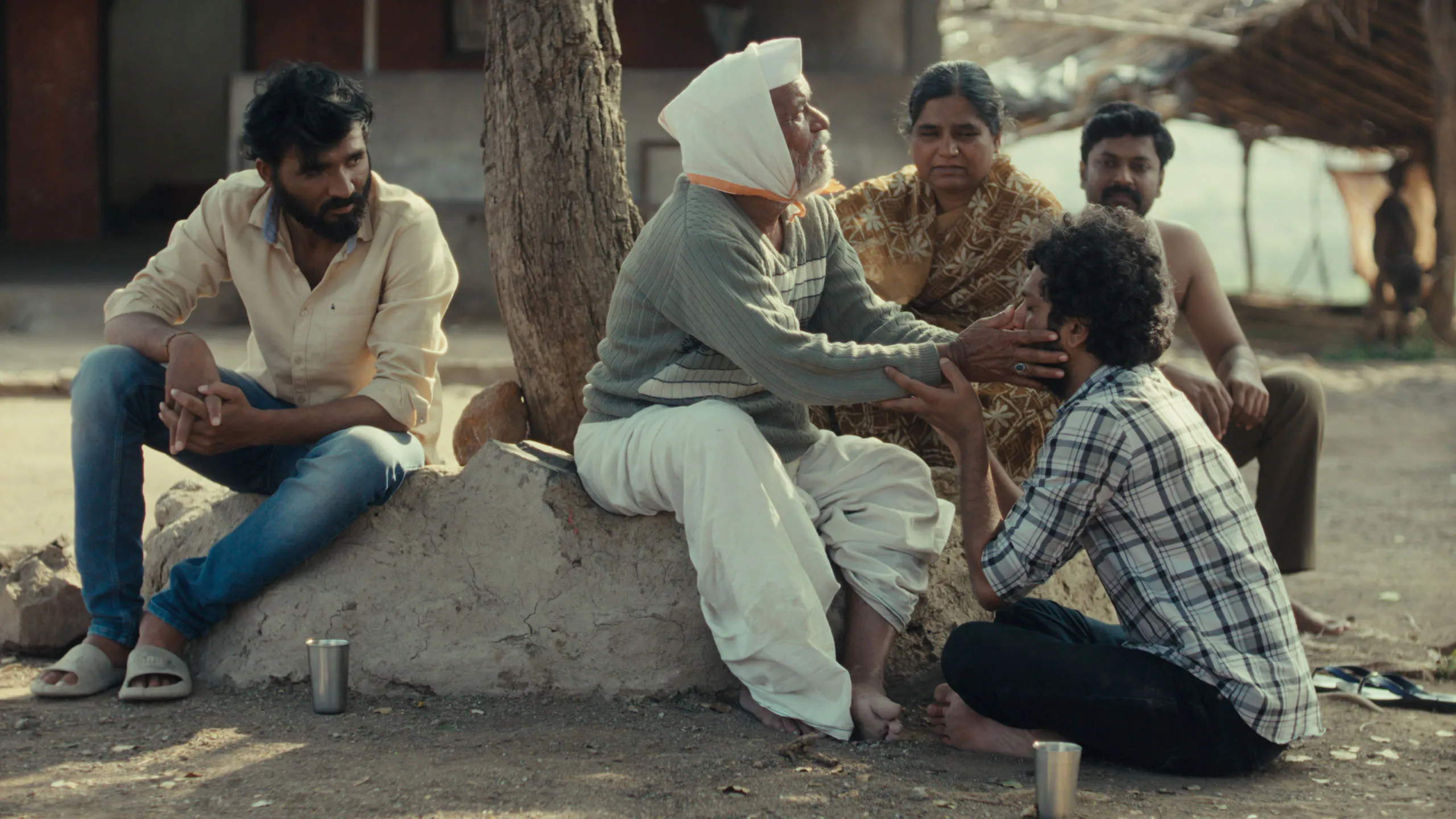
This return is not just a physical journey but a spiritual and emotional one, as Anand is forced to confront the weight of traditional familial expectations. In the quietude of the rural landscape, where grief is palpable yet unspoken, Anand must also contend with the pressure to marry, a topic that his family continues to push despite knowing his true identity.
The societal pressure on Anand to settle down, marry, and conform to heteronormative roles is exacerbated by the presence of his childhood friend, Balya (Suraaj Suman), a farmer who has stayed behind in the village. Balya, though also unmarried, presents a striking contrast to Anand. More self-assured in his identity, Balya has learned to navigate the complexities of village life with ease, deflecting questions about his personal life with practiced nonchalance.
As the two men rekindle their friendship, a quiet emotional connection begins to form, underscored by the shared knowledge of their unspoken queerness. Their bond becomes a safe space where they can express themselves outside the confines of societal expectations.
The film’s narrative unfolds as a slow burn, allowing the characters’ emotional landscapes to develop gradually, mirroring the languid pace of rural life. This quiet approach is a deliberate contrast to the more explosive dramatic arcs seen in many mainstream films, allowing for an exploration of intimate, often unspoken moments.
Sabar Bonda favors stillness, with long pauses between dialogue and lingering shots that allow the viewer to absorb the weight of the characters’ emotional lives. This pacing invites the audience into the inner worlds of Anand and Balya, letting them experience the characters’ vulnerabilities and small moments of connection with deep empathy.
A significant layer of symbolism emerges through the cactus pear (sabar bonda), the fruit whose tough, prickly exterior contrasts with the sweet, tender interior. This metaphor not only reflects the characters’ lives—concealing their true selves behind societal facades—but also speaks to the quiet rebellion of their love. Just as the cactus pear survives in harsh environments, so too do Anand and Balya’s feelings endure in a society that demands conformity, revealing that softness and tenderness can thrive even in the most inhospitable conditions.
Complex Bonds: Character Development and Performances in Sabar Bonda
In Sabar Bonda, the emotional depth of the film is carried by its nuanced characters, each grappling with personal conflict amidst the backdrop of societal expectations. Anand, played by Bhushaan Manoj, is a soft-spoken, introspective man whose emotional world is defined by grief, familial obligation, and the constant weight of societal pressures regarding masculinity and heterosexuality.
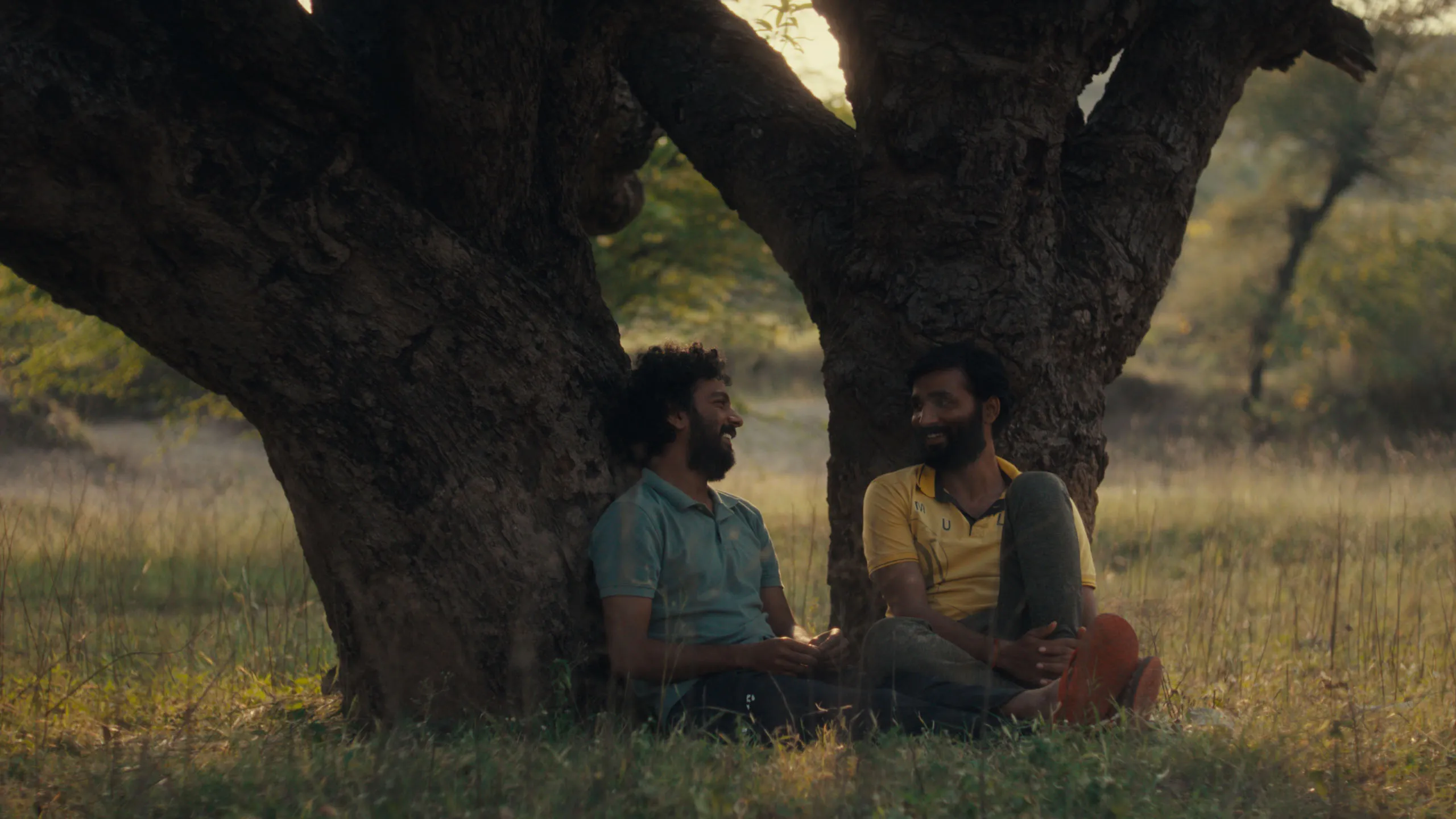
Anand’s struggle to navigate his queerness in a conservative rural setting is portrayed with a subtlety that speaks volumes about his internal turmoil. Manoj’s performance brings to life the character’s vulnerability and sensitivity, capturing Anand’s emotional fragility in both his body language and his expressions.
His tense posture and the almost invisible tremors in his voice convey a deep-seated exhaustion, as though Anand’s sense of displacement and sorrow is not just from his father’s death but an ongoing personal battle. The hesitance in his movements, the quiet pauses between his words, and his distant gaze all reflect his deep internal conflict. Anand is constantly on the cusp of revealing his true self but remains guarded, unsure of how much he can afford to expose in a world that demands conformity.
Balya, portrayed by Suraaj Suman, presents a contrasting, yet equally compelling figure. Unlike Anand, Balya is more self-assured, comfortable with his identity and the complexities of his rural life. Though he faces the same societal pressures as Anand, Balya’s quiet confidence allows him to navigate these pressures with a kind of ease that Anand has yet to achieve.
Suman’s portrayal of Balya is understated, allowing the character’s emotional depth to shine through in his subtle actions and gestures. His chemistry with Manoj is palpable, with moments of silence between the two men carrying as much weight as their spoken words. The touch of their hands, the quiet gaze, and the tender closeness that grows between them serve as a testament to their growing emotional bond, captured with remarkable sensitivity.
Anand’s mother, played by Jayshri Jagtap, stands as a rare and welcome presence in South Asian queer narratives. Her acceptance of Anand’s queerness, though subtle, offers a refreshing counterpoint to the conservative village mindset. Jagtap’s portrayal is one of quiet strength, and her unconditional support for her son provides a deeply human layer to the narrative.
Rather than rejecting or pushing her son into conformity, she subtly defends his autonomy, reflecting a tenderness that is often missing in depictions of parental figures in South Asian cinema. Her role is essential, offering hope and complexity in a story where societal pressures are often felt as insurmountable.
The supporting characters, particularly the relatives who question Anand’s lack of marriage prospects, serve as a reflection of the broader societal pressure to conform. These interactions are marked by the subtle, yet unrelenting force of traditional expectations—reinforcing the dichotomy between personal identity and cultural obligation.
A Cinematic Landscape of Quiet Intimacy: Direction and Cinematography in Sabar Bonda
Rohan Parashuram Kanawade’s directorial style in Sabar Bonda is characterized by a slow, contemplative pace that allows moments of intimacy and reflection to unfold organically. His approach, rooted in the rhythms of rural life, invites viewers into the quiet, unspoken world of his characters, where every glance and gesture carries emotional weight.
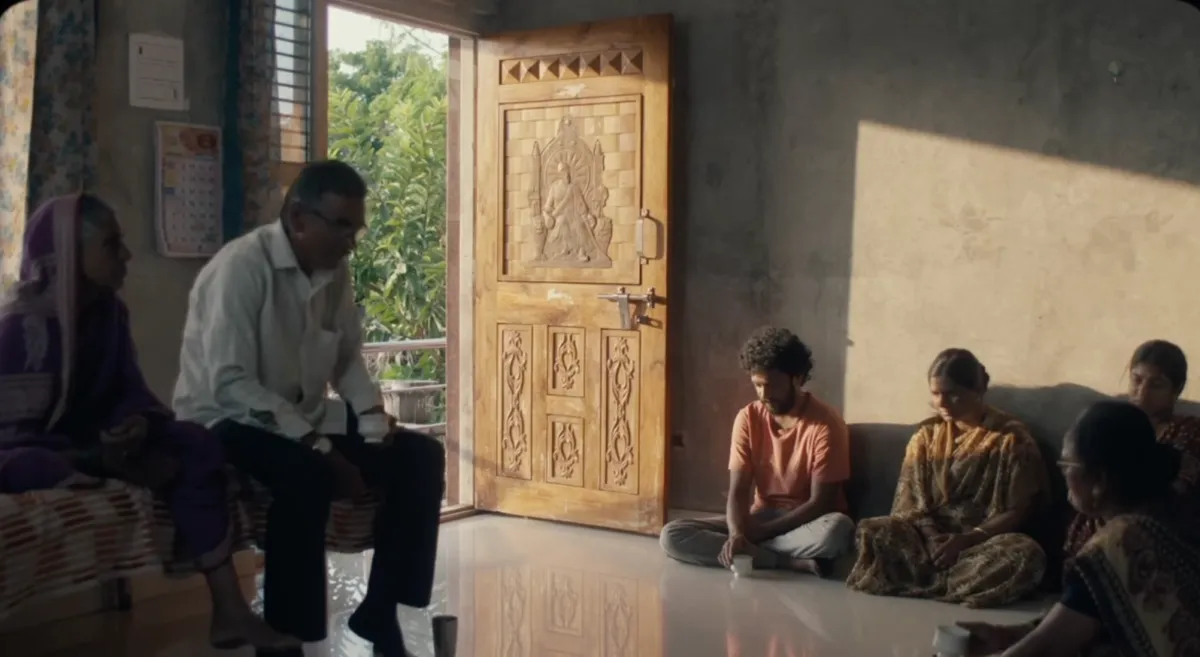
This meditative pacing, while not typical of mainstream Bollywood, aligns closely with global trends in independent cinema, where the exploration of human emotion often transcends rapid plot developments in favor of emotional depth. Kanawade’s emphasis on subtlety and restraint draws from the traditions of parallel cinema, a movement in Indian cinema that has long sought to explore personal and societal issues with nuance and authenticity.
Kanawade’s personal connection to the narrative, as a semi-autobiographical story, infuses the film with a distinct sense of honesty. His ability to blend universal themes—grief, identity, societal expectations—with the deeply specific cultural context of rural Maharashtra creates a poignant reflection on the lived experiences of queer individuals.
The film becomes not just a story about one man’s journey, but a broader meditation on the intersection of queerness, family, and tradition in a society where such identities are often hidden. The authenticity with which Kanawade presents these themes resonates deeply with global audiences, who are increasingly drawn to stories that defy conventional narratives of self-actualization and offer a more complex, multifaceted portrayal of identity.
The cinematography by Vikas Urs complements Kanawade’s directorial vision, capturing the emotional essence of the film through a combination of wide shots and intimate close-ups. Urs’s use of wide shots allows the expansive, rural landscapes to mirror the characters’ emotional isolation, while the close-ups provide a more intimate connection to the characters’ inner lives.
These techniques highlight the subtle emotional exchanges between Anand and Balya, where much of their communication happens in the spaces between words. The choice to shoot in a 4:3 aspect ratio further enhances the film’s intimate feel, focusing attention on the characters’ expressions and physical proximity, making the audience feel like silent witnesses to their unspoken connection.
The rural setting plays an integral role, both as a literal and emotional landscape. The natural beauty of the surroundings—fields, trees, and the quiet stillness of the village—serves as a backdrop to the film’s emotional narrative.
The rural environment, though picturesque, also underscores the isolation the characters feel, amplifying their sense of being disconnected from both the traditional world around them and their own desires. This contrast between the beauty of the landscape and the emotional barriers the characters face adds depth to the film, making the rural setting not just a physical space, but a symbol of both longing and constraint.
Silent Rebellion: Cultural and Social Commentary in Sabar Bonda
At the heart of Sabar Bonda is a keen exploration of societal expectations, particularly within the rural Marathi community. In this environment, traditional customs and social obligations weigh heavily on individual lives. The film places a significant emphasis on the grieving process, a ritualistic 10-day mourning period following the death of Anand’s father, which is governed by rigid cultural norms.
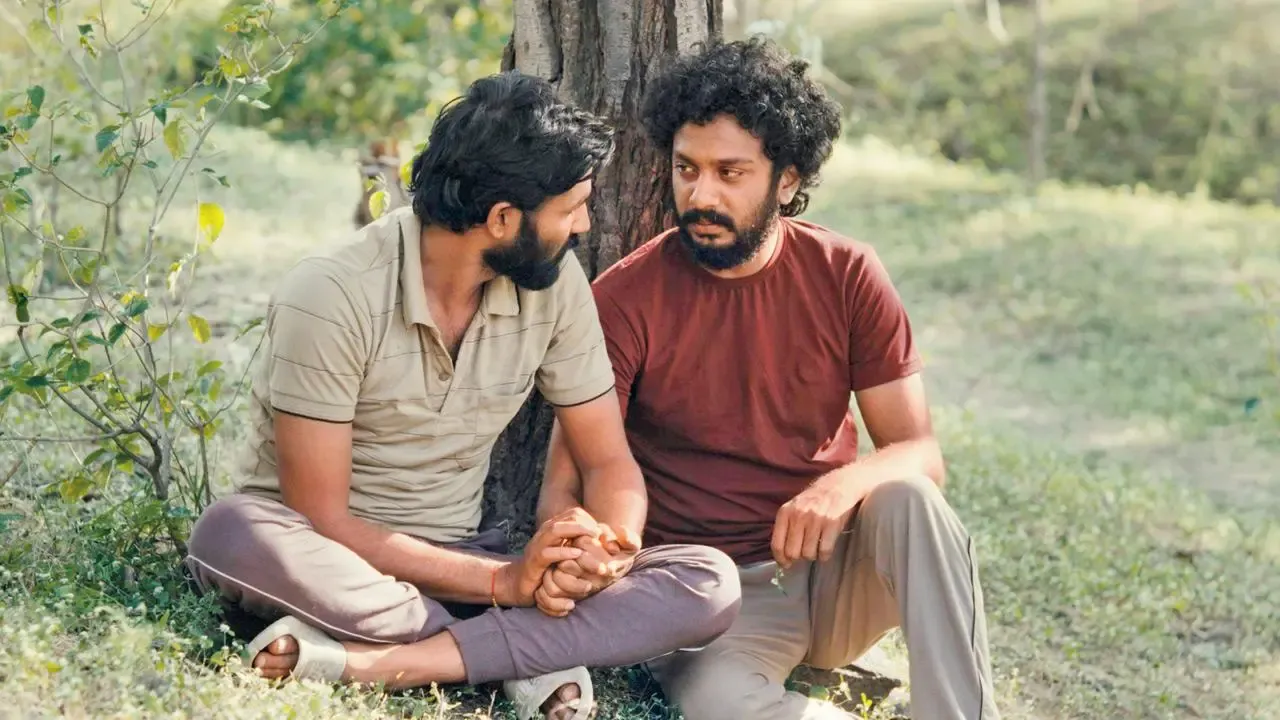
Anand’s return to the village forces him to grapple with these expectations—specifically, the pressure to marry. In rural India, masculinity is defined through marriage and the ability to uphold family honor. The film poignantly depicts how grief, typically a deeply personal experience, becomes entangled with societal norms, turning it into yet another moment where expectations are placed upon Anand to conform.
This intersection of mourning and the pressure to uphold heteronormative roles highlights the social complexities faced by men like Anand, who must navigate their grief while contending with the unrelenting demands of traditional masculinity.
The film also offers a nuanced critique of the concept of marriage, particularly as a social and familial obligation. Anand’s queerness is not overtly acknowledged in the village; instead, it is subtextually addressed through his reluctance to marry.
The quiet intimacy that develops between Anand and his childhood friend, Balya, becomes an act of subtle rebellion against a system that demands their compliance. Both men are trapped in a society where same-sex relationships are relegated to secrecy, and the consequences of deviating from these norms are severe. Their relationship, though tender and filled with longing, is constrained by the need to maintain the appearance of conformity.
Anand’s mother, portrayed by Jayshri Jagtap, plays a critical role in subverting these traditional pressures. Her quiet complicity in hiding her son’s true identity reflects the complex nature of support in a deeply conservative society. While many parents might reject their queer children, her nuanced acceptance offers a rare depiction of maternal support in South Asian queer narratives.
However, her defiance is subtle, only surfacing through quiet gestures of protection. Other family members, particularly the extended relatives, represent the larger societal forces pushing for conformity, reminding Anand that his personal desires must always be secondary to family reputation and tradition.
Silence and Sound: The Role of Music and Sound Design in Sabar Bonda
One of the most striking elements of Sabar Bonda is its deliberate absence of a musical score, a choice that amplifies the raw emotional weight of the film. By forgoing a traditional soundtrack, Rohan Parashuram Kanawade allows the characters’ internal struggles to unfold without the distraction of music, letting their emotions and silences speak for themselves.
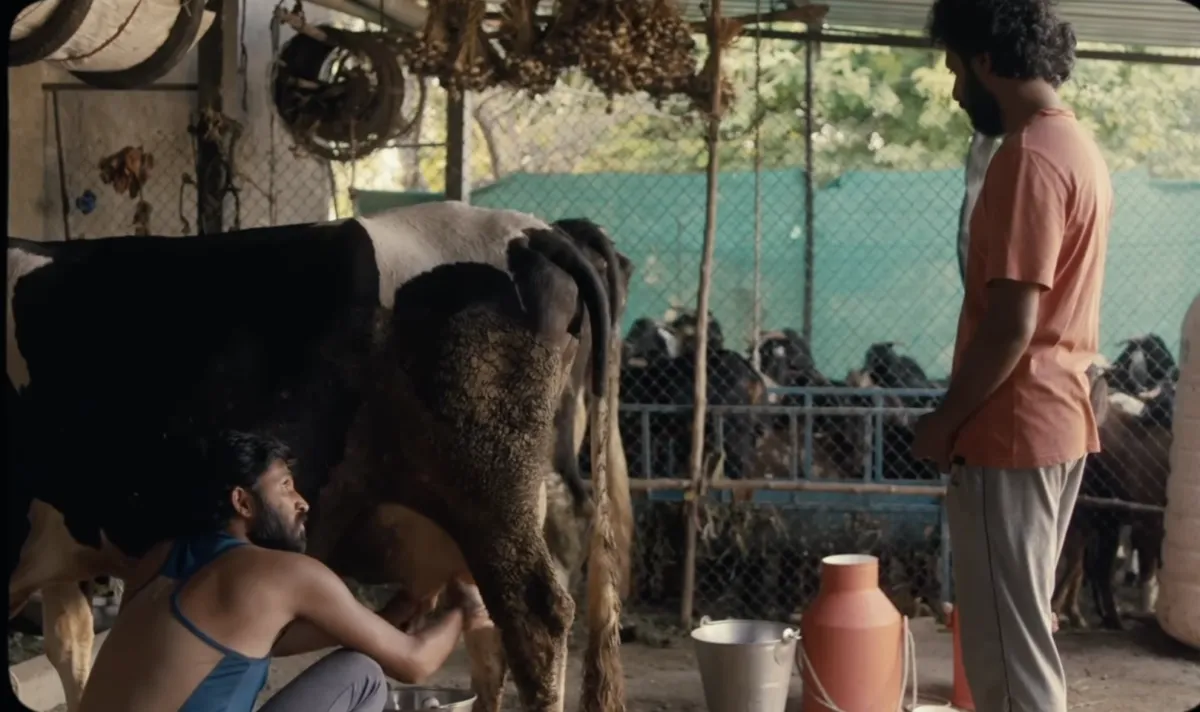
This absence is not a void but an active decision that heightens the authenticity of the grief and longing experienced by Anand and Balya. Every moment of stillness between the two men becomes charged with meaning, as the silence draws attention to the nuances of their unspoken connection. This approach aligns with trends in global indie cinema, where silence and restraint are often used to convey deeper emotional layers, particularly in character-driven stories.
Sound design in Sabar Bonda is equally crucial to its storytelling, with the diegetic sounds of nature playing an integral role in shaping the film’s atmosphere. The chirping of birds, the crunch of footsteps on dirt roads, and the occasional rustling of trees all serve to reinforce the themes of grief and introspection.
These natural sounds are woven seamlessly into the film’s visual storytelling, mirroring the inner turmoil of the characters and their connection to the rural landscape. The simplicity of the soundscape reflects the characters’ lives—quiet, unadorned, and deeply rooted in their surroundings—allowing the viewer to become immersed in the emotional depth of the narrative.
A Tender Revolution: Sabar Bonda’s Emotional and Cultural Impact
Sabar Bonda takes its audience on a profound emotional journey, navigating the complexities of grief, identity, and love within the strict confines of a conservative society. Through the delicate portrayal of Anand and Balya’s growing connection, the film offers a quiet exploration of the emotional turbulence that comes with reconciling one’s true self in a world that demands conformity.
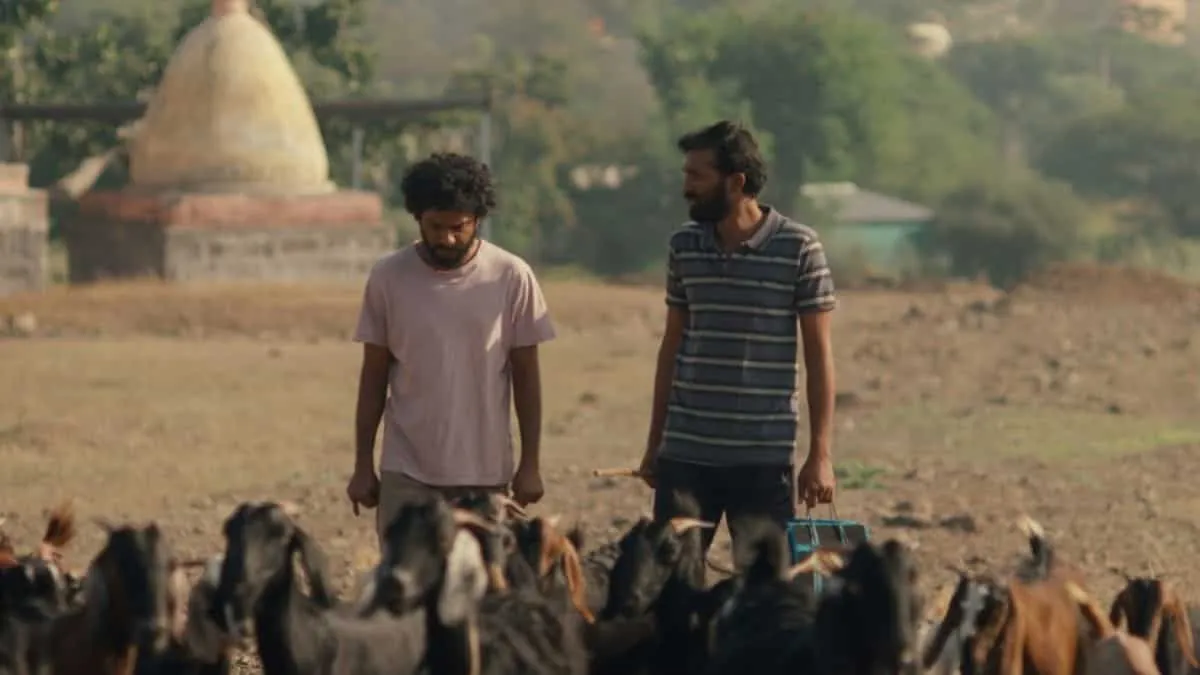
The nuanced performances, combined with Rohan Parashuram Kanawade’s slow, meditative direction, allow viewers to experience the tension between private desires and public expectations, making every unspoken word and fleeting moment of intimacy deeply impactful. Anand’s internal battle is framed by the overwhelming silence of his rural environment, amplifying his struggle with grief and unfulfilled yearning.
The film stands as a significant contribution to queer representation in Indian cinema, particularly within rural settings where such narratives are rarely depicted. By offering a glimpse into the lives of queer men navigating societal and familial pressures in a conservative, rural backdrop, Sabar Bonda opens up new avenues for discussion about the intersection of sexuality, tradition, and identity in India.
It challenges prevailing norms and subtly critiques the cultural expectations surrounding marriage and masculinity, making it not only a groundbreaking exploration of queer love but also an essential step in broadening the scope of representation in Indian cinema.
The Review
Sabar Bonda
Sabar Bonda is a tender and introspective exploration of love, grief, and identity within the constraints of rural Indian society. Rohan Parashuram Kanawade’s delicate direction, coupled with powerful performances, brings to life a rare portrayal of queer relationships in rural settings. The film’s quiet yet poignant narrative, supported by an immersive sound design and evocative cinematography, offers a fresh perspective on LGBTQ+ representation in Indian cinema. It’s a groundbreaking piece that opens important conversations about identity, societal pressure, and the complexity of love.
PROS
- Thoughtful and sensitive portrayal of queer love in a rural, conservative setting.
- Subtle, meditative direction that emphasizes emotional depth and intimacy.
- Strong performances, particularly from Bhushaan Manoj and Suraaj Suman.
- Authentic sound design that complements the film’s reflective tone.
- Beautiful cinematography that captures both the emotional isolation and the lush rural landscapes.
CONS
- Slow pacing may feel repetitive for some viewers.
- Lack of dramatic tension at times, with the narrative leaning heavily on understated moments.
- Limited plot progression, focusing primarily on character introspection rather than external conflict.