
























![Kingdom Hearts Collection [I-III] Review](https://gazettely.com/wp-content/uploads/2026/10/Kingdom-Hearts-Collection-I-III-1-360x180.webp "Kingdom Hearts Collection [I-III] Review: KHII Holds Steady as Newer Entries Fluctuate 37")



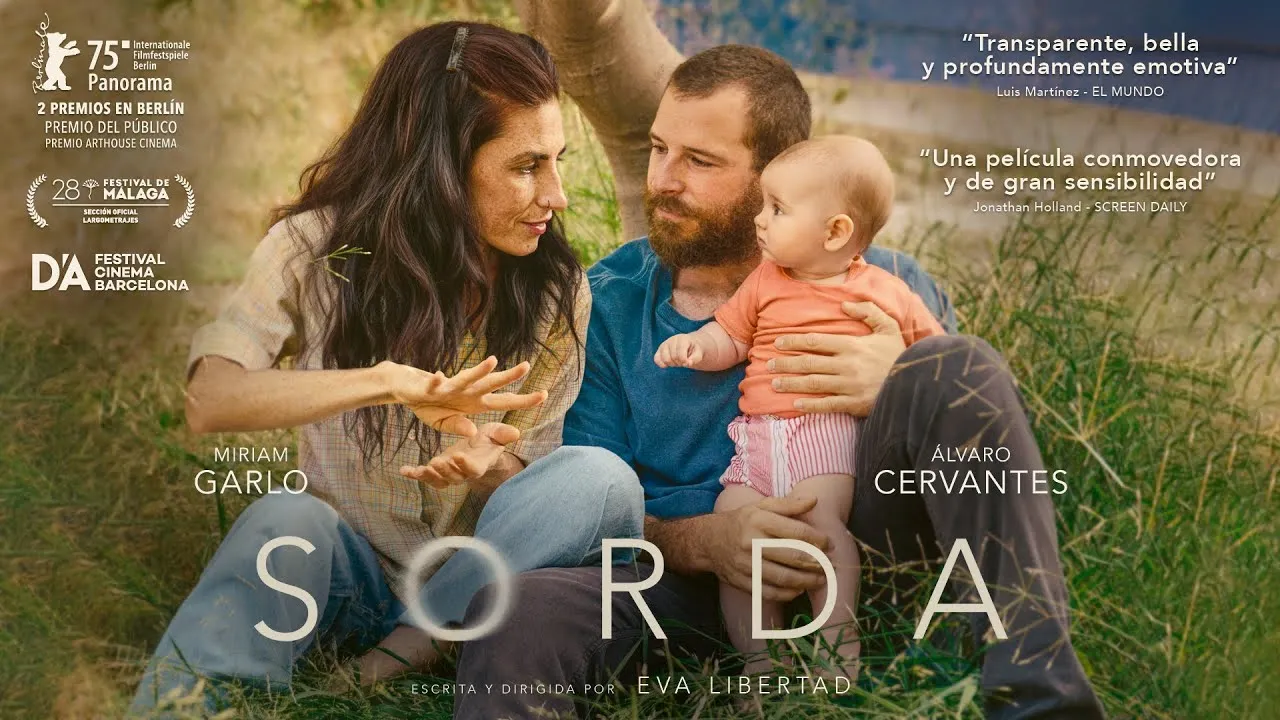

When Sorda made its debut in the Panorama sidebar at the Berlinale earlier this year, its quiet power was immediately clear. Set against the sun‑baked plains of rural Spain, Eva Libertad’s first feature tracks Ángela, a deaf ceramicist, and her hearing partner Héctor as they brace for parenthood. There’s no grand spectacle here—moments unfold with the precision of a potter’s wheel, revealing the emotional contours of two people learning to share a world they experience in very different ways.
From the very first frame, Libertad invites us inside Ángela’s perspective: lips form questions she can’t hear, sign language punctuates conversations, and the only soundtrack is the soft echo of her own heartbeat. Yet the film never feels aloof or experimental for its own sake. Instead, it weaves intimacy with social reality, showing how a new baby can both unite and stretch a relationship.
This is a low‑key portrait, driven by small gestures—a hand squeeze, a glance across a table—and anchored by Miriam Garlo’s expressive performance. As someone who’s spent too many hours debating nonlinear edits in French New Wave, I find Sorda refreshingly direct: its structure mirrors the unpredictability of life rather than conforming to set patterns. In this review, we’ll explore how Libertad’s narrative choices and technical flair create a story that feels both immediate and deeply human.
Shifting Rhythms: Plot and Structure
Set in a sun‑warmed corner of rural Spain, Sorda unfolds in Ángela’s pottery studio and the village’s modest gathering spots, where clay dust settles as gently as routine. The film opens with unhurried shots of wheel‑thrown pots and neighbors signing across a café table. This choice of setting grounds the story in a communal world that feels lived‑in—reminding me of the quiet streets in Éric Rohmer’s tales of chance encounters—while highlighting the couple’s blend of isolation and solidarity.
The story arc resists a clean three‑act template. In the first thirty minutes, we watch Ángela and Héctor celebrating their child’s imminent arrival among friends who share her deaf experience and parents who can’t help but worry. Then comes the midpoint: a gripping birth sequence where Libertad’s handheld camera hovers over Ángela’s bed as she struggles to lip‑read masked midwives. When Héctor steps back for a moment, her disorientation becomes ours, and that brief absence sharpens the film’s emotional stakes.
After Ona’s birth, the second act feels almost cyclical—fresh mornings with a newborn dissolve into sleepless nights, and Ángela’s confidence gives way to uncertainty about whether her daughter will inherit deafness. Héctor moves between supportive partner and accidental outsider, and family dinners become battlegrounds over hearing aids. Here, the film’s pacing mirrors newborn time: quiet stretches punctuated by sudden tension.
Key scenes carry much of the narrative weight. The delivery room’s tight framing captures beads of sweat and quick glances; in a later scene, a well‑meaning shop assistant’s inability to sign underscores how small gestures of indifference can feel enormous.
An intimate a cappella moment—Ángela and Héctor sharing a private song—brings an almost jazz‑like improvisation to their communication. Finally, Libertad shifts the sound design near the end, layering muffled cries and amplified vibrations to bridge our hearing world and Ángela’s silence. The result is a structure that feels both linear and elastic, bending time to the couple’s shifting bond.
Embodying Silence: Characterization and Performances
Miriam Garlo anchors Sorda with a performance that feels lived‑in. Watching her move through Ángela’s world—hands shaping clay, eyes scanning lips—reminded me of a jazz solo, each gesture riffing on the last with precision and heart. In early scenes, she radiates confidence: a skilled artisan at work, fully present in her craft.

But as parenthood looms, Garlo layers on vulnerability—tightened shoulders, a wavering glance when Héctor drifts too far—that maps Ángela’s shift from self‑assured creator to an unsure new mother. Without dialogue, Garlo’s face becomes a canvas for pride, fear and isolation; it’s performance as pure cinema, recalling the silent expressiveness of Godard’s Anna Karina yet wholly her own.
Álvaro Cervantes brings warmth and restraint to Héctor, a partner whose empathy sometimes collides with his own limits. His support is palpable—gentle touches, whispered reassurances—but he’s not immune to frustration. The moment he clicks his fingers near baby Ona’s ears, testing her hearing, reveals his struggle: he means to include Ángela but inadvertently alienates her. Cervantes’s reaction—a flicker of guilt, the quick descent into apology—captures that tightrope walk between caring ally and outsider, offering a portrait of love under pressure.
Around them, the ensemble illustrates the wider world’s textures. Ángela’s circle of deaf friends provides laughter and shared shorthand—group sign‑language scenes feel like communal jam sessions, everyone in sync. In contrast, Héctor’s relatives and the hearing‑aid shop clerk embody well‑intentioned blindness: solicitous offers of devices that Ángela quietly rejects. These moments underscore how small missteps can widen emotional gaps.
What binds it all is chemistry built on unspoken exchange. A simple glance across a workbench or the way Héctor mirrors Ángela’s sign for “quiet” speaks volumes. Their micro‑expressions—her soft smile when he anticipates her needs, his attentive nod as she signs—create a natural rhythm, as if each scene’s emotional score were improvised in real time.
Behind the Lens: Libertad’s Cinematic Language
Eva Libertad’s first feature feels rooted in real experience. By partnering with deaf collaborators and casting Miriam Garlo, she brings authenticity that echoes the best of indie cinema’s inclusive spirit. There’s a documentarian honesty in her approach—moments captured with raw immediacy—yet each scene holds a quiet intimacy, as if we’re eavesdropping on private life rather than watching actors perform.

The camera shifts to match Ángela’s emotional state. In crisis—like the gripping birth sequence—hand‑held shots wobble just enough to make us share her unease. In calmer scenes at the pottery studio or around the kitchen table, the frame settles into longer, steady takes, letting us absorb the gentle rhythms of daily routine.
Framing stays close to hands and faces, highlighting sign‑language gestures and the subtlest flickers of expression. This focus on body language feels akin to Godard’s obsession with faces in Breathless, though Libertad never sacrifices narrative clarity for style.
Editing moves at its own heartbeat. Sequences unfold with measured patience, reflecting the endless cycle of feeding, soothing, and waiting that defines new parenthood. Pauses are bold choices here—silences left intact long enough to make the next exchange resonate more deeply.
When sound returns, it does so with intention: a soft tap of a spoon, the distant coo of a baby, then an a cappella motif that feels both spare and soulful. These shifts remind me of Truffaut’s use of music in Jules et Jim, where a simple melody can carry the weight of unspoken emotions.
In an age of rapid cuts and flashy camera moves, Libertad stakes out her own path. She honors the textures of her characters’ lives and trusts that stillness can carry as much power as motion.
Silence Speaks Volumes: Sound and Sight
Libertad opens Sorda with title cards drawn against utter quiet—no ambient hum, no score—inviting us to inhabit Ángela’s world on her own terms. Those deliberate stretches of muted sound punctuate the film: a newborn’s cry heard only through its vibrations, a bustling kitchen rendered eerily still. It’s a reminder that absence of noise can speak as loudly as any shout in more conventional dramas.

When sound does thread through the film, it balances diegetic authenticity with carefully placed musical moments. Gina Ferrer García’s capture of rural Spain—birdsong, pottery wheels, distant tractors—grounds us in place. Then Verde Prata’s a cappella piece enters almost like a spontaneous jazz riff, its raw human voice contrasting with the earthbound textures of clay and stone. That interplay recalls the way Truffaut would slip a chord progression into a scene of everyday life, transforming it without fanfare.
Later, Libertad stages an experiment with hearing‑aid simulation: audio crackles shift between muffled warmth and sudden distortion, as if the device itself has a pulse. These tremors in the mix let us feel Ángela’s occasional claustrophobia, forging empathy more directly than any explanatory dialogue could.
Visually, Ferrer García favors natural light and a palette of ochre and slate—the pottery studio’s kilns echoing the warmth of human touch. Recurrent motifs—hands shaping clay, close‑ups on signing fingers, lips pausing mid‑word—create a grammar of gesture that feels both lyrical and precise. In marrying these elements, Sorda turns every frame into a study of how we see and hear the world.
Contours of Silence: Themes and Symbolism
At its heart, Sorda stakes a claim on deafness as identity. By choosing the title “Sorda,” Libertad and Garlo reclaim a word often used dismissively, turning it into a badge of authenticity. That act of naming resonates beyond the screen—reminding me of how Truffaut’s characters in The 400 Blows owned their own rebellions. Ángela’s worry that her daughter might inherit deafness becomes a larger meditation on what we pass down: not just genes, but the ways we define ourselves.

Motherhood in this film isn’t presented as an automatic bond. Instead, it’s a negotiation between universal love and sensory disconnect. Ángela cradles Ona with fierce devotion, yet the absence of audible cues forces her to invent new rhythms of care. The baby becomes both mirror and bridge, testing the couple’s ability to translate affection across worlds—much like jazz musicians finding harmony through improvisation.
Communication and isolation play out not only between hearing and deaf, but within traditions that assume everyone shares the same language. Family dinners flicker between sign‑filled solidarity and unspoken misunderstandings, while public spaces reveal a social “deafness” to individual needs. In that critique, Sorda holds up a mirror to our own inattentive habits, urging us to listen with more than just ears.
Final Cadence: Weighing Sorda’s Resonance
Sorda offers a rare blend of intimate drama and thoughtful craft. Miriam Garlo’s deeply felt portrayal of Ángela, paired with Álvaro Cervantes’s nuanced turn as Héctor, delivers performances that echo long after the credits. The choice to center deaf experience without resorting to melodrama gives the film an authenticity that feels both fresh and essential.

Technically, Gina Ferrer García’s naturalistic cinematography and Libertad’s careful editing create a rhythm that mirrors the give‑and‑take of new parenthood, while the strategic use of silence and sound design forges genuine empathy.
At moments, the film’s pacing can linger—pauses meant to invite reflection sometimes stretch a scene’s momentum. A few narrative beats, such as extended family debates over hearing aids, verge on instructional. Yet these are small notes in an otherwise compelling score.
Sorda stands out as a debut that respects its audience’s intelligence, inviting viewers to engage with what it means to live between worlds. In an era when mainstream studios often shy away from stories of difference, Libertad confidently steps forward, offering a film that asks us to listen—and to see—with renewed attention.
Full Credits
Director: Eva Libertad
Writer: Eva Libertad
Producers: Miriam Porté, Nuria Muñoz Ortín, Amalia Blanco
Cast: Miriam Garlo (Ángela), Álvaro Cervantes (Héctor), Elena Irureta (Elvira), Joaquín Notario (Fede)
Director of Photography (Cinematographer): Gina Ferrer
Editor: Marta Velasco
Composer: Aránzazu Calleja
The Review
Sorda
Sorda is a poised debut that combines emotional honesty with confident technical craft, offering a moving portrait of deaf identity and parenthood that challenges viewers to listen anew. While a few extended scenes slow its pace, the film’s authentic performances and inventive sound design make it a standout in contemporary independent cinema.
PROS
- Authentic central performances that convey depth without excess dialogue
- Thoughtful sound design that uses silence as an emotional tool
- Naturalistic cinematography capturing tactile details of rural life
- Intimate pacing that mirrors the rhythms of new parenthood
- Inclusive representation through collaboration with the deaf community
CONS
- Occasional pacing lulls during extended family discussions
- A few scenes feel overtly explanatory
- Limited narrative scope outside the central couple’s dynamic
- Sparse musical moments may feel minimal to some viewers







