



























Breakout Beyond marks a bold reimagining of the 1976 arcade classic, Breakout, retaining the core concept while introducing several new mechanics and a modern aesthetic. Developed by Choice Provisions and published by Atari, the game offers a fresh take on the timeless brick-breaking formula, transitioning the gameplay from the traditional vertical screen layout to a horizontal one. This shift in perspective is more than just a cosmetic change— it allows for more intricate level design, adding layers of strategy and pacing that weren’t possible in the original setup.
At its core, Breakout Beyond stays true to the essence of the original: players control a paddle, bouncing a ball to break bricks and clear the stage. However, the game introduces mechanics like ball curving, which allows for more precision in hitting targets, and power-ups that can drastically alter the flow of gameplay.
These include multi-ball, laser blasts, and protective barriers, all of which introduce new challenges and moments of chaos. The game’s new mechanics are well-integrated, offering a sense of depth without overshadowing the simplicity that made the original so compelling.
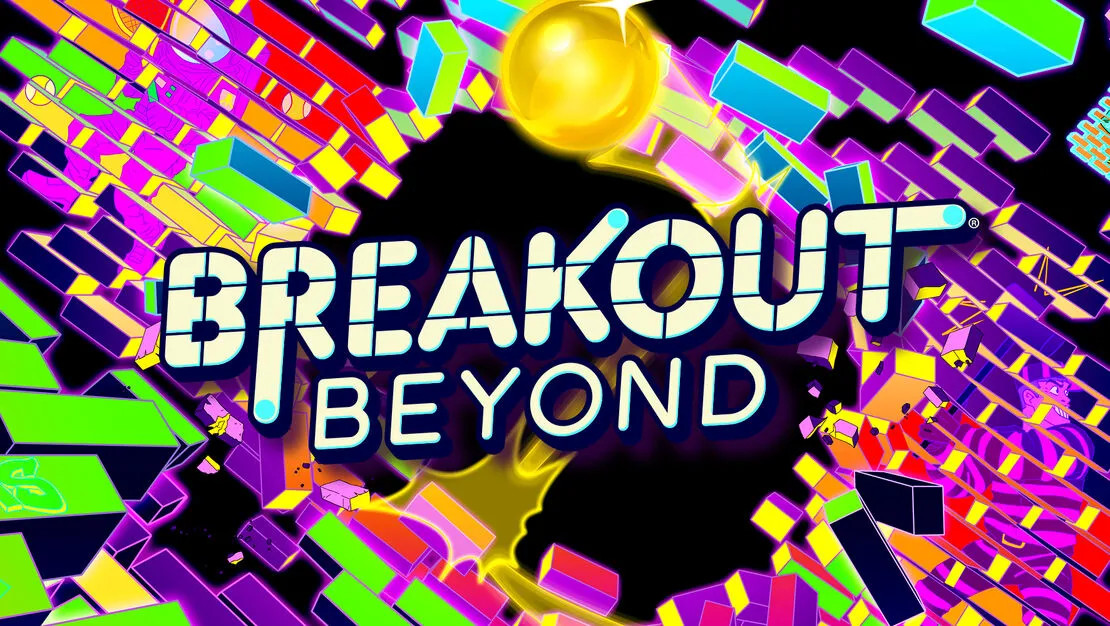
This reimagining also leans into its modern sensibilities, with a neon-infused, retro-futuristic aesthetic and an ambient soundtrack that heightens the visual and auditory experience. While the game retains a strong connection to its roots, the changes it introduces serve to enhance the pacing and complexity, appealing to both long-time fans of the franchise and newcomers alike.
Core Gameplay Mechanics: Building on a Classic Formula
At its heart, Breakout Beyond retains the simple yet addictive mechanics that defined the original Breakout—the player controls a paddle that bounces a ball, which in turn breaks through a series of bricks. The objective remains straightforward: clear all bricks on the screen and reach the goal on the right side.
However, the transition from a vertical screen to a horizontal layout is more than just a shift in perspective; it fundamentally alters how the player approaches each level. This horizontal orientation creates a wider field of play, allowing for more complex stage layouts and increasing the visual space in which the ball bounces. The larger area means faster ball speeds and more elaborate brick formations, demanding quick reflexes and precise control from the player.
Also Read





The core paddle and ball mechanics are straightforward but satisfying. The ball’s movement is dictated by the player’s timing and angle of impact with the paddle, but Breakout Beyond adds an interesting wrinkle to this formula with the ability to curve the ball.
By moving the paddle in the moment of impact, players can influence the trajectory of the ball, adding an element of skill that enhances the feeling of control. It’s a subtle but rewarding mechanic, offering a deeper layer of strategy that goes beyond simply positioning the paddle. This addition feels like a natural evolution for the series, akin to the more tactical elements introduced in other modern reimaginings of classic arcade games, such as Shatter or Arkanoid.
Alongside the ball-curving mechanic, Breakout Beyond introduces two key features that impact gameplay significantly: focus and sprint modes. Focus mode, which allows players to slow down time for a brief period, gives them the chance to regain control when things get chaotic—an invaluable tool, particularly in later levels where the action becomes fast and furious.
Sprint mode, on the other hand, accelerates the paddle’s movement, adding a sense of urgency when navigating tricky scenarios. These two features combine with power-ups like multi-ball, lasers, and barriers to inject variety and excitement into each level. Multi-ball, for instance, intensifies the chaos, forcing players to manage multiple balls at once, while lasers and bombs provide satisfying ways to clear dense brick formations quickly.
Together, these new mechanics and features give Breakout Beyond a modern edge while preserving the essence of the classic formula.
Level Design and Progression: Evolving Complexity and Engaging Layouts
Breakout Beyond takes full advantage of its horizontal layout, offering a level design that evolves in complexity as players advance. The early stages of the game are relatively simple, designed to introduce players to the core mechanics—moving the paddle and breaking bricks. These introductory levels serve as a gentle onboarding experience, allowing players to familiarize themselves with the ball’s behavior and the dynamics of the paddle.
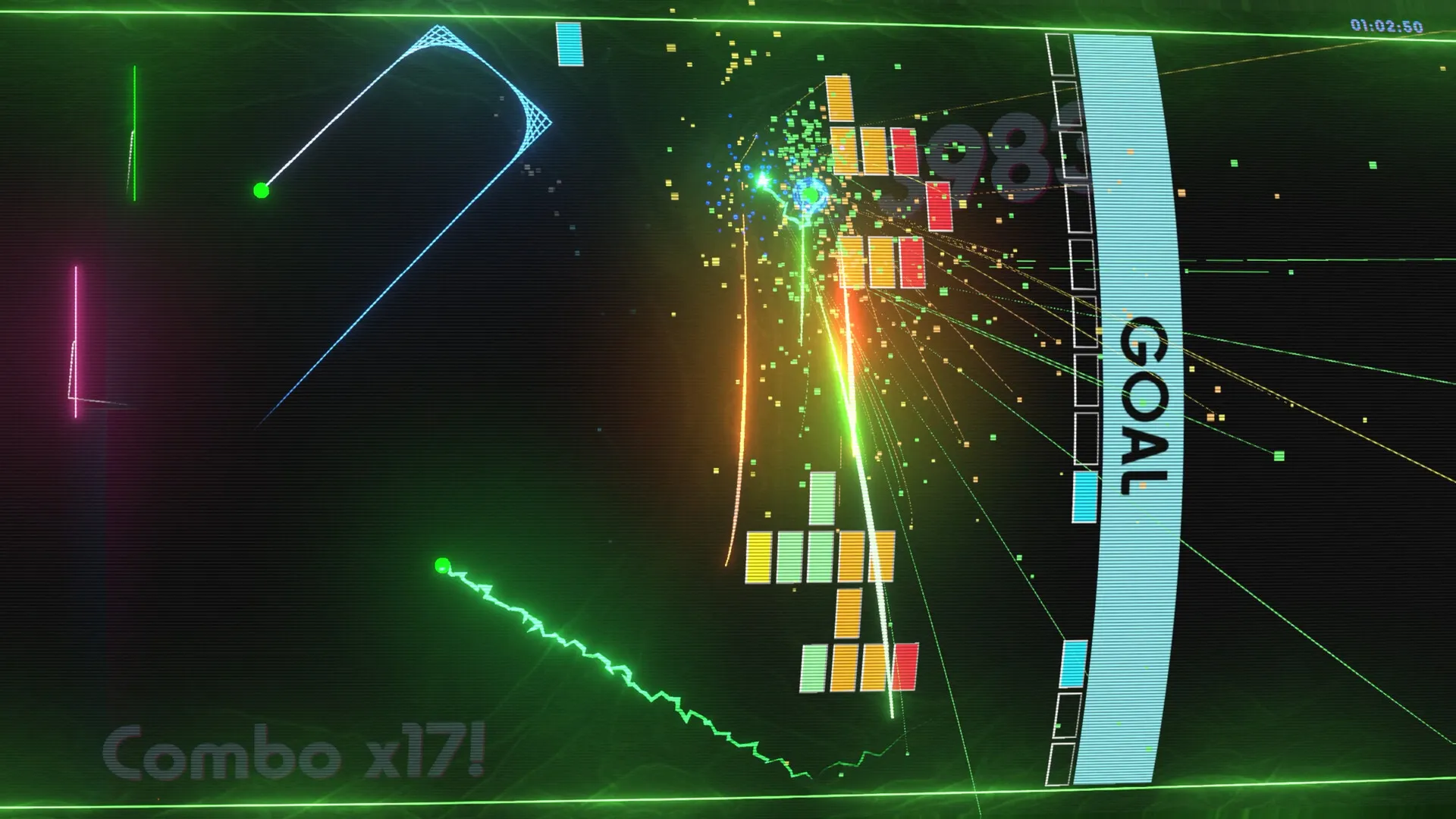
However, as the game progresses, the complexity ramps up significantly. The stages become more intricate, with layers upon layers of bricks that require careful planning and precise ball control. The horizontal screen orientation provides a much larger canvas for creative and varied level designs.
For example, later stages feature vertical columns of bricks and diagonal rows, forcing players to think strategically about how to angle their shots. This is where the addition of ball-curving mechanics becomes especially crucial, allowing players to thread the needle through tight spaces or curve the ball around obstacles in ways that weren’t possible in the original Breakout.
The difficulty curve in Breakout Beyond is well-paced, gradually increasing as ball speeds intensify and brick formations become more complex. Each new challenge is an invitation to refine your skills, testing both reaction time and strategic thinking.
The game balances this growing difficulty with the therapeutic nature of its gameplay. The satisfaction of clearing a complex formation of bricks or setting up a chain reaction with power-ups adds a layer of enjoyment that keeps the game feeling rewarding, even as the stakes rise.
In terms of content, Breakout Beyond offers 72 main levels, each with unique layouts and challenges. Once players complete these, they can unlock Endless Mode, which offers a more relentless experience where the goal is to survive as long as possible against an ever-escalating barrage of bricks.
For fans of the original Breakout, the game also includes 1976 Mode, a nostalgic throwback that mirrors the classic arcade experience. This mode allows players to enjoy a purer form of the game, providing a refreshing break from the more dynamic and modernized gameplay of the main campaign.
Visuals and Audio: A Sensory Experience with Modern Flair
Breakout Beyond embraces a striking retro-futuristic aesthetic that draws inspiration from the neon-infused visuals of the 1970s while adding a modern twist. The game’s CRT-inspired filter serves as a nostalgic nod to the original arcade classic, enveloping the player in a digital landscape that feels both familiar and fresh.
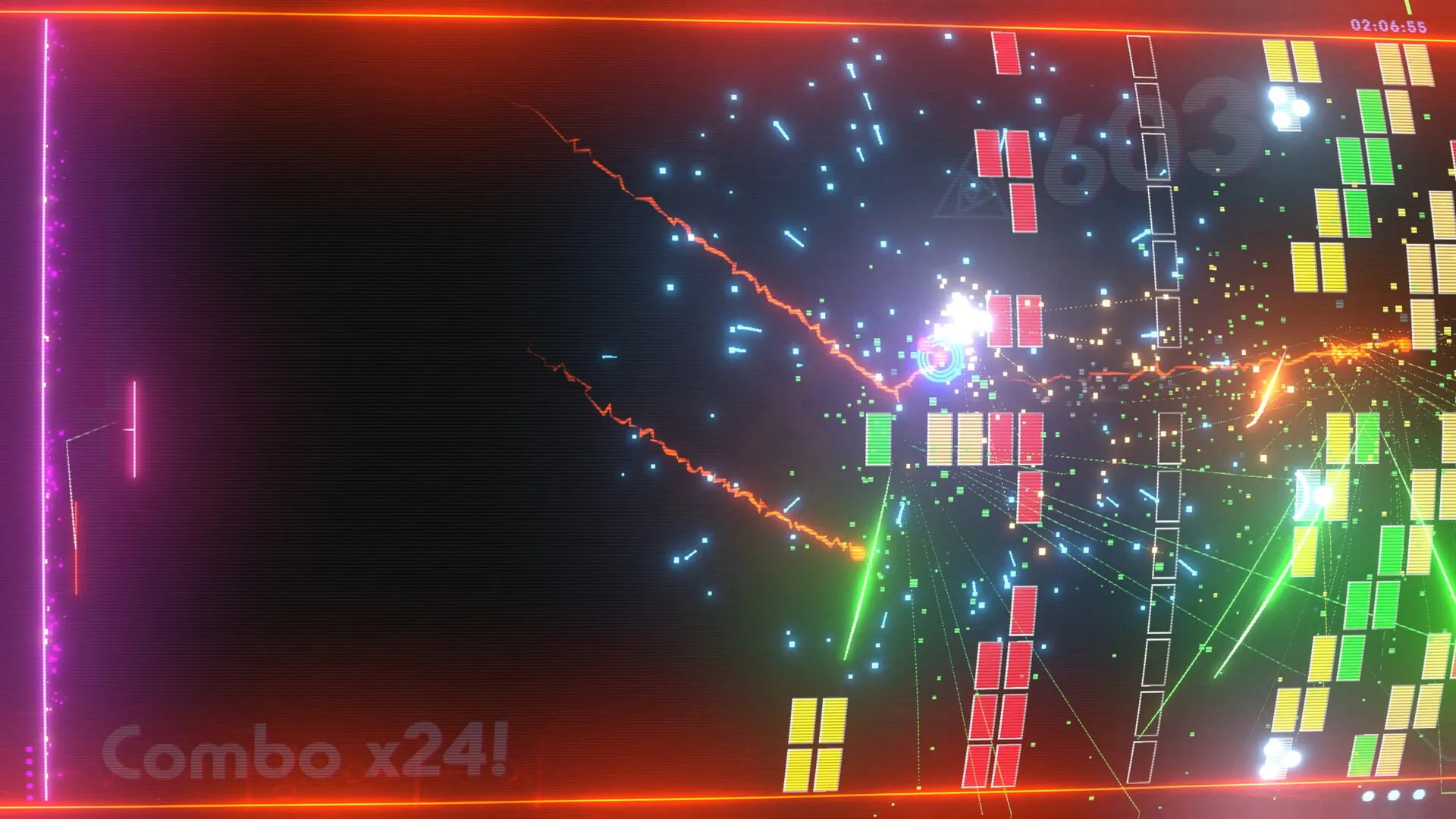
The neon color palette pops against the black background, creating a visually dynamic experience that feels right at home in today’s gaming landscape. This design choice does more than simply evoke nostalgia; it provides a sleek, modern look that enhances the game’s overall vibe, making each stage feel like a visual spectacle.
The use of visual effects, such as the explosion of bricks and the chain reactions triggered by combos, adds another layer to the sensory experience. When multiple bricks are destroyed in rapid succession or when a multi-ball power-up is activated, the screen bursts with color and energy, making each successful play feel like an event.
These effects work in tandem with the gameplay mechanics, visually reinforcing the satisfaction of mastering the ball’s movement and breaking through tough formations. The visual clarity in these moments contributes to the sense of accomplishment, rewarding the player for precise timing and strategic thinking.
However, the game’s visual design is not without its challenges. While the neon effects are striking, they can also become a distraction, particularly when the action gets fast and frantic. The flashing lights and quick-moving balls can sometimes make it difficult to track the ball, especially in higher speeds or during intense multi-ball scenarios. The combination of the fast pace and visual clutter can occasionally overwhelm the player, making it harder to maintain control in certain situations.
The soundtrack of Breakout Beyond complements the gameplay perfectly, shifting from ambient and subdued during quieter moments to intense and driving as the pace picks up. This dynamic shift in music mirrors the growing tension of the levels, enhancing the overall immersion.
Meanwhile, the sound effects—especially the satisfying “thwack” of the ball hitting the paddle—serve as auditory rewards for player success, providing a tangible sense of impact and rhythm that aligns with the brick-breaking action. The sound design, in particular, plays a vital role in making each level feel engaging, amplifying the feedback from the gameplay and immersing the player further into the experience.
Game Modes and Replayability: Variety in Challenges and Endless Fun
Breakout Beyond offers a variety of game modes that ensure players have plenty of content to dive into, with each mode offering its own unique twist on the classic Breakout formula.
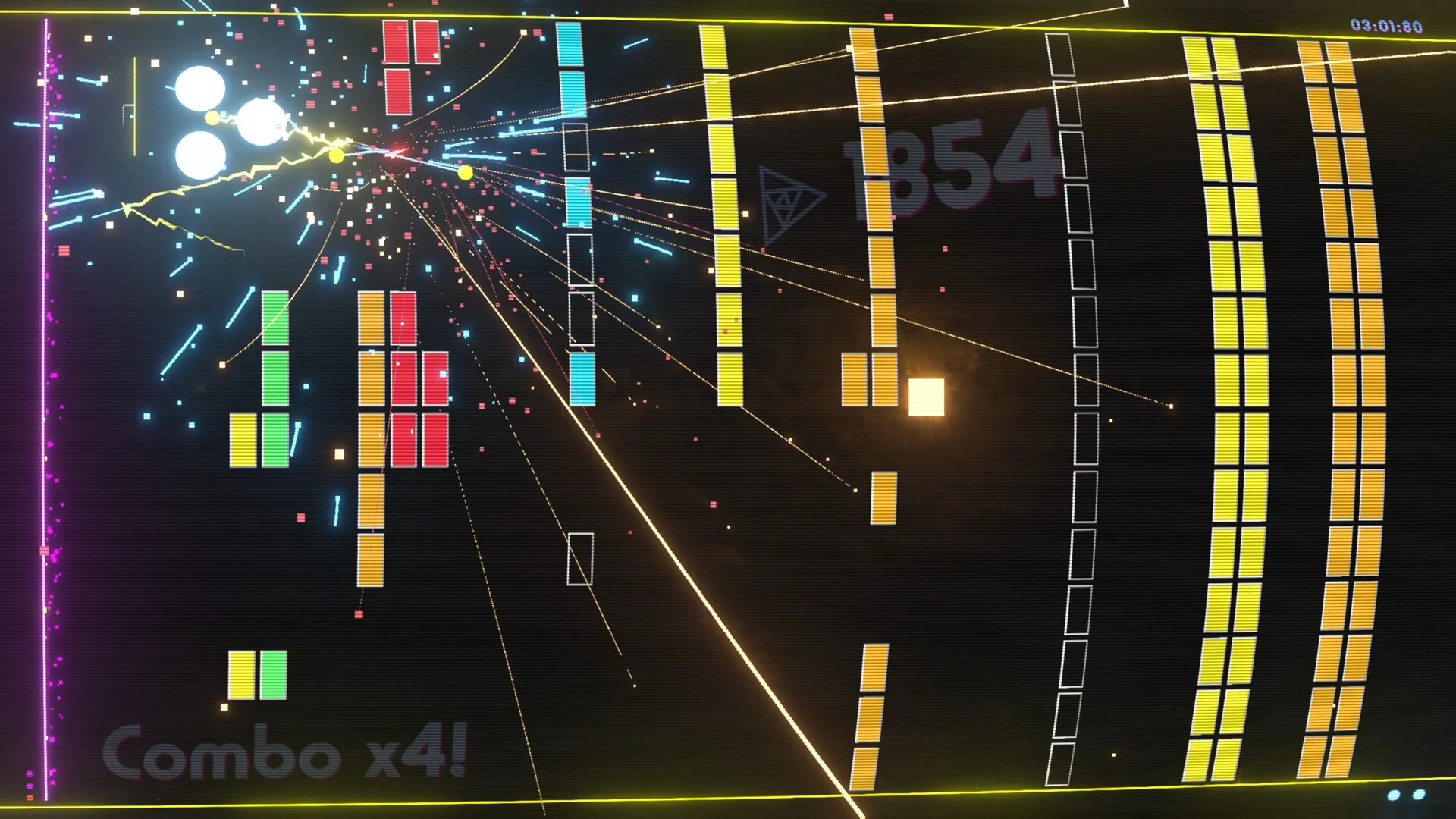
The primary mode, Voyage Mode, consists of 72 levels where the core goal is to clear brick formations while progressing towards a finish line at the right side of the screen. As players move through each stage, they’ll encounter increasingly complex brick layouts, which not only test their ball control and paddle maneuvering skills but also challenge their ability to strategize with power-ups and ball mechanics. The gradual difficulty curve ensures that the experience remains engaging, with later levels providing a satisfying sense of accomplishment once completed.
For those looking for more replayability, Endless Mode offers a more relentless challenge. In this mode, players continue breaking bricks with escalating difficulty, aiming for high scores that will land them on the global leaderboard. The game’s escalating pace in Endless Mode makes it a perfect fit for competitive players who want to push themselves further with each attempt.
However, there is a minor issue with this mode—the “infinite” nature of Endless Mode is somewhat misleading due to a bug that prevents the mode from being truly endless, which might be a disappointment for players hoping to see how far they can go.
The Co-op Play mode introduces a fun and chaotic twist by allowing two players to team up and tackle the levels together. This mode enhances the experience, adding an extra layer of fun and strategy as players must work together to manage the challenges of multi-ball, power-ups, and complex stage designs. It also introduces a greater sense of urgency, with both players needing to coordinate their actions to prevent the ball from slipping past them.
Finally, the leaderboard system—primarily available in Endless Mode—fuels the game’s competitive aspect. Players can compare their scores with others worldwide, motivating them to refine their strategies and achieve higher rankings. The presence of these online leaderboards adds a sense of community and competition, encouraging players to return time and again to improve their performance.
Controls and Usability: Precision and Flexibility in Gameplay
The controls in Breakout Beyond are intuitive at their core, providing the essential responsiveness needed for fast-paced brick-breaking action. The paddle movement is smooth, and the ball’s interaction with the paddle feels satisfying, especially when players begin mastering the ball-curving mechanic.
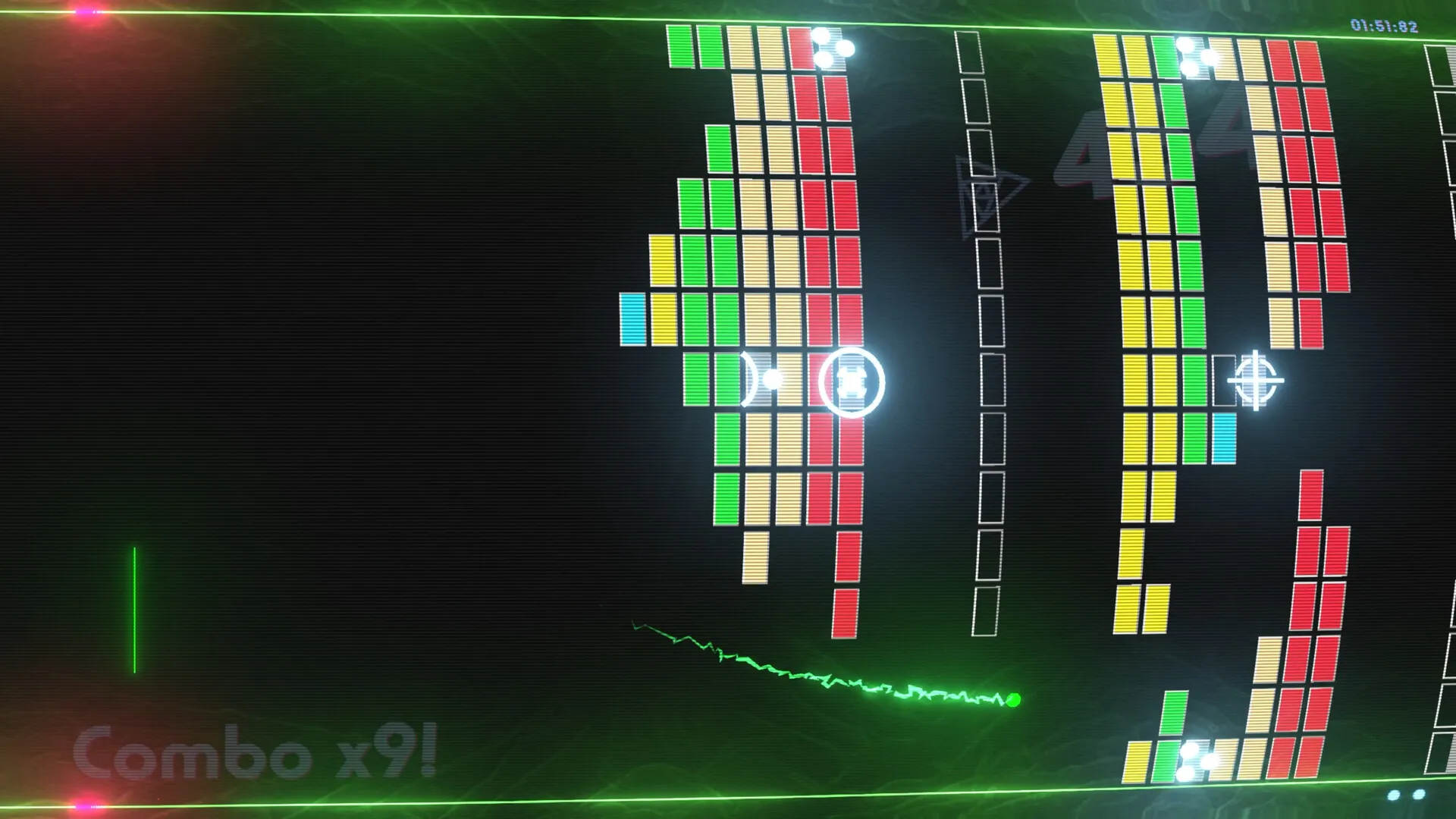
The addition of the sprint and focus buttons, which speed up paddle movement and slow down time, respectively, introduces an extra layer of control. These features are essential in higher-level gameplay, where precise paddle movements are crucial to navigating through increasingly chaotic brick formations.
However, their placement on the same button (R and ZR, depending on the platform) can feel awkward, especially when players need to use both features in quick succession. The inability to independently control these functions makes certain sections of the game frustrating, as players may accidentally trigger the wrong feature in high-pressure moments. Offering the option to rebind these controls would improve usability and give players more flexibility to tailor their experience.
As for the learning curve, Breakout Beyond challenges players to master the new mechanics, particularly the ball-curving feature. At first, the concept of curving the ball with precise paddle movement can be difficult to grasp, as players must time their movements perfectly to alter the ball’s trajectory.
This mechanic introduces a satisfying layer of skill but can also cause frustration for newcomers who are more accustomed to the simplicity of traditional Breakout controls. The game’s increasing difficulty gradually forces players to improve their precision and timing, making it feel like a rewarding experience once mastered.
In terms of accessibility, the game does not offer an extensive range of options, but the ability to adjust controls and sensitivity is a step in the right direction. However, there’s room for improvement—such as allowing more granular control over visual settings to cater to players who may find the flashing lights and fast-moving balls overwhelming. More customization in this area could make the game more accessible to a broader audience, ensuring a smoother experience for players with different needs and preferences.
Final Impressions: A Modern Take on a Classic
Breakout Beyond successfully blends the nostalgic charm of the original Breakout with modern mechanics and a stylish aesthetic. The transition to a horizontal layout and the introduction of new features like ball curving, focus mode, and power-ups all contribute to an experience that feels both fresh and familiar.
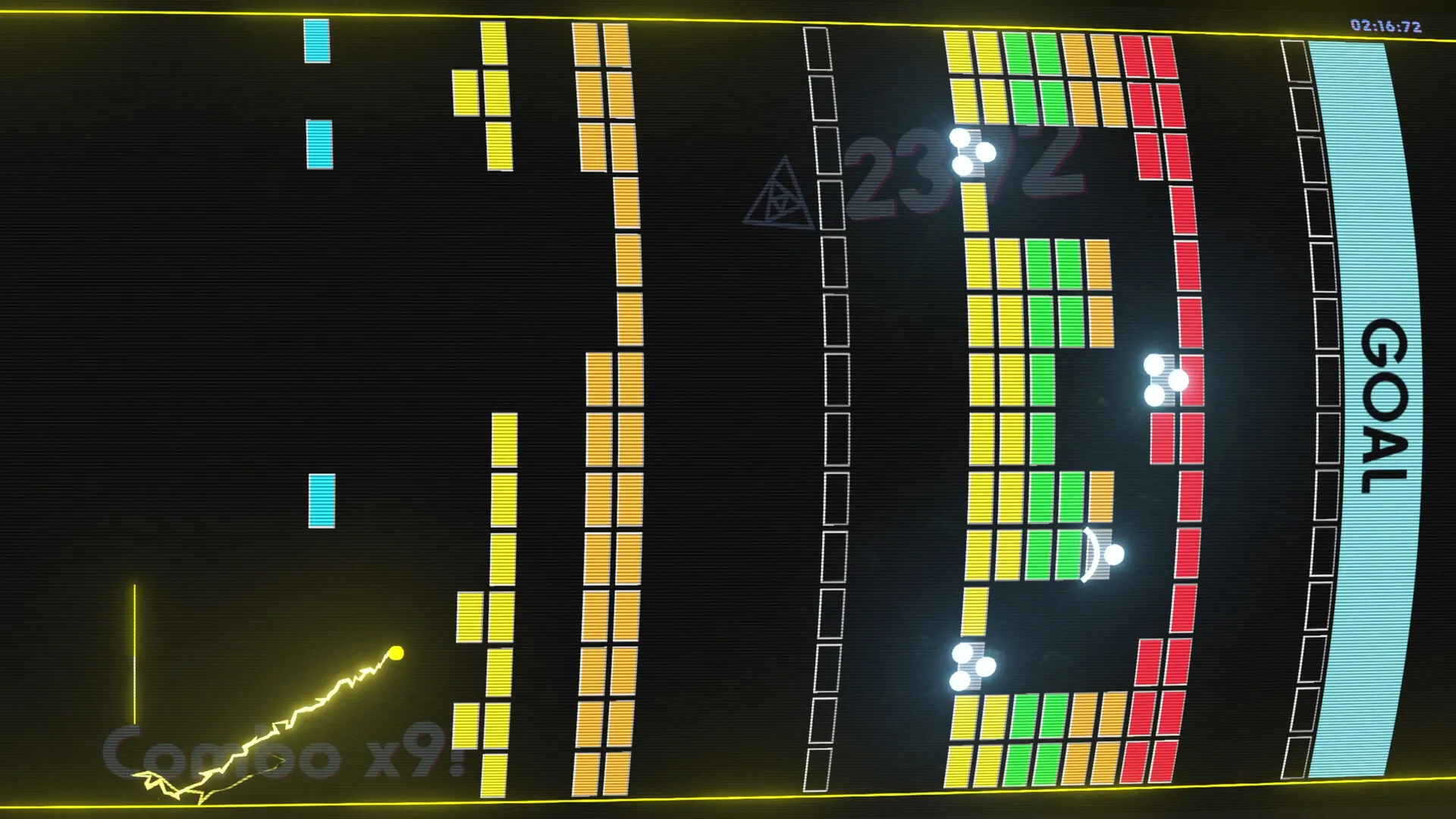
The neon-infused visuals and dynamic visual effects add an engaging layer to the gameplay, making each level visually satisfying and impactful. These elements work together to keep the game exciting and rewarding, even as the difficulty ramps up.
However, the game is not without its flaws. The paddle movement can feel imprecise at times, especially when speed is necessary, and the flashing lights and fast-paced action can occasionally make it difficult to track the ball. While these minor issues might detract from the experience in moments of high intensity, they don’t overshadow the overall enjoyment of the game.
Breakout Beyond is accessible to both fans of the original Breakout and newcomers to the series. The core gameplay is simple enough for beginners to grasp, but the added complexity of new mechanics and escalating difficulty offers enough depth for more experienced players.
The game is particularly well-suited for short, engaging play sessions, especially in handheld mode on the Nintendo Switch, making it a perfect pick-up-and-play experience. Whether you’re a long-time fan or a newcomer, Breakout Beyond offers something for everyone.
The Review
Breakout Beyond
Breakout Beyond successfully revitalizes the classic formula with modern mechanics, visually stunning effects, and engaging gameplay. While minor issues like imprecise paddle control and visual distractions occasionally hinder the experience, the overall sense of satisfaction from mastering the ball's movement and progressing through dynamic levels remains strong. It's an accessible, fun, and challenging game, perfect for short bursts of play, especially in handheld mode.
PROS
- Visually striking with a retro-futuristic neon aesthetic.
- Engaging mechanics, including ball curving and new power-ups.
- Gradually increasing difficulty keeps gameplay fresh.
- Multiple game modes, including Endless Mode and Co-op play, for added replayability.
- Satisfying audio design with impactful sound effects and music.
- Smooth gameplay on the Nintendo Switch, especially in handheld mode.
CONS
- Paddle movement can feel imprecise, especially during fast-paced moments.
- Flashing visuals and fast-moving balls can occasionally overwhelm the player.
- Focus and sprint buttons are awkwardly mapped on the same button.
- Endless Mode suffers from a bug preventing it from being truly infinite.