
























![Kingdom Hearts Collection [I-III] Review](https://gazettely.com/wp-content/uploads/2026/10/Kingdom-Hearts-Collection-I-III-1-360x180.webp "Kingdom Hearts Collection [I-III] Review: KHII Holds Steady as Newer Entries Fluctuate 37")



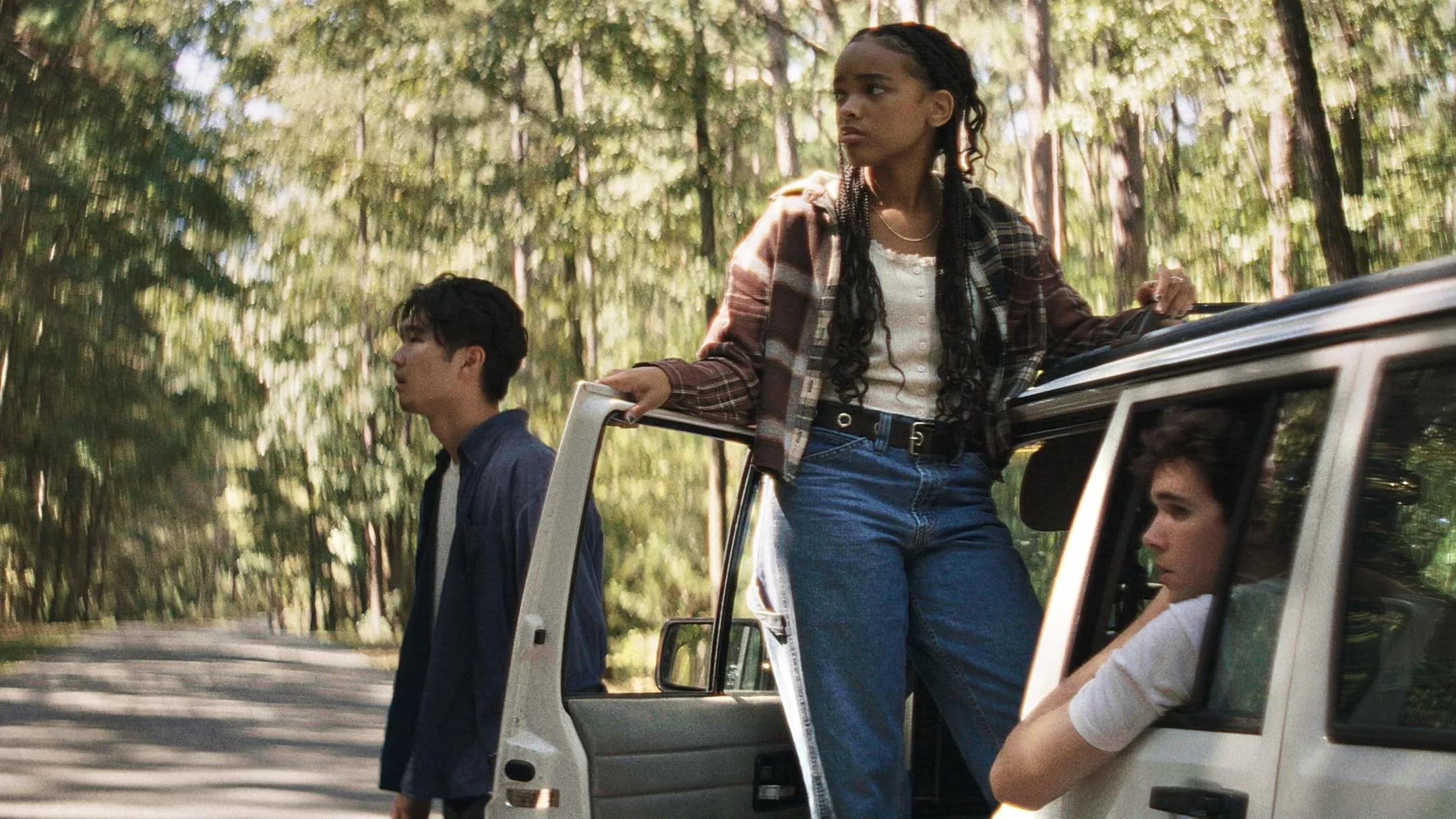

Alexander Ullom’s first film, It Ends, strands four fresh graduates on a nocturnal drive that refuses to end. James, Day, Fisher and Tyler pile into a Jeep Cherokee for one last late‑night meal—and before they know it, their fuel gauge freezes, fatigue vanishes and every roadside stop summons a howling throng from the woods. No exit. No explanation.
That relentless loop operates as more than a horror device; it’s a mirror held up to post‑college dread (I’ll call it “purgalypse” sensibility). One moment you’re reveling in banter about hawks vs. rifle; the next you’re wondering whether adulthood is simply endless motion. Is this road an existential treadmill? Perhaps.
Cinematographers Evan Draper and Jazleana Jones shift between shadowy interiors and bleached‑out stretches of pavement, suggesting that light and dark are equally inescapable. Ullom’s tight framing inside the car tightens the screws—claustrophobic yet oddly liberating, like realizing your future is both mapped and uncharted.
By keeping story mechanics mysterious, the film forces viewers to wrestle with their own unease about direction, choice and commitment. You expect a genre thriller; what you get is something that haunts the hours before dawn—and maybe the ones that follow.
Blueprint of the Infinite Drive
Ullom strands James, Day, Fisher and Tyler as emblematic post‑college archetypes. James wears ambition like armor; Day flits between hope and uncertainty; Fisher’s wit barely conceals dread; Tyler stoically embraces reality. Their banter—hawks vs. rifles segues into offhand remarks about rent and job prospects—hints at undercurrents of social precarity (echoes of 2008 job market collapse).
A missed GPS turn becomes the pivot from road‑trip to phenomenon. The car glides past a non‑existent dead‑end. That ordinary stretch morphs into an infinite expanse, akin to Kafka’s absurd landscapes, yet powered by a Jeep’s engine. The shift feels as sudden as a coup d’état of logic.
Each stop summons an agitated mass of strangers bursting from the forest. Hazard lights flicker like a warning; the door‑ajar chime becomes percussion in a nightmare score. Ullom repurposes automotive minutiae—interior glow, seatbelt clicks—to amplify dread. It recalls the collective panic of wartime blackouts.
Fuel gauge frozen, hunger and fatigue evaporate. Phones still have signal (minor miracle), yet logic warps: Do bodies age? Do clocks tick? These paradoxes cultivate “purgalypse” tension—a term for purgatorial apocalypse—where certainty dissolves. Time itself seems to decouple from cause and effect.
Panic subsides into a trance of repetitive motion. Once frightful, the scenario settles into drudgery (an allegory for modern work culture). The film’s tempo becomes a mirror to office cubicle monotony. Conversations veer from survival tactics to existential calculus (Why are we here? What if this is eternal?). Moments of dark humor surface, however, reminding us how absurd survival can feel.
As fuel levels remain static, individual wills fracture. When James urges a risky detour, Tyler cautions resignation. Day’s impulsive hope collides with Fisher’s resigned humor. These choices propel the narrative toward a tentative breakthrough—if they can override fear itself (a nod to Sisyphus?). Their choices echo broader questions about agency under systemic constraints.
Portraits in Motion: The Four at the Wheel
James arrives with briefcase ambitions and an intellect that treats every problem like a logic puzzle. He’s the prototypical “cynic‑turned‑convert” (cynoversion?), shifting from detached observer to obsessive architect of escape. Yoon anchors the film’s emotional axis—his furrowed brow suggests both resolve and quiet dread. He’s the guy who reads news headlines at dinner. And yes, he still manages a dry quip when the world tilts.
Tyler is the voice of labor‑class realism, fresh from HVAC gigs and reluctant to romanticize adventure. His military‑toned calm presaged this ordeal—he’d read the manual, so to speak. Cole conveys weight in every silence (an economy of expression that feels earned). He resists melodrama, yet you sense a suppressed storm. At times he seems to predict doom with a shrug—an everyday oracle.
Day embodies creative precarity—she’s a design major whose future feels pixelated. Jackson threads hope and doom into her posture: a shoulder slump one moment, then a fleeting spark of defiance. Her performance captures the jittery optimism of gig‑economy youth (she might doodle her fears into a sketchbook). She vacillates between clutching straw theories and brief, radiant courage.
Fisher’s humor feels like survival gear—he cracks jokes to fend off panic. But when the Jeep’s headlights catch a forest of faces, the cracks in his levity show. Toth flips from carefree grin to taut tension in an instant. His arc forces him to confront mortality head‑on, revealing that laughter and fear share a pulse.
Their shared history becomes a catalyst for sharper terror—the old inside jokes twist into uncanny echoes. Strategy sessions descend into blame games, then rise again into fragile solidarity. (Trust, it seems, is the rarest commodity.) Confessions—half‑formed yet raw—forge unexpected bonds. In their collective unraveling, the film suggests that community may be the road’s true destination.
Symbols on the Endless Asphalt
The road here becomes a metaphor for life’s uncharted highway—no exit ramps, no preview of what’s next. Each mile mirrors the uncertainty of adulthood’s first steps (think of assembly‑line workers during early industrialization, condemned to monotonous loops). The endless drive evokes the grind of 9‑to‑5 existence, where freedom feels like another illusion.
These grads teeter between forging ahead and conceding defeat. They clutch hope like a compass, only to watch it spin. That tension reflects a generation weighed down by student debt and gig‑economy precarity. They push the accelerator, yet the landscape remains the same—sometimes momentum offers little relief.
Within the Jeep’s confines, four archetypes crystallize: the Dreamer (James), the Skeptic (Day), the Free Spirit (Fisher), the Realist (Tyler). Their interactions form a miniature society where hope, resignation and rebellion collide. In their banter, you catch echoes of political squabbles and cultural divides—micro‑parliaments debating survival strategies.
The mob in the woods could be zombies, vengeful spirits or society’s marginalized clamoring for a ride. Ullom’s refusal to label them sharpens the allegory: fear of the unknown breeds its own chaos. Without clear villains, anxiety becomes collective. It reminds me of wartime refugee crises, where faceless crowds blur into headline statistics.
This is Sartre’s No Exit reimagined for Gen Z (call it “No‑Exit 2.0”). Here individual agency flickers against absurd forces. Is free will a passenger or merely an illusion in the driver’s seat? The film challenges viewers to consider whether choice matters when the road itself defies meaning.
In these layered symbols, It Ends raises questions about purpose, belonging and the thin line between driving forward and spinning wheels in place.
Engineering the Unending Nightmare
Shooting almost entirely within a cramped Jeep Cherokee demands inventiveness. Ullom transforms a mundane station wagon into a “motor‑bound mise‑en‑scène,” using roof‑mount rigs, door‑frame brackets and tight over‑the‑shoulder angles to keep the frame dynamic. (Reminds one of war reporters’ cramped trenches—confined yet alive with stories.)
Evan Draper and Jazleana Jones employ naturalistic illumination that shifts like mood swings—murk‑tinged nights give way to harsh midday glare. That daylight intrusion undercuts night’s claustrophobia, as if dawn itself mocks the characters’ plight. Their lens choices echo cinéma vérité, instilling both verité grit and unsettling artificiality.
Hazard‑light clicks become a metronome of dread; open‑door beeps register as alarms in an absurd symphony. Forest ambience swells in surround‑sound, then empties into crushing silence. This audio choreography (I’d call it “sonic purgalypse”) offers more shocks than any jump scare.
The opening spasms of rapid cuts propel us into terror. As the narrative wears on, Ullom stretches shots into hypnotic loops, mirroring the characters’ mental drift. That rhythm—terror‑pause‑terror—induces emotional whiplash, much like modern news cycles stoking and deflating panic.
A single ribbon of asphalt repeats, yet subtle variations—fallen leaves, distant road signs—suggest endless iteration. The Jeep itself feels alive: cracked leather seats, scuffed dash, personal effects sliding with each turn. It becomes a quasi‑character, its interior geography mapping the quartet’s unraveling.
Echoes in the Cabin: Atmosphere, Mood & Pacing
Tight framing inside the Jeep turns a familiar space into a pressure chamber (think subway cars at rush hour). Shoulders brush; rearview mirrors reflect panic. Then, suddenly, you glimpse the endless road beyond—a visual paradox that amplifies the squeeze.
Every creak of the seatbelt, gust of wind through cracked window and distant scream carves a notch in your spine. Silence hits like a power cut, letting dread pool and thicken. It’s a tactic used in wartime reportage—when quiet speaks volumes.
A burst of frantic acceleration. A lull of monotonous mileage. Peaks of blood‑pounding escape ricochet into valleys of repetitive driving. That ebb and flow mimics modern life’s adrenaline highs and Sunday afternoons of listless scrolling.
Pacing here isn’t just rhythm—it’s emotional sine wave. Rapid crescendos force empathy; muted stretches wear empathy thin. At times dread flips into dark humor (“Well, at least the gas gauge is full?”), then collapses back into despair. This interplay of sound, sight and timing coaxes viewers into the characters’ psyche, making the absurd road feel intimately familiar—and eerily possible.
After the Endless Drive
A taut premise rendered with remarkable ingenuity, transforming a lone station wagon into a theater of dread. Ullom’s direction wrings suspense from every jar and creak, while Draper and Jones’s lighting conjures mood shifts that feel almost metaphysical. The four leads share a palpable bond—fraternal tension that deepens each crisis moment.
Repetition can weigh heavily; the film’s insistence on looping the same tension occasionally feels self‑indulgent (a conscious risk, perhaps). Unanswered logistical questions—persistent phone signals, endurance of the human body—beckon viewers toward distrusting narrative coherence, which may alienate those craving firm resolutions.
Anyone drawn to philosophical horror (echoes of Sartre or Buñuel) will find the film’s meditations potent. It lands best in intimate settings—late‑night festival auditoriums or solitary home viewings—where the endless road can truly echo in one’s mind long after the credits roll.
The sight of tire tracks burning across moonlit asphalt, intercut with silent forest shadows, endures as a striking image. As a debut, It Ends secures Ullom’s place among minimalist genre‑benders who push thematic ambition on a modest scale.
Full Credits
Director: Alex Ullom
Writer: Alex Ullom
Producers: Evan Barber, Carrie Carusone
Cast: Mitchell Cole (Tyler), Akira Jackson (Day), Noah Toth (Fisher), Phinehas Yoon (James)
Director of Photography (Cinematographers): Evan Draper, Jazleana Jones
Composer: Matthew Robert Cooper
The Review
It Ends
It Ends transforms its daring premise into a tense meditation on young adulthood’s anxieties. Ullom’s claustrophobic staging and the cast’s chemistry sustain suspense, even as the premise’s repetition tests endurance. Its open‑ended logic invites viewers to ponder choice, routine and the allure of motion itself. A bold debut for fans of contemplative horror.
PROS
- Taut, high‑concept premise
- Inventive use of a single vehicle setting
- Naturalistic lighting that shifts mood
- Strong ensemble chemistry under pressure
- Philosophical depth beneath horror trappings
CONS
- Repetitive loops can test patience
- Key logistical details remain unexplained
- Mid‑section pacing occasionally stalls
- Open‑ended logic may frustrate some viewers







