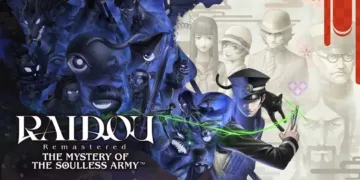
























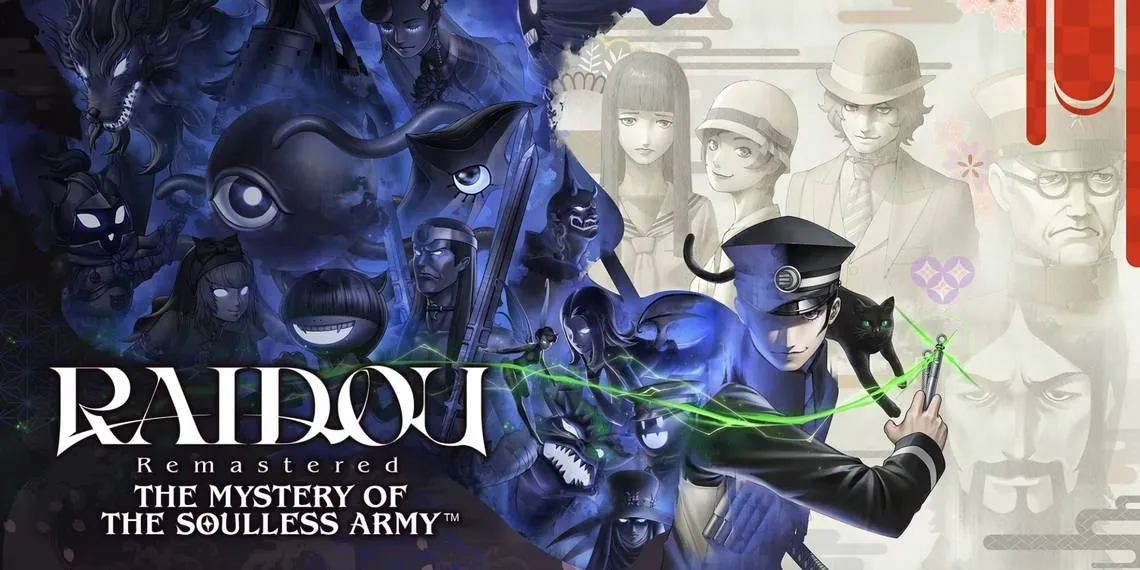

The air in 1930s Tokyo hangs thick with coal smoke and whispers of the arcane. This is the Japan of the Taishō period, a city caught between the ghosts of its past and the fever dream of Western modernity. Into this world of streetcars and shadows steps Raidou Kuzunoha. He wears the uniform of the new age—a student’s cap and cloak—but his true profession is ancient. He is a Devil Summoner, an exorcist tasked with policing the city’s spectral borderlands.
His day job, however, is a Western invention: the private investigator. Working from the Narumi Detective Agency, his first case appears deceptively familiar, a page torn from a pulp novel. A young woman requires his help. She isn’t being blackmailed; she believes a family curse will soon transform her into a demon.
This premise takes the American hardboiled archetype and steeps it in Japanese folklore. What begins as one girl’s plea soon pulls at the threads of a conspiracy woven deep into the capital’s foundation, exposing a darkness that industrial progress was meant to erase.
A Conspiracy of Silence and Specters
The narrative architecture of RAIDOU Remastered rejects the steady escalation common in Western thrillers. It embraces a kind of explosive, genre-bending storytelling popular in Japanese popular media, where a story’s scope can balloon unpredictably.
A provincial curse involving a kidnapped girl shatters into a full-blown international incident, featuring a phantom legion of red-caped soldiers, futuristic superweapons, and the baffling appearance of the Russian mystic Grigori Rasputin.
The game’s tone careens from the gritty crime drama of a Seijun Suzuki film to the wild, speculative fantasy of a Toho sci-fi epic. This is not a gradual uncovering of clues; it is a series of narrative ruptures that throw the player into increasingly bizarre circumstances.
This chaos is grounded by its tangible, atmospheric setting. The game’s 1930s Tokyo is a city of dualities, a living document of the friction between tradition and a rapidly imposed modernity. Here, the existence of the Dark Realm is not just a fantasy contrivance.
It functions as the city’s id, a psychic space where repressed folklore and forgotten demons bleed into the material world of streetcars and political ambition. Crossing between these two realities is a constant reminder of the city’s fractured identity, a place where the past is a literal, physical threat to the present.
This psychic split is mirrored in the protagonist’s experience. While many Japanese RPGs build their stories around the strength of a collective, RAIDOU opts for the profound isolation of the Western noir detective. Raidou moves through the story almost entirely alone, accompanied only by his sardonic feline guide, Gouto.
The interesting figures he meets—a compassionate Yakuza boss, an intrepid reporter—are less like partners and more like informants in a spy film, dispensing information before retreating into the scenery. This design choice creates a palpable sense of solitude, casting the player as a solitary agent in a city that refuses to offer companionship, only more secrets.
The Detective in Name Only
A detective story lives or dies by the quality of its investigation, the intellectual satisfaction of connecting disparate clues. It is here that RAIDOU Remastered presents its most significant contradiction, a place where its narrative promise and mechanical systems diverge sharply.
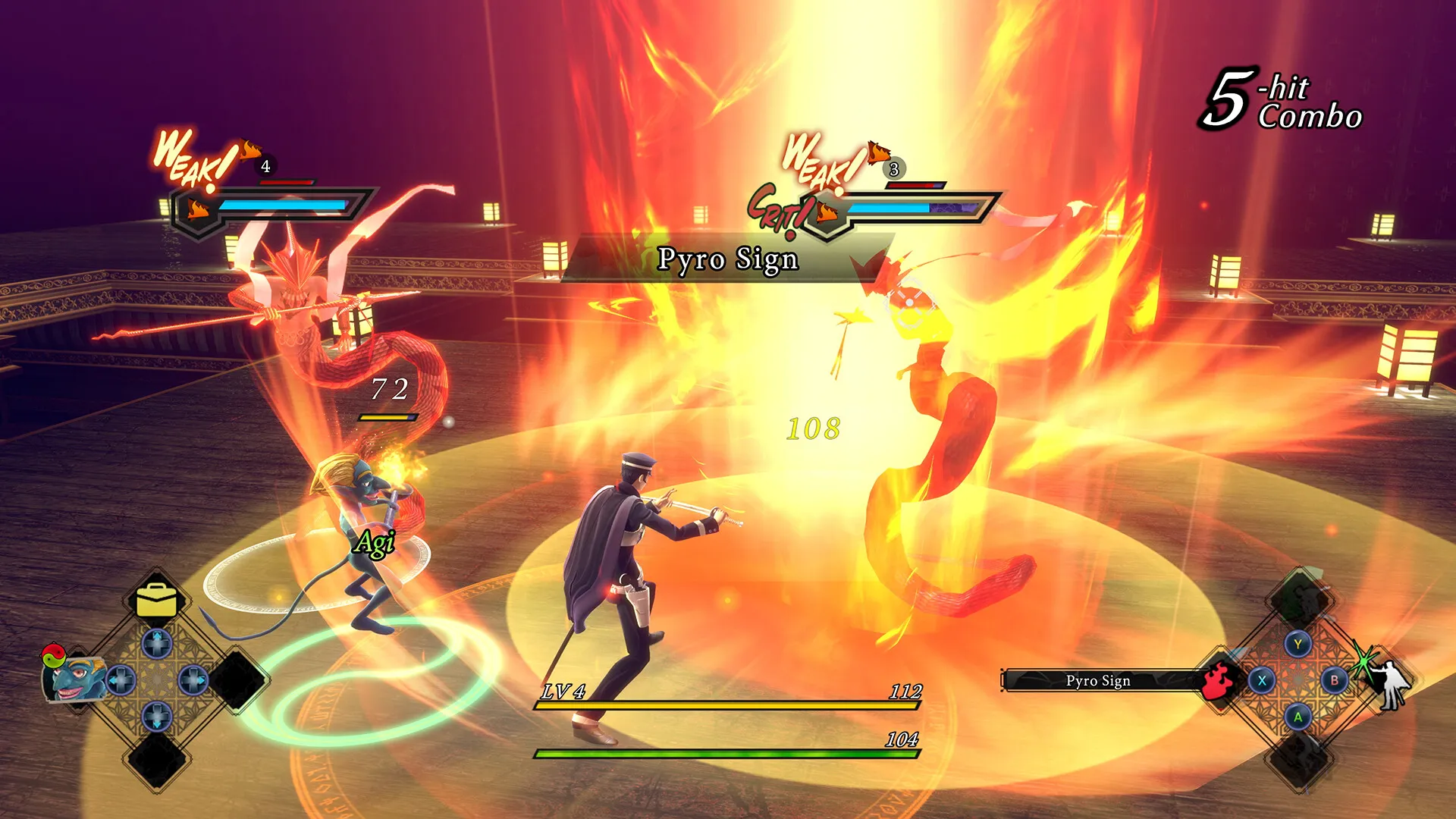
The game establishes a compelling fantasy of a supernatural private eye, only to systematically dismantle any opportunity for the player to embody that role. The process of investigation is reduced to a simple, linear path from one marked point on the map to another.
On paper, the system appears rich with potential. Raidou’s summoned demons are not just combatants; they are investigative tools, a supernatural toolkit for uncovering secrets. Lilim can peer into a person’s mind, Jack Frost can sculpt ice bridges across canals, and a Neko Shogun can move heavy obstacles. This suggests a game of lateral thinking, where the player must consider their demonic roster to solve environmental puzzles.
The reality, however, is a profound mechanical failure that undermines the detective premise. The game consistently refuses to let the player think. A garish exclamation mark on the map dictates every destination. Upon arrival, any interaction requiring a demon skill is met with a simple button prompt that automates the entire process.
There is no puzzle to solve, no deduction to be made. The player is not an investigator; they are an errand runner, following a checklist provided by an overbearing guide. This approach feels rooted in a JRPG design tradition that prioritizes a seamless narrative journey above all else, but in a game built around the fantasy of being a private eye, the result is a system that actively works against its own identity. Raidou may wear the detective’s coat, but the player is never truly allowed to do the thinking inside it.
A Violent Dance of Elements
Where the game’s detective mechanics falter, its combat system finds a potent and successful synergy between concept and execution. This is the moment the fantasy of being a Devil Summoner becomes a kinetic reality. In each encounter, Raidou is an agile human core flanked by two demonic partners.
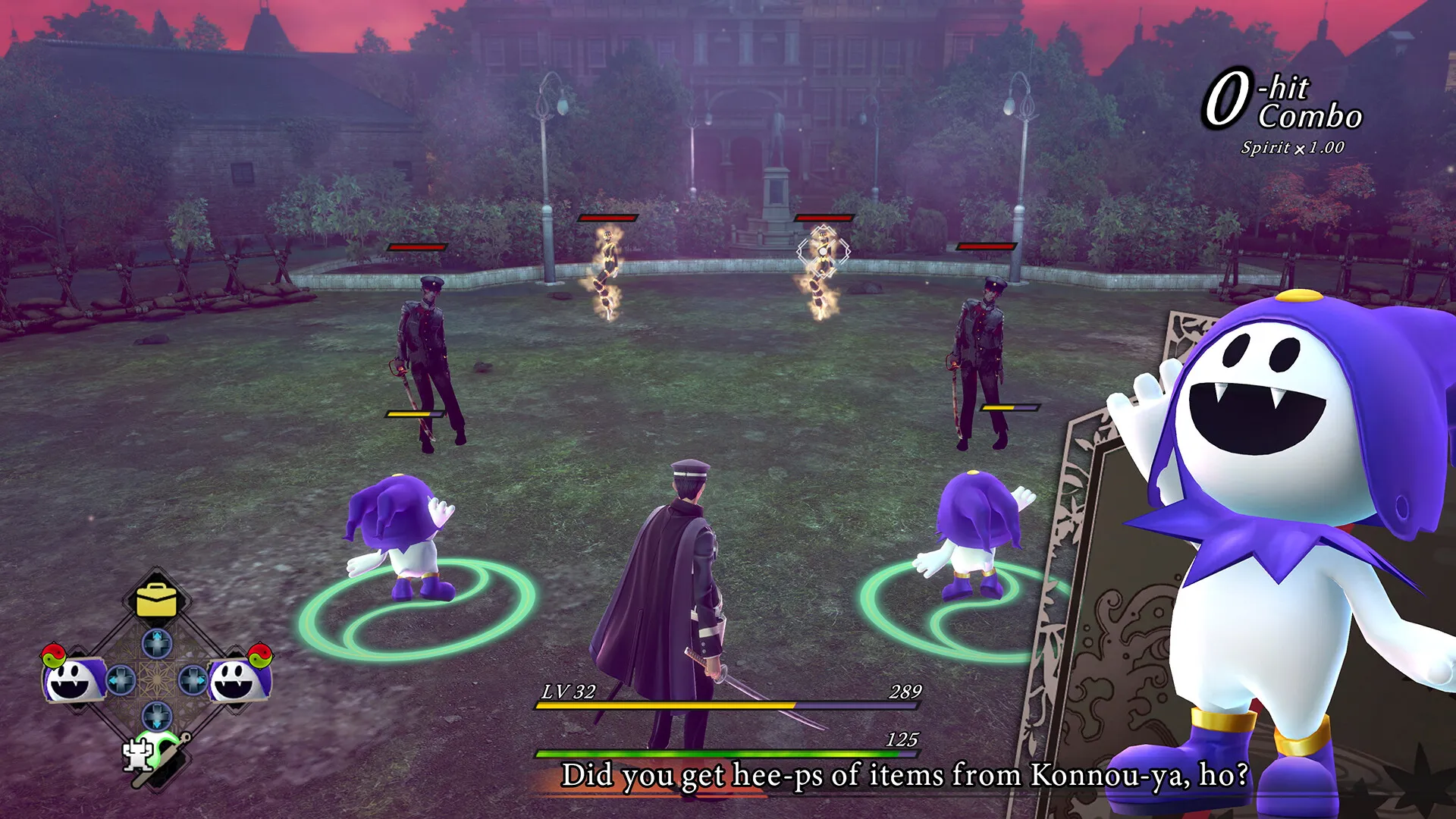
The remaster frees the camera from its fixed PS2-era perspective, allowing for fluid, modern movement. Raidou himself is nimble, armed with a sword, a firearm, and the ability to dodge and jump through incoming attacks. He is not a passive commander but an active participant, the focal point of a three-being fighting unit.
The system’s true intelligence lies in its successful translation of Shin Megami Tensei’s iconic Press Turn logic into the chaos of real-time action. The goal is not simply to deplete health bars but to exploit elemental weaknesses. Striking a foe with an element it is vulnerable to induces a stun state, opening it up for a flurry of attacks that yield a greater amount of MAG—the shared energy pool for all demon abilities.
This creates a thrilling combat rhythm: identify a weakness, command a demon to strike with the correct element, dash in to punish the stunned foe with sword combos, and use the generated MAG to fund the next elemental assault. It is a virtuous cycle of strategic thinking and aggressive execution.
Yet, a curious duality lies at the heart of this system’s depth. On a standard difficulty setting, it is entirely possible to assemble a demon duo so efficient that many encounters devolve into a simple repetition of attacks, with little tactical input required.
The game provides a rich set of tools but does not always demand they be used. To dismiss the system as shallow on this basis would be a mistake, however. Major boss encounters act as aggressive examinations of the player’s understanding.
These fights demand spatial awareness, precise dodging, and active management of your demonic partners, punishing those who have relied on a single, straightforward strategy. The system offers a set of sharp tactical knives, but outside of its most demanding moments, it rarely forces you to use more than one at a time.
Familiar Spirits, New Purpose
The ideological core of the Shin Megami Tensei franchise has always been its demonology—a complex system of recruitment and creation drawn from a global well of mythology. This tradition continues in RAIDOU Remastered.
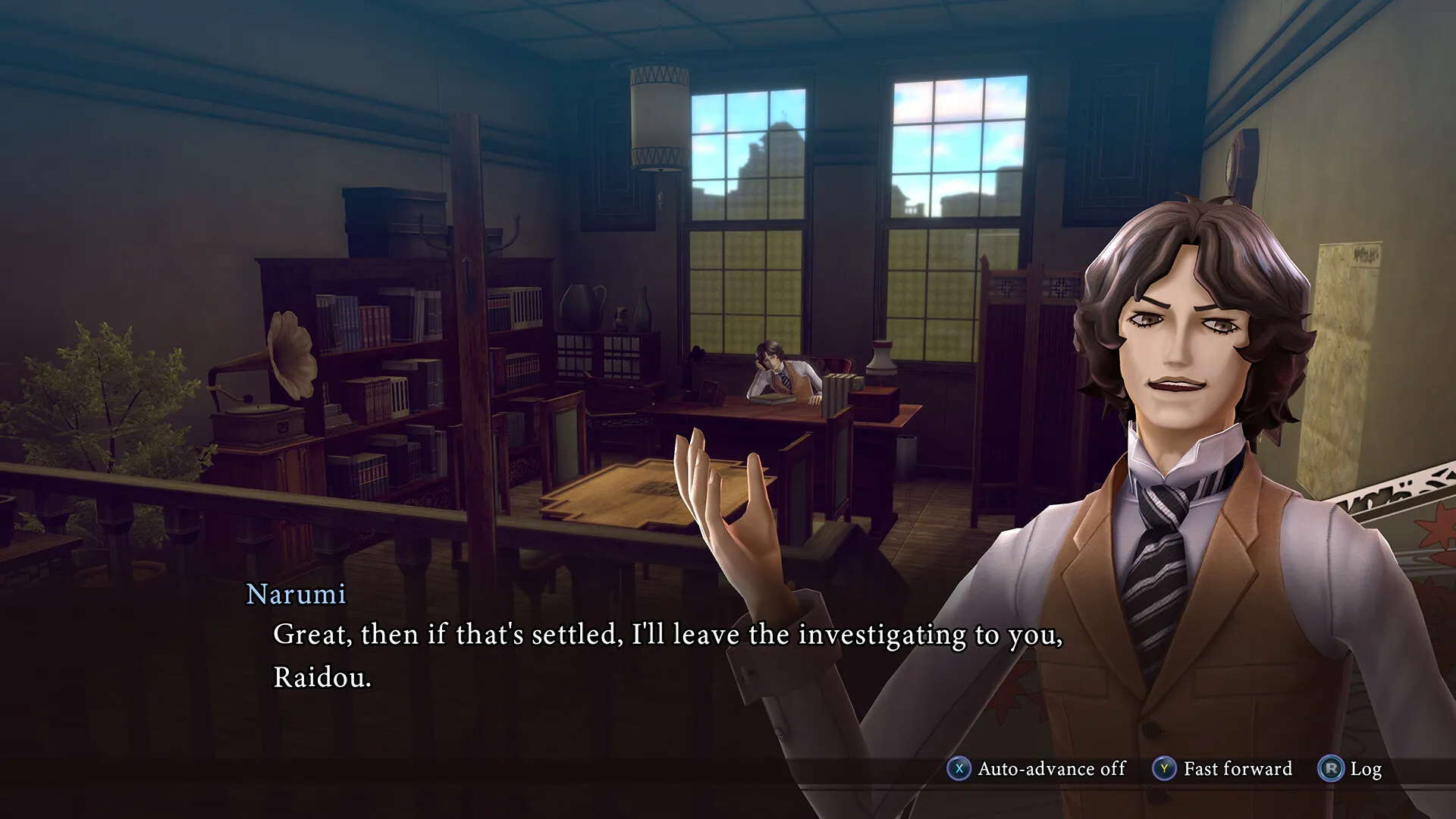
The loop is timeless: engage demons in combat, negotiate for their allegiance, and then, in a dark alchemical process, fuse two spirits into a new, more powerful being. This remaster streamlines the process with a cleaner interface and expands the roster with dozens of creatures from later games, making the act of filling out your demonic compendium a smoother affair.
This process of mythological recycling, of breaking down and rebuilding archetypes, is as satisfying as ever. Yet, its function within RAIDOU’s ecosystem is noticeably different from its turn-based relatives. In mainline SMT or Persona titles, constant, careful fusion is often a prerequisite for survival.
Here, the game’s action-centric design shifts the balance of power decisively toward Raidou himself. His personal combat prowess and upgraded weaponry can often eclipse the raw power of his demonic underlings, especially on a standard difficulty.
The consequence is a system that feels less about necessity and more about curation. Players are not relentlessly pressured to sacrifice a beloved demon like the iconic Jack Frost for a marginal statistical gain. Instead, they are free to grow attached to their favorites, using them for their specific elemental skills rather than their raw damage output.
The demonic bestiary becomes less of a vital strategic resource and more of an expressive palette, a choice that softens one of the series’ sharpest edges and reframes team-building as an act of personal preference over desperate optimization.
A Ghost in New Clothes
Remastering a game from a bygone console generation is an act of digital archaeology. The developer must choose what to polish and what to preserve. RAIDOU Remastered navigates this challenge with some thoughtful, if not entirely seamless, choices. The most apparent work has been done on the environments, with the static pre-rendered backgrounds of the original now replaced by full 3D spaces that add a sense of place. Yet, the game’s skeleton remains visible.
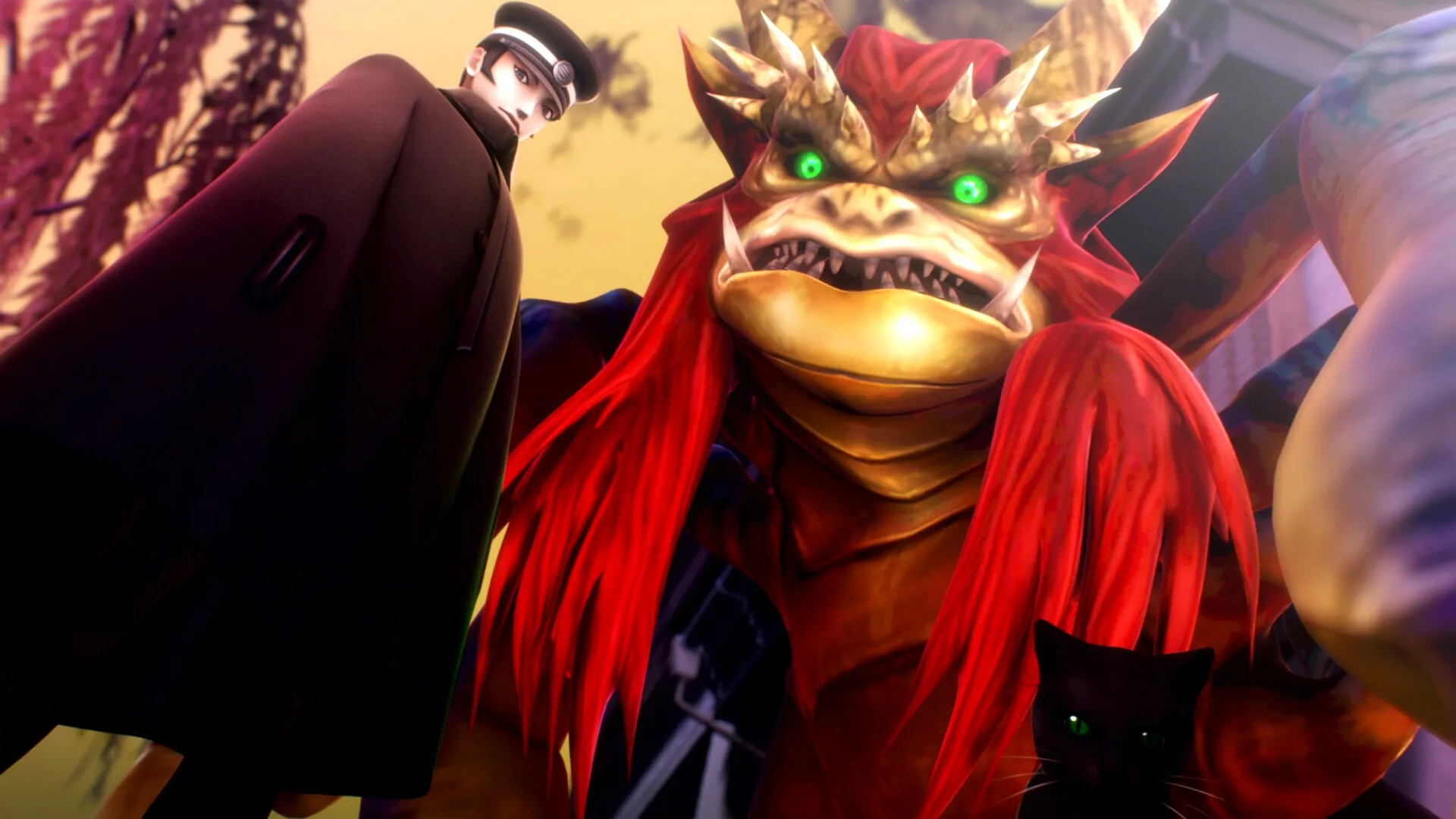
Character models, while clean, move with a certain stiffness, their ghostly puppet strings tracing back to the PS2 era. The camera will occasionally lock into a fixed perspective, a stylistic echo of its original composition, reminding you of the game’s history.
Aurally, the restoration is more comprehensive. The addition of full voice acting gives the cast a newfound presence, bringing a level of personality to the dialogue that was previously left to text boxes. The soundtrack remains a highlight, its mix of smoky jazz for city exploration and aggressive rock for battles establishing a strong, distinct sonic identity that is quintessentially Shin Megami Tensei. It is a soundscape that feels both of its time and timeless.
The most impactful change, however, is structural. The surgical removal of random encounters transforms the experience of moving through the world. What was once a potential war of attrition is now a smooth journey, allowing the game’s atmosphere to take precedence over repetitive combat.
This is a clear acknowledgment of modern design sensibilities, sanding down a major point of friction for a contemporary audience. The result is not a modern game, but a carefully curated relic viewed through a modern lens, its history still etched into its code.
The Review
RAIDOU Remastered: The Mystery of the Soulless Army
RAIDOU Remastered presents a fascinating conflict. It succeeds brilliantly as an action game, with a fast, strategic combat system that translates SMT’s core ideas into real-time. Its atmospheric 1930s Tokyo and stellar soundtrack create a powerful sense of place. Yet, it fails at its detective premise, offering a linear, hand-holding investigation that removes all player agency. It is a stylish, enjoyable, and deeply flawed curiosity—a case where the fistfights are far more interesting than the clues.
PROS
- Engaging and strategic real-time combat system.
- Unique and evocative 1930s supernatural Tokyo setting.
- Excellent soundtrack mixing jazz and rock.
- Meaningful quality-of-life improvements, like the removal of random encounters.
CONS
- Investigation gameplay is entirely linear and lacks player deduction.
- The narrative's tone can shift wildly and feel inconsistent.
- An underdeveloped supporting cast creates a lonely experience.
- Visuals are improved but still reveal their PS2-era origins.