


























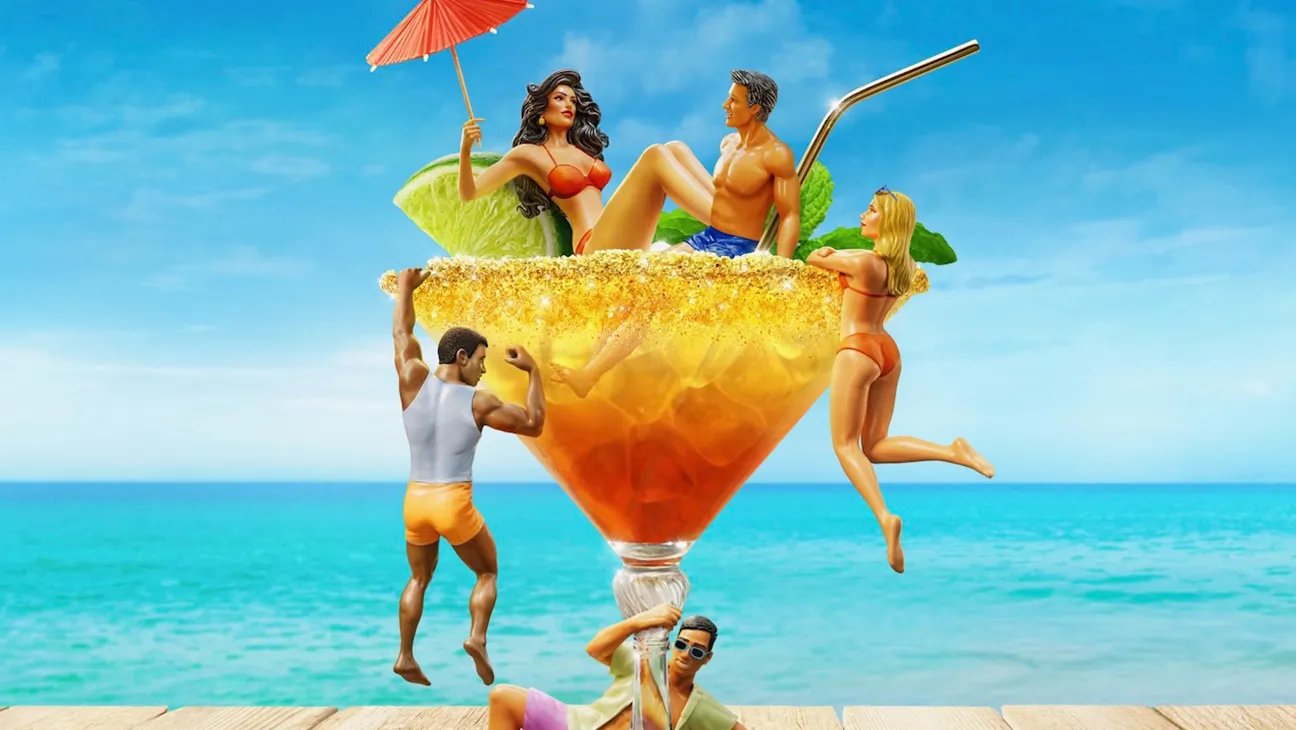

After a year-long absence, Bachelor in Paradise returns for its tenth season, not as a mere television show, but as a cultural artifact attempting a delicate recalibration. For the uninitiated, the premise is a time-tested reality formula: alumni from The Bachelor and The Bachelorette, their first televised quests for love having failed, are gathered on a beach for a second, messier chance.
This iteration, however, arrives with a clear mandate to evolve. The setting has been upgraded to a plush Costa Rican resort, a move that telegraphs a desire for a more premium feel. More pointedly, the cast will soon include contestants from the Golden series, introducing a multi-generational dynamic that forces a direct confrontation with television’s deep-seated ageism.
This season feels less like a simple continuation and more like a high-stakes experiment, one that asks if a legacy franchise can fundamentally rewrite its own social codes to survive in the modern media landscape.
The Paradise Panopticon Gets a Glossy Upgrade
The most immediate change in this tenth season is its aesthetic. The shift from the rustic beaches of Mexico to Costa Rica’s sleek Azura Beach Resort is more than geographical; it is ideological. With its private pools and, most crucially, its air-conditioned sanctuaries, the new location swaps manufactured hardship for manufactured luxury.
This visual overhaul is a clear signal that the franchise is courting an audience accustomed to the high-gloss production of streaming giants. The camera work is noticeably more deliberate and cinematic, the lighting is richer, and the editing incorporates stylized slow-motion and a propulsive soundtrack, all intended to make the proceedings feel more prestigious.
This season also exhibits a newfound self-awareness, occasionally breaking the fourth wall with a knowing wink. When a contestant named Spencer mentions his “contract” or the camera pointedly captures a crew member’s deadpan reaction, the show acknowledges its own artifice.
Also Read






It’s a subtle but significant concession to a contemporary audience that is fluent in the language of reality TV production and no longer content to ignore the machinery behind the curtain. The iguanas may have replaced the crabs, but the bigger shift is from feigned authenticity to a polished, self-referential performance.
Gamifying Intimacy for the Digital Age
Beyond the surface-level changes, the very mechanics of courtship have been retooled. The unstructured mingling of past seasons has been augmented with what the show calls “compatibility exercises,” a clinical term for producer-driven scenarios designed to accelerate drama.
The premiere’s “Kiss and Don’t Tell” challenge, a kind of Tinder-in-real-life where contestants swiped on profiles to earn a meeting in a kissing booth, serves as a perfect microcosm of this new approach. It transforms private attraction into a public game, immediately generating data points of desire and rejection for all to see.
This gamification is further underscored by the introduction of Hannah Brown as the “Head of Paradise Relations,” a corporate-sounding title that adds a layer of bureaucratic absurdity to the management of human emotions. The season also dangles its most provocative twist in the previews: a choice between love and a $500,000 prize.
This mechanic moves beyond romantic fantasy to directly engage with the cynical reality of the influencer economy, forcing a confrontation with the question that has always lingered in the background: are these people here for love or for a career?
Familiar Archetypes and a Looming Social Experiment
The human drama, for now, runs on familiar tracks. The initial cast is a curated collection of franchise archetypes: recent cast-offs from the seasons of Jenn, Joey, and Grant; returning figures like Kat and Justin; and the requisite wildcard, Dale Moss, whose own dramatic history with the franchise adds a layer of meta-narrative.
The early conflicts follow established patterns, as seen in the love triangle involving Brian, Zoe, and Parisa, a textbook case of a wandering eye creating immediate discord. A more complex situation unfolds with the arrival of Susie Evans, the recent ex-girlfriend of Justin, which sends his budding connection with Lexi into a tailspin.
The ensuing rose ceremony, where Justin’s attempt to save his ex was rejected, created the kind of emotional wreckage the show thrives on. Yet, the most significant casting decision is the one still held in reserve: the “Goldens.”
Their impending arrival transforms the season from a standard dating show into a fascinating social experiment. They are not positioned as elder advisors but as full participants, a choice that sets the stage for a rare exploration of intergenerational attraction and desire on mainstream television.
A Renovation for Relevance
The cumulative effect of these changes presents a franchise in active conversation with its own identity. The polished production and structured challenges are an effective modernization, aligning the show with the aesthetic and pacing of its streaming-era competitors.
Yet this efficiency may come at a cost. The increased producer intervention risks making the experience feel more like a controlled laboratory than an organic social environment, where emotional outcomes are engineered rather than discovered. While the early episodes deliver the requisite drama, the season’s true cultural significance hinges on the execution of its boldest premise.
The integration of the “Golden” cast will be the real test. If handled with nuance, it could challenge deep-seated conventions around age and desire in popular culture. The ambition is palpable; the new Bachelor in Paradise is making a concerted effort to evolve beyond its established format. The question is whether this renovation is a true structural change or simply a more sophisticated facade on a well-worn foundation.
Bachelor in Paradise season 10 premiered on Monday, July 7, 2025, on ABC, with episodes airing weekly on Mondays at 8 p.m. ET/PT. There was also a special Tuesday episode on July 15, 2025, which introduced the Golden contestants. The season is available to stream on platforms like Fubo, DirecTV, Hulu + Live TV, and on-demand the following day on Hulu.
Full Credits
Producers and Executive Producers: Scott Teti, Mike Fleiss, Martin Hilton, Nicole Woods, Tim Warner, Louis Caric, Peter Geist.
Cast: Alexe Godin, Bailey Brown, Brian Autz, Dale Moss, Hakeem Moulton, Jeremy Simon, Jess Edwards, Jonathon Johnson, Justin Glaze, Kat Izzo, Kyle Howard, Lexi Young, Ricky Marinez, Sam McKinney, Spencer Conley, Zoe McGrady.
The Review
Bachelor in Paradise Season 10
Bachelor in Paradise Season 10 executes an ambitious and necessary renovation, successfully modernizing its aesthetic to compete in a crowded streaming landscape. Its willingness to gamify intimacy and, most importantly, to introduce an intergenerational cast, positions the season as a fascinating social experiment. While the increased producer hand can feel overt at times, the effort to evolve beyond its own formula makes this a compelling and culturally relevant watch. It is a calculated bid for continued relevance that, for now, seems to be paying dividends.
PROS
- A significant visual upgrade with a more cinematic and polished feel.
- The inclusion of contestants from the Golden series introduces a fresh, multi-generational dynamic.
- New structured challenges and a more self-aware tone add energy to the established format.
CONS
- Heightened producer intervention risks making drama feel manufactured rather than organic.
- Core conflicts still rely on familiar reality television tropes and character archetypes.
- The slick, fast-paced style could overshadow the potential for genuine emotional development.