




















![Kingdom Hearts Collection [I-III] Review](https://gazettely.com/wp-content/uploads/2026/10/Kingdom-Hearts-Collection-I-III-1-360x180.webp "Kingdom Hearts Collection [I-III] Review: KHII Holds Steady as Newer Entries Fluctuate 40")
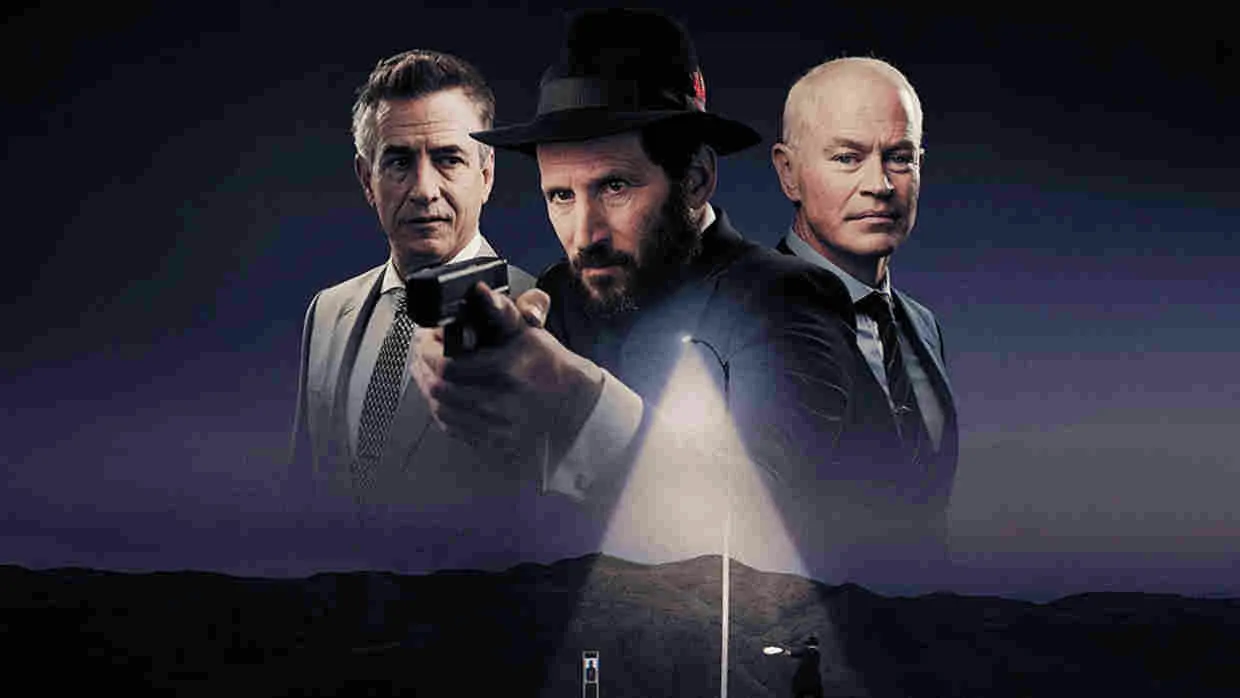

In the bleached light of the Southern California sun, a man of God resides in a place of commerce. Rabbi Mo Zaltzman shepherds his flock from the impermanence of a strip-mall temple, his existence a quiet study in faith awaiting a more solid foundation.
The desert landscape itself seems to hold its breath, a vast emptiness promising either revelation or ruin. The film introduces this man of gentle certitude, this community built on text and tradition, only to watch its world crack open.
A gala meant to celebrate a future sanctuary becomes its desecration. A gunshot rings out, a clean, sharp tear in the fabric of the evening, and a benefactor falls. In the aftermath, society scrambles for a simple narrative, a comprehensible evil. It finds one in a boy, a vessel for an ancient hatred.
The police offer this explanation, and the community accepts the solace of a story they understand. Yet for Rabbi Mo, the story does not hold. A dissonant note sounds within him, a flicker of doubt that suggests the abyss beneath the official truth is far deeper and darker than mere bigotry.
The Topography of Greed
This seed of doubt compels the Rabbi from his world of scripture into the profane labyrinth of a secular investigation. His spiritual framework, designed to interpret sins of the soul, proves useless against sins of the ledger. His quest, born from a humane belief in a young man’s potential for redemption, becomes a grim education in a different kind of evil.
He peels back the skin of his town to find not the clean wound of ideological hate, but a sprawling, cancerous network of human appetite whose tendrils choke every institution. The search for truth unspools into a cartography of moral compromise, where the lines between benefactor and predator dissolve. Alan Rosner’s life was not a simple testament to community, but a complex architecture of ruthless deals and broken men.
Whispers of espionage cling to his family like a shroud. The land itself, the very ground of this community, is stained by schemes of phantom green energy and the raw power of government contracts. The film pivots on a stark realization that lands with the cold weight of a stone: this violence was not born from a twisted love of God or race, but from the worship of money.
This banal truth is perhaps the most chilling revelation, shifting the source of terror from some grand, metaphysical evil to the quiet, desperate corruption of neighbors and protectors, an evil that wears a suit and files for permits.
A Fracture in Form
The film itself seems to suffer a crisis of faith, its identity splintering under the weight of its own story. It is a creature of warring impulses, a body twitching with discordant gestures, unable to commit to a single truth. For moments, it settles into the shadows of a serious crime noir, only to convulse into a family drama or erupt in a spasm of clumsy humor.
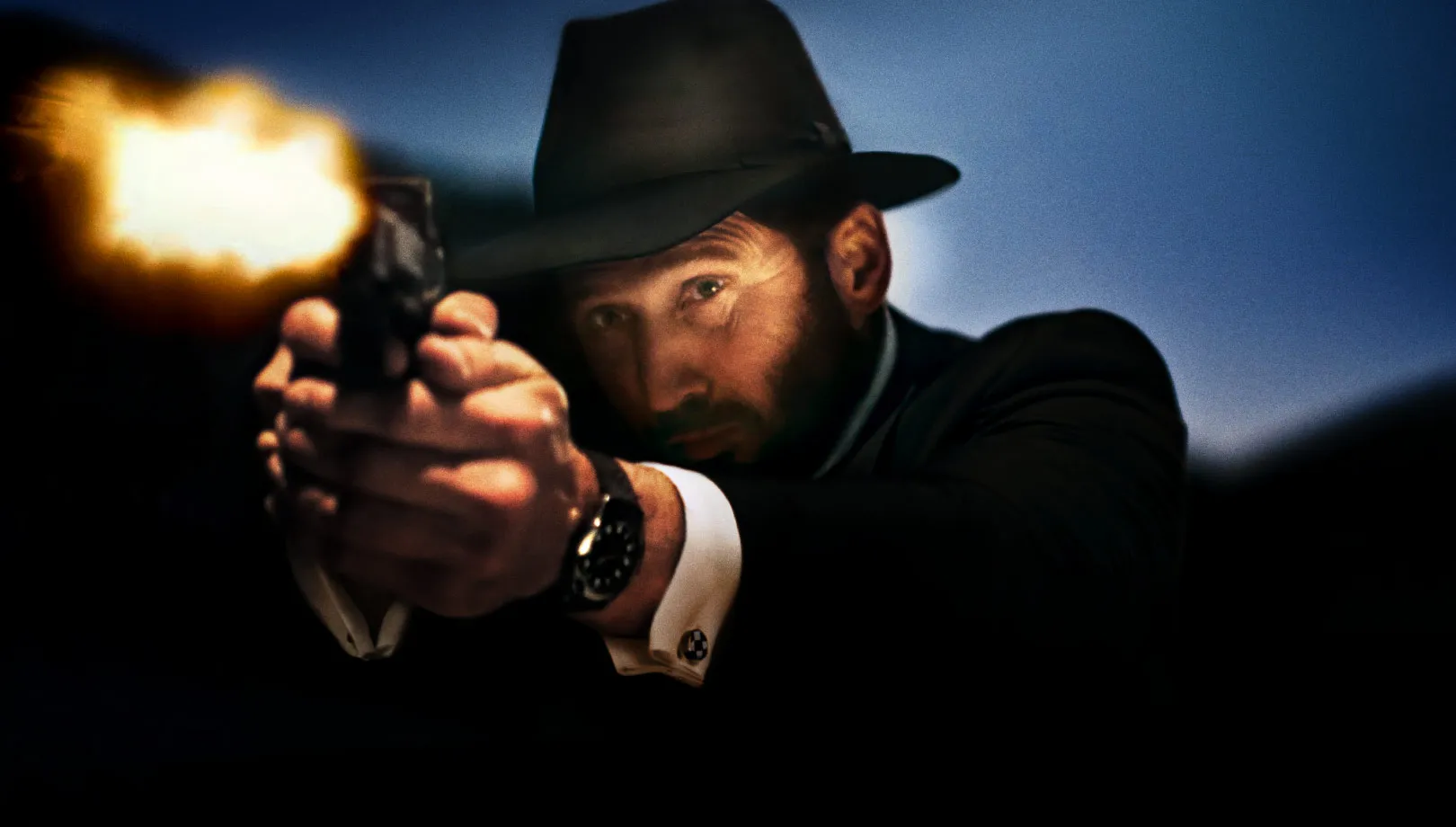
Mark Feuerstein’s Rabbi, with his amiable warmth, often feels like a man from another, kinder film, his gentle demeanor a nervous tic in the face of escalating horror. This tonal schism creates a profound sense of unease, reflecting a world where nothing is sacred, not even its own narrative integrity. Is the humor a shield against the bleakness, or a failure of nerve?
The script reaches for meaning with preachy monologues, most notably from a Holocaust survivor whose grave testimonial feels airlifted from a more serious work. It is a desperate grasp for a known moral framework in a story whose primary evil is procedural and gray. Even the action, the violent grammar of the genre, feels born of this uncertainty.
The shootouts are competently staged yet ring hollow, their climactic implausibility—where rank amateurs successfully repel paramilitary professionals—a flight into fantasy when the grimy reality of the conspiracy becomes too much to bear. It is a surrender to cinematic convention, a retreat from the grim logic the film itself establishes.
The Weight of a Gun
Amid this maelstrom of intentions, Mark Feuerstein’s performance is the anchor, the one element of unwavering authenticity. He gives Rabbi Mo an authentic heart, portraying with aching credibility a man whose very essence is eroded by the choices forced upon him.
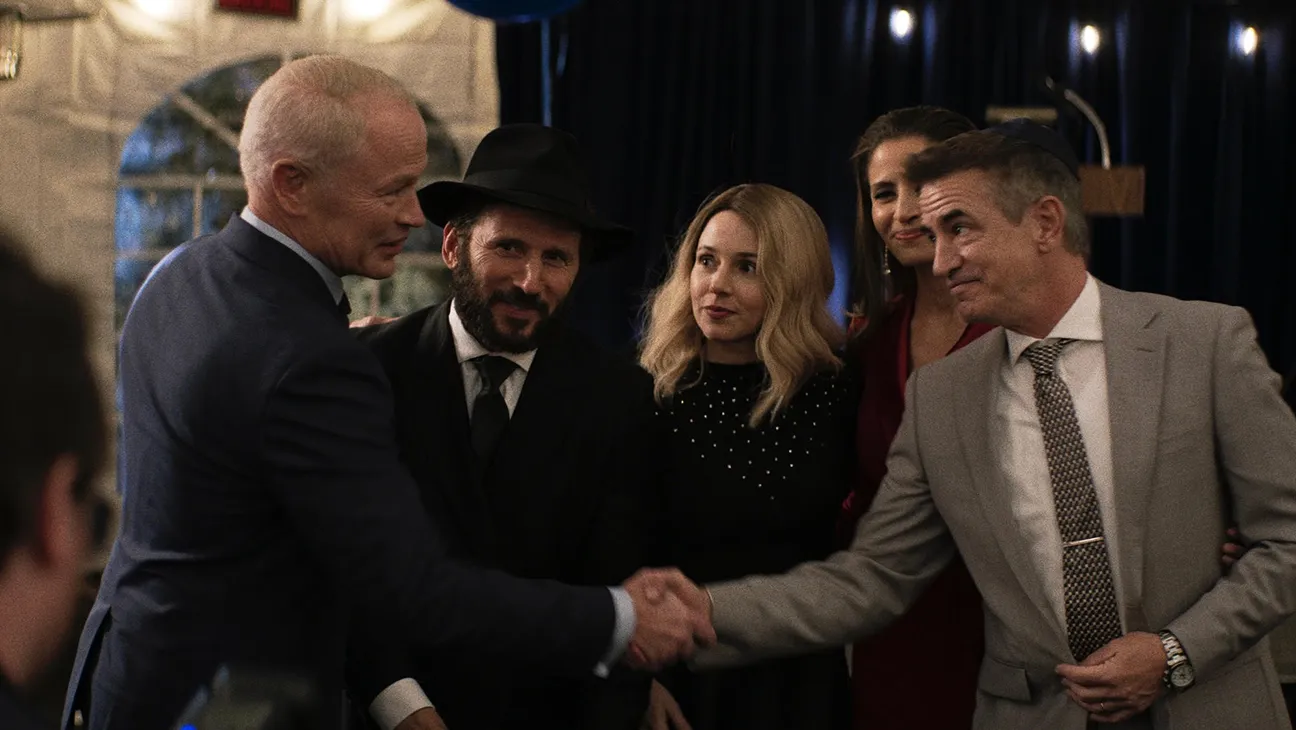
We see the scholarly stoop of his shoulders give way to the tense posture of a combatant, a physical manifestation of a soul in crisis. The veteran actors orbiting him lend a necessary gravity to the proceedings, preventing the shaky structure from collapsing entirely. But the film’s most potent element is the philosophical quandary it places in its hero’s hands along with a firearm.
What happens when a man whose identity is built on peace must adopt the tools of violence to protect life? The question is not merely one of self-defense; it is about the irreversible transformation of the self. Can one learn the language of the gun without losing one’s native tongue of mercy? The film offers no simple answer, its own muddled voice incapable of a clear moral pronouncement.
The score, with its spectral echoes of a classic Western, haunts the action with the ghost of a simpler time, of a black-and-white morality that has long since faded to gray. It evokes a myth that cannot survive in this modern wilderness of compromised ideals, leaving us with a good man unmoored, holding the cold, heavy burden of survival.
Guns & Moses is an American crime thriller that premiered at the Los Angeles Jewish Film Festival on June 19, 2024. It was released theatrically in the United States on July 18, 2025, distributed by Pictures From The Fringe and Concourse Media.
Full Credits
Director: Salvador Litvak
Writers: Nina Litvak, Salvador Litvak
Producers and Executive Producers: Lee Broda, Aimee Schoof, Isen Robbins, Salvador Litvak, Brian David Cange, Natalie Marciano, Horatio C. Kemeny, Sol Goldner, Shmuel Shajewitz, Matthew Shreder, Yekusiel Kalmenson, Michael Kest, Shlomo Bohem, Charles-Edouard Gros, Shawn Bookin
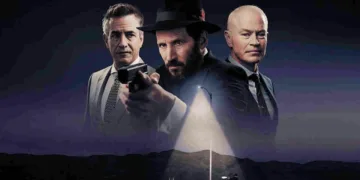
Cast: Mark Feuerstein, Neal McDonough, Dermot Mulroney, Christopher Lloyd, Alona Tal, Jake Busey, Craig Sheffer, Mercedes Mason, Paulo Costanzo, Ed Quinn, Gabrielle Ruiz, Jackson A. Dunn, Mila Brener, Juju Journey Brener, Joshua Gallup, Zach Villa
Director of Photography: Ricardo Jacques Gale
Editors: Peter Marshall Smithy, Peter Marshall Smith
Composer: Aaron Gilhuis
The Review
Guns & Moses
"Guns & Moses" reaches for a profound exploration of faith confronting violence but ultimately fractures under the weight of its own conflicting ambitions. Mark Feuerstein provides a compelling, human anchor in a story that unravels into a muddled conspiracy. While its central questions about community and survival linger provocatively, the film's jarring tonal shifts and narrative incoherence leave it as a collection of intriguing fragments rather than a satisfying whole. It is a film at war with itself, offering more philosophical quandaries than cinematic resolution.
PROS
- A strong, anchoring lead performance from Mark Feuerstein.
- An original premise with a fresh protagonist for the thriller genre.
- Poses significant questions about faith, violence, and self-defense.
CONS
- A deeply fractured and inconsistent tone.
- An overplotted and convoluted conspiracy narrative.
- Moments of clumsy, on-the-nose dialogue and messaging.