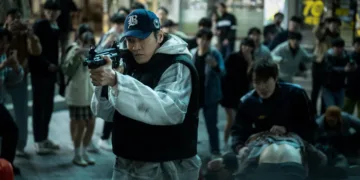



















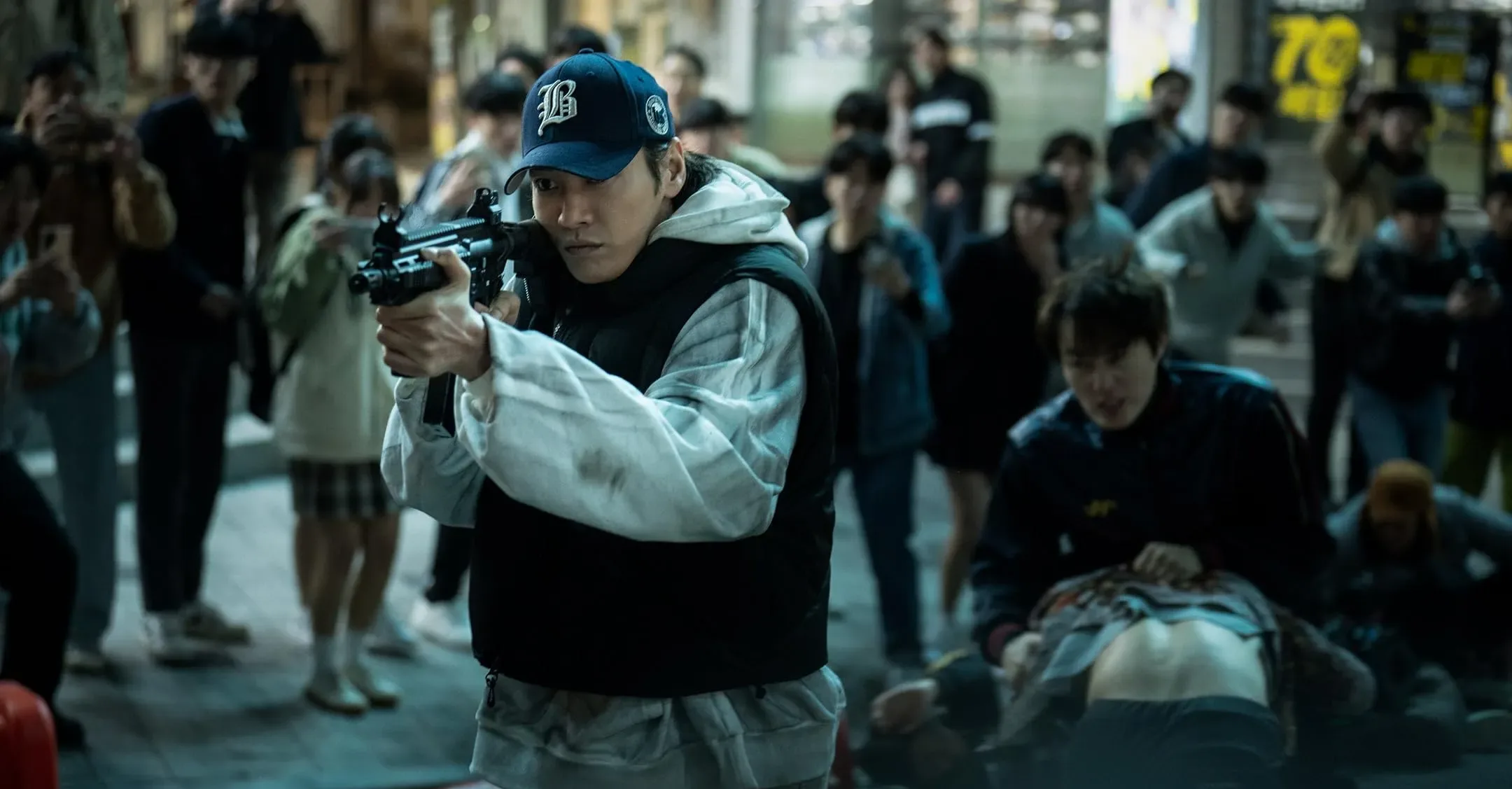

What happens when an object of immense power is introduced into an environment that has no context for it? Trigger poses this question with unnerving focus. The series opens in a South Korea we recognize—a society of immense pressure and ambition—but drops a foreign element into its heart: an influx of illegal guns.
In a nation with virtually no gun crime, these weapons find their way into the hands of ordinary, stressed-out people. This is not a straightforward action series. It is a slow-motion study of a social fabric tearing apart. The show’s title cleverly points to the mechanical function of a firearm and, more importantly, to the psychological breaking point within every person.
A Society on the Verge
The show builds its world not on grand conspiracies, but on the quiet desperation of modern life. I once lived in an apartment with paper-thin walls, where you learned the rhythms of your neighbors’ lives through muffled arguments and footsteps.
Trigger captures that feeling of forced, tense intimacy and magnifies it to an unbearable degree. It understands that true societal anxiety isn’t always about big, headline-grabbing events. It’s often a low, constant hum of friction—the claustrophobia of the daily commute, the pressure of precarious work, the feeling of being unheard.
The series brilliantly channels this through Yoo Jung-tae, a young man studying for the hyper-competitive civil service exam. His rage isn’t born from a single great injustice, but from a thousand daily cuts that relentlessly chip away at his composure.
We watch him try to navigate a world that feels hostile at every turn. On the subway, a man belligerently occupies a seat reserved for pregnant women, ignoring his polite request to move. In the cramped boarding house where he lives, the manager ignores broken fixtures while neighbors flout the rules, cackling loudly in the common kitchen and smoking in prohibited areas.
The final, almost comically mundane straw is someone repeatedly stealing his food from the shared refrigerator. Each event, isolated, is a minor annoyance. But the series presents them as a relentless accumulation, a piling on of disrespect that makes Yoo Jung-tae feel powerless and invisible. The show visualizes his internal state with disturbing clarity; we see his fantasies of lashing out, of pulling a rifle from his guitar case and silencing the world around him.
By giving such understandable, almost mundane motivations to a character who commits a horrific act, the show makes its violence feel terrifyingly close to home. It suggests the capacity for chaos exists in anyone, from a delivery worker rushing to meet quotas to a student buckling under academic pressure, just waiting for the right sequence of pressures to unlock it.
The Cop and the Ghost
At the center of the investigation are two figures who embody the core conflict of law versus chaos, yet both are more complex than their archetypes suggest. Lee Do is a former military sniper, a man whose past is defined by calculated violence, now working as a meticulous police officer.
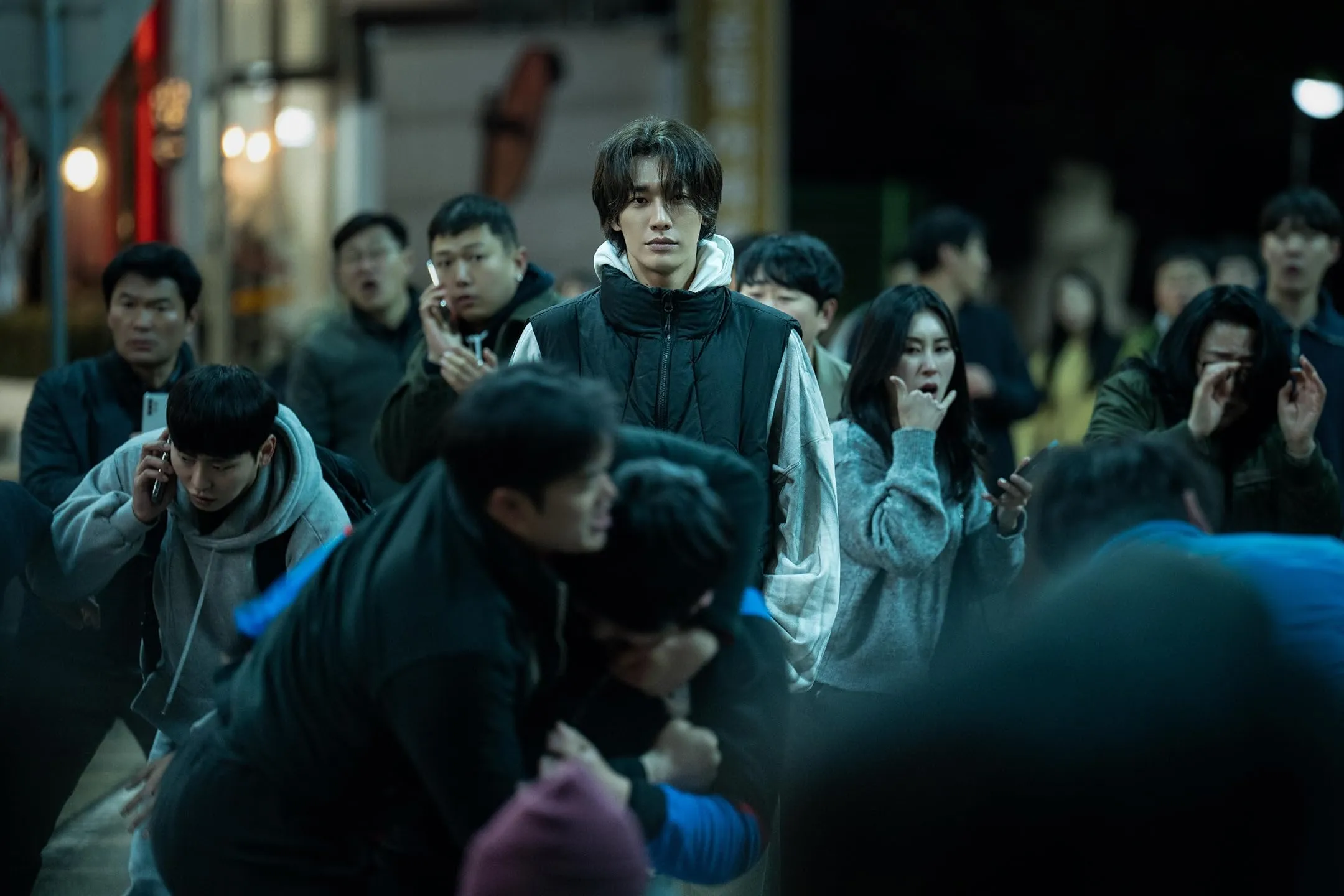
He is our anchor in the storm, a man who approaches the escalating madness with a weary calm and a belief in procedure. The show smartly contrasts his lethal background with his present-day methods. He is more likely to be found patiently de-escalating a fender bender or filing detailed reports than kicking down doors. Actor Kim Nam-gil wears this history in his posture; you feel the immense weight on his shoulders in every scene.
In a standout sequence where he subdues a violent sex offender, we see his skills are not just about force but about control and psychological insight. He is a man who understands violence intimately and therefore does everything he can to avoid it. His new, younger partner, Jeon Won-seong, acts as a perfect foil, representing a more traditional, action-eager form of policing that underscores Lee Do’s seasoned wisdom.
On the other side is Moon Baek, an arms broker who moves through the city’s underworld like a ghost. He is impossibly polished, his stillness more threatening than any overt display of power. He feels less like a gangster and more like a philosopher of chaos, a man who sees the rising tide of anger and positions himself to ride the wave. Kim Young-kwang, who was so memorable in Somebody, gives a wonderfully unnerving performance here.
His serene, almost carefree expression hides deep currents, making him completely unpredictable. The uneasy alliance formed between Lee Do and Moon Baek is the series’ narrative engine. It’s a fascinating dynamic built on a foundation of mutual suspicion and a strange, unspoken respect.
Their chemistry is described in one of the source documents as “sweet and disturbing,” a paradox that makes perfect sense as you watch them. They are two sides of the same coin, men who operate with a clear understanding of human nature’s darkest potentials. Their quiet, loaded conversations are often more tense than the shootouts.
An Atmosphere of Intentional Dread
This series firmly plants its flag in the camp of the psychological thriller, subverting the expectations of a show about guns. Instead of a relentless pace and explosive set pieces, director Kwon Oh-seung opts for a slow, deliberate burn that lets an oppressive dread seep into every frame.
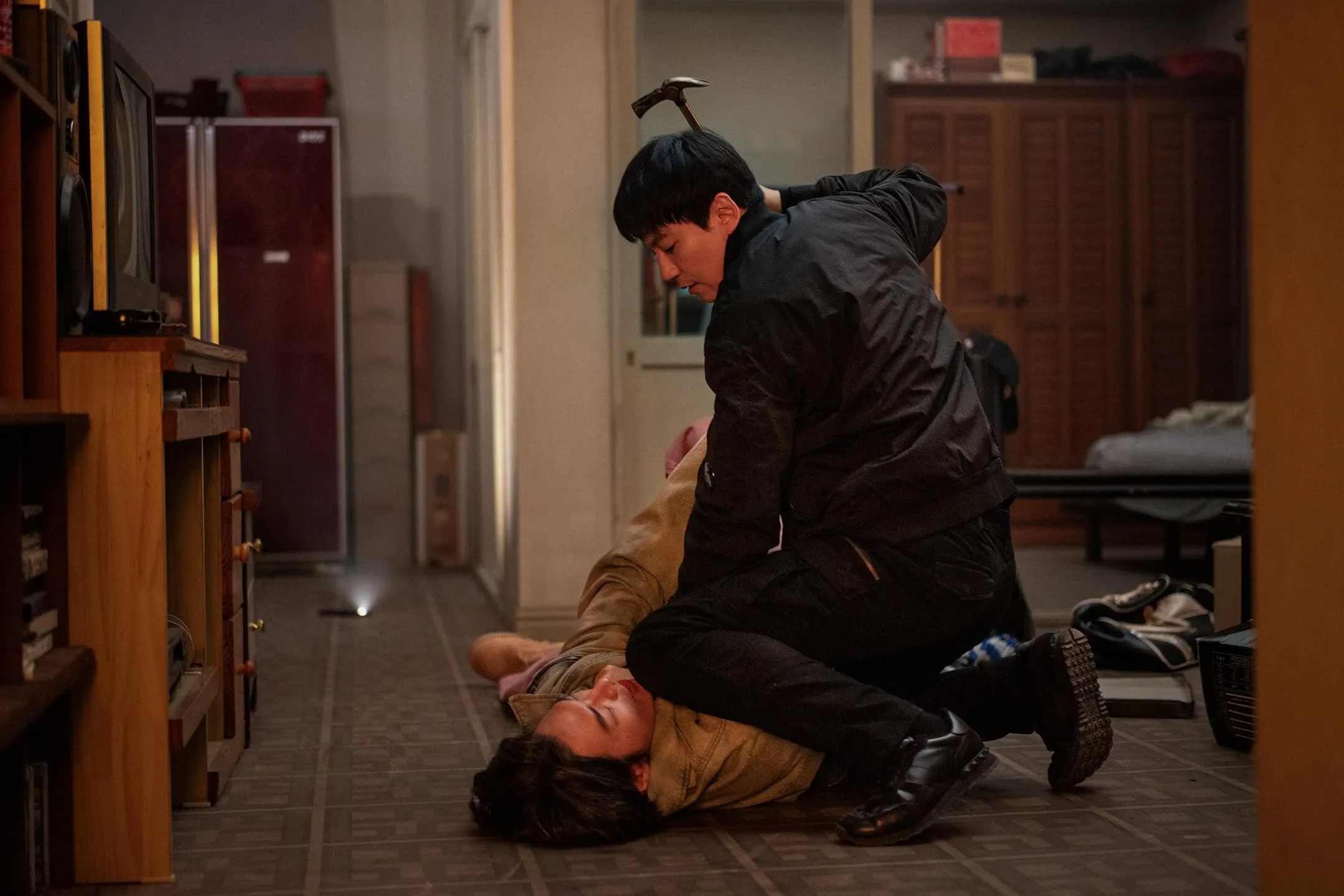
The show’s aesthetic reminds me of the great paranoid thrillers of the 1970s, which understood that true suspense comes from atmosphere, not just action. The visual language is beautiful in its bleakness. Seoul is rendered in a palette of muted greys, sterile whites, and deep shadows, its urban spaces feeling both vast and claustrophobic.
The cinematography often isolates characters in the frame, emphasizing their alienation. The director uses long, static shots and slow, creeping pans, forcing you to sit with the characters in their discomfort and scan the environment for threats.
The sound design is just as critical. The series is remarkably quiet. The score is minimal, and long stretches are filled only with ambient sound: the hum of fluorescent lights, the distant wail of a siren, the muffled thud of a neighbor’s argument through a thin wall.
This absence of a conventional soundtrack makes the audience hyper-aware of every small sound, creating an almost unbearable tension. The sharp, ugly crack of a gunshot, when it finally comes, is shocking not just for its violence but for its violation of the oppressive silence. When the action does erupt, it is choreographed with a brutal fluidity that rejects any sense of glamour.
The fights are messy, the gunplay is clumsy and terrifyingly real. This deliberate style is the show’s greatest strength, though it does lead to a slight dip in momentum around the middle episodes as various subplots develop. This is not a flaw so much as a consequence of the show’s commitment to its patient, immersive method of storytelling.
A Crack in the Social Contract
Ultimately, the guns in Trigger are a catalyst, a tool that reveals a much deeper disease. The series argues that the true danger lies not in the weapons themselves, but in the failure of the social contract. It’s a profound examination of what happens when people feel that the systems designed to support and protect them have become indifferent or even hostile.
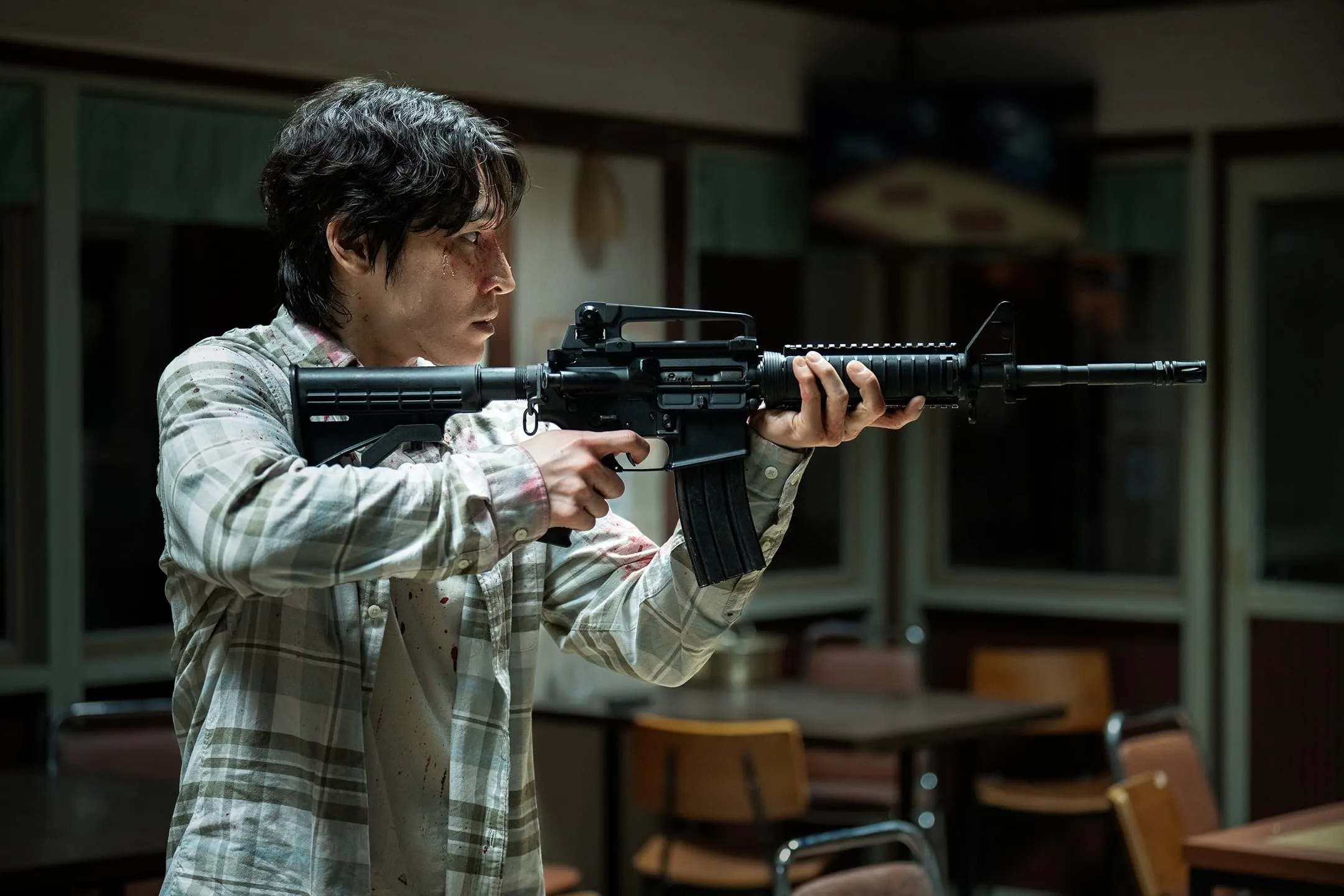
The show resists easy moral categorization. There are no clear heroes or villains here. It forces you into the uncomfortable position of understanding the rage of the perpetrators. You see their pain and alienation so clearly that their violent acts become a dark, twisted form of catharsis. The narrative places its characters, and by extension the audience, in a morally grey world where justice is elusive and motivations are tragically human.
This makes Trigger a particularly resonant work in a global context. For viewers in countries where gun violence is a constant headline, the series offers a fresh perspective, stripping away the political baggage to focus on the root human causes: desperation, loneliness, and a yearning to be seen. It posits that the potential for such violence is not a political issue but a human one, simmering beneath the surface of any society that puts its people under immense pressure.
The show does not offer easy answers or a triumphant resolution. It leaves you with a lingering sense of unease, a quiet question about the stability of the world just outside your door. It suggests that the fabric of society is more fragile than we imagine, easily torn by the weight of many small, private despairs.
Full Credits
Director: Kwon Oh-Seung
Writer: Kwon Oh-Seung
Producers: Kwon Oh-seung, Kim Jae-hoon
Cast: Kim Nam-gil, Kim Young-kwang, Woo Ji-hyun, Park Hoon, Gil Hae-yeon, Kim Won-hae, Park Yoon-ho, Jang Dong-joo
Composer: Hwang Sang-jun
The Review
Trigger
Trigger is a masterclass in tension, a slow-burn thriller that cares more about the psychology of violence than the spectacle of it. With powerhouse performances and a haunting, deliberate style, it burrows under your skin and stays there. While its methodical pace might not be for everyone, it is essential viewing for those who appreciate intelligent, atmospheric television that reflects the anxieties of our time. A stunning, unsettling piece of work.
PROS
- Intelligent, layered social commentary on societal pressure and alienation.
- Exceptional lead performances from Kim Nam-gil and Kim Young-kwang.
- Masterful direction that builds a thick, palpable atmosphere of dread.
- A mature, thought-provoking script that avoids easy answers and moral binaries.
CONS
- The deliberate, slow-burn pacing may feel repetitive or too slow for some viewers.
- Its relentlessly grim and heavy tone offers little in the way of light entertainment.