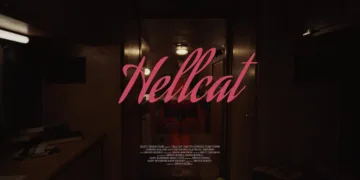





















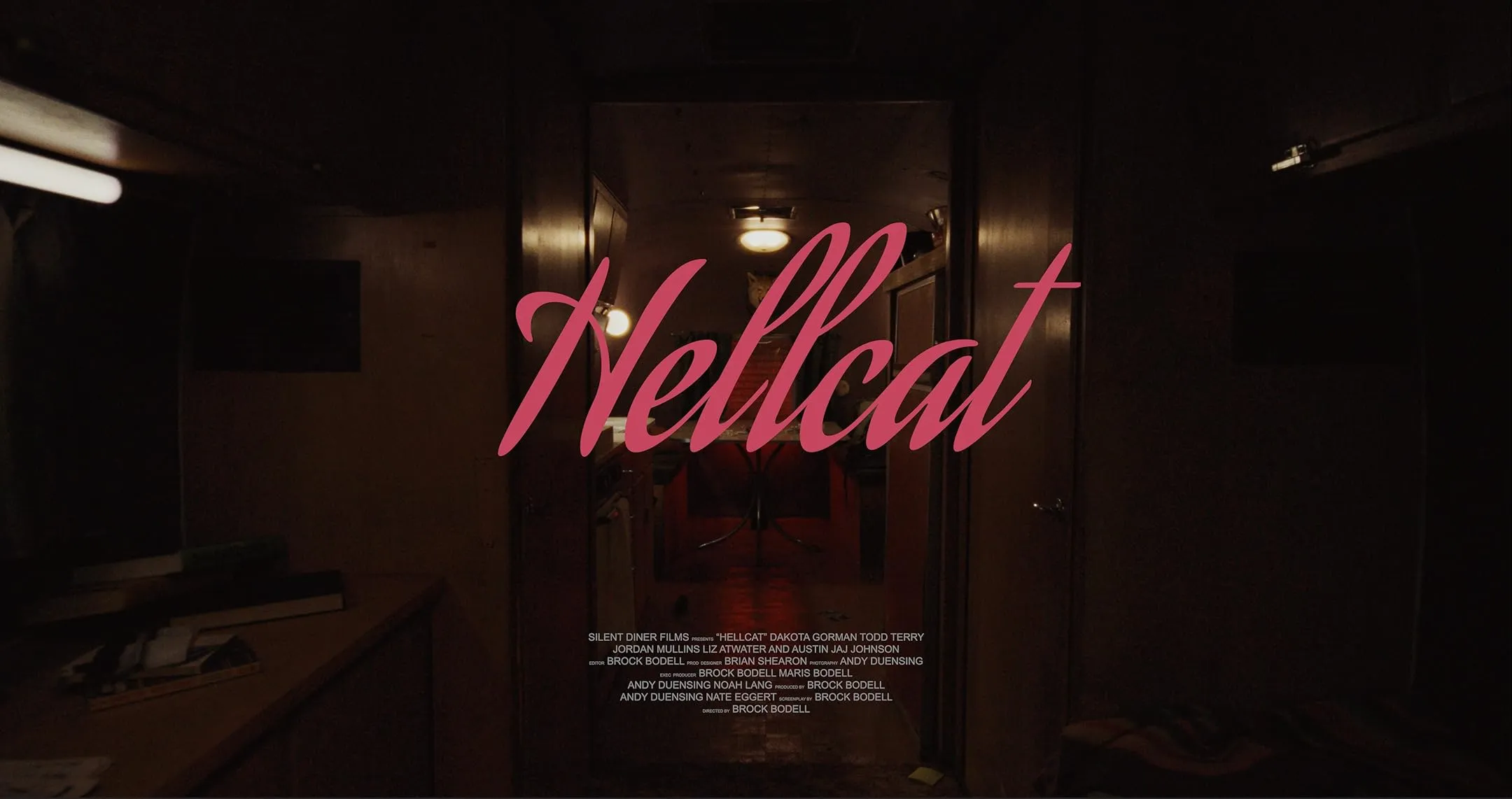

A young woman named Lena awakens to a nauseating lurch. She is not in a bed, but on the floor of a moving Airstream trailer, a rolling metal icon of American wanderlust now twisted into a claustrophobic cell. Her confusion is quickly amplified by a voice crackling through a speaker, a man named Clive who offers the most unsettling of reassurances: he is a “good man” and he is saving her life.
The evidence suggests a different story. A grotesque wound on her arm festers, with black veins creeping towards her chest, a physical manifestation of the immediate threat. The trailer itself is a museum of American paranoia, filled with conspiracy pamphlets, stray bullets, and medical syringes.
From its opening moments, Hellcat poses a question steeped in contemporary anxiety: in a world of profound distrust, what is the shape of salvation, and how can it be distinguished from a monstrous deception?
A Dialogue of the Dispossessed
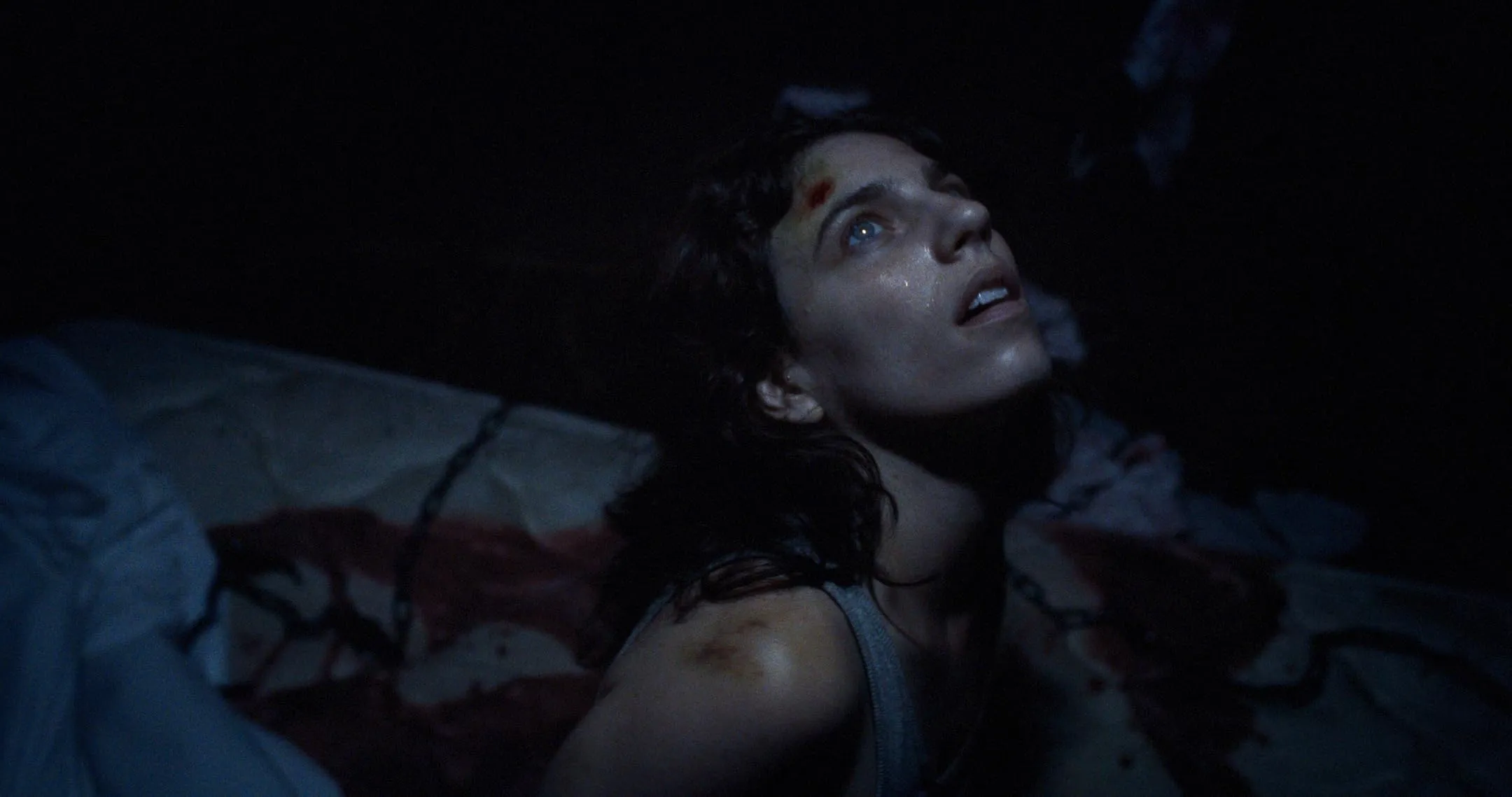
The film’s tension is sustained almost entirely by the psychological duel between its two central figures, a tense negotiation that feels like a stage play stripped of all artifice. As Lena, Dakota Gorman gives a fiercely physical performance that channels a primal fight for bodily autonomy. She is a cornered animal, yes, but also a thinking one.
Her attempts to outwit her captor are calculated, shifting between violent desperation and a quiet, almost forensic study of her surroundings for any weakness. Her pleas to Clive, invoking her own impending motherhood and the memory of her late mother, are not just cries for empathy but tactical maneuvers designed to find a crack in his armor.
This portrayal of survival as both a physical and intellectual battle resonates deeply, a universal struggle for agency seen here through the specific lens of American self-reliance. On the other side is Todd Terry’s vocal portrayal of Clive, a masterclass in unnerving ambiguity. He represents a peculiar archetype: the off-grid Samaritan, a man who operates by his own rigid, self-made moral code, convinced of his own righteousness.
His calm, almost paternal tone, offering instructions for her well-being, is constantly at odds with the violent reality of her abduction. He is not a simple monster; the script provides him a history of loss, making his need to control and “protect” Lena feel like a distorted attempt to right past failures. This transforms their dynamic into a complex examination of human connection in the most atomized of circumstances.
The Aesthetics of Confinement
Director Brock Bodell demonstrates a keen understanding of how to turn limitation into a stylistic strength. The choice to confine the action to the Airstream is a powerful one, using a symbol of American freedom as a literal prison. This inversion is potent. Every object within the trailer—a kitschy “World’s Greatest Dad” mug, photos tacked to a cupboard—is an artifact of a failed domesticity, now imbued with a palpable sense of dread.
The sound design is a critical component of this atmosphere. It is not just a score, but an acoustic assault. The incessant, unpredictable rattling of bead curtains and loose fittings works to deny both Lena and the viewer any moment of peace or stability, mirroring her internal chaos.
Furthermore, the decision to have Clive’s voice emanate from a speaker inside a taxidermy fox head is a brilliantly bizarre touch. It elevates him from a mere kidnapper to a disembodied, god-like oracle, a technological ghost in a decaying machine. Visually, the film adopts Lena’s perspective entirely.
The camera swims woozily through the space, and her fractured memories return in glitchy, psychedelic flashes of the world outside. These techniques are not mere embellishments; they are the film’s narrative engine, breaking the bounds of objective reality to plunge the audience directly into the character’s subjective, feverish experience.
When the Mystery Recedes
Hellcat is most potent when it operates as a psychological puzzle box, letting the ambiguity of Clive’s motives and Lena’s condition fester within the sealed environment of the trailer. The tight pacing and suffocating atmosphere create the promise of a truly startling revelation.

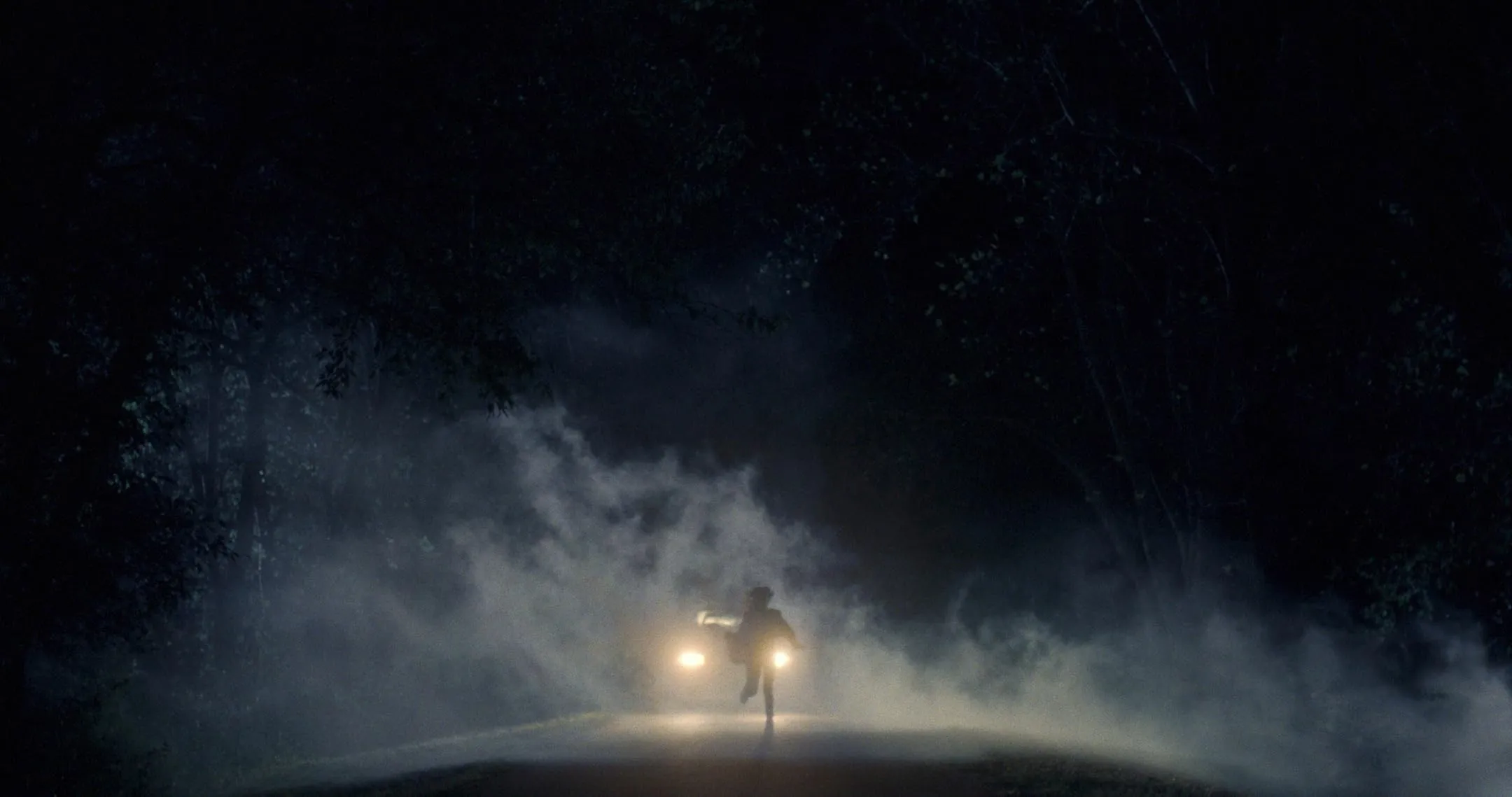
As the story enters its final act, however, it expands its scope, introducing new characters and providing concrete answers to its central questions. With this narrative expansion, some of the unique, oppressive tension that defined the film’s first hour inevitably dissipates. The intimate psychological horror, rooted in a very American brand of folk paranoia, gives way to a more standard, plot-driven genre exercise.
The explanation for Lena’s ordeal, when it arrives, feels more like a conventional turn than the profound surprise the buildup seemed to foreshadow. The issue is that the resolution feels like it belongs to a simpler film. The complex questions about trust, isolation, and the nature of truth in a post-truth world are resolved with a comparatively straightforward genre answer.
This feels like a missed opportunity to follow through on the story’s more challenging ideas. The thematic exploration of bodily autonomy, so central to the setup, becomes secondary to the mechanics of the ending. Hellcat remains a formidable exercise in sustained suspense, a journey whose unnerving execution is ultimately more memorable than its final stop.
“Hellcat” is a survival horror-thriller film that premiered at the Fantasia International Film Festival on July 25, 2025. It also screened at Fantasia 2025 and is scheduled to be screened at FrightFest on Sunday, August 24, 2025.
Full Credits
Director: Brock Bodell
Writers: Brock Bodell, Adam Cantor
Producers: Andy Duensing
Cast: Dakota Gorman, Todd Terry, Jordan Mullins, Liz Atwater, James Austin Johnson
Editors: Brock Bodell
The Review
Hellcat
Hellcat is a formidable exercise in sustained suspense, leveraging a powerful lead performance and masterful sound design to create a truly claustrophobic experience. Its first two acts are a tense study in ambiguity and paranoia. Unfortunately, the film trades this potent psychological dread for a conventional third-act reveal that feels uninspired, making the journey far more compelling than its final destination.
PROS
- A fierce and physically committed lead performance from Dakota Gorman.
- An intense, claustrophobic atmosphere sustained for most of the film.
- Effective use of a single location and unsettling sound design.
- The ambiguous and complex dynamic between the two main characters.
CONS
- The final act loses the tension so carefully built by the setup.
- A conventional and underwhelming narrative resolution.
- The payoff does not live up to the promise of the film's premise.
- Some thematic ideas feel underdeveloped by the conclusion.