

























![Kingdom Hearts Collection [I-III] Review](https://gazettely.com/wp-content/uploads/2026/10/Kingdom-Hearts-Collection-I-III-1-360x180.webp "Kingdom Hearts Collection [I-III] Review: KHII Holds Steady as Newer Entries Fluctuate 37")



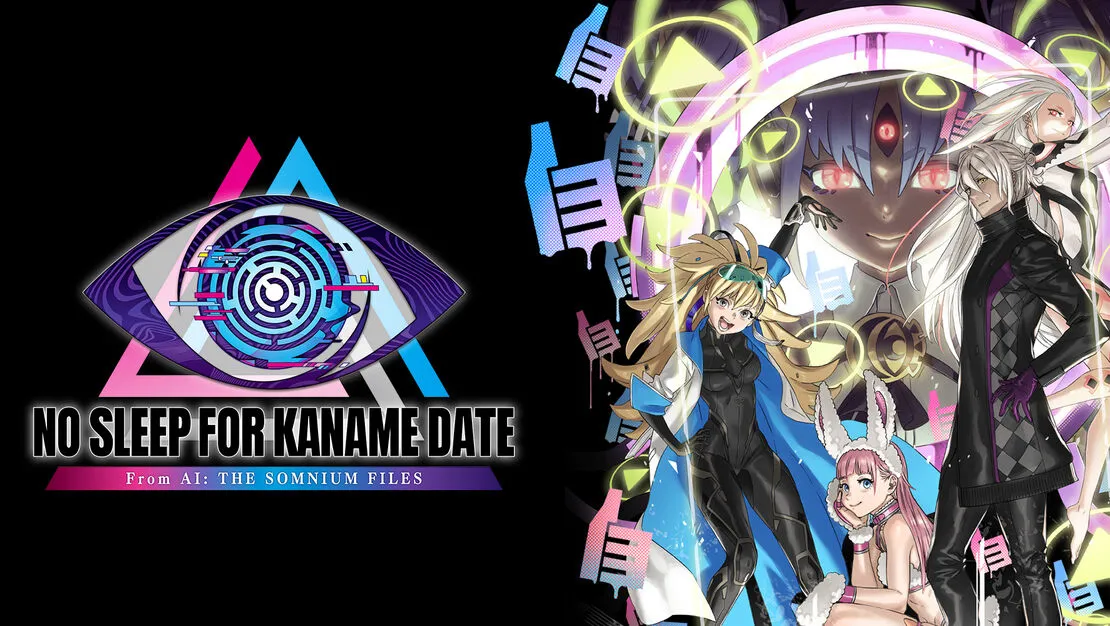

The AI: The Somnium Files series returns with No Sleep For Kaname Date, an entry that carves a space for itself between the two mainline games. This is not a direct sequel but a self-contained side story. We once again follow special investigator Kaname Date and his cybernetic eye companion, Aiba. The case begins with an outlandish incident: Date’s friend, the effervescent internet idol Iris Sagan, is suddenly abducted by a UFO.
This event kicks off a dual-perspective narrative. While Iris finds herself a captive participant in a sequence of lethal escape room challenges called “The Third Eye Games,” Date must work from the outside, investigating the bizarre kidnapping and trying to find her before it’s too late. The premise is immediately absurd, setting a clear expectation for the strange adventure ahead.
A Familiar Tune, A Different Composer
This game’s placement as a “mid-quel” firmly establishes its narrative scope. It does not attempt to propel the main series plot into the future; its purpose is to tell a focused, personal story that feels like a bonus episode for those already acquainted with its world.
The narrative stakes are therefore unique. Knowing the ultimate fates of characters like Date and Iris from the second game removes the question of “if” they survive, shifting the dramatic tension to “how” they navigate this specific, bizarre predicament. This structure provides the writers with the freedom to construct a tight, self-contained mystery without the burden of series-altering consequences, but it also means character development is largely static.
The cast is presented in a state of suspended animation, reflecting who they were at a specific point in time rather than showing growth. For some, seeing Date before the events of the sequel, deep in his slacker-detective persona, will be a nostalgic comfort.
Taking the helm from series creator Kotaro Uchikoshi is writer and director Kazuya Yamada, yet the transition feels remarkably smooth. The game’s voice successfully captures the spirit of its predecessors. Date’s internal monologues and his banter with Aiba are filled with the same brand of lecherous humor and surprising insight that defined him in the first game.
Iris is just as bubbly and energetic, her influencer persona providing a sharp, often funny contrast to the life-or-death situations she endures. The writing maintains the series’ signature tonal balancing act, capable of swinging from a tense investigation to a goofy exchange about the contents of a refrigerator without feeling jarring.
The story is populated with a rich cast of returning characters, a clear nod to dedicated followers. Seeing what the second game’s protagonist, Ryuki, was involved in before his formal introduction adds valuable context to his character. The game also creates opportunities for character interactions that the main timeline does not allow.
A highlight for many will be the moments between Date and Tama, the flirtatious AI from the second game; their shared idiocy bounces off each other in delightful ways. The new characters also fit comfortably within the established weirdness. Hina, with her deep love for puzzles, and Akemi, whose origins are tied to strange reptilian theories, feel like they have always been a part of this world of conspiracy and intrigue.
The central mystery itself, however, is more direct when compared to the wild, branching narratives of the mainline titles. With a single story path and fewer earth-shattering revelations, the plot twists are more predictable, lacking the stunning impact of the franchise’s biggest moments.
Escaping the Formula, Diving into the Familiar
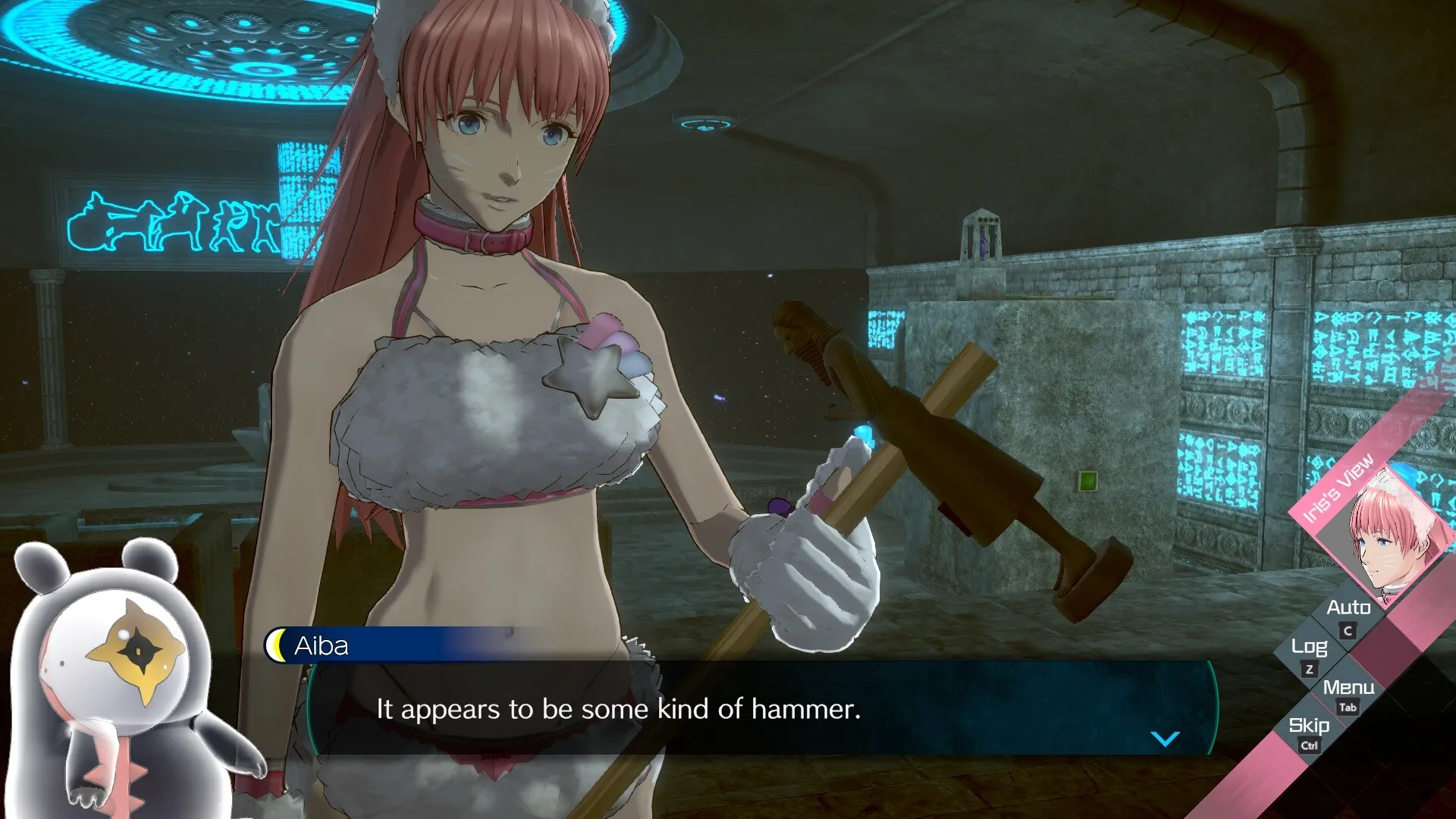
The gameplay experience in No Sleep For Kaname Date is cleanly divided into two distinct, contrasting halves. The most significant and refreshing addition is the focus on intricate escape rooms. These segments, which form the core of Iris’s gameplay, place the player in locked environments under intense pressure.

With timers ticking down and threats like dwindling oxygen supplies, the puzzles demand a sharp mind and a capacity for creative, unconventional thinking. The design philosophy behind these challenges is a direct and affectionate tribute to the Zero Escape series. The influence is unmistakable, extending beyond simple inspiration to include specific aesthetic and auditory cues.
The iconic “SEEK A WAY OUT” text splashes across the screen to signal the start of a puzzle, and the sound effect for picking up an item is lifted directly from Nine Hours, Nine Persons, Nine Doors. The puzzles themselves often feel absurd at first glance, like deciphering a code from patterns on torn flags, but they operate on a consistent internal logic that makes solving them feel earned and satisfying rather than lucky.
In stark contrast to this new direction are the returning Somnium sections, the investigative tool of Kaname Date. Here, the player controls Aiba inside the subconscious of a person of interest, navigating a surreal dreamscape to uncover hidden truths. The goal is to break “mental locks” by interacting with objects, with each action consuming a portion of a very strict six-minute time limit. This mechanic arrives almost completely unchanged from its introduction in the first game.
While it remains a core part of the series’ identity, its implementation here can feel stagnant compared to the dynamic escape rooms. The logic of the Somniums can be opaque, with choices that often feel arbitrary. Deciding whether to “read” or “take” a script can come down to a coin flip, turning what should be a detective challenge into a frustrating guessing game.
This trial-and-error nature is somewhat mitigated by the game’s retry system and the witty dialogue between Date and Aiba that accompanies your exploration. Their conversations, ranging from serious analysis to outright silly observations, add a layer of entertainment that makes even a failed attempt worthwhile.
These two distinct puzzle types are connected by standard investigation gameplay, where Date’s detective work—interviewing suspects and gathering evidence—uncovers the path forward, leading him to a new Somnium or revealing a clue that can help Iris in her next ordeal.
Your Case, Your Rules
A considerable strength of this title lies in the extensive control it gives players over the difficulty of its challenges. The game is built to be highly malleable, accommodating a wide spectrum of player preferences through its accessibility options. You can meticulously tailor the experience to suit your playstyle.
For the puzzle purist who thrives on pressure, a hard mode offers strict timers and no hints, preserving the intended intensity of the escape rooms. This setting provides a challenge reminiscent of the tough, unforgiving puzzles found in the games that inspired it.
On the opposite end of the spectrum, players who are primarily interested in the story can activate a host of aids. The “Seek” system can be turned on to highlight the next critical interactive object, completely removing the need to hunt around the environment. Hints are available, and if a particular puzzle proves too much of a roadblock, the game will even provide the direct solution, allowing the narrative to continue uninterrupted.
This effectively allows the game to transform from a demanding puzzle adventure into a more passive interactive novel. Most players will likely find a comfortable middle ground on the normal difficulty, which provides a satisfying sense of challenge without becoming overly frustrating. This deep level of customization is a thoughtful feature that respects the player’s time and preferences.
From a technical standpoint, the game is functional but lacks polish. The PC port is a barebones affair, requiring players to adjust graphical settings in an external launcher before starting the game—an archaic practice. It offers no support for modern features like ultrawide monitor resolutions or performance-enhancing technologies such as DLSS and FSR.
While the game runs stably, the lack of modern conveniences is noticeable. On the console side, the enhancements offered by newer hardware are described as negligible. The graphical and loading time improvements on a Switch 2 versus the original Switch are minimal.
This is not a major detriment for a game that is primarily text and static image-driven, but it is worth noting. The new “Mouse Mode” is a curious addition, but it feels more like a novelty than a genuinely superior way to play, with traditional controller inputs remaining more intuitive.
For Insiders Only
This game is, without question, a product made for the established community of AI: The Somnium Files fans. Its entire structure is built upon a foundation of pre-existing knowledge and emotional investment. The humor of Date’s interactions, the significance of Iris’s plight, and the context behind the appearance of characters like Ryuki are all dependent on a familiarity with the first game, if not both.
A new player starting here would be missing the essential context that gives the narrative its weight and the character moments their charm. The experience would be confusing and would ultimately diminish the impact of meeting these characters for the first time in their proper introductions.
Think of this entry as supplementary material for a long-running show—an original video animation or a special episode. It exists to enrich the world and provide fan-pleasing moments that don’t fit into the main, high-stakes plotline.
It is a fun side adventure, a chance to spend more time with a beloved cast, and a rewarding experience for anyone who is already dedicated to the franchise. For those individuals, it is an easy recommendation. For everyone else, the advice is simple and firm: your investigation should begin with the original AI: The Somnium Files. This is a treat for the initiated, not a starting point for the unacquainted.
The Review
No Sleep For Kaname Date - From AI: The Somnium Files
No Sleep For Kaname Date is a well-crafted side story that knows its audience perfectly. While it doesn't advance the main series plot, it delivers a thoroughly entertaining mystery that feels right at home in the AI universe. The new escape rooms are a fantastic, intense addition that cleverly borrows from the Zero Escape series, even if the familiar Somnium segments feel a bit dated by comparison. This is a must-play for existing fans looking for another dose of weird, wonderful detective work, but it is not the place for newcomers to begin their investigation.
PROS
- Intense and creative new escape room puzzles.
- Successfully captures the series' unique tone and humor.
- Excellent, flexible difficulty and accessibility options.
- Provides enjoyable new character interactions for fans.
CONS
- Story is not essential to the main plot and may feel like filler.
- Somnium gameplay mechanic is largely unchanged and can feel dated.
- A barebones technical port on PC and console.
- Not recommended for newcomers to the series.