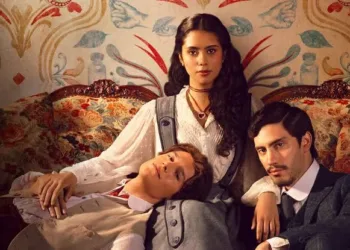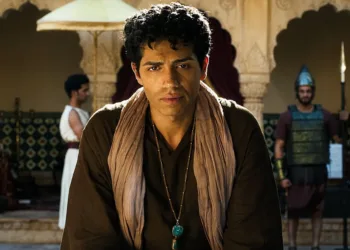


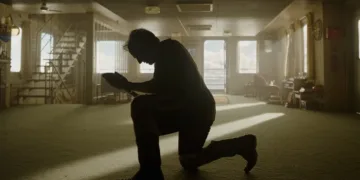








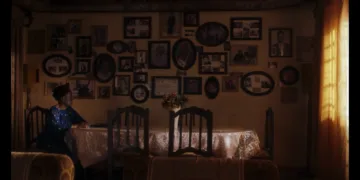












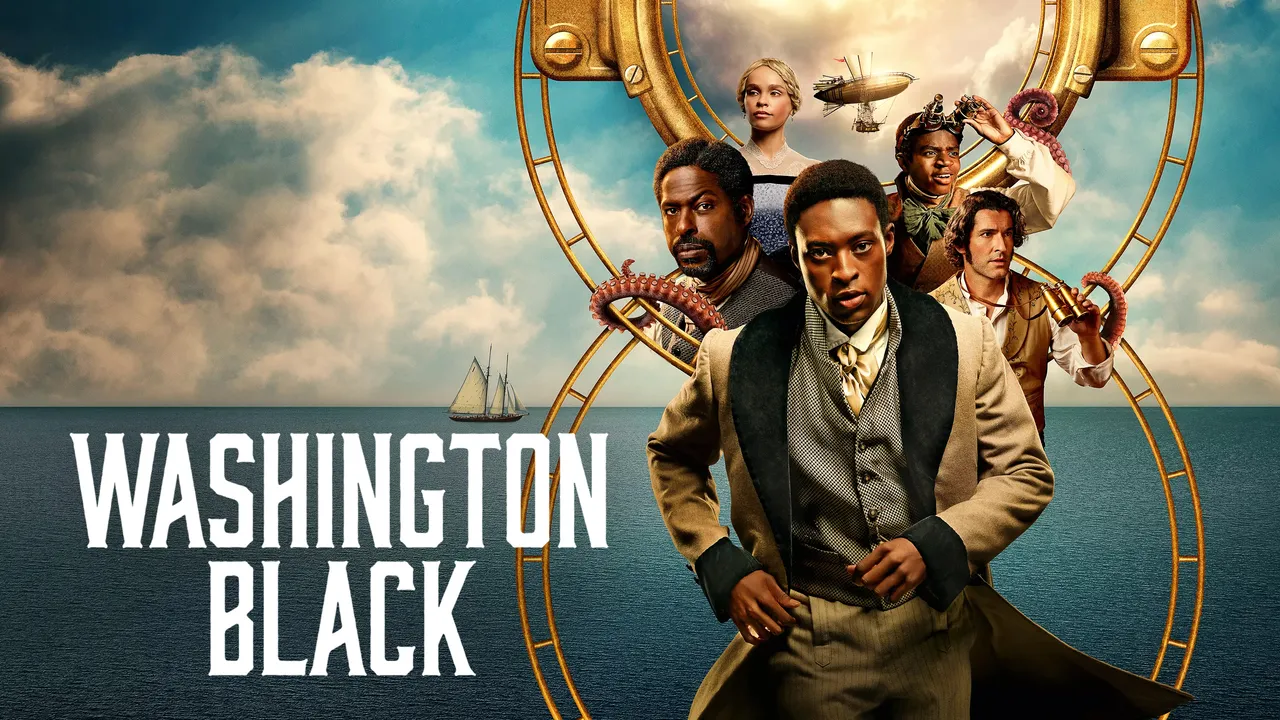

Hulu’s Washington Black arrives on the streaming scene not as just another period piece dutifully recounting the brutalities of the past, but as an act of imaginative reclamation. Adapted from Esi Edugyan’s novel, the miniseries uses the 19th-century slave narrative as a launchpad for a story that has different ambitions.
We first meet George Washington “Wash” Black as an eleven-year-old boy on a Barbados sugar plantation in the 1830s, his world defined by oppression. His quiet intelligence and artistic talent, however, set him apart. This distinction attracts the attention of Christopher “Titch” Wilde, the owner’s eccentric brother and a man of science.
When Titch introduces Wash to his “cloud cutter,” a magnificent and improbable flying machine, the series signals its true intent. The escape from the plantation is not merely a flight to safety; it is an ascent into the genre of adventure, promising a story where a Black boy’s future is shaped by wonder as much as by trauma.
The Architecture of Memory
The series constructs its narrative across two separate timelines, a now-familiar technique in streaming television designed to parcel out history and maintain suspense. The foundation is laid in the 1830s past, on a plantation where the casual cruelty of its owner, Erasmus Wilde, provides a stark backdrop for the story’s events.
Against this, his brother Titch’s intellectual fervor feels both radical and dangerously naive. The “cloud cutter” itself is more than an escape vehicle; it is a potent symbol of Enlightenment ideals—logic, science, upward mobility—colliding with the brutal, illogical engine of the slave economy. The act of Titch teaching Wash to read is presented as a profound transgression, an opening of a world that the system is designed to keep shut. Every lesson in science or art is an act of quiet rebellion.
Years later, the 1837 timeline finds an adult Wash living a cautious, veiled existence in Halifax, Nova Scotia, a location of immense historical significance as a terminus of the Underground Railroad. The community he has joined, led by the formidable Medwin Harris, breathes an air of hard-won freedom, a place of cautious hope shadowed by the constant threat of discovery.
Wash works the docks by day, but in private, he fills notebooks with intricate scientific drawings, secretly continuing the education that began in Barbados. This fragile stability is disrupted by the arrival of Tanna Goff, a woman whose own complicated status immediately creates a spark of recognition and connection with Wash, threatening the anonymity he relies on.
By cutting between these eras, the show makes Wash’s past a constant, active presence. This is not simply a literary device; it reflects a psychological truth about trauma, where memory is not a distant recollection but a force that shapes every present-day decision. The narrative’s deliberate, sometimes slow, initial pacing feels like a conscious choice, immersing the viewer in the confinement of the plantation to make the eventual ascent feel all the more liberating and momentous.
Figures in a New World
At the heart of Washington Black are the two actors who share the titular role, creating a seamless and deeply affecting character arc. As the young Wash, Eddie Karanja delivers a performance of remarkable subtlety. So much of his work is non-verbal; it is in the way he watches the adults around him, his eyes absorbing every hypocrisy and kindness, conveying an intelligence and an old soul that the plantation system seeks to crush.
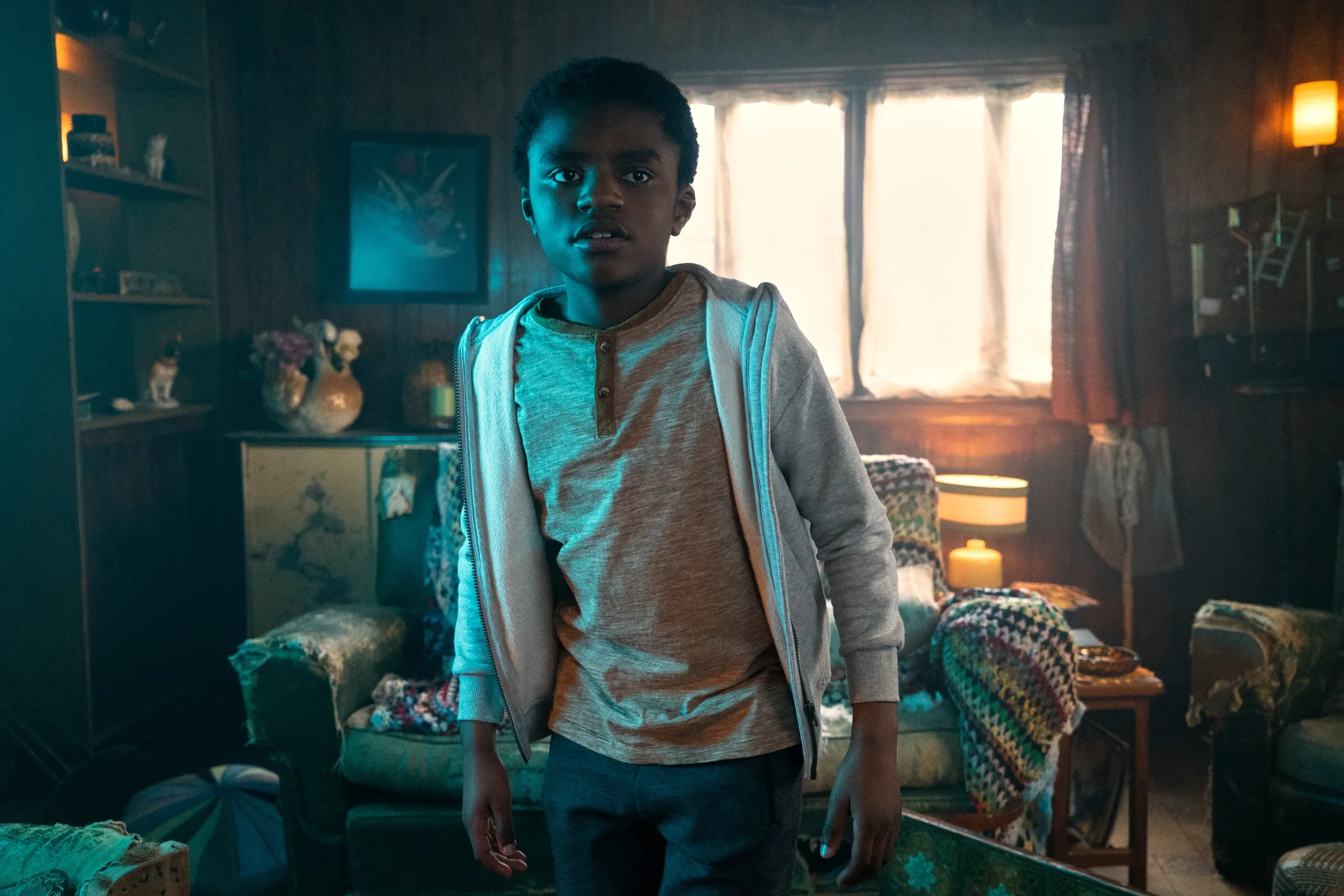
He registers the world with a scientist’s precision long before he has the words for what he is seeing. When Ernest Kingsley Jr. assumes the role, he carries that history in his very posture. His adult Wash is a man of science, filled with intellectual fire, yet there is a permanent guardedness to his movements, a hesitation in his speech that betrays the constant vigilance of a fugitive. The brilliance of the dual performance is in this continuity of spirit—the resilient, curious boy is always visible within the cautious, brilliant man.
The supporting cast provides a rich study in the complexities of the era. Tom Ellis’s Titch Wilde is a masterful deconstruction of the well-meaning white ally. He is presented with all his contradictions intact: a man who preaches abolition but sees no issue with using his brother’s enslaved workers for his own scientific ends. The series wisely refuses to absolve him, dissecting a brand of privileged idealism that can comprehend injustice in the abstract but not in its systemic, personal horror.
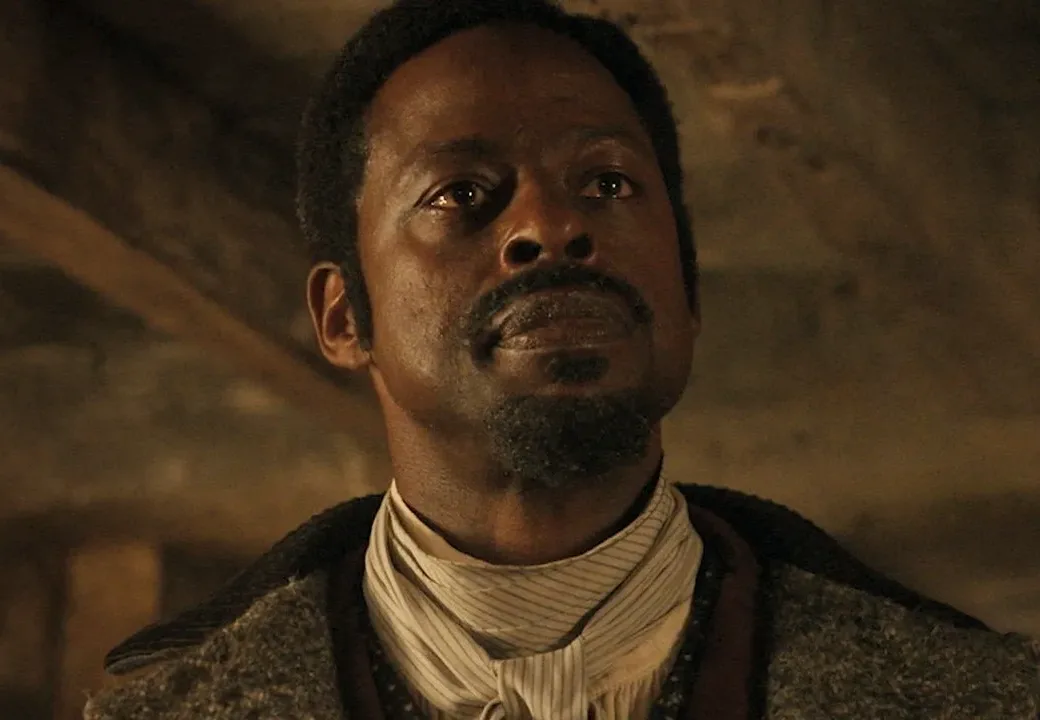
Their relationship is a fraught exploration of power; it is a friendship in which one friend’s very survival is contingent upon the other’s whims. Elsewhere, Sterling K. Brown gives Medwin Harris a commanding presence that transcends the “mentor” archetype. His Medwin is a political operator, a protector, and a father figure who understands that building a community is an act of constant, wearying defense. Iola Evans gives Tanna a fiery intelligence that makes her a true partner to Wash.
Her personal struggle with her biracial identity is not a subplot but a parallel narrative about the cages of race and societal expectation, making her defiance of her father (a wonderfully conflicted Rupert Graves) feel just as vital as Wash’s own fight for freedom.
The Pursuit of Joy as a Radical Act
Thematically, the series makes a significant and political choice to steer its narrative away from the unrelenting trauma that often defines stories set in this period. The show argues that true freedom is an internal state, a continuous psychological process of unlearning the strictures of enslavement.
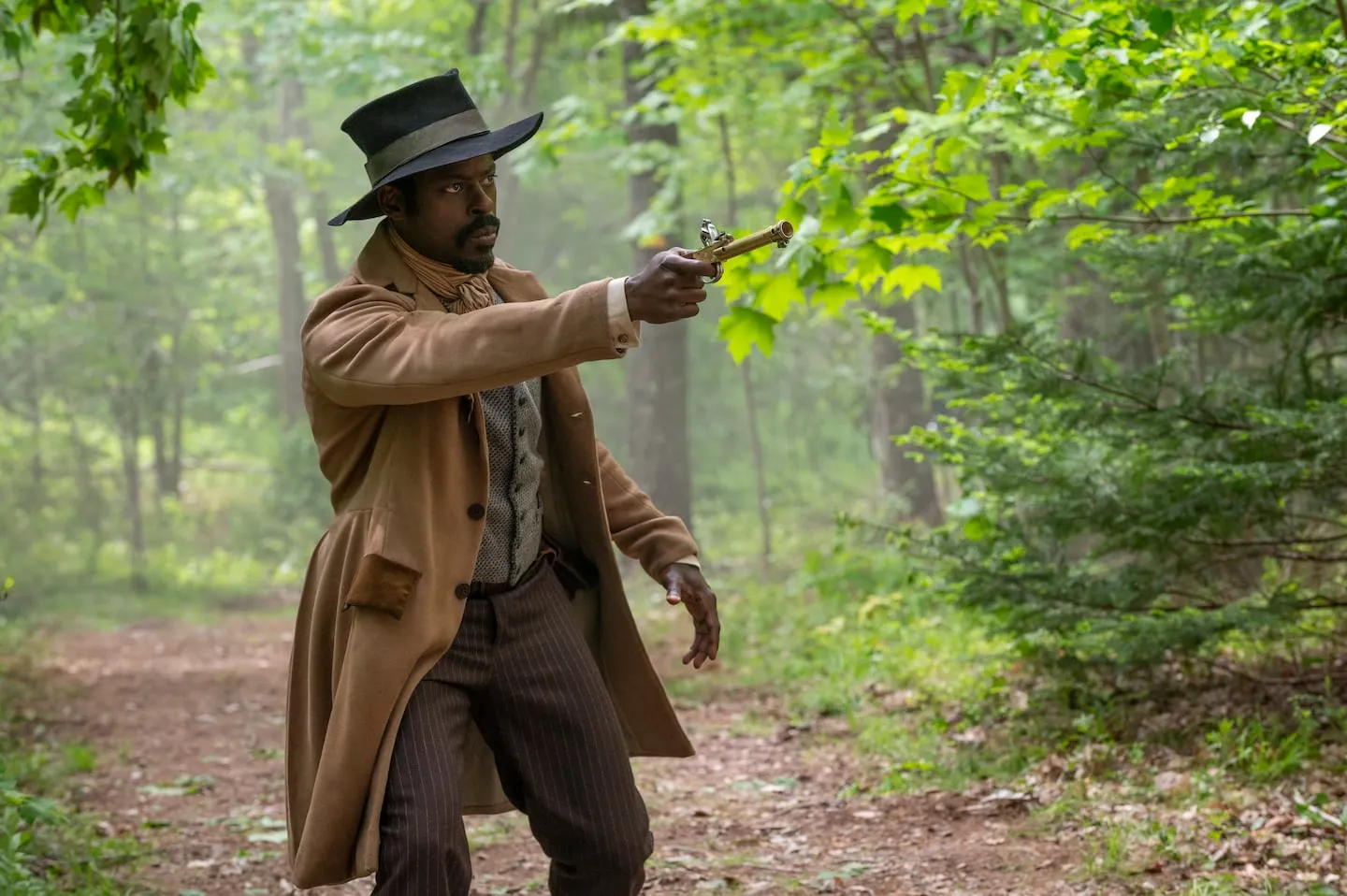
We see this in Wash’s devotion to his art and scientific diagrams; these are not mere hobbies but acts of ordering the universe for himself, of claiming intellectual and spiritual territory. His journey is to separate his self-worth from the validation of his white benefactor and to discover his own power as a creator and a thinker. This focus on internal liberation feels deeply connected to contemporary conversations about healing and the long shadow of historical trauma.
This framework allows the story to become a Verne-esque adventure, a decision that functions as a powerful statement. It inserts a Black protagonist into a genre of wonder and discovery from which he has been historically excluded. The very idea of Wash as a globe-trotting scientist and explorer challenges a literary tradition that has long reserved such roles for white heroes.
This creative choice is not without risk. In prioritizing a sense of wonder, the narrative occasionally softens the brutal reality of Wash’s situation. Once he is off the plantation, the acute sense of peril can feel diminished, the dangers of life as a fugitive sometimes giving way to romantic and adventurous plotting.
The series is at its most potent when it explores the idea of belonging—not just Tanna’s struggle with being caught between two racial worlds, but also the formation of a “found family” in Halifax, a community built from the shared experience of displacement and the collective will to create a future.
Crafting a Fantastical Past
Visually, Washington Black is a study in contrasts, a key element of its storytelling. The cinematography captures the oppressive heat and claustrophobia of the Barbados plantation with a harsh, bright light, making the cool blues and greys of Nova Scotia feel like a gasp of fresh air.
The production design is meticulous, particularly with the “cloud cutter.” It is not just a prop but a piece of art, an intricate, almost delicate marvel of brass and canvas that perfectly visualizes Titch’s brilliant, yet fragile, idealism. This visual splendor elevates the series beyond stark realism into the realm of historical fantasy.
The auditory landscape is similarly ambitious, with a lush score that aims to heighten every emotional beat. At times, however, this guidance can become too explicit, the music swelling to instruct the audience on what to feel rather than allowing the actors’ performances to carry the emotional weight of a scene.
In its execution, the series is anchored by the undeniable strength of its central character study. The narrative invests deeply in the internal lives of Wash and Tanna, and their chemistry provides a powerful emotional core that makes their story resonant. Where the execution sometimes falters is in the broader scope of the adventure.
The globe-trotting aspect can feel superficial; new locations are sometimes introduced and abandoned quickly, serving as little more than picturesque backdrops for the next stage of Wash’s development rather than feeling like fully inhabited worlds.
This may be an unavoidable consequence of a story so grand in scope. The show’s primary commitment is to its protagonist’s evolution. Left with several unresolved plotlines at the midpoint of the season, the viewer is not left frustrated but invested. The series has so successfully built the world within Wash that we are compelled to follow him wherever his improbable, wondrous journey takes him next.
Washington Black, based on the novel by Esi Edugyan, is an eight-episode limited series that premiered on Hulu in the US on Wednesday, July 23, 2025.
Full Credits
Director: Wanuri Kahiu, Anthony Hemingway
Writers: Selwyn Seyfu Hinds, Blaize Ali-Watkins, Ann Cherkis, Michael Cobian, Esi Edugyan, Shernold Edwards, Jennifer Johnson, Marco Ramirez
Producers: Selwyn Seyfu Hinds, Kimberly Ann Harrison, Sterling K. Brown, Ellen Goldsmith-Vein, Wanuri Kahiu, Mo Marable, Rob Seidenglanz, Jeremy Bell, Lindsay Williams, D.J. Goldberg, Jennifer Johnson, Anthony Hemingway. Co-Producer: Esi Edugyan
Cast: Ernest Kingsley Jr., Sterling K. Brown, Tom Ellis, Eddie Karanja, Iola Evans, Sharon Duncan-Brewster, Rupert Graves, Edward Bluemel, Julian Rhind-Tutt, Billy Boyd, Ntare Guma Mbaho Mwine, Shaunette Renée Wilson, Charles Dance
The Review
Washington Black
Washington Black is a visually stunning and thematically ambitious series, anchored by powerful, layered performances. While its globe-trotting adventure can feel thin in places and its pacing deliberate, the show’s courageous choice to prioritize Black joy, intellectual discovery, and the complex journey toward self-definition makes it vital television. It succeeds as a moving character study and a beautiful, if sometimes imperfect, story of ascent that reimagines what a historical drama can be.
PROS
- Exceptional and cohesive dual performances from Eddie Karanja and Ernest Kingsley Jr. as Wash.
- A bold thematic focus on joy, wonder, and self-creation as a form of resistance.
- Visually imaginative production design, particularly the fantastical "cloud cutter."
- Complex character portrayals that avoid simple hero or villain archetypes, especially with the character of Titch.
CONS
- The narrative pacing is slow to build momentum in the initial episodes.
- The acute sense of peril diminishes noticeably after the escape from Barbados.
- Some of the international locations feel like brief, underdeveloped backdrops for the plot.