























The world of Folktales opens within an existential canvas of blinding white and abyssal black. Hundreds of miles above the Arctic Circle, the Norwegian wilderness presents a landscape stripped to its elemental form, a high-contrast battleground where the sun is a fleeting visitor.
Into this void steps a cohort of teenagers, enrolling at the Pasvik Folk High School, an institution predicated on a radical thesis: that a new self can be forged only after the old one is dismantled by ice, exhaustion, and the silent judgment of sled dogs.
The school proposes a year-long severance from the digital hive mind, a return to primal skills. It is a severe and beautiful proposition. The film observes these young subjects, adrift in the static of modern life, as they submit to this experiment in controlled demolition, seeking a promised “new version of self” in the unforgiving cold.
Fugitives from the Self
At the film’s emotional core is Hege, a young woman navigating the psychic wreckage left by her father’s recent murder—a brutal, senseless act that has untethered her from the world’s perceived order. Her self-diagnosis of young adulthood as “chaos” is the story’s operating thesis, an honest response to a world that has proven itself arbitrary and violent. We first see her clinging to the artifacts of her former identity.
The infamous collection of mascaras is a telling piece of psychological armor, a mask donned each morning to face a world she no longer trusts. Her transformation from a homesick teen into a figure of quiet competence, her face eventually free of cosmetics and streaked with soot and effort, is rendered with meticulous observational precision.
The film’s most potent insight, however, arrives after her return to civilization. The traditional dress that no longer fits is a stark, heartbreaking symbol of irreversible change. The person who left is not the person who came back, and the film wisely leaves her stranded in this new reality. You can survive the wild, but you can never truly go home again.
Her companions in this trial are Romain and Bjørn Tore, a study in paired anxieties. Romain, a Dutch dropout, is trapped in the feedback loop of his own self-doubt, a psychological prison more confining than any snowbound cabin; his mind is its own antagonist. Bjørn Tore, meanwhile, wears his “annoying” persona like ill-fitting armor against a lifetime of perceived social rejection.
Their burgeoning friendship is a fragile ecosystem of mutual validation, a small pocket of warmth in the vast cold. It is a bond born of shared exile. Romain’s arc is a particularly noirish turn: he flees the program’s pressures only to return, having concluded that the “real world” offers a more insidious misery.
He doesn’t return for inspiration, but because Pasvik presents the less-awful of two options—a suffering that, at least, comes with a purpose. It is a profoundly existential calculation. Through their alliance and their separate bonds with their dogs, they find a temporary reprieve from themselves.
The Wild Classroom: Nature and the Canine Connection
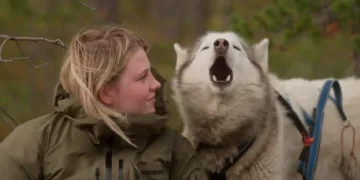
The curriculum at Pasvik is deceptively simple: stay warm, stay fed, and manage a pack of Alaskan huskies. The dogs, however, are not merely subjects of study; they are the core of the pedagogy, silent masters of a pre-verbal wisdom. They operate as living mirrors, reflecting a student’s patience or fear without comment or judgment.
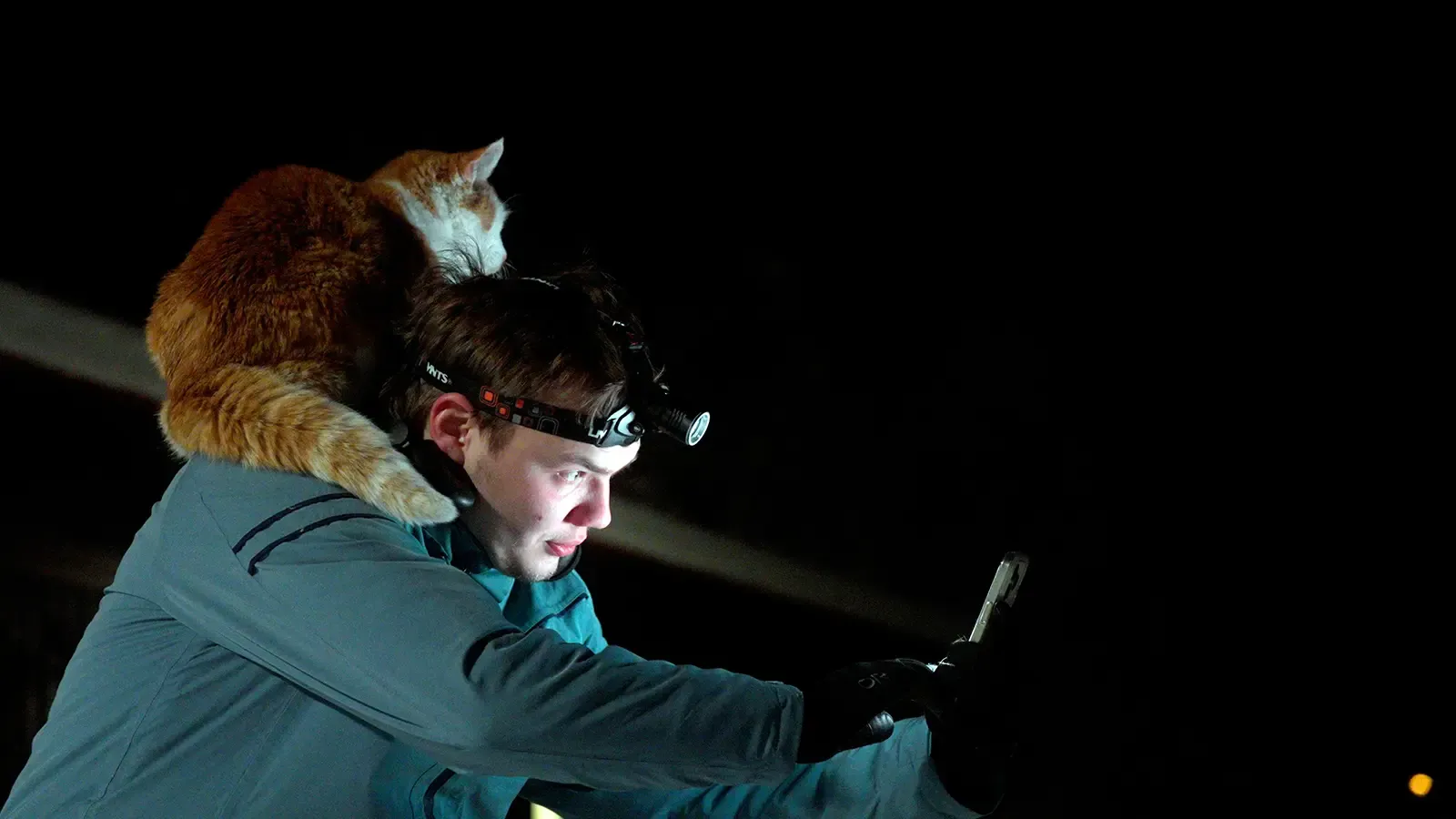
The bond forged is not sentimental. It is a primal contract of mutual dependence that rewires the students’ understanding of responsibility and communication. Learning to read the subtle language of a dog’s ears or tail demands a level of presence that the hyper-verbal, distracted world of human society allows one to evade. The pack itself is a functioning society with clear, unforgiving rules, a stark contrast to the ambiguous social codes the teens have fled.
This awakening is facilitated by the instructors, Thor-Atle and Iselin, who preside over the experiment with a kind of compassionate severity. They are the curators of a difficult experience, providing the tools—an axe, a flint—but refusing to provide the answers.
The wilderness itself is the true teacher, and its lessons are brutal. Building a fire against a subzero wind becomes a profound existential trial, a Sisyphean task where success is fleeting and failure has immediate consequences. This physical hardship is designed to strip away the ego, to force a confrontation with one’s own limits.
In this wild classroom, resilience is not a concept discussed in a lecture; it is a quality earned through chattering teeth, numbed fingers, and the quiet satisfaction of seeing a flame flicker to life against the encroaching darkness. Growth here happens not through coddling, but through carefully managed hardship.
The Grammar of Isolation
Directors Heidi Ewing and Rachel Grady, aided by their cinematographers, render this experience with a stark, visual intelligence. The film’s aesthetic leans into a natural chiaroscuro—the fierce electric light of a cabin slicing through the arctic gloom, the low, slanted sun creating long, expressionistic shadows that distort the snow-covered ground.

Vertiginous overhead shots captured by drones flatten the landscape into an abstract map, reducing the dog sleds to mere specks and emphasizing the students’ profound isolation. The camera often frames its human subjects as small figures dwarfed by an indifferent universe.
Low-angle, dog’s-eye-view shots offer a brilliant break from human subjectivity, pulling us into the visceral, sensory world of the pack. The pulsing, thrumming score by T. Griffin acts less as musical accompaniment and more as the environment’s own unnerving heartbeat, punctuated by the sharp diegetic sounds of panting dogs and creaking ice.
The filmmakers attempt to stitch this verité footage together with a recurring motif from Norse mythology, casting the Norns as weavers of destiny. The image of red threads wrapping a tree is a beautiful, if somewhat tidy, metaphor for determinism in a film that otherwise celebrates the messy chaos of becoming.
One wonders if the film trusts its own subjects enough, or if it feels the need to braid their authentic struggles into a pre-packaged legend. The real mythic power lies in the final dogsledding sequence—a moment of pure kinesis where thought ceases and being takes over.
This physical ecstasy is the program’s ultimate reward, but it is temporary. The students return to the world armed with new knowledge, but this knowledge isolates them. The ending is not a resolution, but the beginning of a new, more complex internal struggle.
Folktales premiered at the Sundance Film Festival on January 25, 2025, and is scheduled for a US theatrical release on July 25, 2025, distributed by Magnolia Pictures.
Full Credits
Director: Heidi Ewing, Rachel Grady
Writers: Heidi Ewing, Rachel Grady
Producers: Heidi Ewing, Rachel Grady. Executive Producers: Lisa Schejola Akin, Jeffrey Akin, Maiken Baird, Michael Bloom, Christine Connor, Ian Darling, Ryan Heller, Mary Lisio, Jenny Raskin, Regina K. Schilly, Ian Stratford
Cast: Hege, Bjørn Tore, Romain, Thor-Atle Svortevik, Iselin Breivold
Director of Photography (Cinematographer): Lars Erlend Tubaas Øymo, Tor Edvin Eliassen
Editors: Nathan Punwar
Composer: T. Griffin
The Review
Folktales
Folktales is a visually arresting and psychologically incisive documentary that transcends its feel-good premise. It operates as a stark meditation on identity, using the unforgiving arctic landscape to map the internal wilderness of its young subjects. While its mythological framing feels like a slight misstep, the film’s raw honesty and breathtaking craft create a profound and haunting portrait of transformation. A deeply intelligent and moving piece of filmmaking.
PROS
- Stunning cinematography that masterfully captures the stark, elemental beauty of the arctic environment.
- Deeply sensitive and psychologically astute portraits of its young subjects' internal struggles.
- Intelligent exploration of complex themes like identity, grief, and the profound nature of the human-animal bond.
- Exceptional sound design and a powerful score that create a deeply immersive and atmospheric experience.
CONS
- The recurring Norse mythology framing device can feel heavy-handed and less compelling than the core human drama.
- A tight focus on the main trio leaves the broader context of the school and the experiences of other students unexplored.