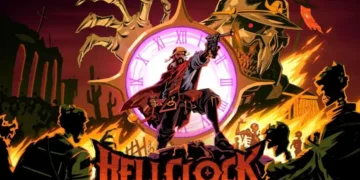


























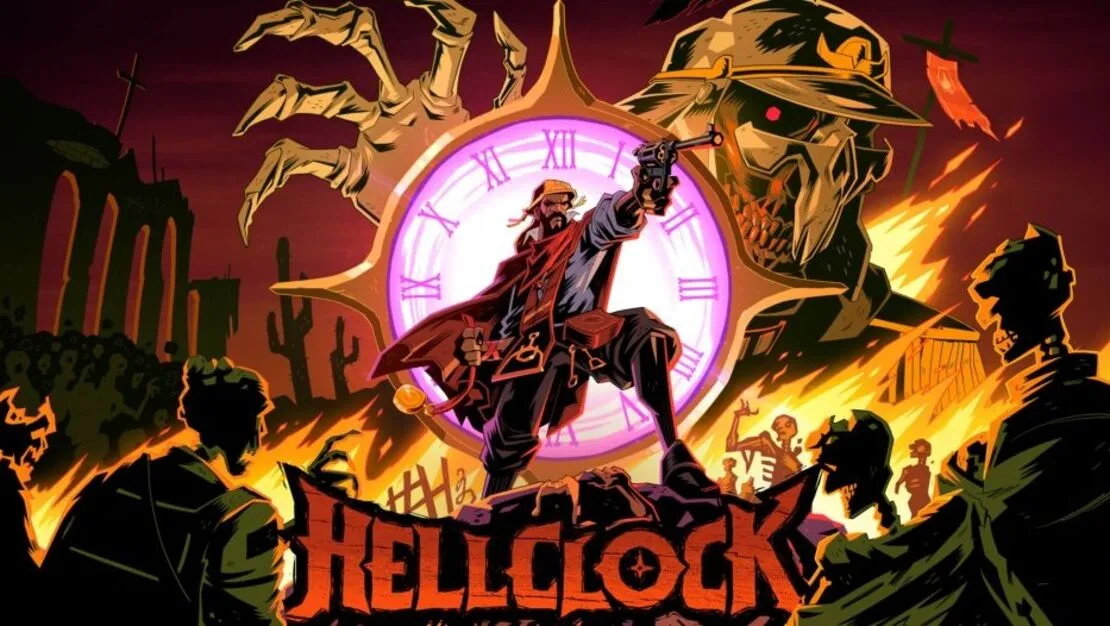

Some stories are rooted in soil so dark they feel like fiction. Hell Clock draws its power from one such history: the War of Canudos, a brutal conflict in 19th-century Brazil that saw tens of thousands massacred. The game drops you into the aftermath of this tragedy, casting you as Pajeú, a warrior and former enslaved person.
Your mentor, the historical leader Antônio Conselheiro, has had his soul dragged into a demonic underworld, and your mission is to descend into this abyss to save him. This setup grounds the fantastical action in a tangible, somber reality. It’s not just a dungeon crawl; it is a desperate rescue through a nightmarish reflection of a real historical event.
The game immediately establishes a grim, oppressive tone, making your quest feel both heroic and terrifyingly personal. You are not just fighting demons; you are fighting the echoes of a violent past made manifest.
Racing the Devil’s Stopwatch
At its mechanical foundation, Hell Clock is an isometric action RPG, sharing a camera perspective and loot-driven DNA with games like Diablo. You hack and slash your way through demonic hordes, watching enemies explode into satisfying showers of resources. The structure of your descent, however, is pure roguelite. Each attempt is a self-contained run, and failure sends you back to your hub.
This formula is familiar to anyone who has guided Zagreus out of the underworld in Hades, but Hell Clock introduces a particularly punishing twist: its namesake timer. Each run begins with a strict seven-minute limit, a constant countdown that reframes your every action. This isn’t a game where you can meticulously clear every corner of the map. It’s a frantic race against damnation itself.
The psychological pressure of the clock is immense. It forces a constant, stressful calculation of risk versus reward. That branching path might hold a valuable chest, but is the potential reward worth the thirty seconds it will cost you? This design choice fundamentally alters player behavior, transforming the experience into an exercise in efficiency and speed.
The developers do offer some mercy; the timer freezes during boss battles, cutscenes, and special encounters, allowing you to catch your breath and focus on the immediate threat. There are also accessibility options to disable the clock entirely for a more traditional ARPG experience. But to play it as intended is to embrace the urgency, letting the ticking clock inform your every move. It’s a design that feels both punishing and incredibly rewarding when you successfully manage your time.
A typical run begins as you descend into a cellar—a clear nod to the opening of the original Diablo—and fight your way through procedurally generated floors. The first act consists of eighteen floors spread across three distinct biomes. Your primary weapons are twin pistols, supplemented by a customizable kit of special skills like fiery explosions and evasive dashes.
Combat is fast, fluid, and often chaotic. The first few hours can feel repetitive, as you grind through the initial act’s environments and enemy sets. This is a deliberate choice. The game uses this initial grind to teach you its core systems.
Then, you beat the first act’s final boss, and the experience cracks wide open. Suddenly, you are greeted with entirely new biomes, a fresh host of enemies with different attack patterns, and new musical compositions that shift the entire mood. This moment of revelation is a masterclass in pacing. Just as fatigue might set in, the game reinvents itself. Crucially, your progress is saved. After defeating an act’s boss, you permanently begin all future runs from the start of the next act.
This structure respects the player’s time and effort, ensuring a constant sense of forward momentum even when individual runs end in failure. During these runs, you will also find temporary power-ups called blessings, which enhance your chosen skills in unexpected ways, forcing you to adapt your strategy on the fly.
Forging a Legend Between Runs
While skill on the battlefield is important, the true path to victory in Hell Clock is forged between attempts. This is where the game’s deep and satisfying meta-progression systems shine, allowing you to transform Pajeú from a desperate survivor into an avatar of vengeance.
Unlike many roguelites where your build is determined by the luck of the draw during a run, this game gives you significant control before you even take your first step. It all starts at the Skill Book. Here, you select a loadout of five active abilities that will form the core of your playstyle for the next run.
This design choice reduces the reliance on random drops for your basic kit, allowing you to focus on a specific strategy from the outset. As you conquer the game’s acts, you unlock new skills, dramatically expanding your tactical options and encouraging experimentation with new build archetypes.
Your build is further customized by a vast system of Relics. These function like the powerful equipment found in ARPGs such as Path of Exile, providing build-defining passive bonuses. A relic might increase your critical damage, boost your attack speed, or add a unique property to one of your skills. You can find these during your descents or purchase them from an ally in your hub world.
The system has surprising depth; you can upgrade your favorite relics to make them more potent and even recycle unwanted ones for crafting materials. There are also multiple versions of the same relic with slightly different stat rolls, creating a compelling item hunt for players who enjoy min-maxing their gear to perfection.
The most critical progression system is the Great Bell, which serves as your primary character skill tree. Using resources gathered from your runs, you can purchase permanent, account-wide upgrades. The choices you make here have a massive impact on your experience. You can increase your base health and mana, boost the amount of gold you find, or unlock game-changing abilities like creating red portals to skip entire floors.
Most importantly, you can invest in adding precious seconds to the seven-minute timer. The decision between prioritizing more time for exploration or more speed to reach the boss faster reflects a fundamental choice in player philosophy. One of the best features of the Great Bell is the ability to revise your choices, allowing you to reallocate points if you feel your current build has hit a wall.
This thoughtful progression directly ties into the game’s intentional “rollercoaster” pacing. Developers have stated that their goal was not a smooth difficulty curve, but a series of peaks and valleys where the player feels alternately weak and powerful.
The meta-progression is the engine that drives you up from those valleys. When you feel stuck, investing in a few key upgrades at the Bell or finding a powerful new Relic can give you the surge you need to overcome a challenge that previously seemed insurmountable.
This design, much like in FromSoftware’s titles, makes accomplishment feel genuinely earned. Late-game systems, like equipping permanent blessed gear and unlocking a constellation map for further customization, ensure there is a long and rewarding path to mastery.
The Sights and Sounds of the Sertão
Hell Clock’s presentation is a cohesive and deliberate work of art. The game employs a stylized, “cell-shaded” visual style that brings its grim world to life with a unique combination of clean character models and gritty, textured environments.
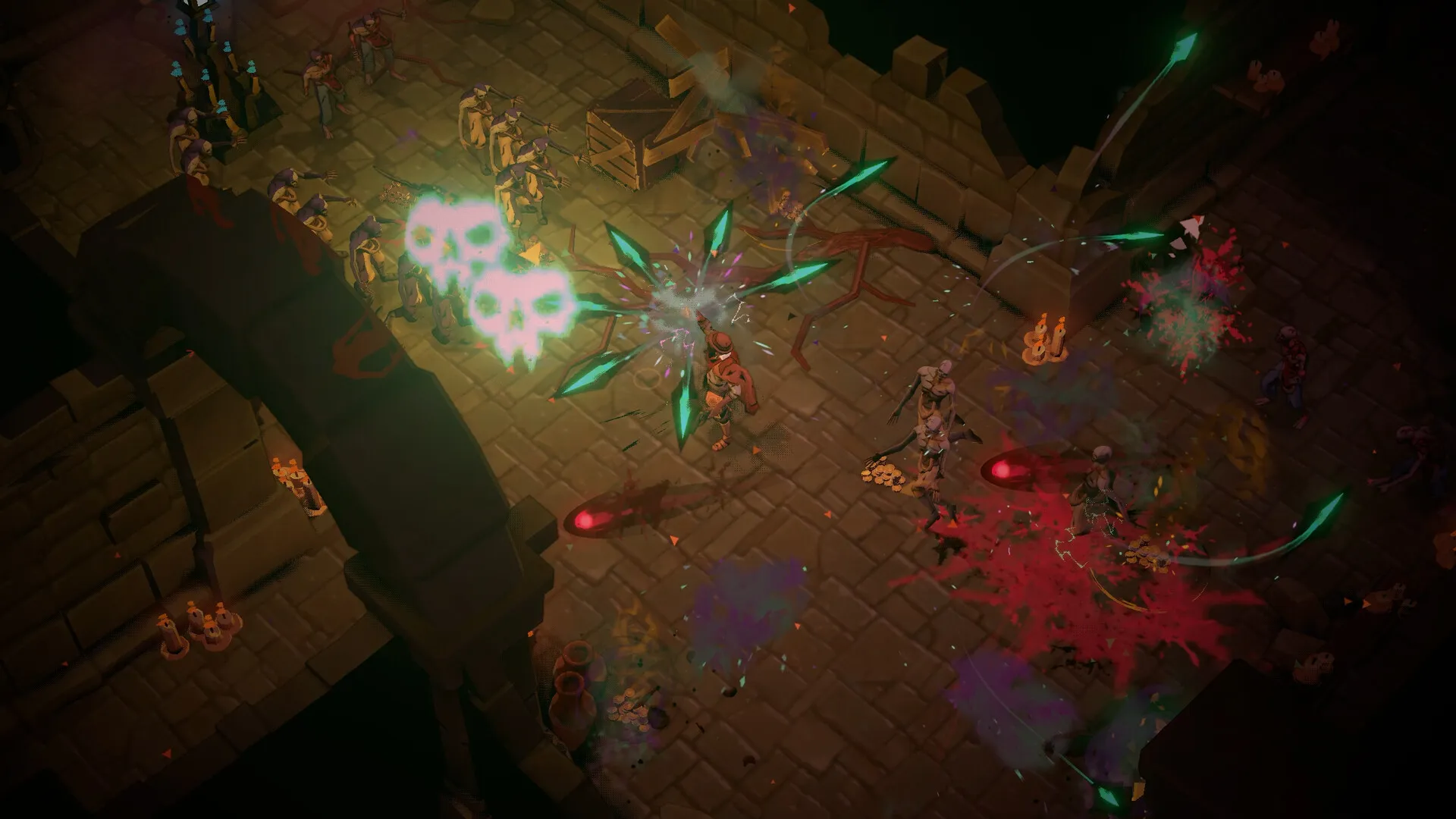
There is a notable and effective contrast between the in-game art and the art used for cutscenes. During gameplay, the visuals are clear and functional, making it easy to read enemy attacks. In the narrative cutscenes, the art becomes more painterly and haunting, conveying the deep emotional weight of the story with striking, somber imagery. This dual approach allows the game to deliver both visceral storytelling and readable action without one compromising the other.
The sound design is another high point. The music, in particular, is beautiful and evocative, using string instruments to create a score that feels authentic to the 19th-century Brazilian setting. It’s a far cry from the generic electronic soundtracks common in the genre and gives the game a powerful sense of place. The ambient sounds of the dungeons, the crack of your pistols, and the dying gasps of demons all combine to create a rich and immersive soundscape.
When it comes to audio, it is vital to offer one piece of critical advice: play the game with the native Brazilian Portuguese voice acting. The performances are delivered with a passion and authenticity that is simply missing from the English dub, which often feels stiff and emotionless by comparison. The use of regional dialects in the Portuguese track is a testament to the developers’ commitment to their source material and enhances the immersion tenfold.
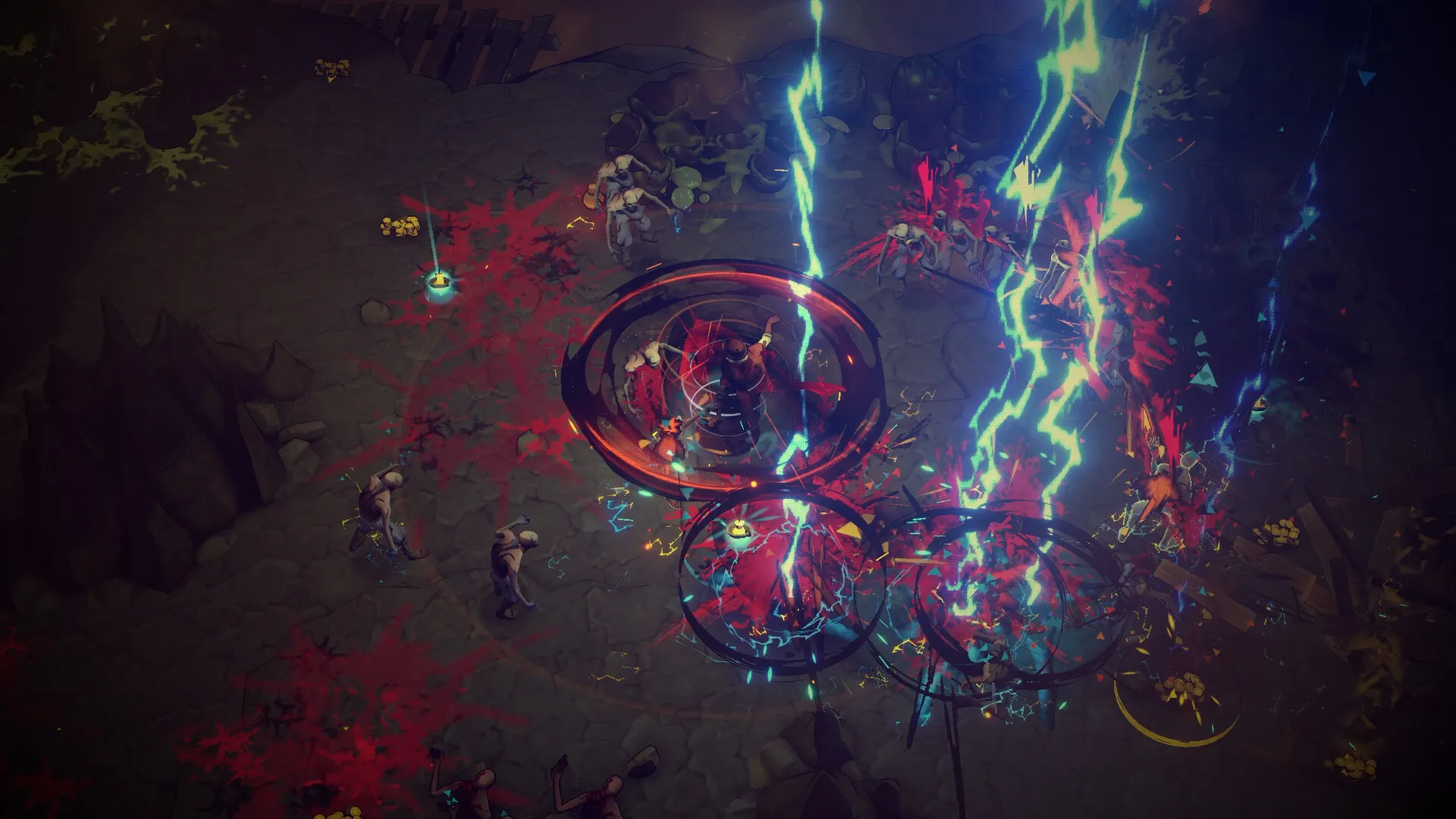
The game is not without its technical blemishes. The most common point of friction occurs during the most intense fights. The screen can become incredibly cluttered with enemies, projectiles, and visual effects, sometimes making it difficult to even see your own character.
This can lead to deaths that feel cheap rather than earned. Players may also occasionally find their movement frustratingly snagged on unseen level geometry. On the performance side, the game runs well for the most part, but users on handhelds like the Steam Deck have reported significant frame rate drops in hectic areas.
Other minor issues include occasional game crashes and lengthy loading times after particularly long runs. The developers seem aware of some of these shortcomings, as the post-launch roadmap includes plans for improved character animations and more varied dungeon generation, suggesting a commitment to long-term polish.
The Review
Hell Clock
Hell Clock is a triumphant fusion of historical tragedy and addictive roguelite action. Its signature timer creates thrilling urgency, while deep progression systems reward every failure. Supported by a gorgeous art style and an essential Portuguese voice track, it’s a powerful and inventive descent into a dark chapter of history. Minor technical flaws and a slow start are present, but they barely detract from this outstanding achievement.
PROS
- Unique and respectfully handled historical Brazilian setting.
- Tense and engaging timer mechanic that defines the gameplay.
- Deep, rewarding meta-progression and character customization.
- Stunning art direction and an excellent musical score.
- Authentic and powerful Brazilian Portuguese voice acting.
CONS
- Screen can become cluttered during intense combat.
- Some technical issues, including performance dips on handhelds.
- English voice acting is stiff and lacks impact.
- The opening act can feel repetitive before the game fully opens up.