



























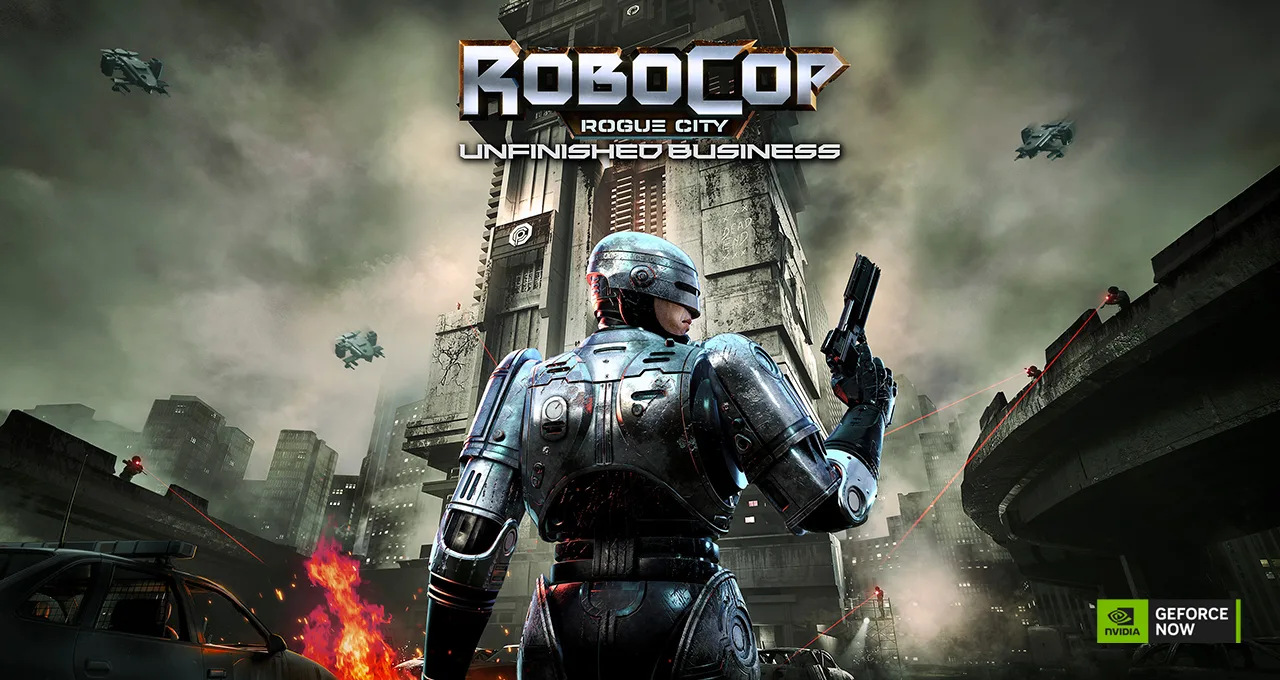

The aftermath of an attack on the Detroit police precinct is a scene of carnage and duty. For RoboCop, there is no pause, only a new objective. His investigation points to a singular source: the OmniTower, an OCP-built skyscraper now functioning as the fortress for a highly trained mercenary company. This standalone follow-up to Rogue City trades the patrol beats of Old Detroit for a focused, vertical assault.
The entire experience is contained within this concrete behemoth, shifting the formula from a semi-open world to a concentrated corridor shooter. The tone remains perfectly authentic, a grim cocktail of extreme violence and sharp, deadpan satire delivered by the titular cyborg. As RoboCop begins his ascent, the central question forms: Does caging this mechanical beast within a single high-rise amplify the action to new heights, or does it merely expose the limitations of his programming?
Mechanical Enforcement
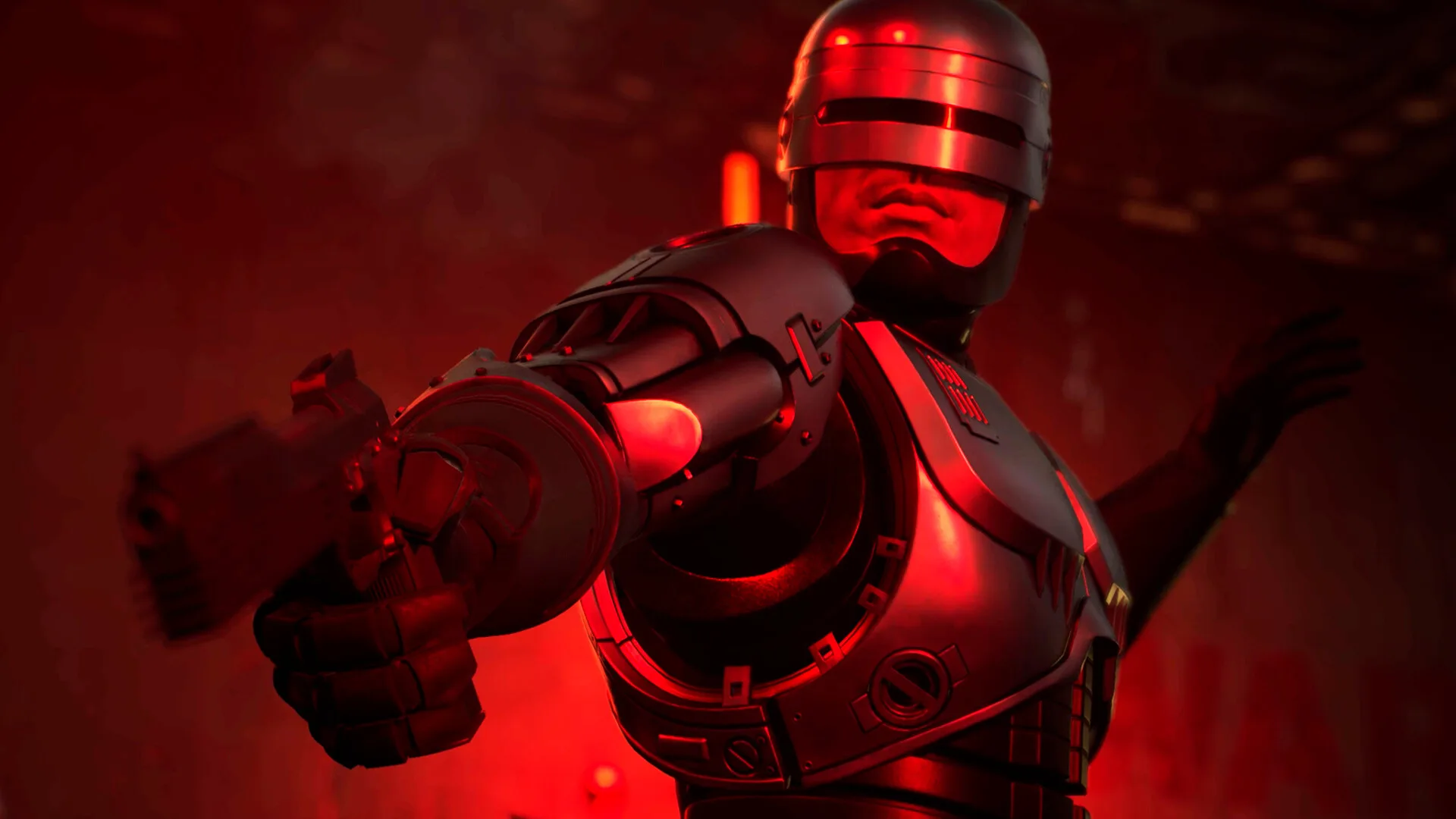
Playing as RoboCop is an exercise in deliberate force, a design philosophy that stands in stark contrast to the hyper-agile shooters that dominate the modern landscape. Where games like DOOM Eternal prize acrobatic motion, Unfinished Business doubles down on the fantasy of being a walking tank. Your movement is weighty, methodical, and grounded. There is no jumping, no sliding, no twitch-based evasion. This limitation is the system’s greatest strength.
It forces a different kind of tactical engagement, one based on deliberate positioning, assessing firing lanes, and methodically dismantling enemy fortifications. Every encounter becomes a puzzle of threat prioritization. You are the immovable object, and the challenge lies in weathering the storm of desperately thrown force. This expansion provides a marginal increase in walking speed over the base game, a welcome quality-of-life adjustment that respects the player’s time without compromising the character’s essential, heavy presence.
The foundation of this combat system is the iconic Auto-9 pistol, which functions less as a starting weapon and more as a customizable extension of RoboCop himself. It possesses unlimited ammunition, and its true potential is unlocked through an RPG-like upgrade system. Hidden throughout the levels are Printed Circuit Boards (PCBs) that can be installed on a grid, allowing for significant player choice in crafting a preferred build. You might find a high-powered board that enables full-automatic fire with no reloads, fulfilling the ultimate power fantasy.
Another path might involve stacking chips that enhance ricochet capabilities, turning every wall into a deadly backboard. This system allows for a degree of expression, though the raw power of a damage-focused build often feels like the most logical choice, somewhat overshadowing more nuanced options. The new weapons introduced attempt to provide tactical alternatives. The Gatling gun is a satisfying room-clearer, but its limited ammo and wind-up time make it situational. The Cryo Cannon, which freezes targets solid, proves more useful. It’s an effective tool for neutralizing high-priority threats like the agile, katana-wielding Otomo cyborgs, locking them down to be shattered.
These new enemy variants are crucial to the combat’s longevity. The game excels at creating challenging encounters by combining different types of threats. A firefight might involve suppressing fire from standard mercenaries, while flying drones force your aim skyward and rolling robobombs demand constant attention at ground level. This forces you to constantly re-evaluate the battlefield and make tactical use of RoboCop’s slow-motion skill, which is less a cool flourish and more a vital resource for managing these complex scenarios. Furthering this tactical layer are the new environmental takedowns.
By grabbing an enemy near a designated spot—a flimsy railing, a large industrial fan, a garbage chute—you trigger a brutal, third-person execution. These moves are not just for show; they are a fluid and effective way to eliminate a single target, granting a moment of invincibility and rewarding smart battlefield positioning. The progression system that ties this all together is a direct copy of the original’s skill tree. While it lacks novelty, the faster pace of leveling in this shorter campaign means you feel your power growing consistently, with investments in skills like Armor or Damage providing immediate, tangible benefits in surviving the OmniTower’s onslaught.
The Vertical Beat
The OmniTower serves as the game’s entire world, a self-contained arcology promising a vertical battleground. The premise evokes the claustrophobic, ever-escalating tension of films like Dredd or The Raid, where each new floor represents a new level of hell. Unfinished Business, however, struggles to translate this feeling of a continuous ascent into its gameplay structure.
The tower is presented less as a single, cohesive building and more as a collection of large, distinct levels connected by elevators and loading screens. The illusion of climbing floor-by-floor is frequently broken, and the experience feels more horizontal than vertical, as if you are clearing out different wings of a massive complex rather than steadily moving upward.
This structural choice does allow for greater environmental diversity than a realistic skyscraper would. Within the tower’s walls, you will discover pockets of surprising detail and creativity. One mission has you fighting through a gleaming, noisy video arcade filled with explosive cabinets and panicked civilians. Another takes you through the eerie silence of an abandoned cinema, its massive screen providing a backdrop for a tense shootout.
These moments are visual and thematic high points. They stand in stark contrast, however, to the vast stretches of the campaign spent navigating charmless, repetitive environments. The endless concrete corridors, prefabricated office cubicles, and dimly lit parking garages that connect these standout locations begin to blur together, creating a sense of visual fatigue. The pacing of these visual highs and lows feels unbalanced, with too much time spent in the mundane spaces between the memorable ones.
The tower is also home to enclaves of civilians, who provide the game’s side quests. These small communities are meant to inject life into the concrete monolith, but they often feel more like static dioramas than living spaces. They lack the organic, gritty authenticity of Rogue City’s Detroit streets, and their problems, such as a dispute over a stolen appliance, can feel tonally jarring when the floor below is an active warzone.
Ghosts in the Machine
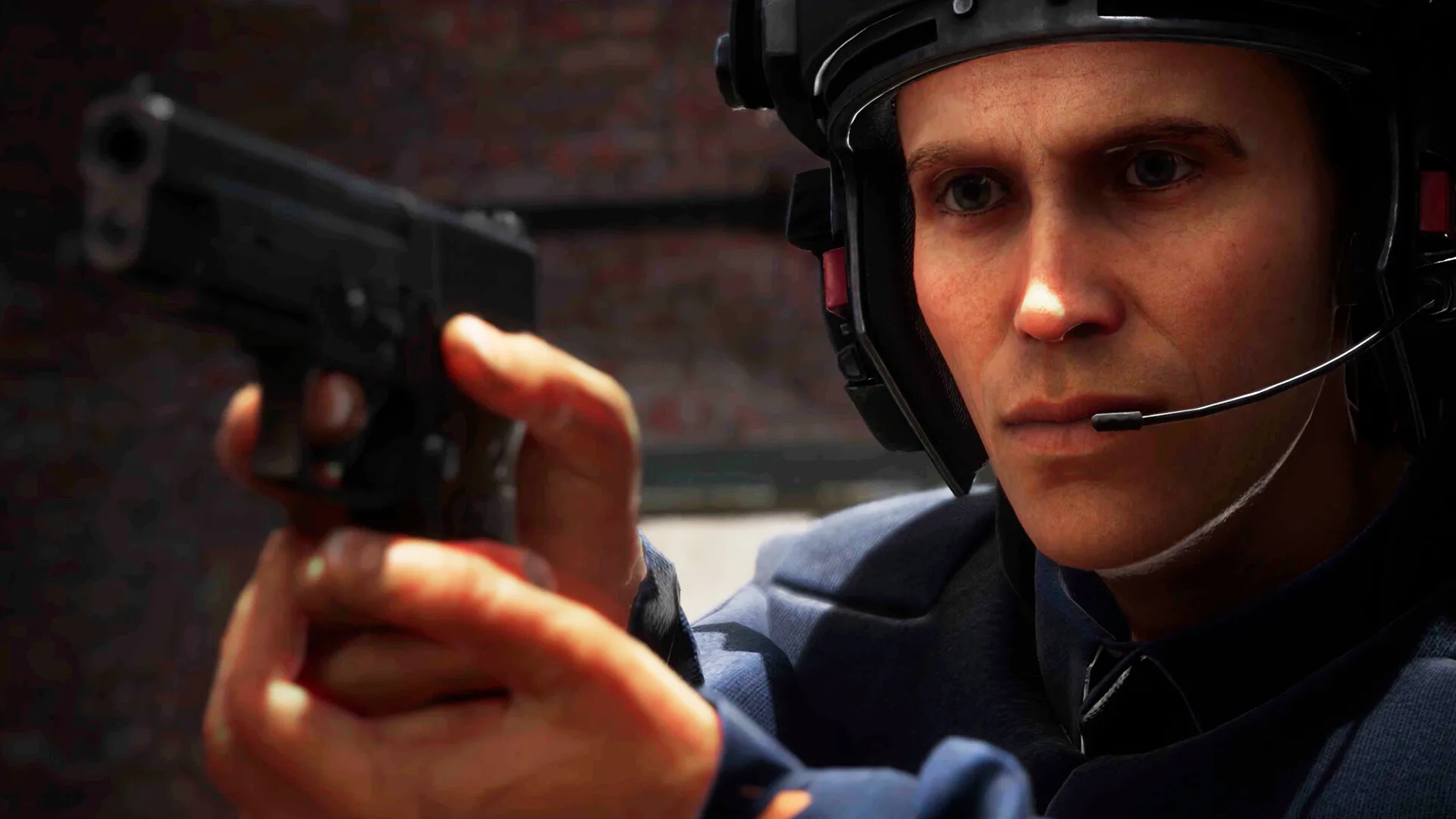
The soul of the experience, the ghost in the machine, remains Peter Weller’s pitch-perfect performance as RoboCop. His ability to deliver lines with a perfect blend of robotic detachment and subtle, world-weary humanity is the anchor that makes the entire project work. Without his authentic portrayal, the game’s mix of grim violence and corporate satire could easily curdle into unintentional parody. Weller’s strength throws the weakness of the supporting cast into sharp relief. Most secondary characters are voiced with a disengaged flatness and are represented by stiff, recycled character models with poor lip-syncing.
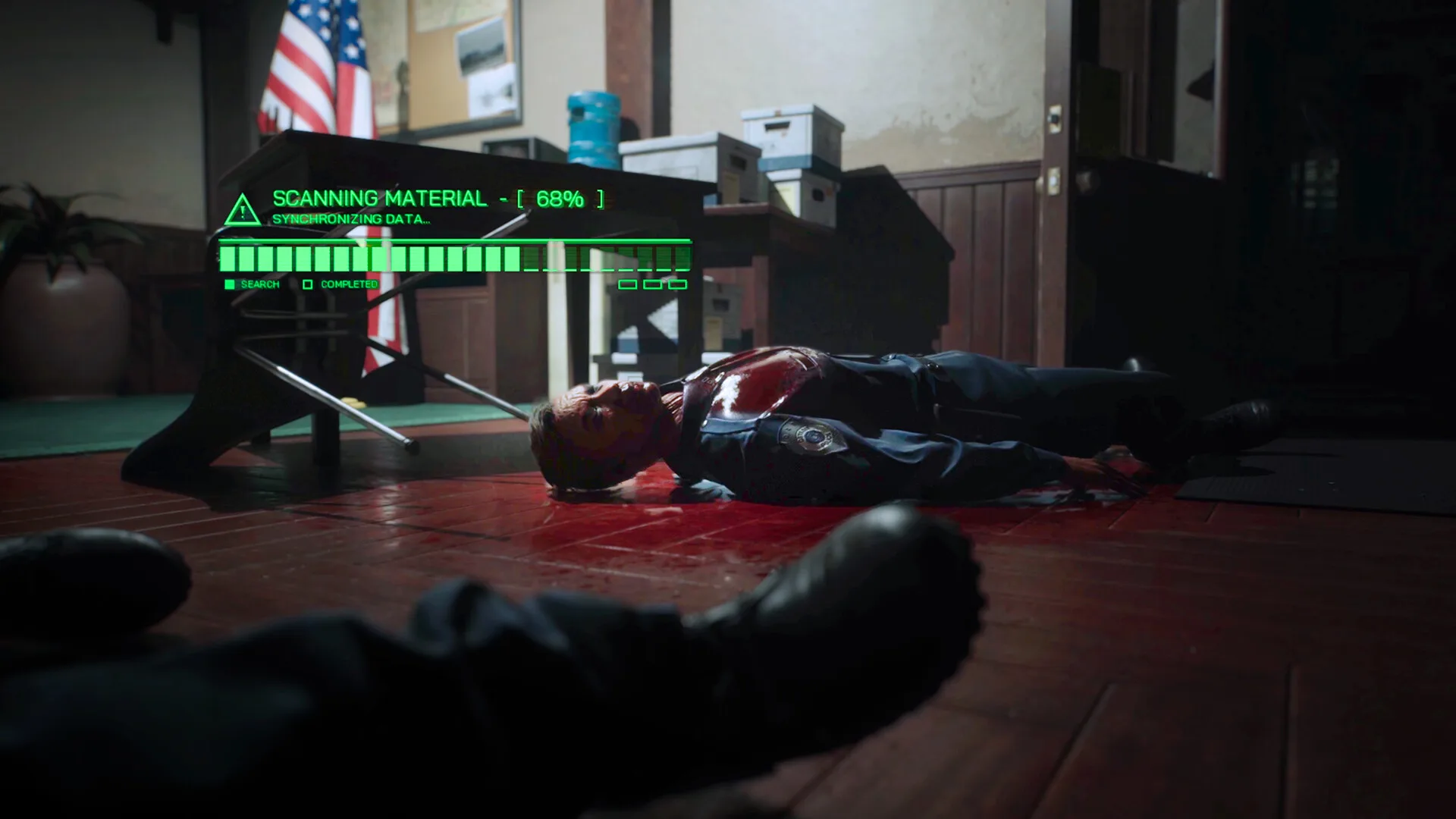
These elements consistently break the narrative immersion, reminding you that you are playing a game with budgetary constraints. The main story is a lean, functional revenge plot: track the mercenaries who attacked the precinct, recover the stolen OCP equipment, and unmask the mysterious figure from Alex Murphy’s past who leads them. This narrative simplicity is both a strength and a weakness. It effectively drives the action forward without getting bogged down in exposition, keeping the focus on gameplay. At the same time, it feels like a missed opportunity to delve deeper into the rich political and corporate intrigue that made the source material so compelling.
This shallowness extends to the game’s role-playing elements. Side quests found within the tower are incredibly basic, and the dialogue choices offered rarely lead to meaningful consequences. Your actions might cause a “Public Trust” meter to rise or fall, but this metric has little tangible impact on the world or the narrative beyond a slightly altered line of dialogue in a later conversation.
The world does not react to your choices, making the RPG mechanics feel like a thin veneer layered over a fundamentally linear shooter. Where the game successfully innovates is in its missions that shift perspective. The flashback sequences where you play as a human Alex Murphy are a narrative and mechanical highlight. These sections are slower-paced, allowing for moments of character development while offering a different gameplay style.
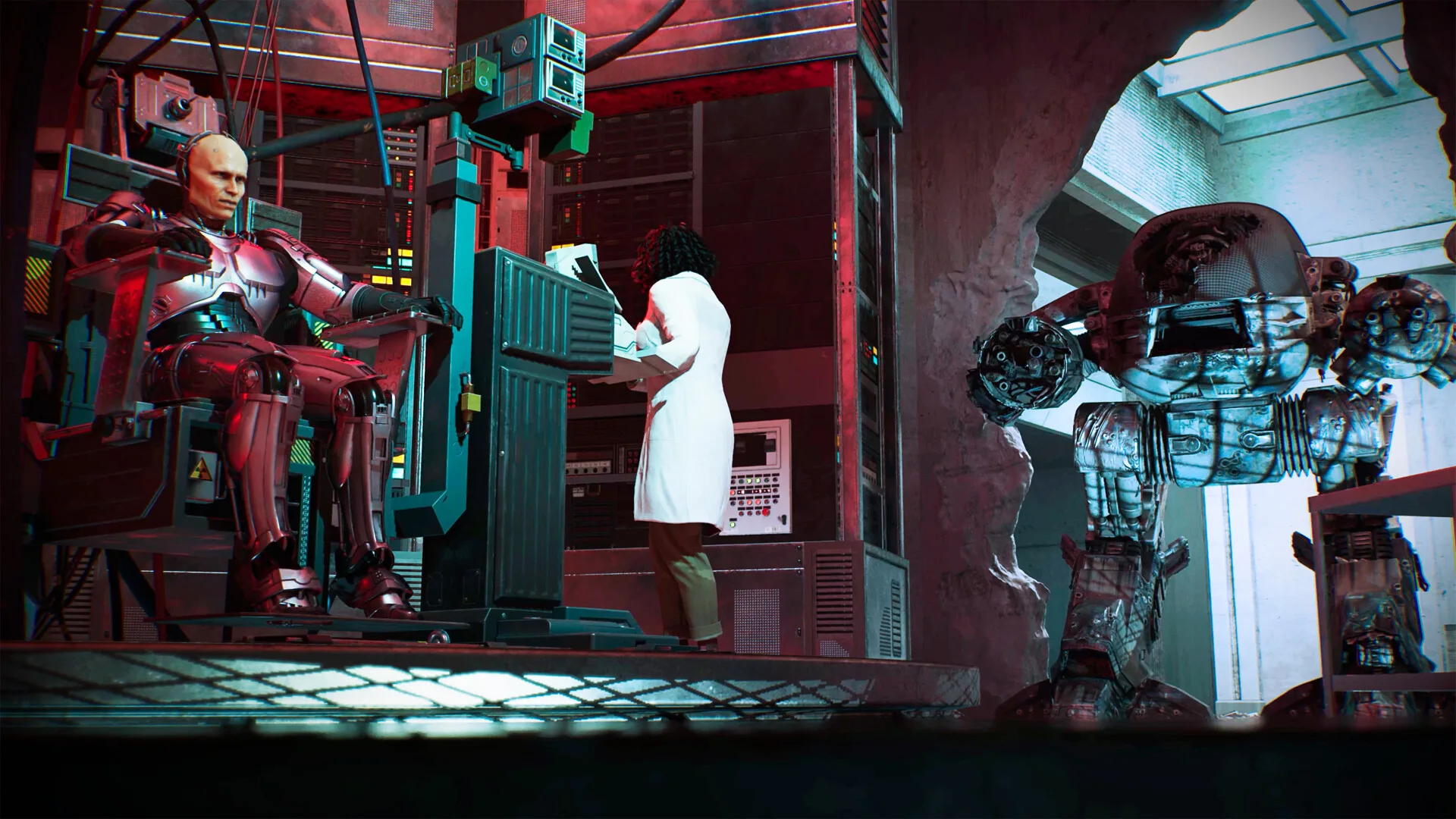
As a normal human, you can run and crouch, forcing you into cover-based firefights that feel refreshingly different from RoboCop’s unstoppable advance. Even more spectacular is the late-game sequence where you are given control of an ED-209. It is a moment of pure, unadulterated power fantasy. The feeling of stomping through the environment, unleashing torrents of cannon fire, and obliterating everything in your path is a cathartic and memorable high point that wisely doesn’t overstay its welcome.
Chrome and Corrosion
Visually, Unfinished Business is a product of competing levels of quality. The artistic representation of RoboCop himself is a triumph. His chrome chassis reflects the world around him with impressive detail, and the way ambient neon light catches on his armor looks as though it were pulled directly from the 1987 film. This loving attention to the hero, combined with a retro-futuristic aesthetic seen in the green CRT-style HUD and clunky computer terminals, demonstrates a deep respect for the source material.
This reverence, however, does not extend to the rest of the presentation. The rough edges are numerous and sharp. Facial animations for most characters are incredibly stiff, failing to convey any believable emotion. Environmental textures are often flat and low-resolution, and the movement of NPCs can look awkward and robotic in a way that isn’t intentional. While some of this might be chalked up to a campy, B-movie charm, much of it simply looks dated and under-produced.
In stark contrast, the sound design is exceptional across the board. The iconic theme music swells during key action sequences, perfectly underscoring the on-screen heroism and violence. The sound of RoboCop’s heavy, metallic footsteps is a constant and powerful presence, announcing your arrival long before you enter a room. Weapon effects are punchy and visceral, with the squelch of a successful headshot or the boom of an exploding barrel providing satisfying auditory feedback for every action. This excellent audio work is frequently betrayed by the game’s shaky technical performance.
During my time on the PlayStation 5, the experience was rife with issues. Frame rate stutters were common in hectic firefights, making aiming difficult. More jarring were the audio bugs, which ranged from distracting static to complete audio dropouts during important narrative moments, deflating any dramatic tension. The list continues with animation glitches, bizarre ragdoll physics during breach sequences, and several hard crashes that forced a complete restart of the application. The game’s subtitle, Unfinished Business, begins to feel less like a narrative statement and more like an accidental confession regarding its own state of polish.
Directive Four: Assessment
RoboCop: Rogue City – Unfinished Business presents itself as more of what made its predecessor a surprise hit, and it delivers precisely on that promise. This is not an ambitious evolution but a confident and concentrated dose of the same formula. It trades the wider patrols of Detroit for the focused, linear assault of a single skyscraper, streamlining the experience to prioritize its greatest strength: the visceral, weighty satisfaction of its combat. The fantasy of being an unstoppable cyborg lawman is realized perfectly, anchored by an exceptional lead performance and punctuated by standout moments of glorious, over-the-top action like the ED-209 sequence.
This core strength is what holds the entire project together, because the chassis is covered in dents and corrosion. The technical performance is consistently unsteady, with a host of bugs and glitches that range from minor annoyances to immersion-breaking failures. The narrative is functional but shallow, and the level design, despite moments of creativity, too often falls back on repetitive, uninspired corridors.
Ultimately, this is a game built for a very specific audience. For players who embraced Rogue City and are simply looking for another ten-hour tour of duty, this expansion will absolutely satisfy. It understands its hero and the violent, satirical world he inhabits.
Conversely, anyone who was not won over by the first game’s unique blend of RPG-lite mechanics and clunky, methodical shooting will find no new arguments here to change their mind. It is a testament to the strength of the core fantasy that the game remains compelling despite its numerous and obvious flaws. It successfully captures the spirit of the franchise—that unique blend of extreme violence, sharp social commentary, and the surprisingly human story of the man inside the machine. It is a worthy, if imperfect, continuation of his directive.
The Review
RoboCop: Rogue City - Unfinished Business
RoboCop: Rogue City - Unfinished Business is a direct and forceful follow-up that successfully replicates its predecessor's strengths. The core satisfaction of being a walking tank and dispensing brutal justice remains incredibly strong, anchored by an authentic presentation and moments of pure fan service. This potent power fantasy is unfortunately packaged with significant technical issues and repetitive design that hold it back from its full potential. For fans of Rogue City, this is a worthwhile, if janky, return to Old Detroit. For anyone else, its rust is hard to ignore.
PROS
- Authentically captures the weighty feel and power fantasy of being RoboCop.
- Viscerally satisfying combat with excellent, impactful sound design.
- Memorable highlight missions, including the playable ED-209 sequence.
- Peter Weller's performance as the titular hero is pitch-perfect.
CONS
- Plagued by numerous technical issues, from frame drops to game crashes.
- Level design often becomes monotonous and visually repetitive.
- Side quests and RPG mechanics feel shallow and underdeveloped.
- Visual presentation is dated, particularly in its character models and animations.