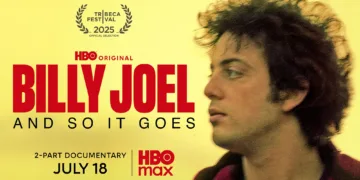
























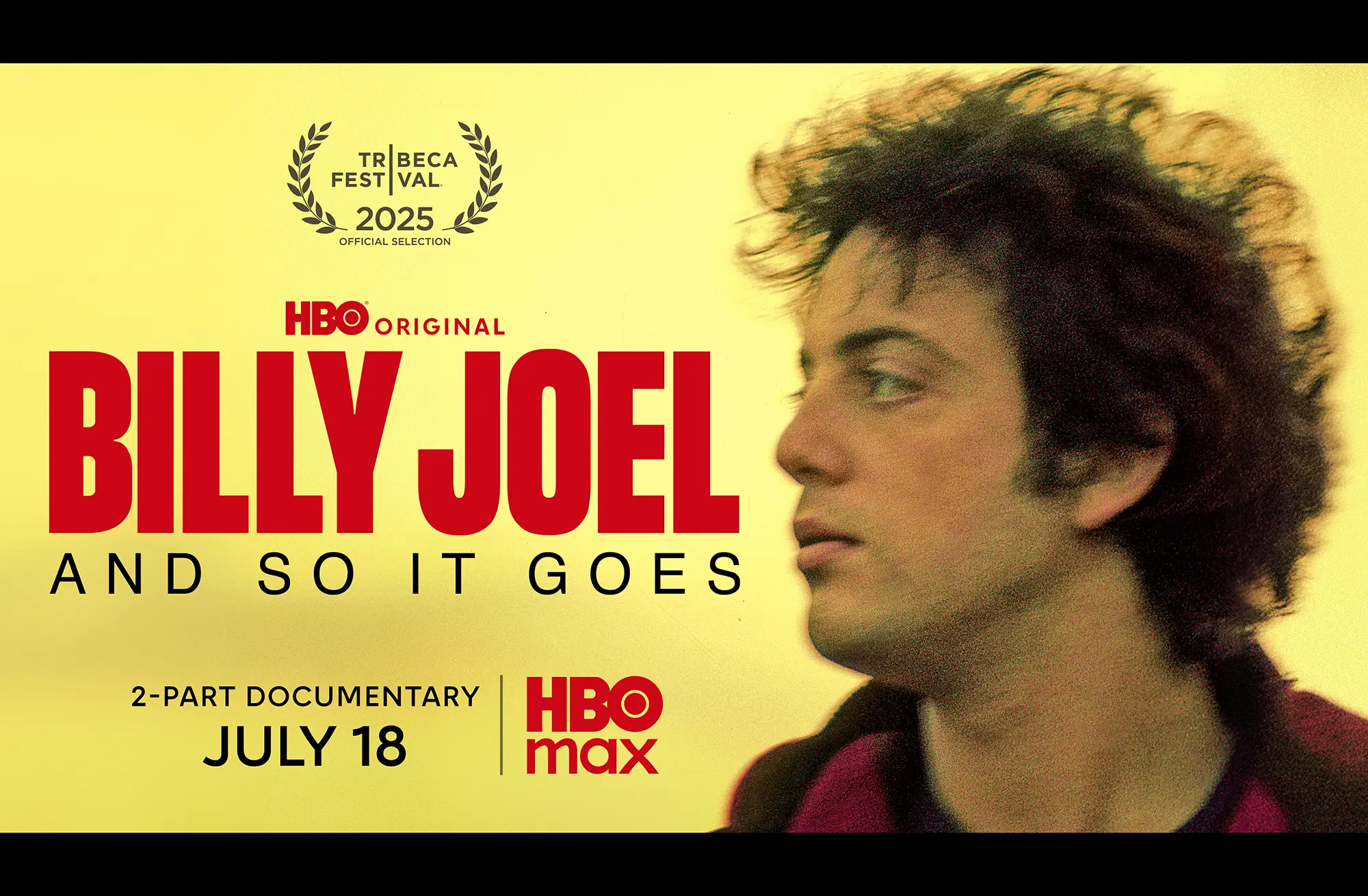

My parents had Billy Joel’s The Stranger on a near-constant loop in their station wagon, so his sound is baked into my earliest memories. It’s the sound of Long Island summers, of a certain kind of 1970s pop craftsmanship that felt both epic and intensely personal. The HBO docuseries Billy Joel: And So It Goes taps directly into that feeling but refuses to stay in the shallow end of nostalgia. In an age of slick, artist-approved documentaries that often feel like extended promotional videos, this nearly five-hour portrait stands apart.
Directors Susan Lacy and Jessica Levin have constructed something far more ambitious: a dense, unflinching, and deeply human examination of the man behind the myth. The series sidesteps the simple highlight reel approach, using its expansive runtime to explore the complicated artist who gave us the soundtrack to our lives, revealing the grit and heartache that fueled the melodies.
The Songwriter’s Blueprint
What’s most striking about the series is its narrative structure. It uses Joel’s discography as its primary framework, a decision that elevates the film beyond a standard biography. By moving chronologically through each album, the filmmakers treat his entire catalog as a serious body of work, giving as much weight to a deep cut from Cold Spring Harbor as to a stadium-shaking anthem from Glass Houses.
This choice is a direct counterargument to the old critical knock that Joel was merely a pop panderer. A fantastic anecdote recounts how he turned down the legendary Beatles producer George Martin, who wanted to replace his touring band with session musicians for the album The Stranger. Joel’s loyalty to his Long Island crew won out, a decision that defined his sound. We see him at the piano, deconstructing his own work to show how a classical motif inspired the doo-wop rhythm of “Uptown Girl,” transforming a familiar hit into a piece of sophisticated composition.
The film’s sound design is equally impressive, often using instrumental versions of his songs as an underscore that adds emotional texture. The origin stories behind the songs are illuminating; “Piano Man” was born from a low point working in an L.A. bar, while “Vienna” is revealed to be a painful reflection on his estranged father. This isn’t just trivia; it’s a re-contextualization of his art.
A Portrait in Sharp and Flat
The series shifts its focus from the art to the artist with a candor that is genuinely rare in today’s landscape of carefully managed celebrity narratives. This is no hagiography. The film confronts Joel’s personal life head-on, exploring his difficult upbringing, his battles with depression that led to two suicide attempts after a painful love affair, and his struggles with alcohol during his peak fame.
The emotional center of the first part of the story is the complex, turbulent relationship with his first wife and manager, Elizabeth Weber. The documentary doesn’t shy away from the raw details: she was married to his bandmate and best friend when their own relationship began. Her on-camera interviews are revelatory, providing a perspective that is both loving and clear-eyed about the man she helped build and the personal costs involved.
The filmmakers secured incredible access, speaking not just to Joel but to all four of his wives, his sister, and former bandmates like Liberty DeVitto. This collection of voices allows for a layered psychological portrait, moving beyond the conventions of the celebrity bio-doc by allowing conflicting, honest perspectives to create a picture of a man as prone to self-destruction as he was to creating moments of pure musical euphoria.
The Unfinished Ballad
For a film built on comprehensiveness, its silences are telling. The archival team deserves immense credit for unearthing a treasure trove of footage that gives the series a powerful sense of time and place. From grainy childhood photos to electric, long-unseen performance clips, the visual texture is rich and immersive.
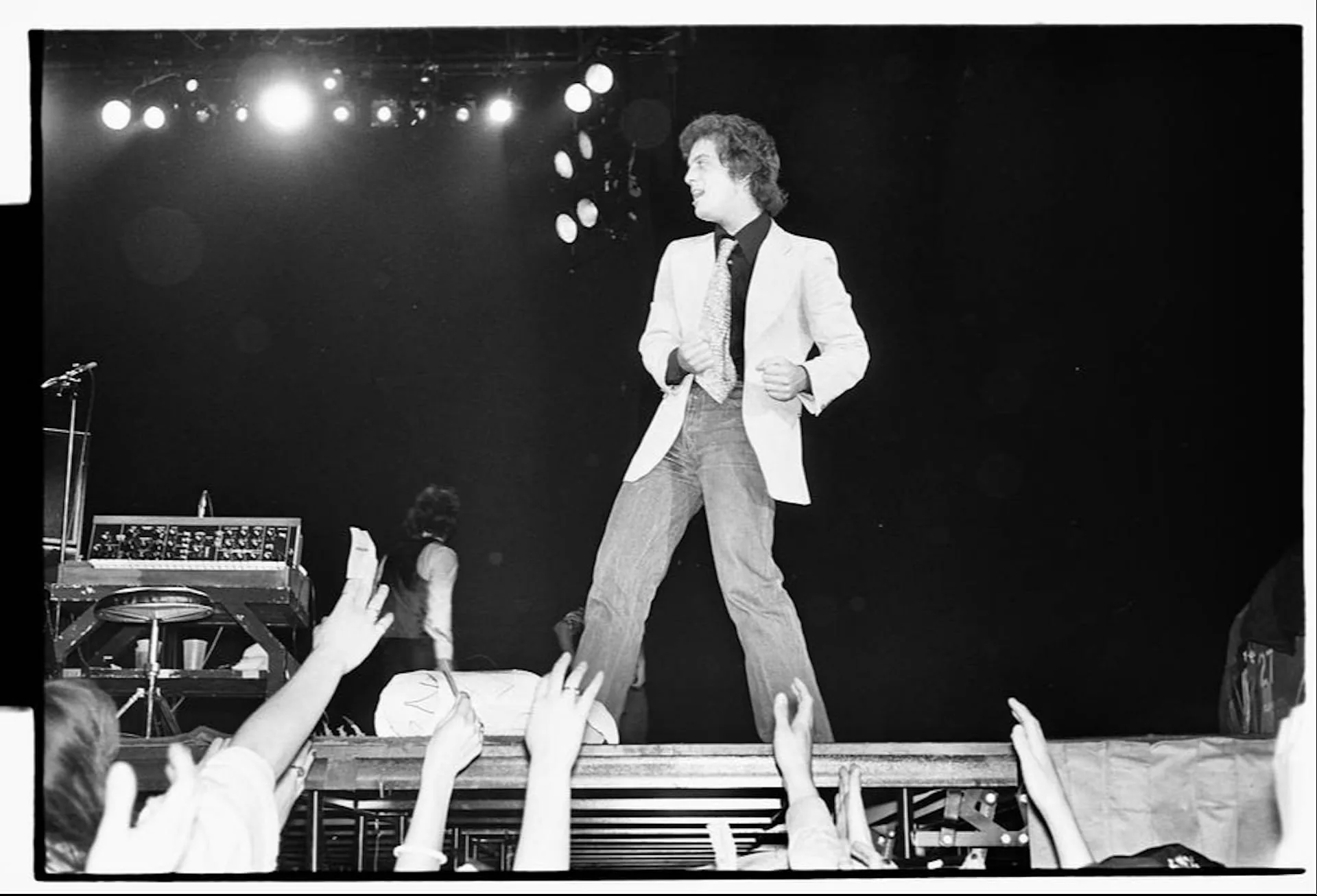
The inclusion of high-profile fans and peers like Bruce Springsteen, Paul McCartney, and Nas also works to situate Joel’s place within the pantheon of great American songwriters. Yet, for all its exhaustive detail, the documentary leaves some of the biggest questions unanswered. It never provides a satisfying explanation for why one of pop’s most prolific writers effectively stopped releasing new songs more than thirty years ago.
His celebrated 2024 comeback single, “Turn the Lights Back On,” goes unmentioned, as does his recent health diagnosis that led to concert cancellations this past year. These omissions don’t feel like an oversight but perhaps a necessary condition of the access granted. It highlights the central tension of the modern celebrity documentary: a portrait can be intimate and revealing, but it may not be entirely complete. The film is an expansive look at a life, but not the final word, suggesting that even in a five-hour chronicle, some verses are left unwritten.
Full Credits
Director: Susan Lacy, Jessica Levin
Producers: Susan Lacy, Jessica Levin, Emma Pildes
Executive Producers: Tom Hanks, Gary Goetzman, Todd Milliner, Sean Hayes, Steve Cohen, Nancy Abraham, Lisa Heller, Sara Rodriguez
Cast: Billy Joel, Elizabeth Weber, Bruce Springsteen, Paul McCartney, John Cougar Mellencamp, Nas, Pink, Jon Small
Director of Photography (Cinematographer): Nicholas Blair, Dennis Dillon, Sam Painter, Jeff Siegel
Editors: Kris Liem, James Pilott, Steven Ross
Composer: Billy Joel
The Review
Billy Joel: And So It Goes
Billy Joel: And So It Goes is a masterful and ambitious music documentary. It succeeds brilliantly as both a serious musical reassessment and an unflinchingly candid character study, offering a rare look at the turmoil behind the timeless tunes. While its impressive scope has curious blind spots regarding Joel's recent life and career choices, the depth of its storytelling and the sheer emotional honesty on display make it essential viewing. It’s a powerful, definitive portrait of a complicated American icon.
PROS
- Offers an unflinchingly honest and raw look at Joel's personal struggles.
- Provides a deep, serious analysis of his musical craftsmanship and entire discography.
- Features incredible access to key figures, especially his former wives.
- Masterfully curated archival footage creates an immersive experience.
CONS
- Leaves significant questions about his career unanswered, particularly his 30-year hiatus from songwriting.
- Ignores recent major events like his 2024 single and health diagnosis.
- The extensive runtime might feel demanding for more casual viewers.