

























![Kingdom Hearts Collection [I-III] Review](https://gazettely.com/wp-content/uploads/2026/10/Kingdom-Hearts-Collection-I-III-1-360x180.webp "Kingdom Hearts Collection [I-III] Review: KHII Holds Steady as Newer Entries Fluctuate 40")
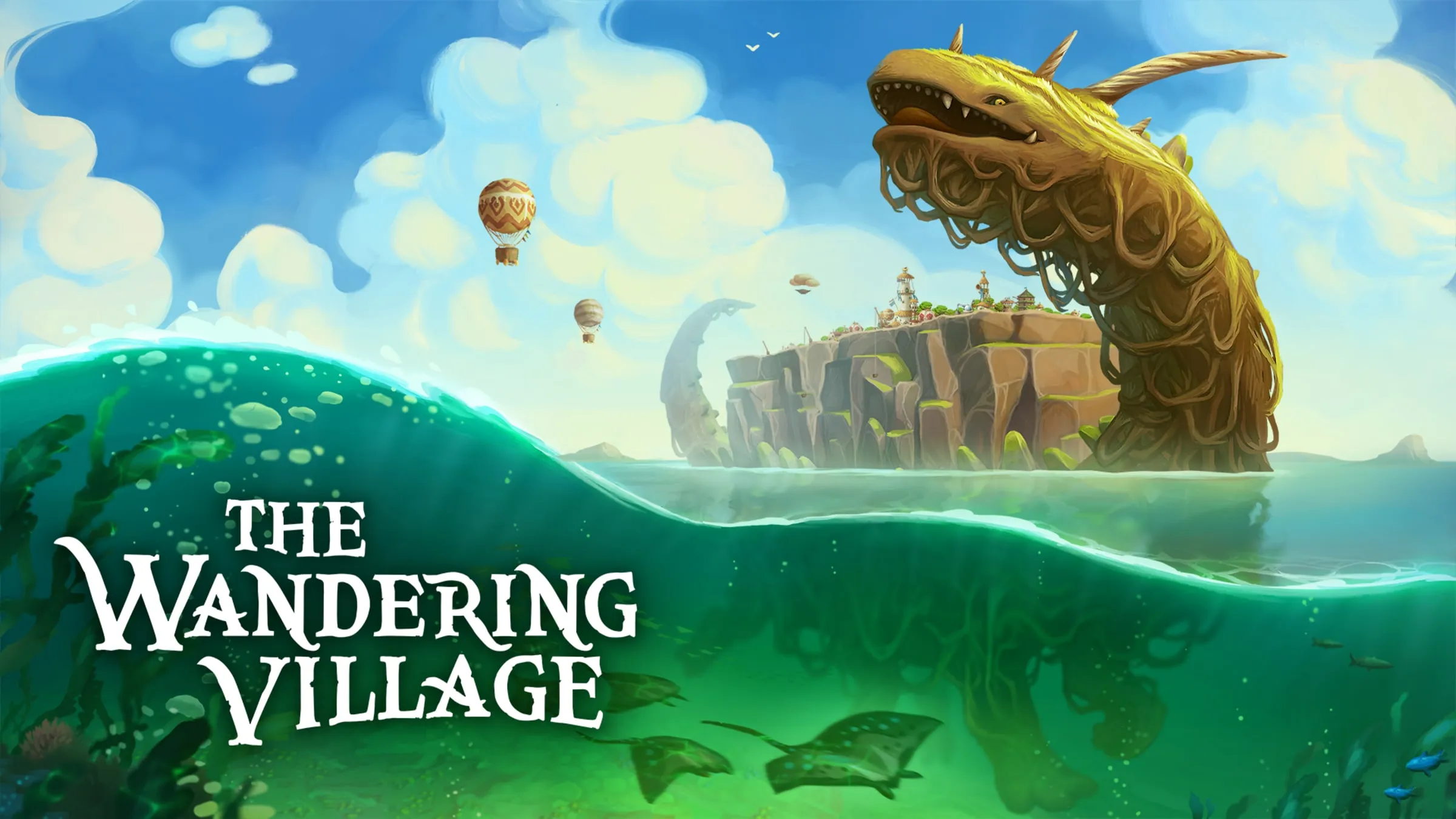

There’s a feeling you get from certain stories, like watching the ancient lion turtles in Avatar or seeing the colossal walkers in Star Wars, a sense of scale that redefines what a home can be. The Wandering Village captures that exact feeling from its opening moments.
It places you in a world choked by toxic spores, where the last remnants of humanity have found salvation not on new ground, but on the back of a living, breathing, wandering mountain named Onbu. The game presents itself as a city-builder mixed with a survival simulation, a blend that is immediately compelling.
Its hand-drawn, storybook visuals could fool you into thinking this is a cozy, relaxing affair, like something from Studio Ghibli’s gentler side. But beneath that charming surface lies a brutal, unforgiving world. The core of the experience is a constant, delicate negotiation between the needs of your people and the health of the very creature whose back provides your sanctuary. It’s a nomadic existence defined by a single, powerful challenge: how do you build a future on a foundation that is alive, and might not always agree with you?
The Precarious Art of Settlement
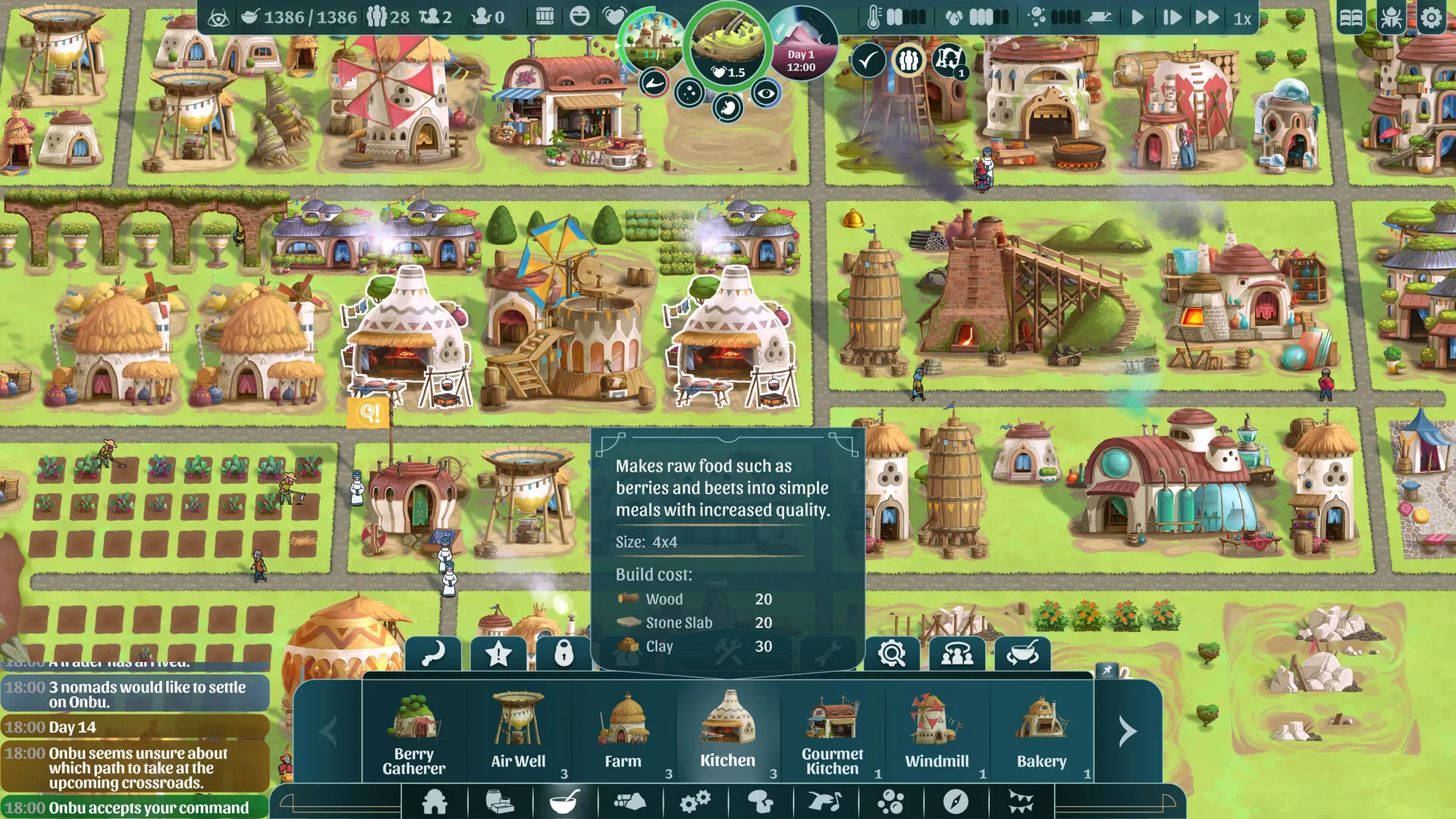
At its heart, the game functions as a city-builder, and a very clean one at that. You begin by directing your small band of survivors to gather basic resources—wood from the forests growing on Onbu’s back, stone from scattered deposits—and construct the necessities of life.
The fundamental loop is deeply satisfying in its clarity. A villager assigned to a farm will harvest beets; another will ferry those beets to a newly built kitchen, where a cook processes them into a prepared meal. That meal not only provides a greater boost to hunger but also improves villager happiness, tying mechanics of survival directly to morale. This chain of production, from raw material to refined good, is the engine that drives your settlement’s growth, and mastering its rhythm is the first major challenge.
What makes this process so engaging, especially in the early game, is how The Wandering Village respects your intelligence. It avoids the dense, front-loaded tutorials that can make other strategy games like Anno 1800 feel like homework. Instead of intrusive text boxes, it provides elegant visual cues.
A small icon of a leaking water droplet appears over a building if its supply is low, a simple, non-verbal prompt for you to investigate the problem. This approach allows for a gratifying sense of discovery as you learn the systems organically. The user interface is a model of minimalist design, keeping the focus on the village itself rather than on navigating complex menus.
This streamlined design is crucial because the game’s primary strategic puzzle is immediately apparent: the severe lack of space. Every single tile on Onbu’s back is precious real estate. This limitation transforms every decision into a weighty one. Do you clear a patch of thorny weeds to build a new set of huts for your growing population, or do you leave the weeds for now because they can be harvested for medicinal herbs?
Do you place your quarry on a large stone deposit near the center of the village, knowing it will be an eyesore and will eventually be depleted, leaving a useless patch of land? These aren’t just logistical choices; they are long-term commitments that force you to think like an urban planner with the world’s most unique zoning restrictions. Your workforce adds another layer of fluid strategy.
Villagers are not specialists but generalists, cogs in the machine of survival. You can pull a researcher from their studies to help with a critical harvest, then send them back once the crisis is averted. This flexibility is empowering, allowing you to react dynamically to the ever-changing needs of your village.
A Symbiotic Struggle for Survival
The city-building provides the foundation, but the true narrative of The Wandering Village is written by the journey itself. Onbu is in perpetual motion, an unstoppable force of nature carrying you across a series of visually and mechanically distinct biomes.
The transition between them is a moment of both beauty and dread. The screen might take on a sickly green tint as you enter a poison forest, where even the rain is toxic and your people will fall ill without proper shelter and medicine. Later, the landscape may shift to a cracked, arid desert, where your water extractors cease to function and your farms can only support hardy crops like corn and cacti.
This constant environmental flux means that no strategy is permanent. A thriving village built on water-intensive crops can be brought to its knees within minutes of entering a desert. Survival is not about creating one perfect, static system; it’s about constant, frantic, and often desperate adaptation.
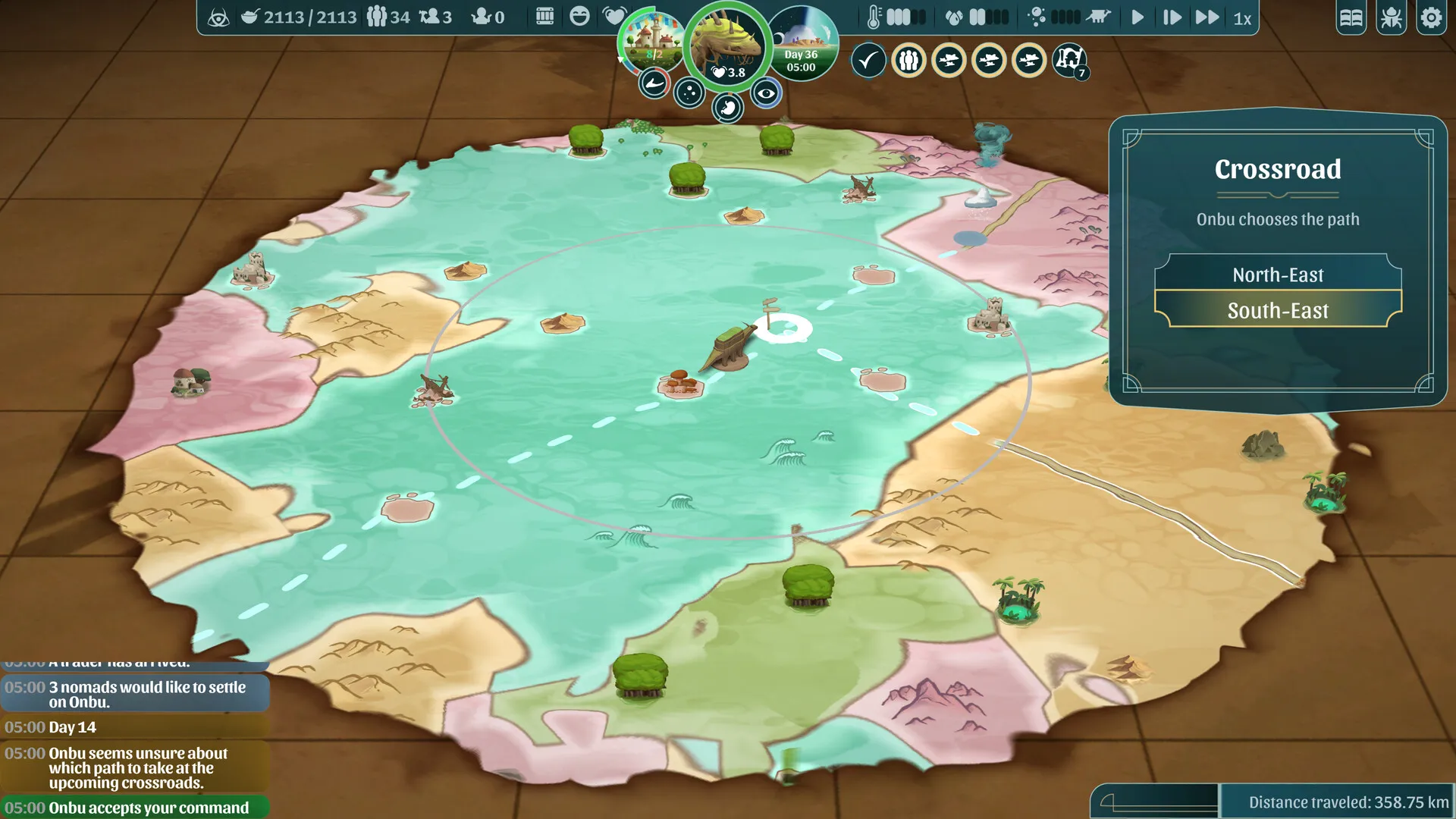
This tension is amplified by the magnificent creature at the center of it all. Onbu is not a car you can steer. It is a character, a willful and ancient being whose decisions are partially outside your control. You can build a horn tower to signal a desired direction at a fork in the road, but Onbu, with its own mysterious whims, might simply choose the other path.
I had moments where I had prepared my scavenging parties for a resource-rich ruin ahead, only for Onbu to take an unexpected turn towards a barren wasteland, completely upending my plans and forcing me into pure crisis management. This lack of absolute control is a masterful design choice, creating a persistent, low-grade anxiety that makes every moment of stability feel earned.
You manage this tense relationship through a Trust mechanic. You can order your people to feed Onbu special meals, pet its massive head, or administer medicine when it’s sick. These actions build trust, making it more likely to heed your commands. Conversely, you can choose to exploit your host, harvesting its blood to create powerful technologies or drilling into its back for stone.
This presents what should be the game’s emotional core: a profound moral dilemma about your relationship with nature. Is it a partnership or a resource to be consumed? Sadly, this is where the game’s mechanical execution undermines its narrative promise. The consequences for exploitation are disappointingly slight. Harming Onbu damages trust, but a few tasty mushrooms or a quick pet session quickly smooth things over.
The system incentivizes a parasitic playstyle, as the benefits of draining Onbu’s resources often far outweigh the minor inconvenience of rebuilding trust. Unlike the gut-wrenching choices in Frostpunk, where enacting a harsh law leaves a permanent scar on your society, the “moral choices” here become simple, cold calculations. The potential for a deep, symbiotic story is reduced to a numbers game, leaving the relationship with Onbu feeling transactional rather than truly sacred.
A Storybook Apocalypse
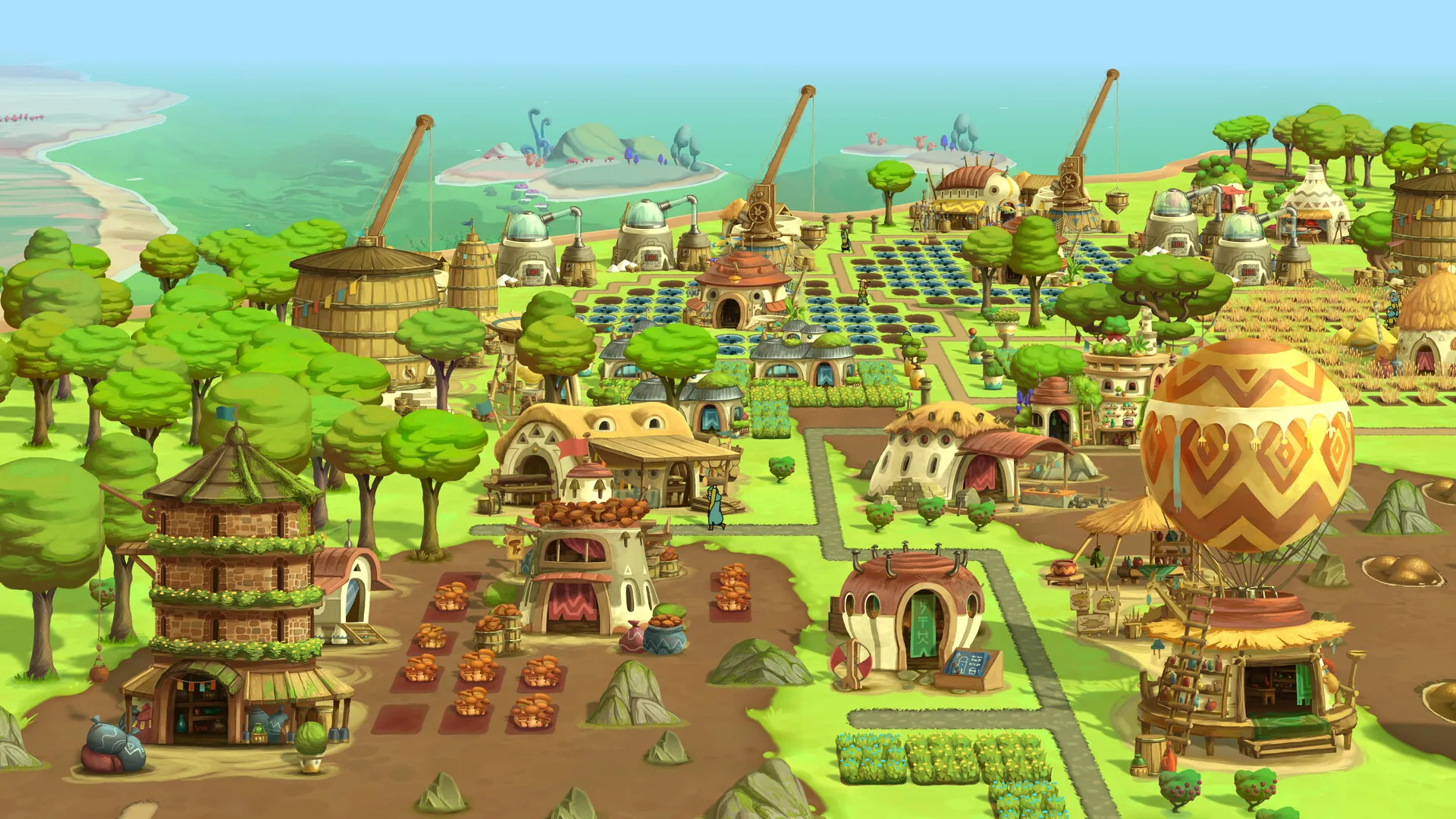
From a directorial standpoint, The Wandering Village is a visual masterpiece. The charming, hand-drawn art style imbues the post-apocalyptic world with a strange and compelling warmth. Every asset, from the rustic huts to the strange, bio-mechanical structures you build, feels crafted with care. The game’s most impressive cinematic tool is its incredible zoom functionality.
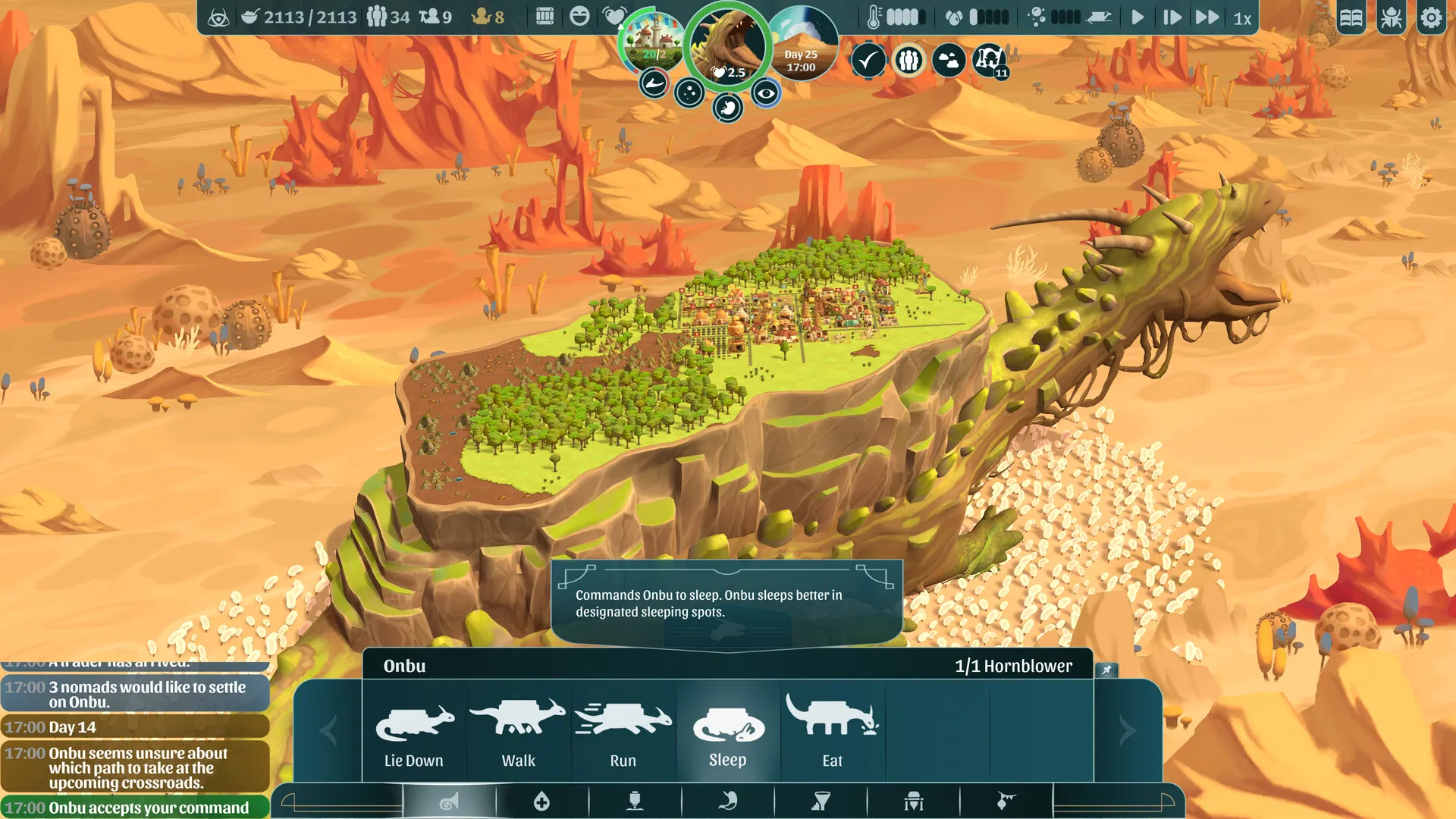
In one moment, you can be pulled far back, observing your village as a tiny, intricate civilization teeming on the back of a continent-sized creature. It’s a view that inspires awe. In the next, you can zoom in so close that you can see the individual animations of your villagers as they go about their tasks: a cook stirring a pot, a farmer tending to a crop, a doctor grinding herbs. This ability to shift perspective from the macro to the micro creates a powerful bond with the world you are trying to save.
This makes the rigid, fixed camera angle a genuine source of frustration. In a world with such stunning art and a unique, layered topography, the inability to rotate the view feels like a significant missed opportunity. You want to see what your village looks like from the other side, to admire the way your buildings conform to the curve of Onbu’s spine, but the game keeps you locked in a single isometric perspective. It’s a standard convention of the genre, but one that feels particularly limiting in a game that otherwise invites you to immerse yourself so deeply in its world.
The audio landscape is a similar mix of brilliance and blemishes. The Mongolian-inspired soundtrack is wonderful, its tribal rhythms and gentle melodies perfectly capturing the nomadic spirit of your people. However, as a film score, it often falls short. It provides a pleasant ambiance but rarely swells to heighten the tension during a crisis.
A sudden storm or a poison spore outbreak feels less dramatic when the music remains placid and calm. The most dissonant note is the sound design for Onbu itself. A creature of such immense size and age should inspire terror and wonder with its calls.
Instead, its vocalizations are high-pitched and screechy, sounding more like a malfunctioning droid from a sci-fi movie than a majestic beast. Imagine if its roars were deep, resonant rumbles that shook the screen, sounds that conveyed its colossal weight and ancient power. It’s a small detail, but it’s a crack in the otherwise masterful world-building.
Systems Under the Hood
When you dig into the game’s mechanical skeleton, you find a framework that is mostly elegant but marred by some curious design choices. The technology tree, for instance, is a model of clarity. It’s simple and linear, with each research project you complete providing an immediate and tangible benefit.
Unlocking a new building or an ability to help Onbu always feels like a meaningful step forward, a satisfying reward that directly enhances your strategic options. This clear sense of progression is a major strength, constantly pulling you forward to see what you can discover next.
This makes the shallowness of the building upgrade system all the more baffling. Once you research the ability to upgrade certain structures, you are presented with what feels less like a strategic choice and more like a test of common sense. The hospital upgrade is the classic example: one option provides a small, reliable buff, while the other introduces an absurdly high-risk gamble, like a 5% chance that any patient treated there will instantly die.
There is no situation where the risky choice is strategically sound, which effectively removes the choice altogether. This design pattern of “sensible option versus chaotic, bad option” repeats across other buildings, making the entire upgrade system feel like a tacked-on feature rather than a core part of the game’s strategic depth. Good strategy games are built on interesting trade-offs, and this system offers none.
The experience is further dented by quality-of-life issues that can grind the game’s otherwise pleasant pacing to a halt. The inability to move most buildings once they are placed is a significant source of friction. Misplacing a key structure in the early game means you must eventually spend precious resources to demolish it and then rebuild it correctly, a tedious process that punishes experimentation. An even greater frustration comes from the clumsy resource management between your villagers and Onbu. There is no way to ration supplies.
This leads to infuriating scenarios where you are desperately trying to craft an antidote for a poisoned Onbu, only to watch helplessly as your villagers consume the last of your herbs to treat their minor ailments. As the leader, you are given no tool to intervene, stripping you of agency at a critical moment. These are not game-breaking flaws, but they are persistent annoyances that create frustration in places where there should be interesting challenges.
The Final Path
The Wandering Village is a game built on a brilliant, unforgettable concept. Its core loop of building, adapting, and surviving on the back of a living, breathing world is one of the most compelling experiences the genre has offered in years.
The constant tension between its cozy, beautiful art style and the brutal realities of its survival mechanics creates a powerful dynamic that keeps you invested through every crisis and every moment of peace. For its price, the game offers a generous amount of content.
A single playthrough can provide dozens of hours of strategic challenge, and with different difficulty settings and game modes, there is ample reason to guide your people on another journey across the blighted world. Replayability comes from mastering the biomes and testing new strategies against the game’s unforgiving systems.
It is by no means a perfect creation. The promise of a deep, moral relationship with Onbu is squandered by shallow mechanics, and several quality-of-life frustrations can occasionally sour the experience. Yet, these feel like blemishes on an otherwise stunning work of art.
In an industry so often dominated by sequels and safe bets, The Wandering Village is a testament to the power of independent development. It is ambitious, heartfelt, and explores a creative idea with a confidence that is truly admirable. For any fan of city-builders, survival simulations, or simply unique stories, this is a journey that is absolutely worth taking.
The Review
The Wandering Village
The Wandering Village is an ambitious and beautiful survival city-builder with an unforgettable premise. Its core loop of nurturing a village on the back of a living creature is captivating, and its visual design is a marvel. However, the experience is held back by shallow moral mechanics and frustrating design quirks that keep it from reaching true greatness. It's a memorable journey that champions a wonderfully unique idea, making it easy to recommend despite its flaws.
PROS
- A truly unique and imaginative core concept.
- Stunning hand-drawn art style with impressive zoom capabilities.
- Engaging and accessible survival and city-building mechanics.
- A powerful sense of atmosphere and constant tension from environmental changes.
- The unpredictability of Onbu adds a compelling layer of strategic challenge.
CONS
- The moral choice system involving Onbu is superficial and lacks emotional weight.
- Frustrating quality-of-life issues, like the inability to move key buildings.
- Clunky resource management tools create unnecessary friction.
- The building upgrade system feels underdeveloped and offers false choices.
- Audio design is inconsistent, with a score that often fails to build tension.