




























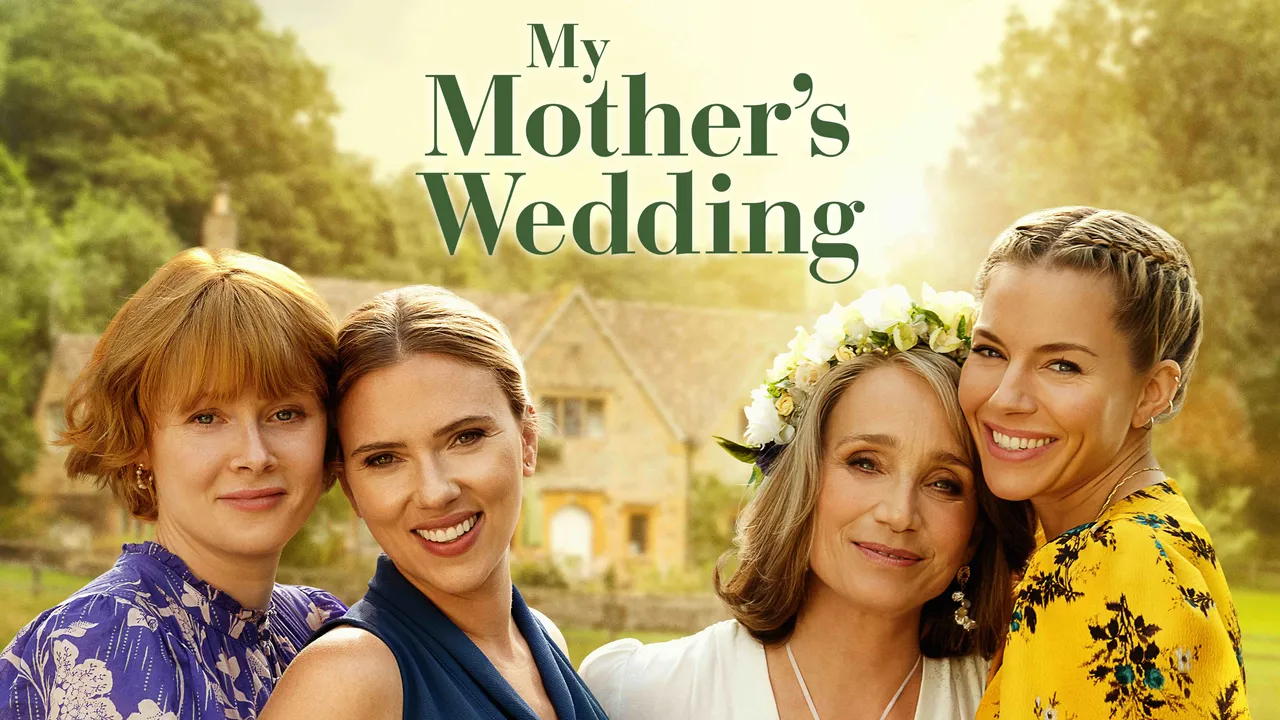

A wedding in the English countryside serves as the stage, but the primary guests are ghosts. In My Mother’s Wedding, three sisters convene for the third marriage of their mother, Diana, a woman twice made a widow by the British Royal Navy.
The specters of two dead fathers, both pilots lost in service, hang in the air, their absence a palpable presence that has warped the architecture of their daughters’ lives. The sisters arrive: Katherine, a military woman; Victoria, an actress; and Georgina, a nurse. Each carries a distinct version of the family trauma, their personal histories a collection of redacted files and unresolved grief.
The film sets out to ask how the dead steer the living, positioning this weekend reunion as a catalyst for a confrontation with the past. It is a premise promising a tense psychological inquiry into the deterministic nature of loss, a look at how identity is not built but inherited, often in fragments. The question is whether the film possesses the nerve to conduct a proper investigation.
Portraits in Isolation
The film’s architecture requires a tense, intricate interplay between its three central figures, yet the execution renders them as isolated planets, their orbits never quite intersecting. Scarlett Johansson’s Katherine is a case study in psychological armor.
As a Royal Navy captain, her rigid posture and clipped, declarative sentences are a form of self-policing, a desperate attempt to impose military order on a chaotic internal landscape. The performance is all surface, a tautly held mask, but the film’s flat lighting and unimaginative framing give us no glimpse of the face beneath.
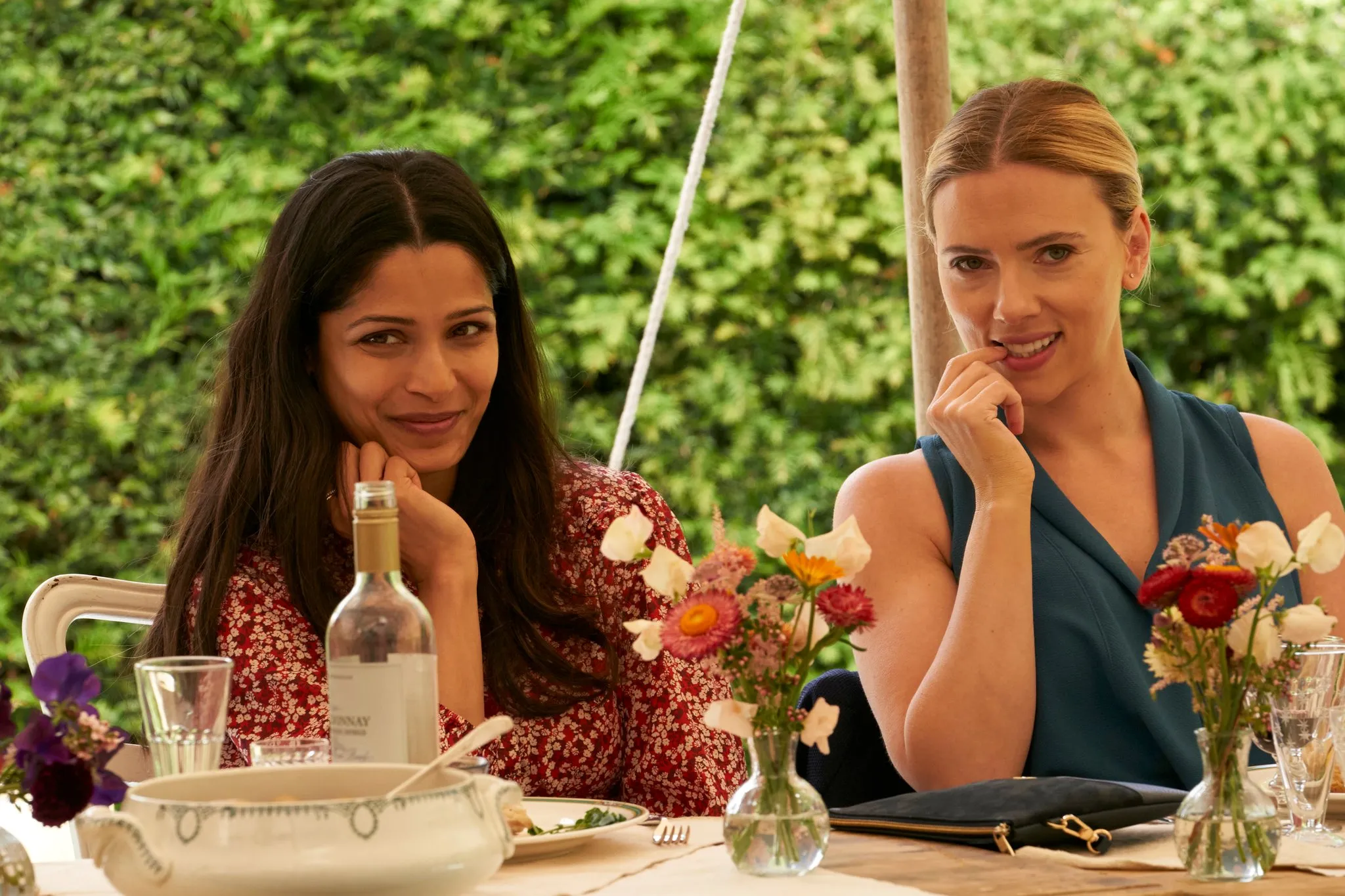
Her inconsistent English accent becomes less a minor flaw and more a symptom of the character’s rootlessness, an identity that feels borrowed and ill-fitting. The emotional void extends to her relationships; her scenes with Freida Pinto, playing her partner, are exercises in dead air, two people occupying the same space without creating a shared world.
Sienna Miller’s Victoria, the celebrity sister, presents a more intriguing specimen: a self-made femme fatale whose chosen victim is her own history. She commodifies her family’s pain for talk-show consumption, a wry commentary on modern grief that the film is too timid to explore.
Miller finds a brittle, compelling energy in the role, her performance a small, flickering bulb in a dimly lit production. Yet the script strands her, most notably in a bafflingly staged bedroom scene that lands with the alienating thud of a misplaced Brechtian device. Standing opposite her is Emily Beecham’s Georgina, the youngest, whose life has curdled into a quiet stew of resentment.
Beecham’s performance is subtle and effective, but the script betrays her with a narrative cul-de-sac: a flimsy, sitcom-grade mystery about a cheating husband. This subplot is an insult to the character’s predicament, reducing legitimate existential pain to a cheap paperback diversion. The sibling dynamic, the very heart the film needs to pump, is stillborn. They are three solo instruments playing in different keys, producing not harmony or even dissonance, but noise.
An Unsteady Hand
As a directorial debut, the film exposes a critical failure of nerve. Kristin Scott Thomas’s visual approach is marked by a pervasive, risk-averse conventionality. The family’s psychic wounds and unspoken tensions demand a visual language of shadow and depth, of claustrophobic framing that mirrors their emotional imprisonment. Instead, the screen is filled with brightly lit, static compositions.
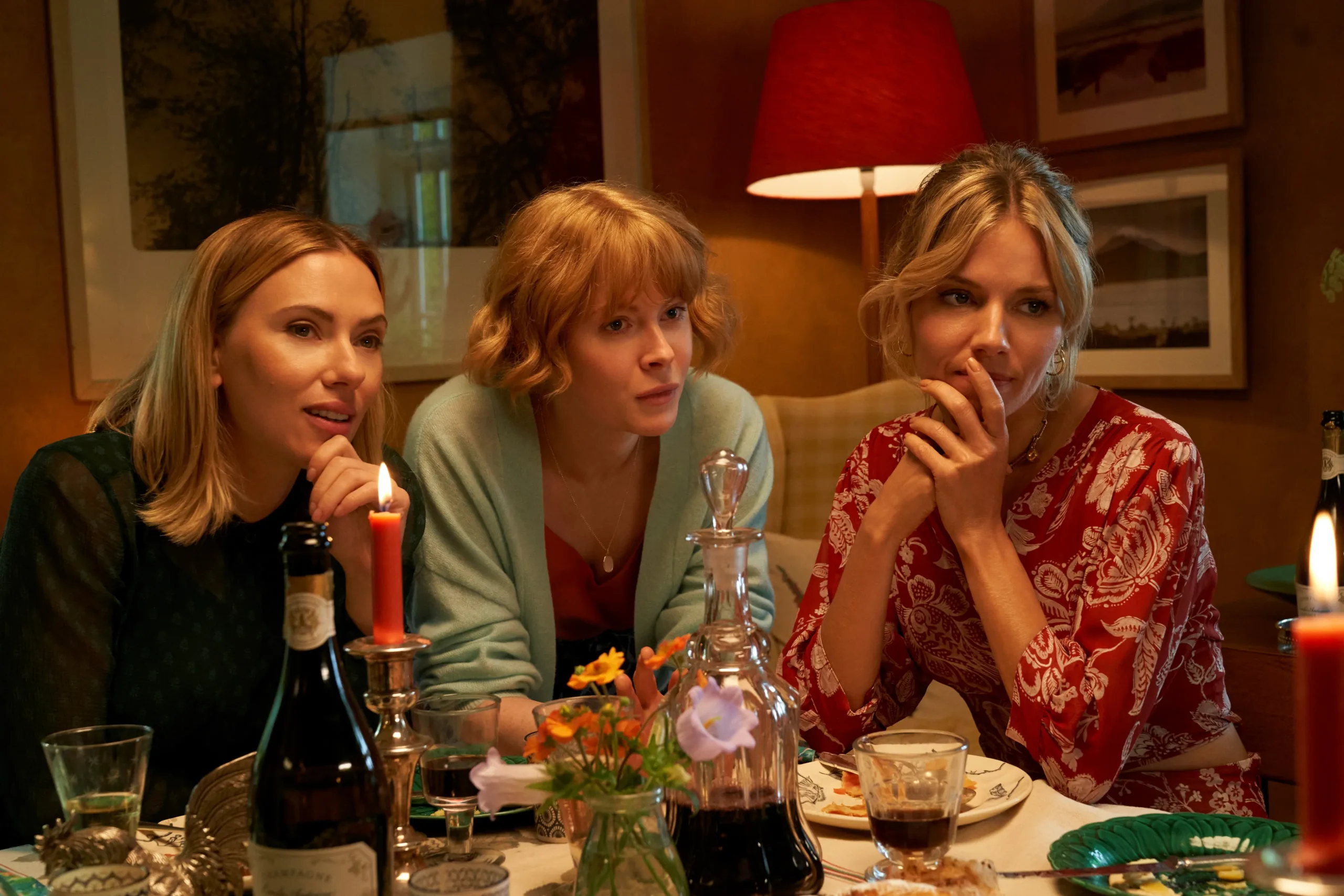
Conversations are captured in rote shot-reverse-shot patterns that drain them of all subtext and dynamism. It is a visual scheme that feels more suited to a television procedural than a serious cinematic inquiry into the soul. This aesthetic blandness makes the picture’s ninety-minute runtime feel like a long, flat road with no landmarks. The pacing is limp, mistaking slowness for deliberation. Key moments that should simmer with unspoken feeling simply evaporate on screen, leaving no residue.
The film’s ending is its most egregious betrayal, a hurried and unearned resolution that feels less like a natural conclusion and more like a panicked capitulation to convention. After establishing a complex web of lifelong trauma, the script resolves it with a single, simplistic conversation. As an actor, Scott Thomas is the film’s most stable element.
Her Diana possesses a quiet, lived-in authenticity, a sense of a woman who has endured the unthinkable. Yet the ultimate irony is her peripheral status within her own story. The director has framed herself as a minor character, a catalyst who then recedes into the background. She is a ghost at her own séance, a structuring absence in the very narrative she has orchestrated, a paradox the film is wholly uninterested in exploring.
A Confusion of Tongues
The film’s tonal architecture is a ruin. It is a work at war with itself, unable to decide if it is a somber meditation on grief or a lighthearted family comedy, and in its indecision, it fails at being either. Moments of genuine dramatic potential are consistently undercut by jarring intrusions of baffling humor.
A slapstick gag involving nudity or a sudden fit of hysteria is deployed with the subtlety of a thrown pie, shattering any carefully constructed mood. This is not the dark, knowing wit of a filmmaker in control; it is the clumsy fumbling of one who fears the silence. These comedic ruptures are not merely distracting; they are an act of aesthetic sabotage, cheapening the very emotions the film purports to take seriously.
This confusion is crystallized in the decision to render Katherine’s traumatic memories as black-and-white animated sequences. The device is a self-conscious flourish, a signal of artistic ambition that the film cannot sustain. The animations are clean, sterile, and emotionally inert—a clip-art rendering of trauma.
By presenting messy, painful memories in such a tidy package, the film betrays its subject. It’s a stylistic choice that creates only distance. The screenplay operates with a similar lack of nuance, mistaking confession for revelation. Characters do not have conversations; they deliver monologues detailing their psychological states. It’s a script that has no faith in subtext, that insists on speaking its themes aloud, robbing the viewer of any interpretive work. The experience is not one of engagement but of passive reception.
An Empty Frame
The film assembles the components for a powerful story of legacy and loss but fails at the crucial stage of construction. The promising premise is systematically dismantled by a script that prefers platitudes to insight, by direction that chooses safety over style, and by a central trio of performances that generate no collective spark.
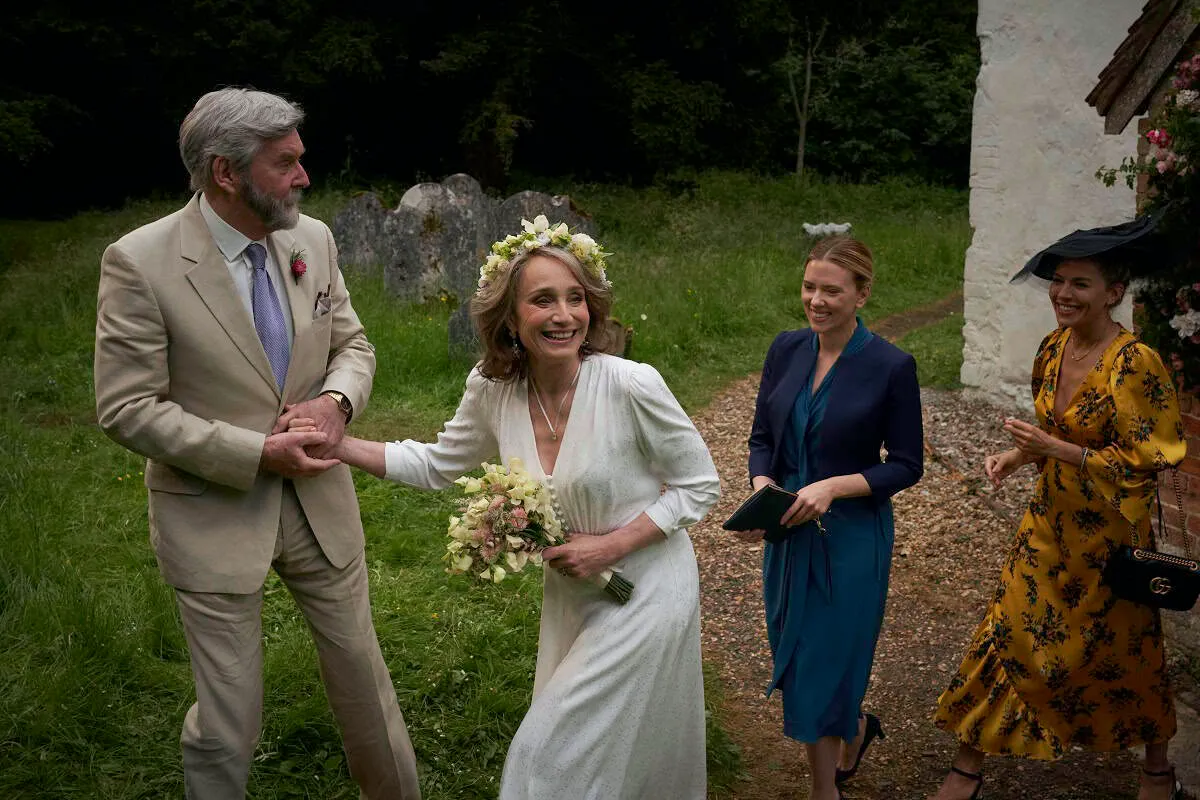
Its emotional core is hollow. The narrative builds toward a catharsis that never arrives, leaving a vacuum where a powerful emotional truth should be. The film’s greatest failure is its cowardice. It sets up a complex, messy, and painful human problem—the inescapable gravity of the past—and then solves it with a facile, sentimental gesture.
This tidy resolution feels like a profound betrayal of the initial inquiry. The emptiness of the film’s final impression is a direct consequence of the emptiness of its frames and the vacant emotional spaces between its characters. What is left is not a rich portrait of a family grappling with its ghosts, but a diorama of feeling, meticulously arranged and entirely lifeless. It is an empty frame.
“My Mother’s Wedding” is a comedy-drama film that premiered at the Toronto International Film Festival on September 7, 2023.
Full Credits
Director: Kristin Scott Thomas
Writers: John Micklethwait, Kristin Scott Thomas
Producers: Finola Dwyer, Steven Rales
Executive Producers: Kristin Scott Thomas, John Micklethwait, Caroline Levy
Cast: Scarlett Johansson, Sienna Miller, Emily Beecham, Freida Pinto, Thibault de Montalembert, Sindhu Vee, Joshua McGuire, Mark Stanley, Kristin Scott Thomas, Giulio Berruti, Samson Kayo, James Fleet, Roger Ashton-Griffiths, Daniel Cook
Director of Photography (Cinematographer): Yves Bélanger
Editors: Joan Sobel
Composer: Rolfe Kent
The Review
My Mother's Wedding
Despite a talented cast and a premise rich with potential, My Mother's Wedding is a misfire of profound emotional inertia. Its flat direction, tonal confusion, and a script that favors exposition over genuine feeling result in a hollow family portrait. It is a film that mistakes sentimentality for substance, leaving the viewer with an experience that is both dramatically inert and ultimately forgettable.
PROS
- Sienna Miller’s energetic performance provides the film’s few moments of genuine life.
- Kristin Scott Thomas is authentic and grounded in her role as the matriarch.
- The core premise, exploring the long shadow of grief over a family, is compelling in theory.
CONS
- Flat, conventional direction that fails to generate a compelling atmosphere.
- A jarring and inconsistent tone that shifts clumsily between drama and ineffective comedy.
- The script relies on on-the-nose dialogue and weak, clichéd subplots.
- A fundamental lack of believable chemistry between the three lead actresses.
- An emotionally unearned ending that feels abrupt and simplistic.
- Odd stylistic choices, like the animated flashbacks, feel out of place.







