





























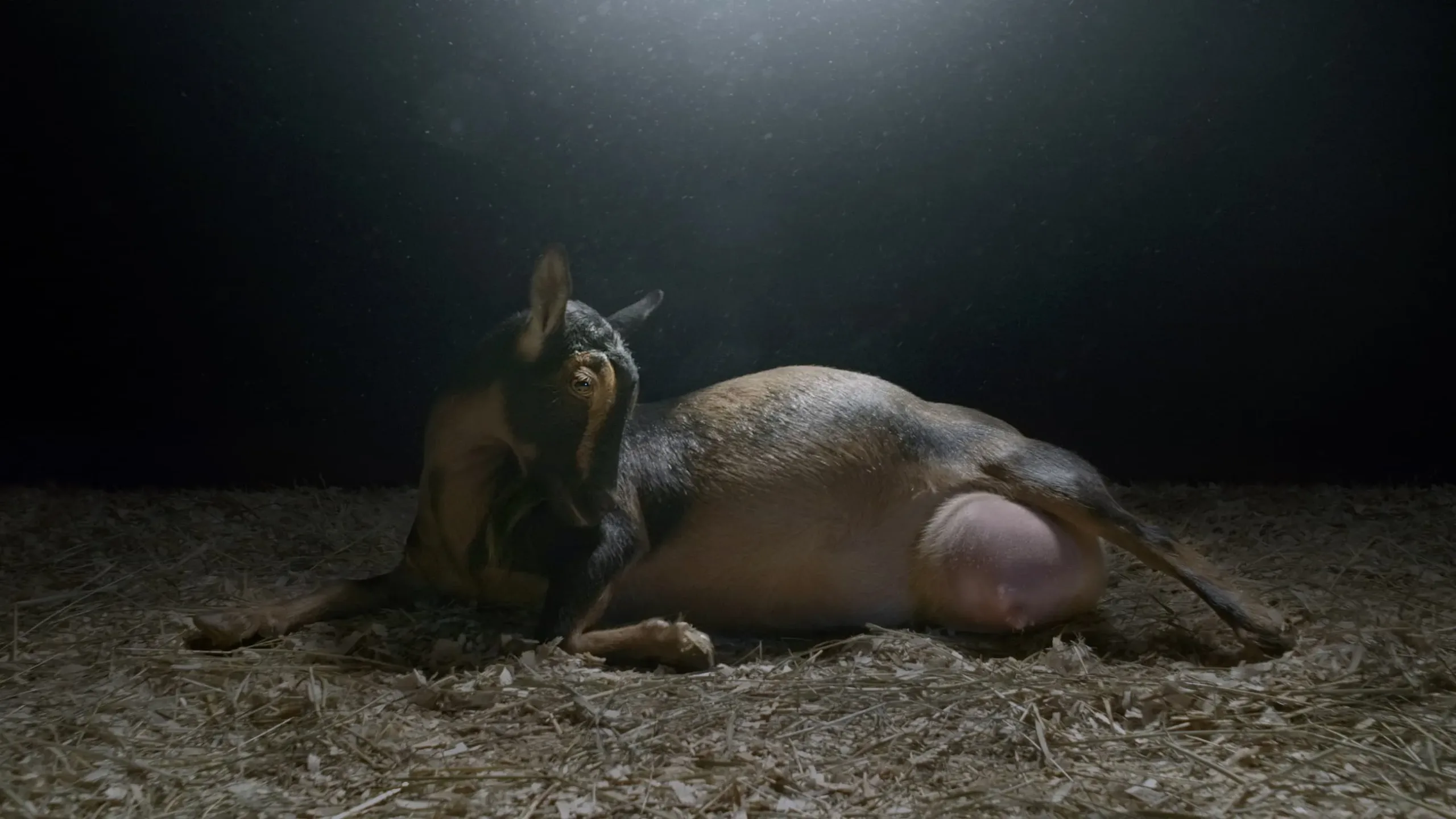
Scott Cummings’s experimental documentary Realm of Satan is less an investigation and more a presentation, a series of curated portraits from within the modern Church of Satan. The film opens not with an invocation but with the messy, primal act of a goat giving birth, its shaky offspring a fitting mascot for a film that is itself a new, strange creature.
This sequence immediately establishes the project’s intent: to be unflinchingly direct, stripping away the comfort of context. From there, Cummings plants his camera and simply watches. There are no guiding interviews, no reassuring narrator to connect the dots.
The film presents a collection of moments from the lives of its subjects, challenging the audience to assemble its own meaning from the provocative and the profoundly normal. It is a work that does not ask for understanding, but silently demands a reaction.
The Static Eye of the Beholder
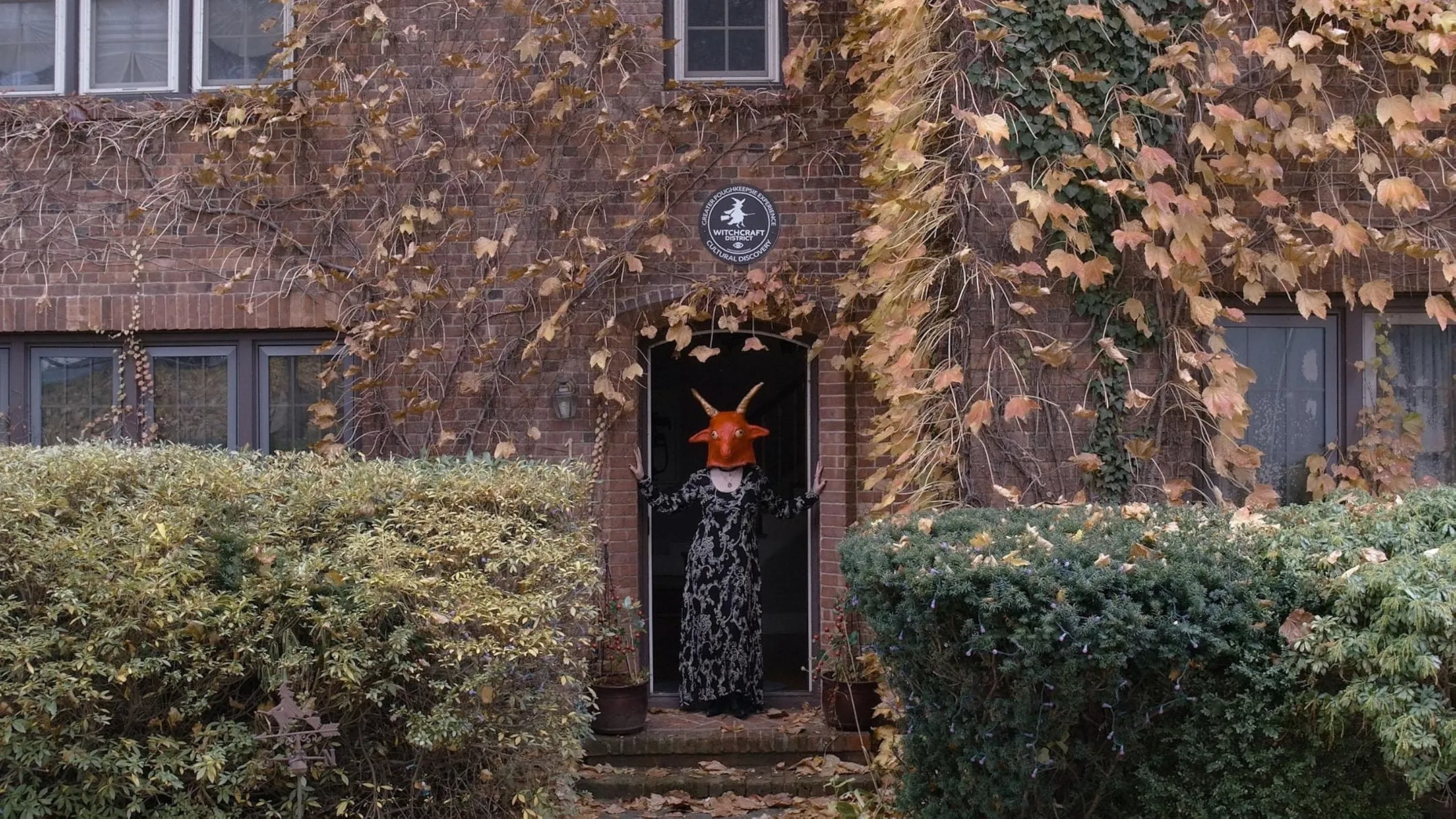
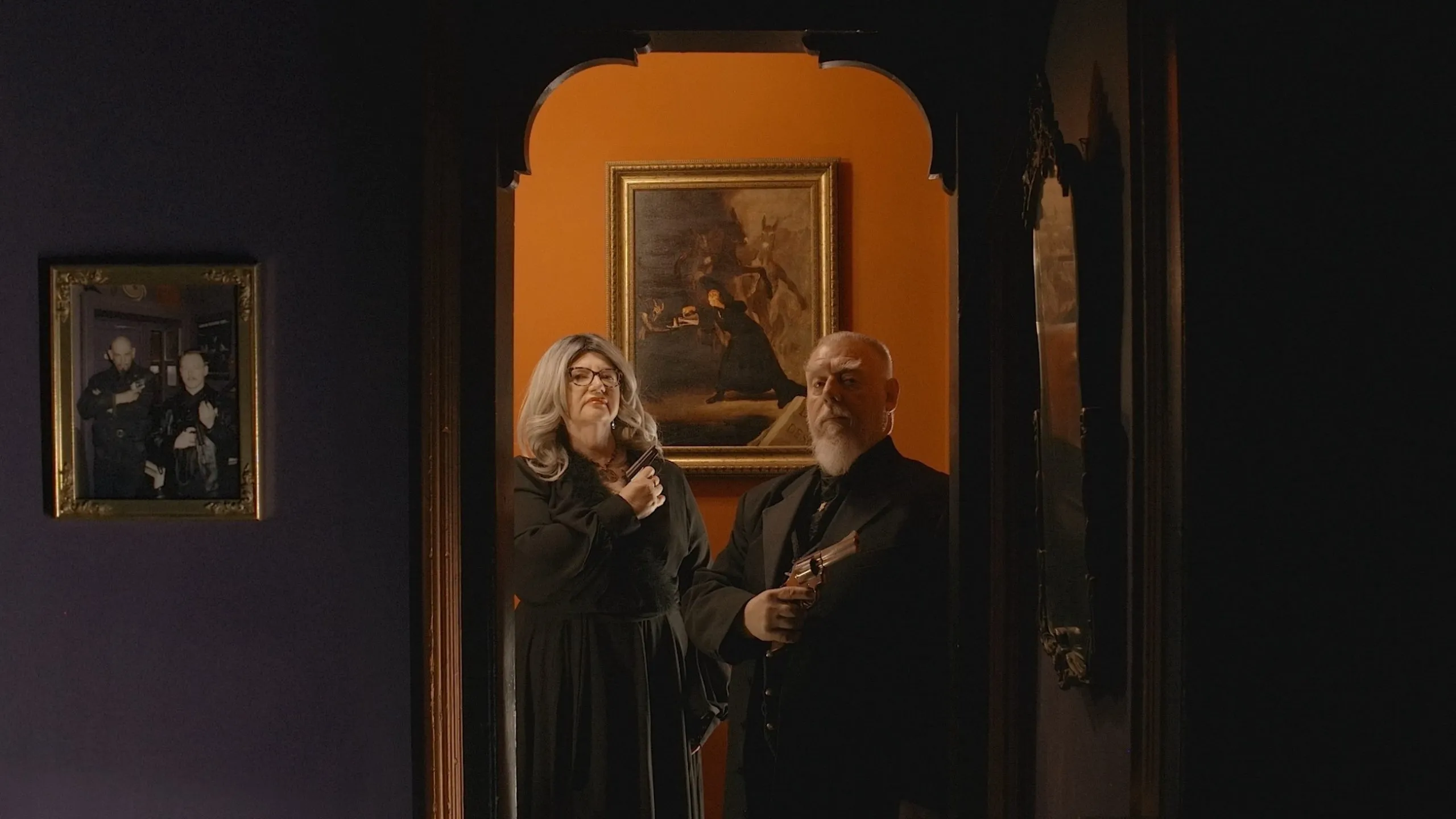
The film’s aesthetic is its argument, a philosophy articulated through cinematography. Cummings employs a rigorously formal style, dominated by a static, locked-down camera that transforms domestic spaces into something akin to museum dioramas or the unsettling stillness of a Gregory Crewdson photograph.
His compositions are fussy, deliberate, and often perfectly symmetrical, giving the impression that we are not spying on life but observing a carefully arranged stage for our consideration. The effect is twofold: it creates a sense of analytical distance, yet the extended duration of the takes forces an uncomfortable intimacy. We are compelled to scan every detail within the frame, to notice how the light hits a cheap skull from a Halloween store with the same reverence it gives a human face.
The prominent color palette is, unsurprisingly, a strict and unyielding procession of reds and blacks. This is more than a simple reflection of the subjects’ tastes; it is the visual grammar of rebellion itself, a choice that carries with it a history of anarchist flags and Expressionist angst. This rigid observational method creates a confrontational silence.
With no narrative voice to direct our thoughts, the responsibility for interpretation falls squarely and heavily on us. Yet, Cummings is not an absolute purist. The film is punctuated by moments of cinematic flourish—a camera snaking through a hallway with predatory smoothness, or sly editing tricks and computer-generated effects that grant a subject glowing red eyes or cloven hooves. These stylistic winks are a crack in the documentary veneer, a deliberate break from realism that reminds us we are watching a construction, not a reality.
Where the Banal and the Blasphemous Meet
The central tension in Realm of Satan exists in the friction between occult ritual and the crushing routine of everyday life. The film finds its most arresting and often humorous power in this juxtaposition, crafting a unique species of suburban gothic.
We see a man painstakingly applying black-and-white corpse paint, a mask of performative evil, as the mundane world continues around him—his partner unloads a dishwasher, a child is heard off-screen asking to watch television. The scene is a perfect tableau of modern alienation; he is both a fearsome icon and just another guy getting ready in the morning. He is later seen hanging laundry in full regalia, the dark lord of the fabric softener.
This is the film’s recurring thesis: Satanic paraphernalia sits comfortably within what appear to be ordinary, even affluent, middle-class homes. Ornate skulls and pentagrams share shelf space with an Elvis statuette or a Playbill for Phantom of the Opera, the signifiers of rebellion domesticated into simple home decor.
The ceremonies themselves vary wildly in tone, running the gamut from the deeply serious to the unintentionally comical. Some have the grave atmosphere of deeply felt practice, with incantations spoken in multiple languages by robed figures. Others, like a BDSM gathering where the dominant sound is the awkward, rhythmic creak of PVC gimp suits, land in an uncanny valley of theatricality.
And then there is the goat. First a newborn, later seen being suckled by a female member in a provocative inversion of the Madonna and Child. The animal becomes a recurring, ambiguous symbol. Is it a nod to pagan fertility, a Baphomet-in-training, or simply a provocative prop in a film that is full of them? The film refuses to say, letting the image fester in the imagination.
A Grand Performance of Self
One begins to suspect, and then becomes certain, that performance is the primary religion on display here. The subjects are perpetually aware of the camera; their actions feel less like candid moments and more like a carefully curated presentation of a chosen identity. Having been made “in collaboration with” the Church of Satan, the film functions as a kind of authorized self-portrait, an anti-promotional promotional video.
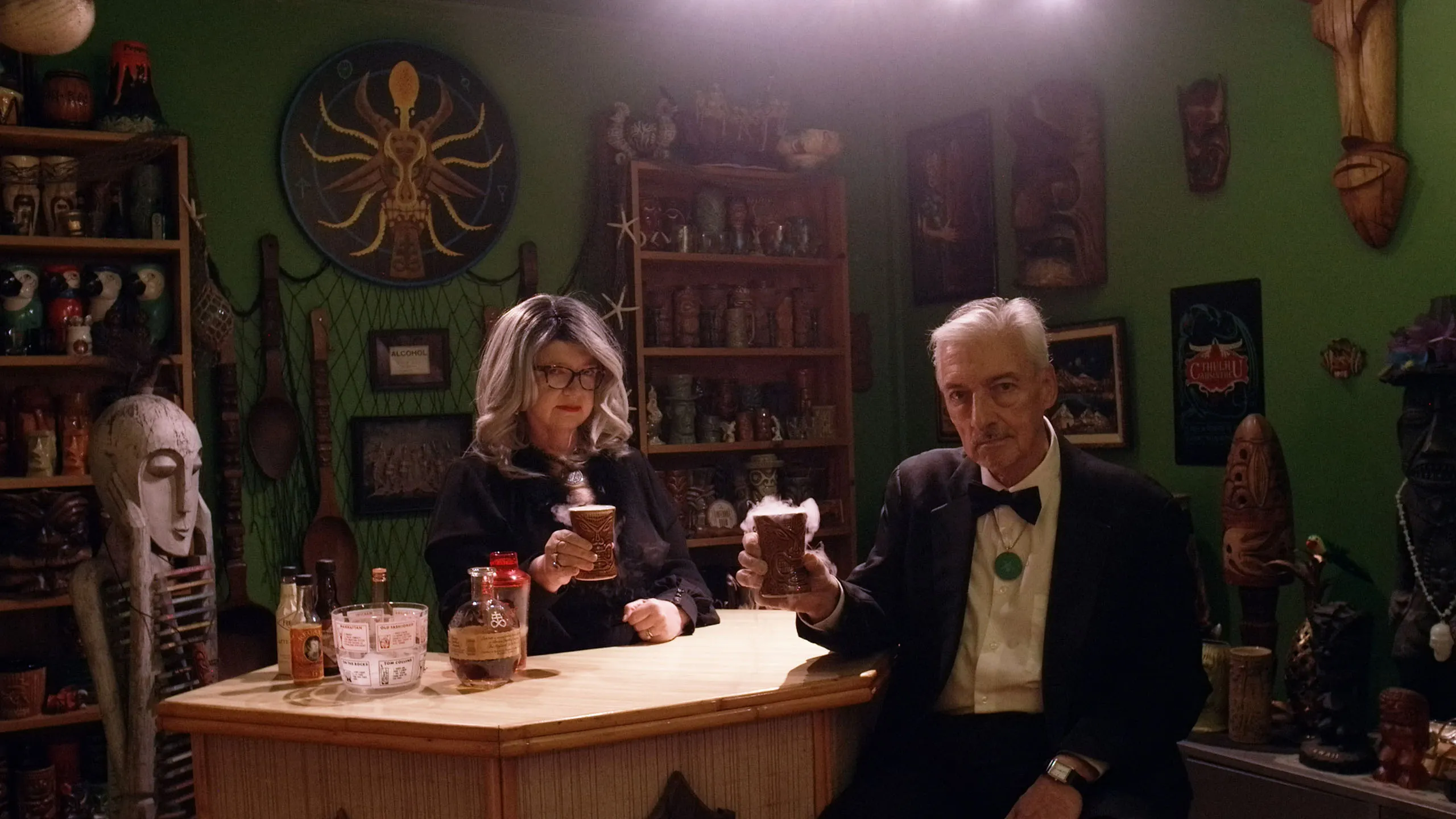
This is not an exposé; it is a declaration of image. There is a deep, pervasive sense of humor at work, a playful, tongue-in-cheek tone that suggests the participants are thoroughly in on the joke. A man with computer-generated satyr legs clops through his kitchen to stare blankly into the refrigerator. This is not the stuff of solemn devil worship. It’s cheeky self-parody, a recognition of the inherent absurdity in taking oneself too seriously.
The film’s greatest insight may be its suggestion that the Church of Satan, an atheistic organization founded by the arch-showman Anton LaVey, is less a theology and more a form of performance art rooted in radical individualism. Its members use the symbolism of the archaic and the profane not to worship evil, but to question the arbitrary rules and suffocating politeness of mainstream society.
They know their rituals are a kind of elaborate theater. This self-awareness is what distinguishes them from other belief systems they view as equally superstitious but far less honest about their own pageantry. This is not a faith of believers; it is a club for performers.
The Rorschach Test and the Arsonist
Because Realm of Satan refuses to explain itself, it becomes a Rorschach test for the viewer’s own prejudices and moral frameworks. The lack of context can be a frustrating void; for some, it will do a disservice, reinforcing tired stereotypes of non-conformists as creepy weirdos best avoided.
For others, the ambiguity is an invitation to question why these images of transgression are so unsettling. The film’s otherwise playful tone is pierced by one moment of undeniable, real-world malice: a brief news report on the arson of member Joe Netherworld’s home in Poughkeepsie. This act of religious intolerance is a stark reminder that while the members’ blasphemy may be performative, the persecution they face is not.
The contrast is potent. Still, the documentary leaves its largest questions unanswered. We learn little about the personal philosophies that led these people here. The film offers a glimpse of a curated surface, leaving us to ponder if there is anything more profound underneath the artifice.
A Portrait of the Surface
In the end, Realm of Satan is a meditation on the construction of identity. It is less a film about a religion and more a film about the power and profound limitations of an image. The lasting impression is one of deliberate opacity.
Whether this amounts to an eye-opening encounter that humanizes a misunderstood subculture or a hollow exercise in style is left entirely for the viewer to decide, which seems to be precisely the point.
Realm of Satan premiered at the Sundance Film Festival in 2024.
Full Credits
Director: Scott Cummings
Writers: Scott Cummings
Producers: Caitlin Mae Burke, Molly Gandour, Eliza Hittman, Gerald Kerkletz, Asher Levinthal, Jack Liechtung, Gabriel Merkin, Pacho Velez
Executive Producers: Joe Poletto, Sam Roseme, Cathy Tankosic
Cast: Blanche Barton, Peter H. Gilmore, Peggy Nadramia
Director of Photography (Cinematographer): Gerald Kerkletz
The Review
Realm of Satan
Realm of Satan is a visually arresting and intellectually provocative experiment that succeeds as a cinematic Rorschach test. It challenges its audience with a formal, unflinching gaze but offers little in the way of narrative or emotional entry points. A fascinating, frustrating, and starkly beautiful portrait of performance, the film is a Rorschach test that many viewers may find too opaque to decipher. It is a work to be admired for its audacity, if not necessarily enjoyed for its warmth.
PROS
- Visually striking cinematography with a highly disciplined, formal aesthetic.
- A thought-provoking and unconventional approach to the documentary form.
- Captures a fascinating and often humorous juxtaposition of the mundane and the macabre.
- Functions as a powerful examination of prejudice and performative identity.
CONS
- The detached, observational style can feel cold and alienating.
- A deliberate lack of context or explanation may frustrate many viewers.
- Offers little insight into the personal beliefs or motivations of its subjects.
- Can feel more like a curated, self-conscious art piece than a revealing documentary.







