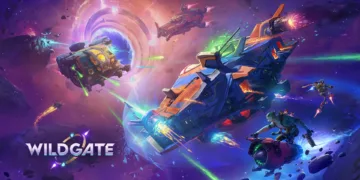




























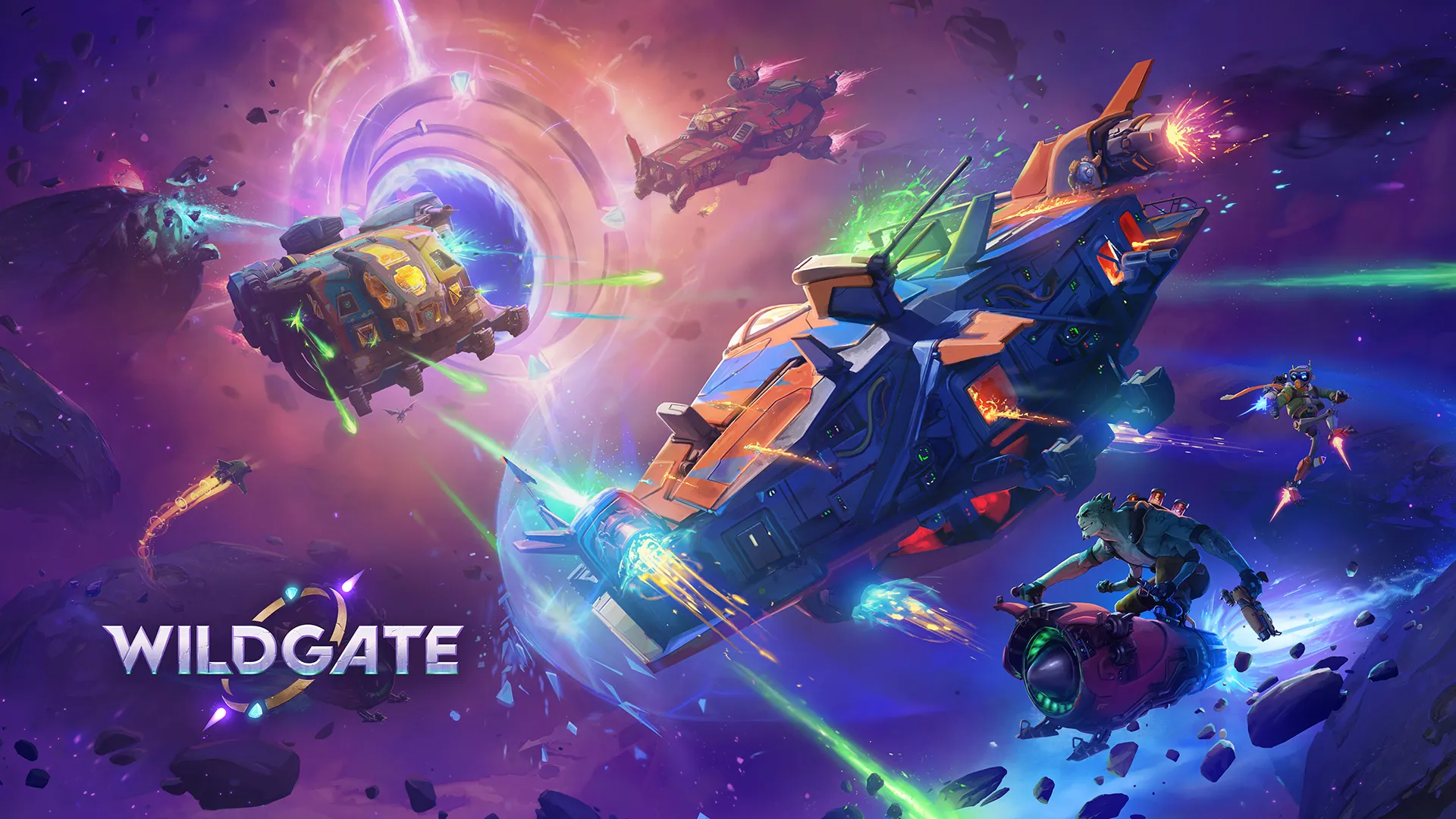

The silence of space is a fragile thing. One moment, there is only the quiet hum of your ship’s reactor. The next, alarms are screaming as enemy cannon fire rips across your shields, painting the cockpit in flashes of violent blue light. This is the constant, thrilling tension of Wildgate.
The game drops you and three crewmates into a shared spacecraft and pits you against four other teams in a dangerous sector of space known as the Reach. Your mission is to plunder derelict stations and hostile asteroids for resources, upgrade your vessel, and hunt for a priceless artifact. Securing it is one path to victory; surviving the escape is another challenge entirely.
The experience is a messy, electrifying mix of methodical ship management, frantic first-person combat, and high-stakes strategic looting. It’s a game that asks for your full attention and rewards it with some of the most memorable cooperative chaos available today.
A Crew United
Wildgate is built on a foundation that will feel familiar to anyone who has sailed the seas in Sea of Thieves: cooperation is not an option, it is the entire point. The comparison is apt, but where that game finds its rhythm in long voyages and serene exploration, Wildgate compresses the experience into a dense, high-speed tempest of action.
Every crew member has a critical, constantly shifting role. The pilot is not just a driver; they are the strategic mind who must manage power between engines and shields, use asteroid fields for cover, and position the ship for optimal firing angles.
The gunners must communicate targets and ammo levels, while the engineer becomes the frantic heart of the ship during combat, racing to extinguish fires, patch hull breaches, and repair disabled systems. A fourth member might act as a spotter, a dedicated boarder, or a scavenger, ready to leap out of the airlock at a moment’s notice.
With a group of friends on voice chat, the game sings. A simple plan to loot a station can spiral into a desperate defense against boarders, then a thrilling chase, all narrated by the panicked, triumphant shouts of your team. These sessions generate stories that last long after the match ends. When playing with silent, randomly matched players, that magic vanishes.
The experience becomes a frustrating showcase of missed opportunities. A pilot might inexplicably fly into a cosmic storm while the engineer is trying to repair the reactor. A gunner might fire uselessly at a shielded target, unaware that a crewmate is trying to board from the other side.
The game has a steep learning curve, filled with complex systems that are best learned through communication. Without a guide, a new player is left to stumble through the chaos. A good crew can transform that intimidating barrier into a shared journey of discovery, making every hard-fought lesson a collective victory.
A Pirate’s Life for Me
Each 40-minute match begins with the same urgent scramble. Your crew is dropped into a section of the Reach and must immediately start gathering resources to stand a chance against your rivals. This initial phase sends you toward nearby asteroids and abandoned outposts for some PvE action.
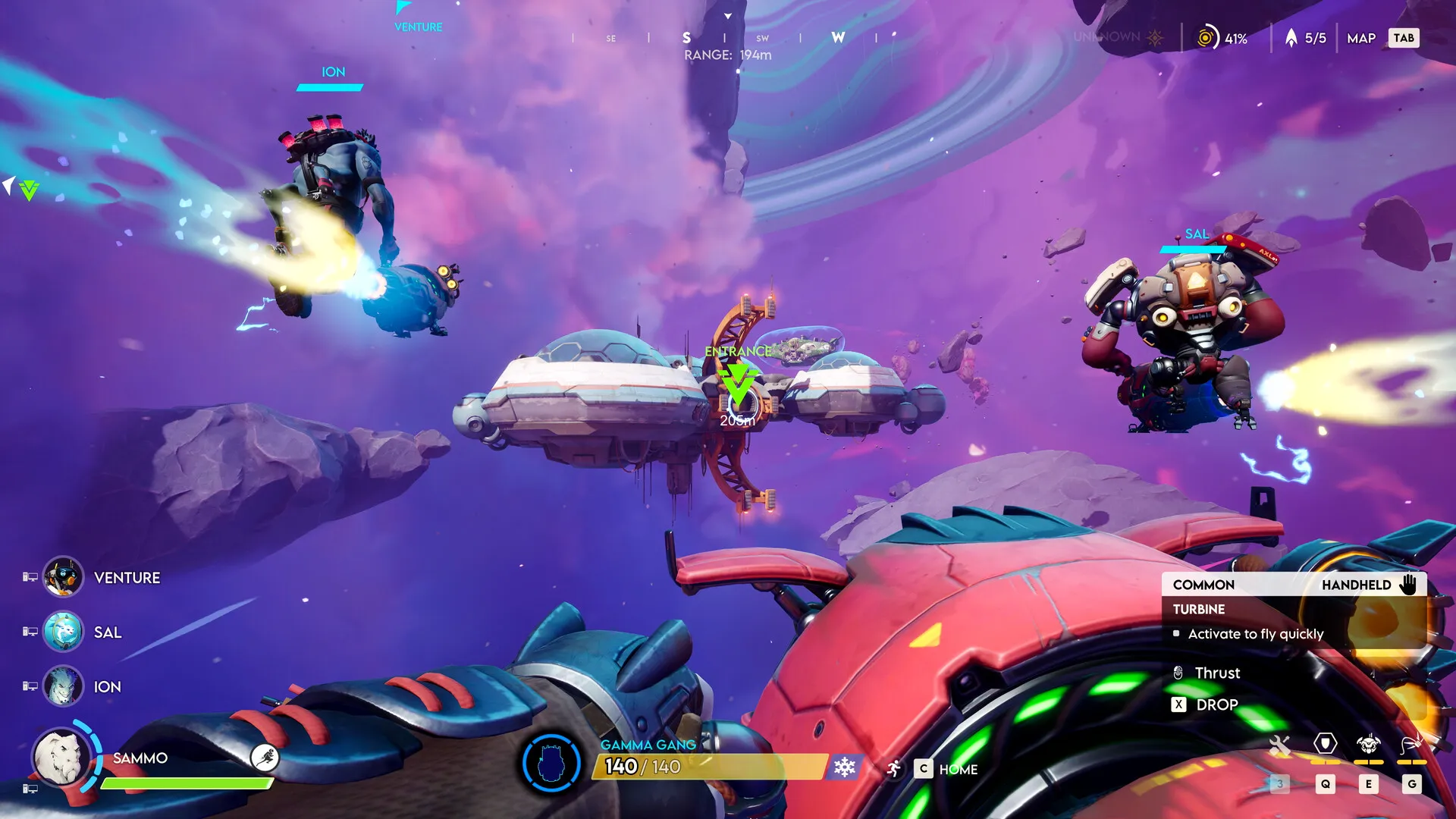
You will land your ship, fight your way through AI raiders and alien creatures—some of which look like angry booger people—and solve simple environmental puzzles to access caches of loot. These objectives are straightforward, but the rewards are the lifeblood of your operation: new cannons, stronger shields, and modules that improve your ship’s performance. Higher-difficulty zones promise rarer gear, tempting crews into taking greater risks for a decisive advantage. This initial phase of preparation is critical before you pursue one of the two main win conditions.
The primary objective is the artifact heist. Your team must locate the artifact, often protected by powerful AI guardians, and then survive long enough for a warp gate to open for your escape. Carrying the artifact makes your ship a beacon for every other crew on the map, turning the final leg of the match into a desperate, lobby-wide chase.
Yet, many matches ignore the artifact completely, devolving into a pure contest of survival where the last ship standing claims victory. This often happens because direct confrontation is faster and more immediately thrilling than the slow, methodical search for the main prize. To keep this loop from becoming too predictable, matches are injected with random hazards.
One game might feature energy-devouring space leeches that latch onto your hull, draining power and needing to be manually shot off. Another could be plagued by a massive cosmic storm that sweeps across the map, forcing any ship without a special storm shield to flee or be torn apart.
The Tools of the Trade
Your effectiveness in the Reach depends on your loadout, and Wildgate offers a respectable array of options, though the cupboards feel a bit bare at launch. You select from a roster of seven Prospectors, characters reminiscent of those from a hero shooter like Overwatch, each with game-altering abilities.
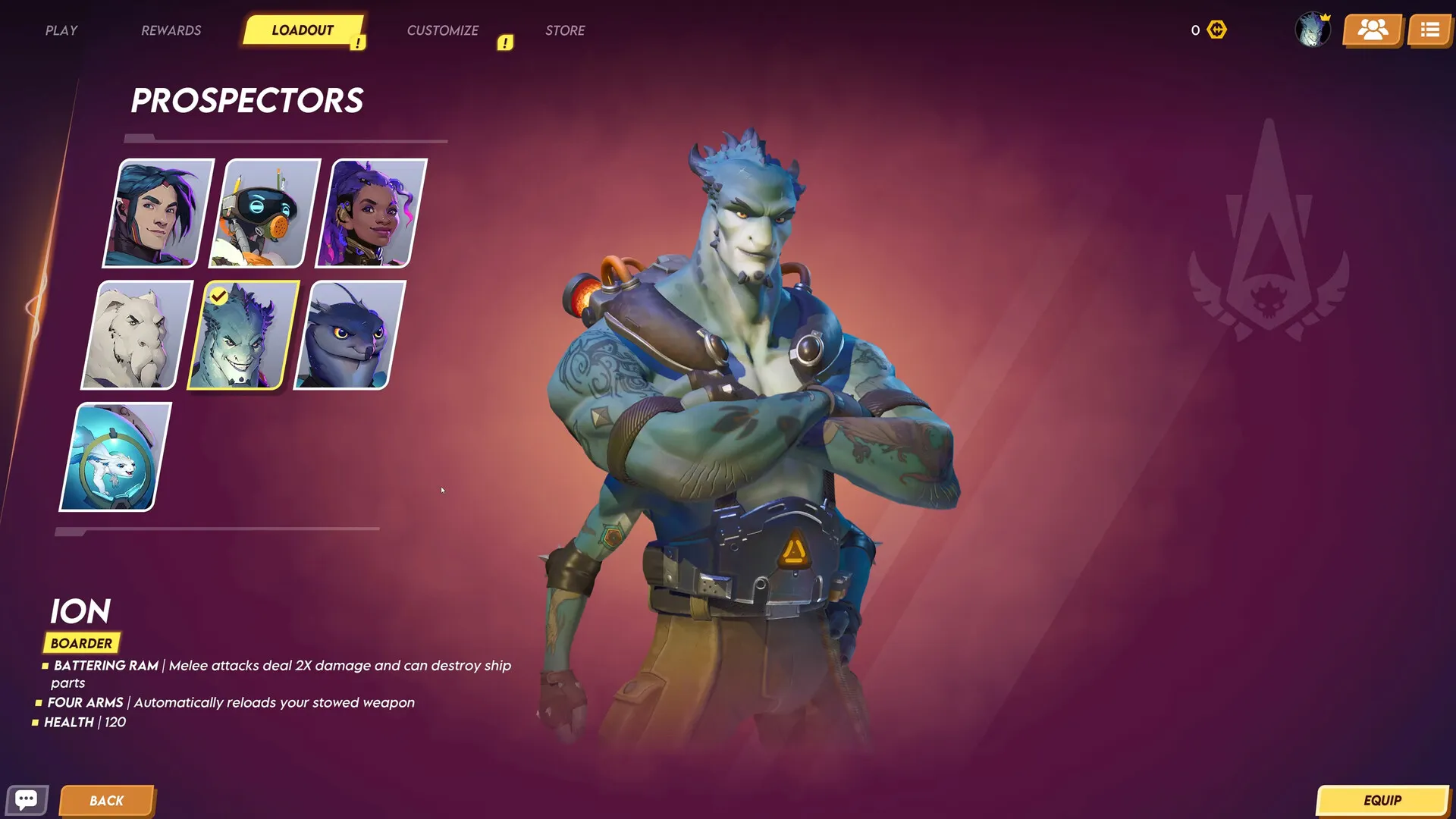
The engineer Sal can reroll unwanted loot into something useful, an ability that can single-handedly turn a bad run into a winning one by transforming junk into a critical component mid-match. Kae, the fleet-footed thief, is a menace who can teleport and telekinetically steal items directly off an enemy’s hull without ever setting foot on their ship, creating paranoia among her victims.
Then there is Ion, a four-armed brute who can simply punch enemy ships for damage. This design leads to some balance questions, as the tactical utility of Kae’s thievery or Sal’s reroll feels far greater than that of a character like Adrian, whose main perk is moving quickly through space.
The choice of ship is just as important, as the four available vessels dictate your entire crew’s strategy. The Hunter is a reliable starter, but the others offer more specialized playstyles. The Bastion is a slow-moving fortress, equipped with lockdown doors and intruder detection systems that make it a nightmare to board. The Privateer is an all-out warship bristling with eight cannon slots, encouraging an aggressive rush-down strategy at the cost of durability.
The Scout is a tiny, nimble craft that sacrifices armor and firepower for incredible speed, making it perfect for outrunning opponents for a quick objective victory. Your on-foot arsenal is limited to nine weapons but contains some memorable standouts, like a goo-firing gatling gun that can slow enemies and a shockingly effective throwable rock.
Gadgets add another tactical layer, from a gravitational device that can pull enemy ships out of position to a drill that latches onto a hull for damage over time. Unlocking all this gear is handled through an “Adventure” pass system, a progression track tied to objectives that can feel like a slow and unrewarding grind at times.
Orchestrated Chaos
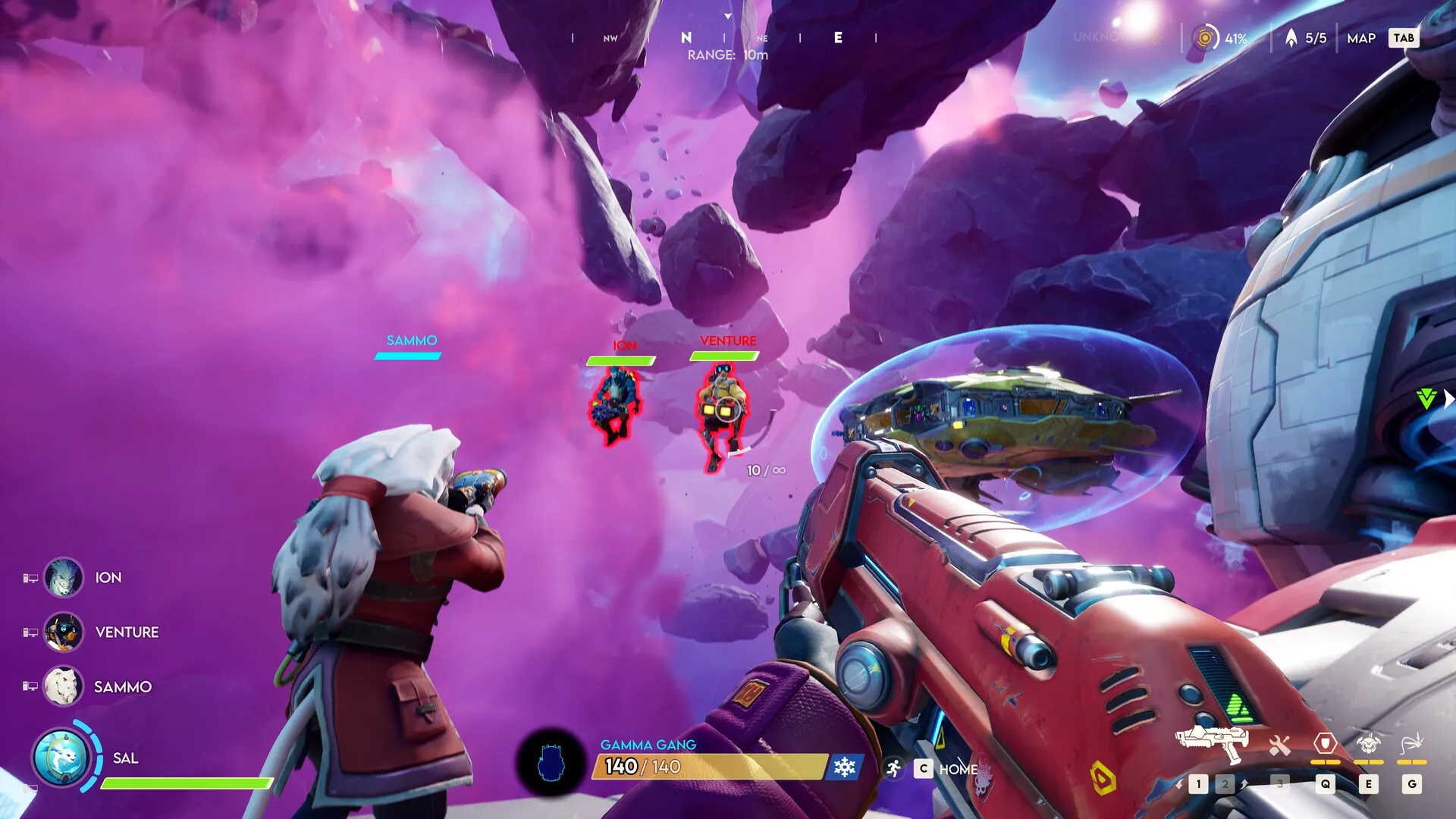
Combat in Wildgate is where its systems collide to produce true spectacle. Ship-to-ship dogfights are a tactical dance of positioning and resource management. Pilots must manage their shields, knowing that dropping them grants a significant speed boost perfect for a quick escape or repositioning for a flank.
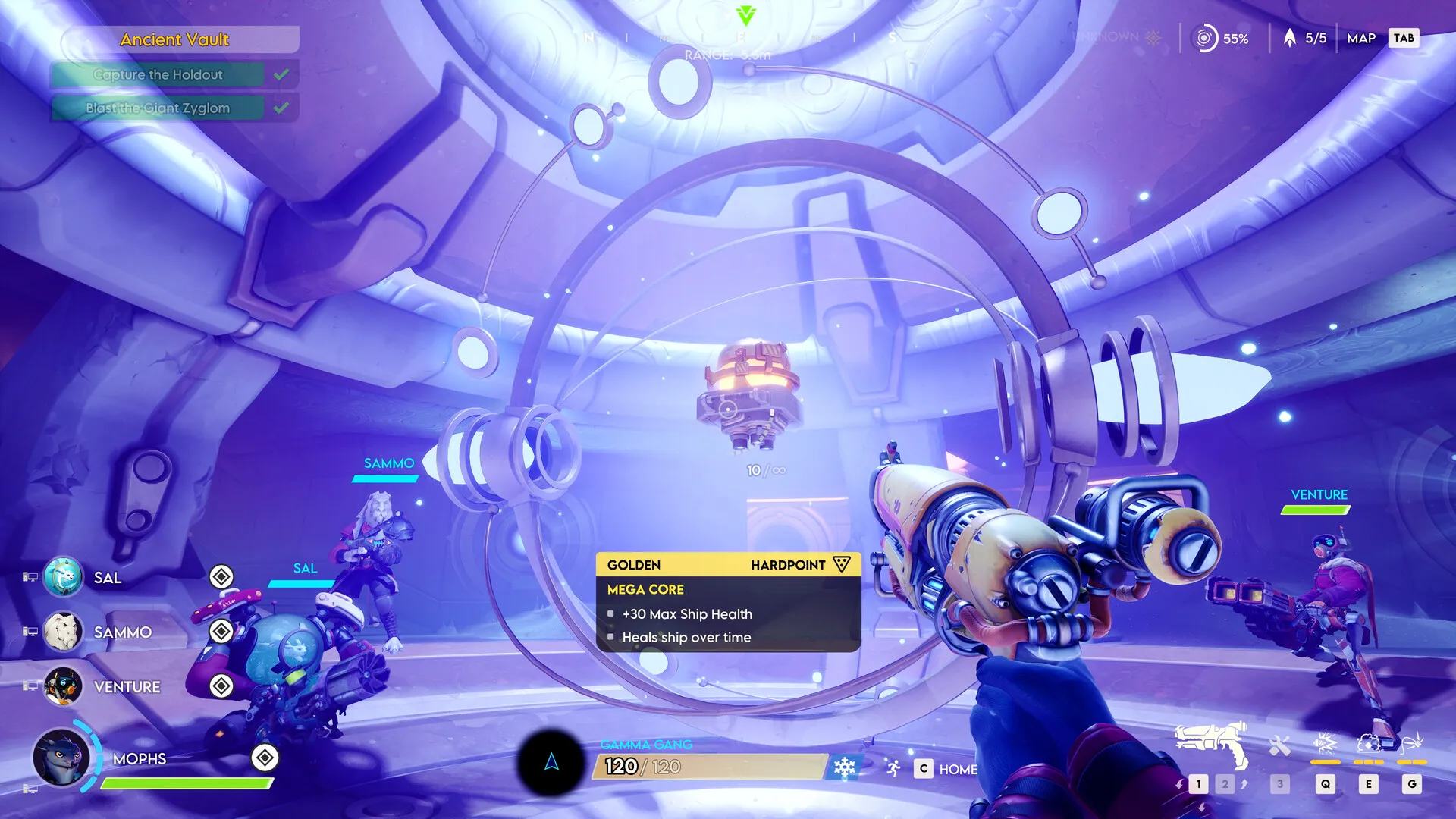
A well-placed shot from a kinetic cannon can push an enemy vessel into an asteroid, while a skilled sniper can cripple a ship from extreme range. Fights are won by combining fire from different weapon types: a shotgun-like shatter cannon to crack shields, followed by a rapid-fire thermic cannon to melt the hull. The real nuance appears when you use your tools creatively, such as attaching a rocket clamp to an opponent’s ship to send them careening into a cosmic storm.
Things get even more personal during boarding actions. Breaching an enemy ship to fight the crew face-to-face is a high-risk maneuver that can pay off spectacularly. A successful boarder can overload the reactor, steal hard-earned loot, and cause general mayhem before teleporting back to safety. Defending against this requires coordination; a team can use electrical field upgrades to repel intruders or station a dedicated defender near the airlocks.
The game’s greatest strength is the unscripted emergent drama these systems create. One memorable encounter involved spotting an enemy crew occupied with a dungeon. We parked our ship in a hollowed-out asteroid, spacewalked over to their defenseless vessel, and silently stripped it for parts.
We installed their superior cannons on our own ship, then laid in wait, ambushing them with their own hardware as they returned, loot in hand. For those moments when you are on the losing end, a fantastic free-cam spectator mode lets you watch the rest of the match unfold, a feature that helps reduce frustration and offers a perfect way to learn new tactics.
A Promising Voyage
For all its brilliant design, Wildgate is hampered by a significant problem: it feels sparse. After about twenty hours, the sense of discovery fades. You begin to recognize the handful of puzzle templates and enemy patrol routes in the PvE zones, turning exploration into a rote exercise.
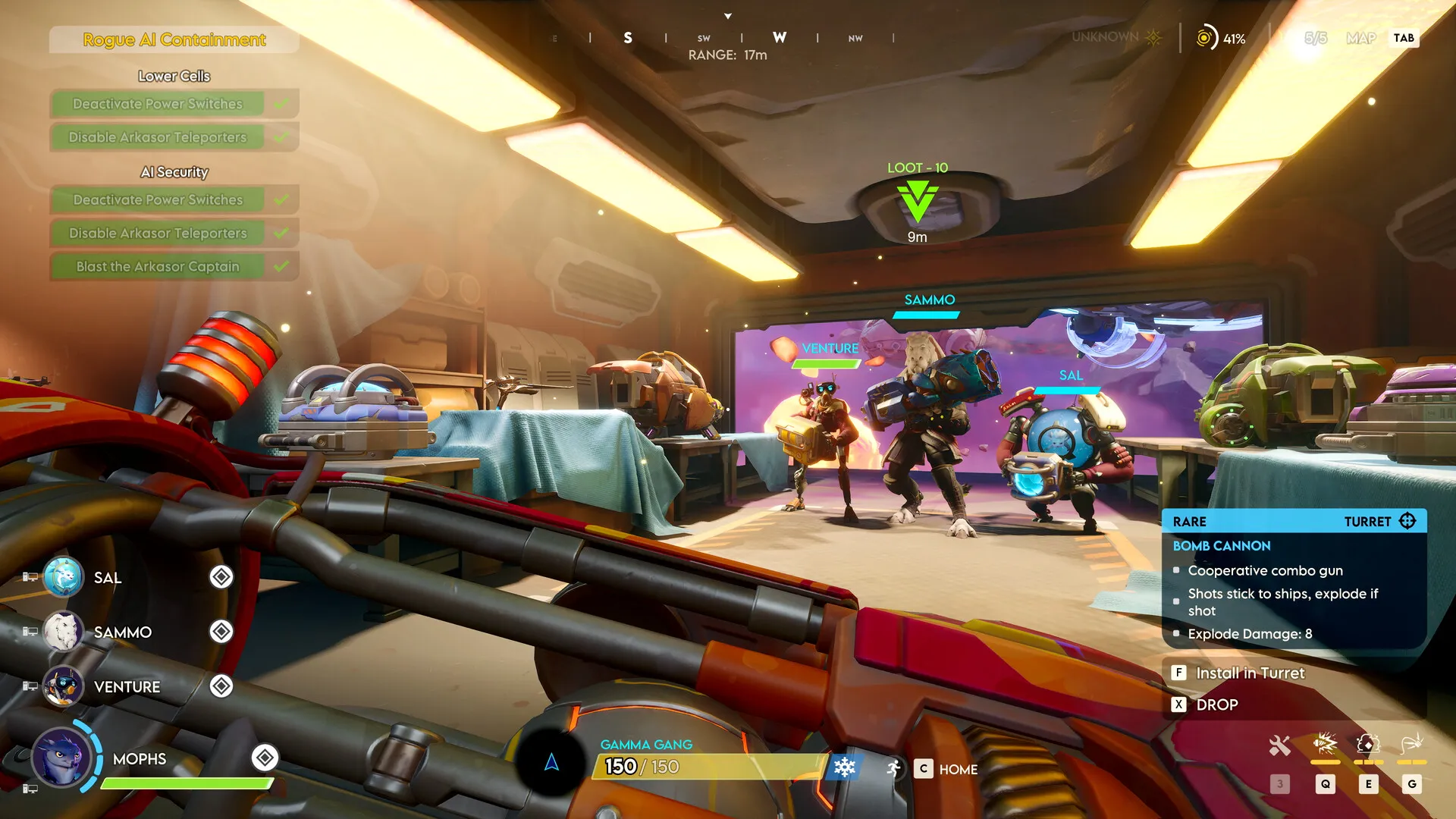
The limited roster of characters and ships means you will be facing the same threats consistently, and there are not enough random match modifiers to truly make each session feel distinct. What is here, however, is an exceptionally polished and mechanically sound foundation. The flight model is tight, the gunplay has weight, and the UI is clear and informative, showing the Blizzard and Riot DNA of the developers at Moonshot Games.
The studio appears to know this is a starting point and has published a roadmap promising a steady stream of new content. Bi-weekly updates and seasonal drops are slated to bring new Prospectors, ships, anomalies, and story elements. Future plans for custom lobbies and ranked play are also encouraging. This support will be vital.
The modern live-service landscape is littered with games that launched with a strong core but failed to deliver content fast enough to maintain momentum. The question is whether these updates will arrive quickly enough to satisfy the initial player base.
A new ship could completely upend the meta, while a new type of galactic hazard could force entirely new strategies. Wildgate is a strong starting point, but it is in a race to build out its world before the initial wonder wears off for its community.
Final Thoughts
Wildgate is a game made for a specific audience: a dedicated squad of players who relish complex, cooperative challenges. It is a brilliant, systems-driven sandbox that consistently generates incredible player-driven moments of heist, betrayal, and desperate survival.
The experience is held back by a distinct lack of content that keeps it from reaching its full potential. The foundation is rock-solid, a testament to a clear and confident design vision.
Its long-term success will hinge entirely on the developer’s ability to flesh out this beautiful skeleton of a game. For now, it offers a fantastic and deeply rewarding experience for those who can gather a crew and invest the time to master its chaotic rhythm.
The Review
Wildgate
Wildgate is a brilliantly designed cooperative sandbox, offering some of the most thrilling and memorable team-based chaos in recent memory. Its layered combat and deep strategic systems create incredible player-driven stories. However, this exceptional foundation is held back by a significant scarcity of content that makes the galaxy feel small after just a short time. It’s a must-play for dedicated crews with a high tolerance for a learning curve, but its long-term success depends entirely on how quickly its developers can build upon this fantastic start.
PROS
- Deep, thrilling, and highly rewarding cooperative gameplay.
- Exciting and emergent combat with both ship-to-ship and boarding actions.
- Meaningful customization through distinct ships and character abilities.
- A polished, mechanically-sound foundation for a live-service game.
CONS
- A significant lack of content at launch leads to repetitiveness.
- Frustrating and often ineffective when playing with random, uncommunicative teammates.
- A steep learning curve that can be intimidating for new players.
- Progression can feel slow and grind-heavy.