




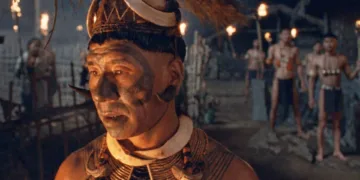





History, we are often told, is written by the victors. What of the history captured by the victims? Shen Ao’s Dead to Rights sets its lens on Nanjing in 1937, a city then synonymous with hell, and poses a chilling question about the nature of evidence.
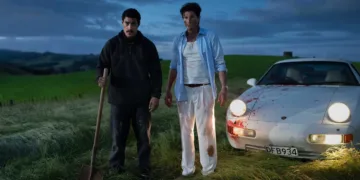
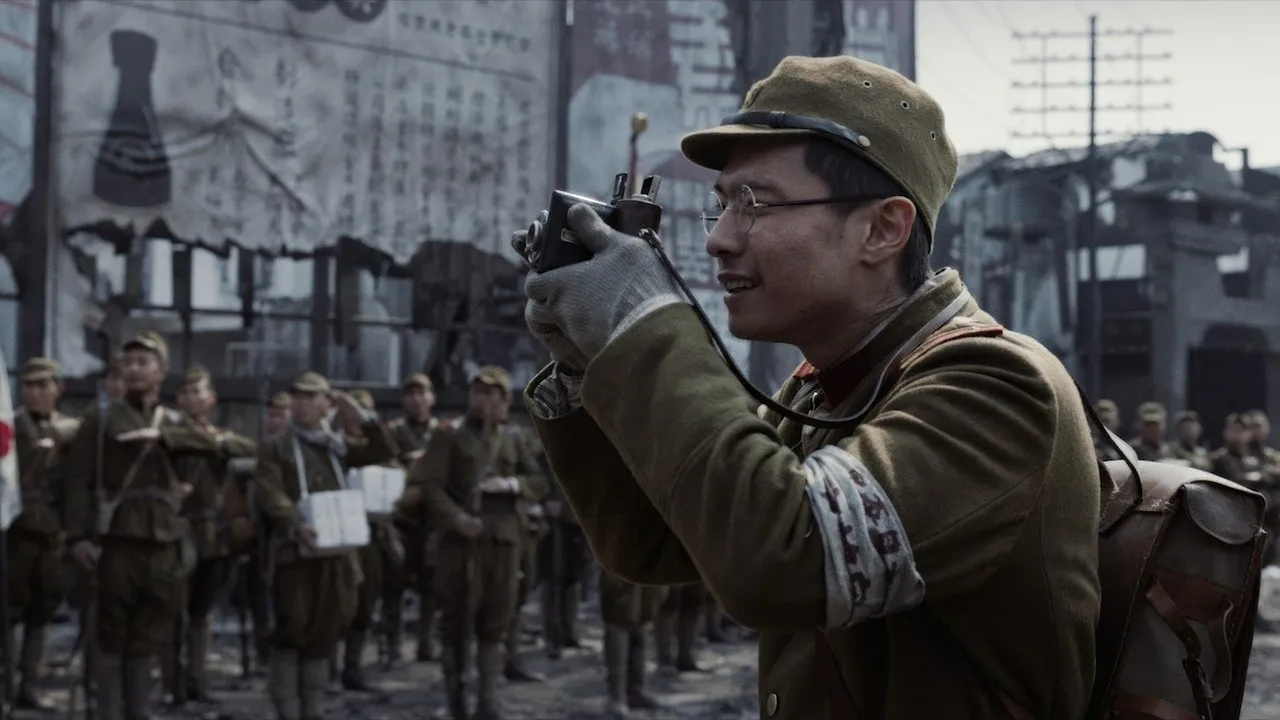
The film introduces us to Ah Chang, a postal worker whose main ambition is to see the next sunrise. Through a twist of fate (a profoundly cruel one), he finds himself posing as a photo technician for the occupying Japanese Imperial Army.
His job is simple: develop their film. Inside the chemical baths and under the spectral red light of the darkroom, the images that emerge are not vacation snapshots. They are silent, silver-halide proof of systematic slaughter. Ah Chang’s struggle shifts from the mechanics of survival to the terrifying weight of the truth developing in his hands.
The Accidental Archivists
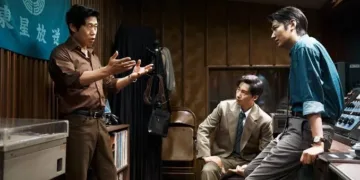
Dead to Rights deftly sidesteps the bombast of the conventional war epic. This is no story of battlefield heroics; it is a chamber piece of atrocity, confined largely to the suffocating space of a photographic studio. This narrative choice is critical. By trapping its characters in a single location, the film transforms external warfare into a psychological pressure cooker.
Every creak of the floorboards, every shadow passing the door, becomes a source of extreme tension. The film’s power comes from this intense focus on ordinary people caught in history’s machinery. Liu Haoran plays Ah Chang as a man whose compassion is a liability. His background as a postal worker makes him meticulous, a trait that allows him to quickly master the chemical processes of the darkroom, yet this same attention to detail forces him to see the systematic nature of the horror he is processing.
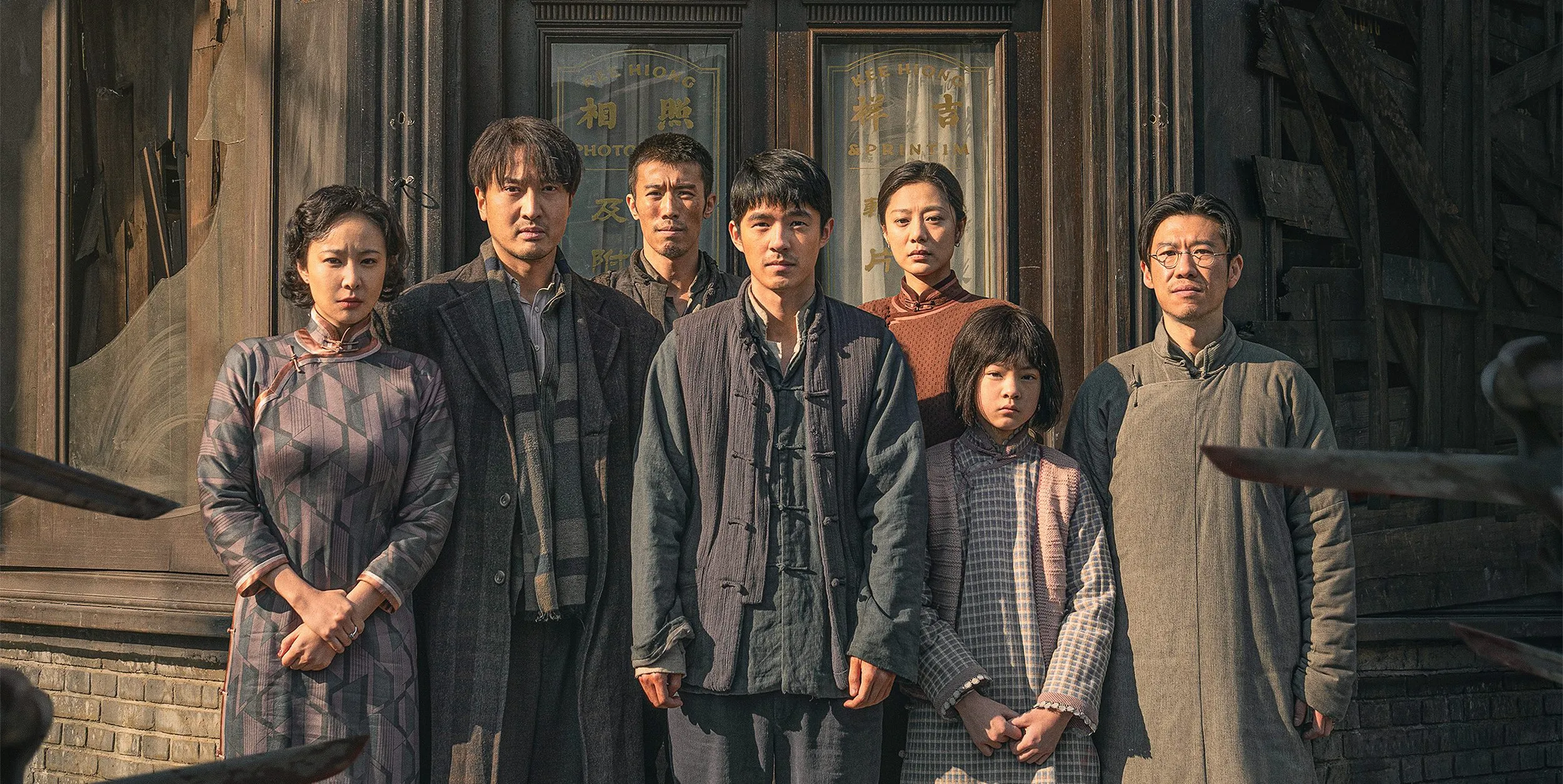
He is surrounded by other souls simply trying to live, each of them flawed and frightened. We meet a morally compromised translator and a displaced actress, among others. They are not a noble resistance cell, but a collection of ghosts-in-waiting, who discover a purpose greater than their own preservation. The film presents its antagonist, Ito, as a chilling specimen of civilized barbarism.
Played with terrifying subtlety by Daichi Harashima, Ito is an officer who can appreciate art while ordering an execution. He is a director of a false reality, orchestrating staged photos of “Sino-Japanese friendship” for propaganda. His refined manners are a tool of control, making his quiet command for an infant to be silenced all the more monstrous. He represents a particular kind of evil, one that cloaks itself in aesthetics and refinement.
The Grammar of Silence
Director Shen Ao understands that the most profound horrors are often the ones left to the imagination. The film’s depiction of violence is remarkably restrained, favoring the power of suggestion over graphic displays. This is an ethical choice as much as an aesthetic one; it refuses to exploit or sensationalize real suffering.
A shadow on the wall, a scream from another room, a bloodstain blooming on a photograph—these moments are more disturbing than any explicit scene could be. The sound design amplifies this effect. The near-silent studio is punctuated by the slosh of chemicals in a tray and the sharp click of a camera shutter, each sound magnified into something deeply ominous. This approach creates a pervasive atmosphere of dread. The air in the cinema feels thick, and every knock on the studio door is a potential death sentence.
The production design is meticulous, grounding the nightmare in a tangible reality. The authenticity honors the historical record, treating the setting with a curator’s respect. A muted, gray-scale color palette drains the world of life, reflecting the moral abyss of the time. The film’s central metaphor is photography itself.
The camera is a silent witness, and the negatives are an incorruptible record, a direct physical link to a past moment. The red light of the darkroom is richly symbolic, suggesting at once a sanctuary, a warning, and the blood that exists just outside its door. Here, the double meaning of the word “shoot” hangs in the air. The click of a shutter is a gunshot that echoes through history.
The Weight of the Image
The performances are the anchors in this storm. Liu Haoran gives Ah Chang a quiet dignity, his face a canvas of fear, sorrow, and burgeoning resolve. He uses his entire body to convey the physical burden of his secret. Opposite him, Daichi Harashima’s Ito is a masterclass in understated menace; his calm demeanor is more frightening than any outburst, and he uses micro-expressions to let the monster peek through his placid surface.
The entire ensemble cast is superb, creating a believable, terrified community whose shared glances communicate entire volumes of fear and solidarity. Dead to Rights is not an easy film. It is a grueling, emotionally taxing experience that offers little comfort. It imparts a sense of responsibility on its audience. The feeling is not catharsis but a lingering disquiet, placing the viewer in the position of a secondary witness.
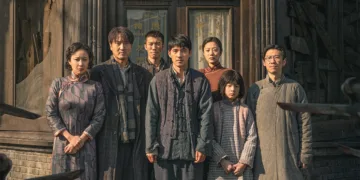
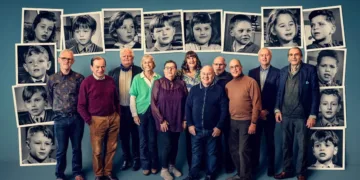
Its cultural importance is significant, acting as a direct challenge to historical revisionism. In our modern era of digital manipulation and contested facts, a story championing the sanctity of a physical photograph as objective proof feels exceptionally potent. One of the film’s most moving sequences involves the trapped characters taking a final group portrait.
They stand not before a blank wall but before painted backdrops of their homeland, their fingers tracing the landscapes they may never see again. This act of creating a personal image, one of identity and defiance, serves as a powerful counterpoint to the images of death they are forced to process. The film is a powerful cinematic document, an unflinching gaze into the abyss that demands we do not look away.
“Dead to Rights” is a Chinese historical drama directed by Shen Ao. The film premiered in China on July 25, 2025, and had a theatrical release in North America (the U.S. and Canada) on August 15, 2025. A streaming release is planned for later in 2025. The film has also been released in Australia and New Zealand, arriving in theaters on August 7, 2025. Distribution for the North American market is handled by Niu Vision Media and Echelon Studios, according to Variety. The film’s runtime is 2 hours and 17 minutes. You can currently watch it in select theaters in North America.
Full Credits
Director: Shen Ao
Writers: Shen Ao, Luyang Xu, Ke Zhang
Producers and Executive Producers: Gong Geer
Cast: Ye Gao, Daichi Harashima, Chuan-jun Wang, Xiao Wang, Zhener Wang, Enyou Yang, Haoyu Yang, Liu Yichun, You Zhou
The Review
Dead to Rights
Dead to Rights is a harrowing and essential piece of historical cinema. Through its claustrophobic setting and restrained direction, it creates a psychologically devastating experience. The film's heavy subject matter makes it a difficult watch, yet its powerful performances and unwavering focus on the preservation of truth create an unforgettable and important work. It is a demanding but deeply resonant examination of history's darkest moments, treating its subject with the gravity it deserves.
PROS
- Shen Ao's restrained, suggestion-based approach to violence is psychologically potent.
- Liu Haoran and Daichi Harashima deliver exceptional, nuanced portrayals.
- The claustrophobic setting and meticulous sound design create a suffocating sense of dread.
- The commitment to detail in the production design grounds the film in a grim reality.
- The central metaphor of photography as evidence and witness is intelligently explored.
CONS
- The subject matter is relentlessly bleak and can be an extremely difficult viewing experience.
- Some structural transitions, particularly in the third act, can feel slightly abrupt.