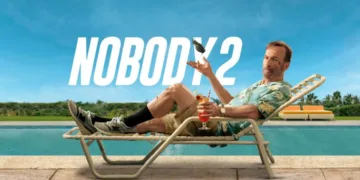















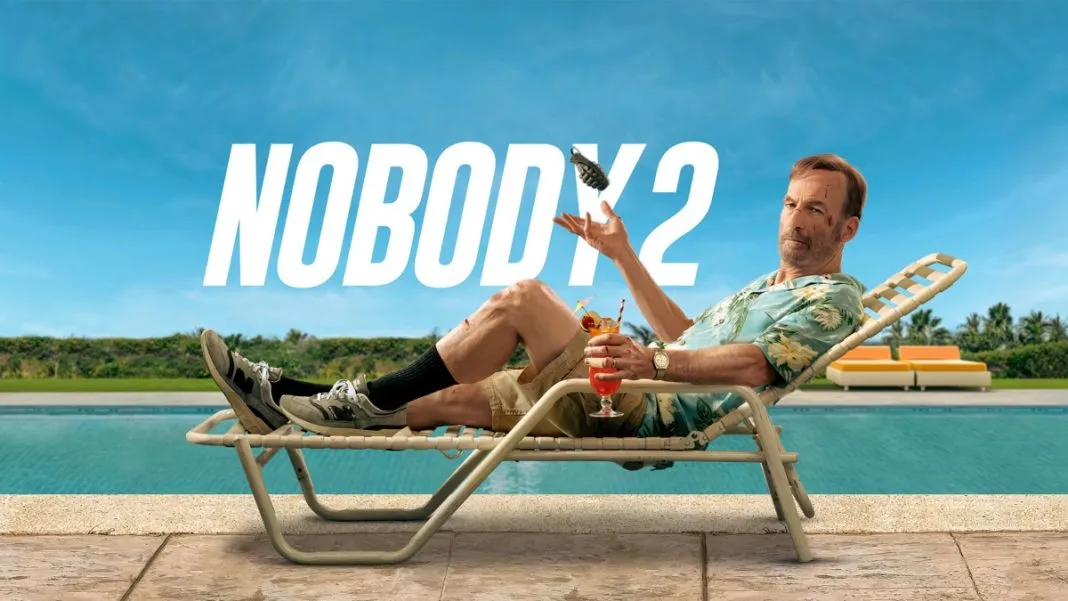

Hutch Mansell returns, but the catharsis of rediscovering his violent past has curdled into a job. The central irony of Nobody 2 is that after embracing his true self, Hutch is more trapped than ever. He’s no longer just an unassuming father with a secret; he’s a full-time killer working to pay off an immense debt, and the work is eroding the very family life he once fought to protect.
The film quickly establishes this tension, framing Hutch’s attempt to orchestrate a family vacation as a desperate measure. He proposes a trip to a dilapidated amusement park, a place soaked in his own childhood nostalgia. This premise cleverly fuses the DNA of a violent action flick with a family road trip comedy, immediately setting the stage for a spectacularly dysfunctional getaway.
A Family Trip to Plummerville
The narrative engine of the sequel is Hutch’s $30 million debt, a lingering consequence from the original film’s fiery climax. This obligation has transformed him from a repressed suburbanite into a perpetually exhausted contract killer, making him a stranger to his own family. The film’s opening action sequence is a brutal illustration of his new reality, a messy, desperate affair that underscores the grim nature of his work.
His wife Becca’s attempts to connect are met with weary distance, while his son Brady’s teenage sullenness hardens into genuine resentment. The vacation to Plummerville is Hutch’s flawed solution, a trip born from a deep, personal nostalgia for the only good vacation his own father ever gave him. The town itself is a portrait of faded glory, its peeling paint and rusting attractions a perfect metaphor for Hutch’s own worn-down state.
For his family, it’s a baffling disappointment; for Hutch, it’s a sacred space he hopes will magically heal their fractures. The breaking point arrives, as it must, at the grimy local arcade. An altercation involving his son and a local bully escalates when a security guard shoves his young daughter. In this moment, the film’s central conflict is perfectly crystallized.
We see Hutch’s struggle as he forces a calm exit, only to pause, his face a mask of controlled fury, before telling his family he forgot his phone. This small deception is a powerful character beat, a deliberate choice to re-engage the violence he claims to want to escape. His brutal, efficient takedown of the arcade staff is the narrative’s inciting incident, alerting the town’s smarmy, corrupt sheriff and triggering the attention of its entire criminal apparatus.
Stylized Mayhem and Breakneck Pace
With director Timo Tjahjanto taking the reins, the sequel’s visual language evolves significantly. Known for his work in Indonesian action cinema, Tjahjanto injects the film with a kinetic, almost joyful brutality that veers into the cartoonish. The action is no longer just grounded and gritty; it is a hyper-stylized ballet of blood and slapstick humor.
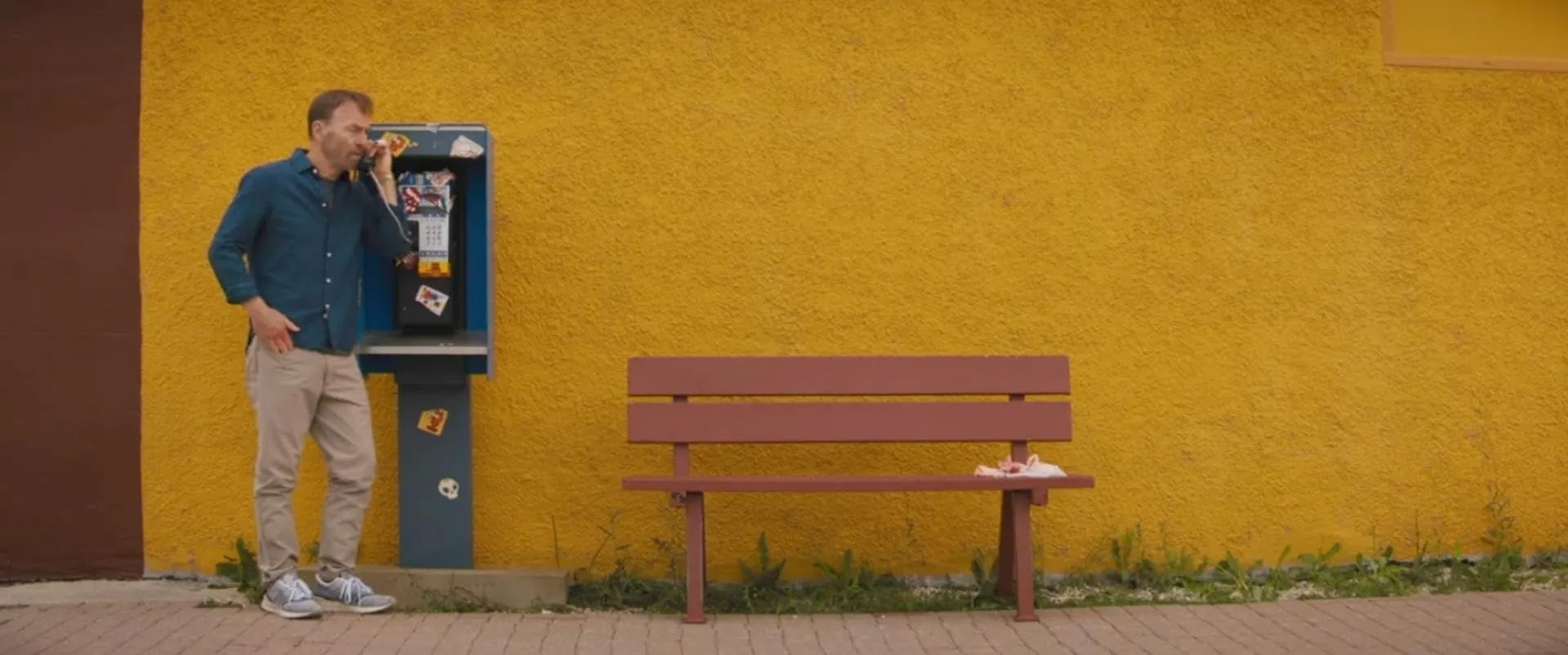
The aesthetic is more self-aware, winking at the audience with shots like a shotgun blast viewed from inside a van’s windshield, turning a gruesome death into a startling visual punchline. The choreography feels like a series of creative puzzles where the environment is the primary weapon. The film’s major set pieces are designed for maximum impact.
A frantic fight to secure a hard drive becomes a multi-stage gauntlet, while a confrontation on a tacky tourist duck boat quickly descends into lethal chaos. The amusement park finale is the film’s masterpiece of level design. It isn’t just a location; it’s an interactive arena where a chase through a fun house flows seamlessly into a desperate struggle in a ball pit, which then leads to a showdown in a hall of mirrors.
The integration of deadly, homemade booby traps gives the sequence a feeling of a player using every tool in their inventory for a final boss fight. All this mayhem is compressed into a tight 89-minute runtime. This breakneck pacing is the film’s greatest strength and its most significant flaw.
It creates an exhilarating, breathless experience that prevents any single moment from growing stale. This relentless forward momentum, however, systematically undercuts any attempt at emotional depth. The narrative raises compelling ideas about trauma and family, then immediately discards them for the next action beat, leaving the audience with little time for reflection.
A Cast of Killers, Cops, and Kin
Bob Odenkirk’s performance remains the film’s unshakable core. He deepens his portrayal of Hutch, a man who is now performing two roles at once: the weary suburban dad and the reluctant killing machine. There is a profound sadness in his eyes even during the most spectacular violence, a sense that each fight is a miserable but necessary task.
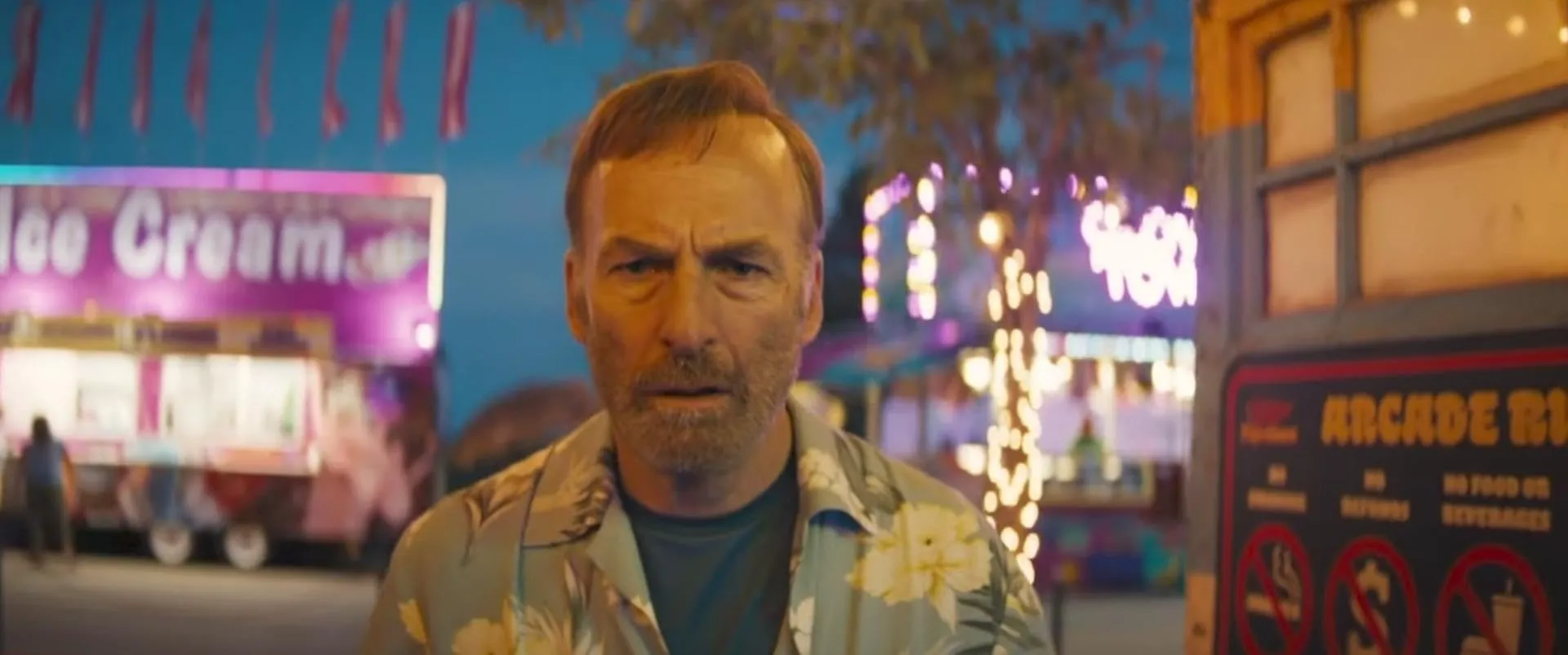
His physical commitment makes every punch and grapple feel authentic, but the character’s emotional resonance comes from this visible internal conflict. Sharon Stone’s villain, Lendina, is a force of pure theatricality. She is a cackling, scenery-chewing crime lord whose extravagant cruelty perfectly suits the film’s heightened reality. She is entertaining, but her character design is a narrative misstep.
By appearing so late in the film, she feels less like a developed antagonist and more like a final boss who spawns without proper introduction, denying the story a personal rivalry. The supporting cast effectively populates this chaotic world. Connie Nielsen brings a grounded warmth to Becca, her worried expressions serving as an emotional anchor for the audience.
The welcome return of Christopher Lloyd and RZA as Hutch’s equally capable father and brother provides brilliant bursts of comedic energy. Their gleeful participation in the final battle elevates the chaos from a simple shootout to a bizarre family affair.
On the other side, Colin Hanks is wonderfully repellent as the corrupt Sheriff Abel, a man whose smarmy confidence makes him instantly dislikeable, while John Ortiz adds a surprising layer of regret to his role as the ensnared park owner, giving a hint of the humanity the town has lost.
An Entertaining, Disposable Ride
As a sequel, Nobody 2 wisely focuses on delivering what its audience wants: a fast, inventive, and brutally funny action film. It succeeds on these terms, providing a satisfying loop of comedic setup and violent payoff. Its most significant challenge is the inherent lack of novelty. The first film’s pleasure was rooted in the surprise of discovering the “nobody” was a “somebody.”
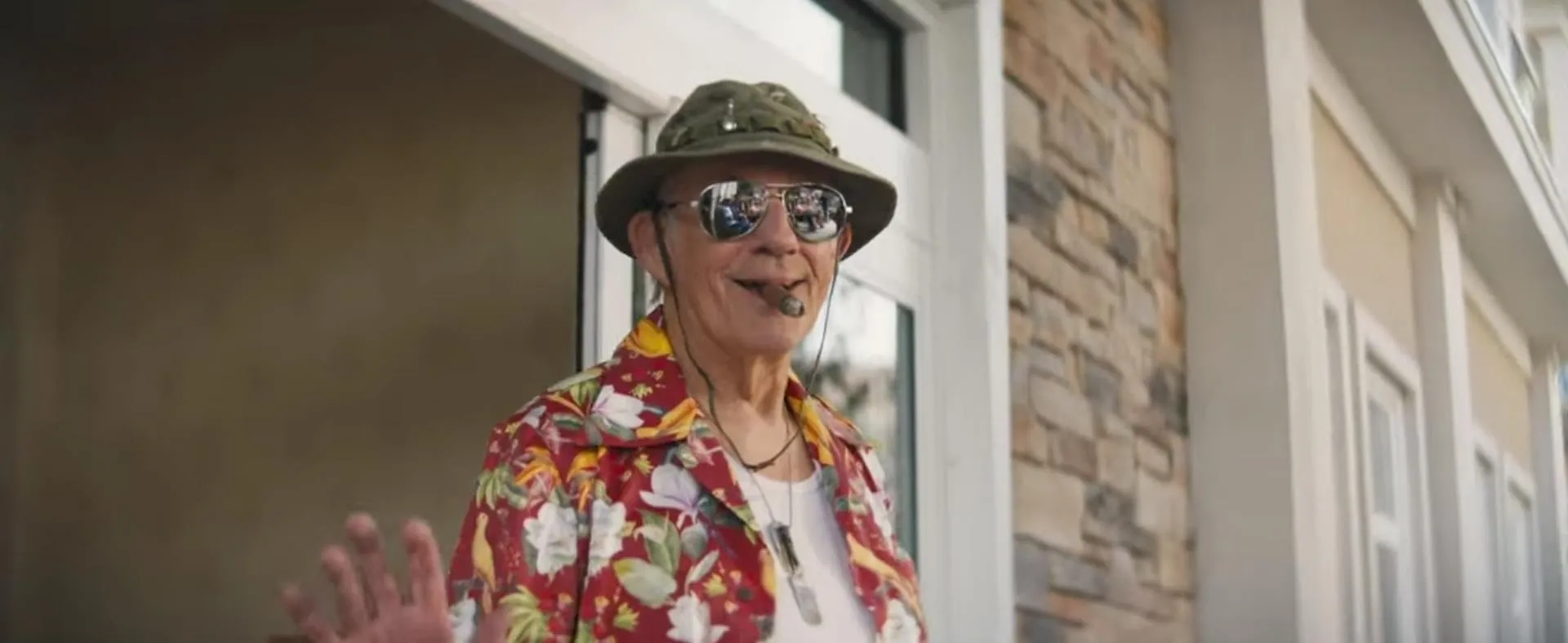
Without that hook, the film relies on a “vacation-from-hell” formula that feels less inspired, however well it is executed. The script is a lean, efficient machine for generating conflict, but it lacks substance. The film’s central themes about the clash between family life and a violent nature are presented as the story’s emotional core but are ultimately treated as window dressing.
The narrative conflict is resolved not through character growth or difficult choices, but by simply escalating the violence until the credits roll. From a design perspective, it’s like a game that teases a complex morality system only to reveal that all paths lead to the same ending. This makes the experience thrilling in the moment but hollow upon reflection.
Nobody 2 is a well-crafted piece of disposable entertainment, a cinematic equivalent of a great arcade game. It prioritizes the exhilaration of the ride over the destination, making it a perfect, crowd-pleasing spectacle that offers immense fun without demanding any lasting emotional investment.
The action-packed sequel Nobody 2 is scheduled to be released in theaters on August 15, 2025. It is a follow-up to the 2021 film Nobody. After its theatrical run, the film is expected to be available for streaming exclusively on Peacock.
Full Credits
Director: Timo Tjahjanto
Writers: Derek Kolstad, Aaron Rabin, Bob Odenkirk, Umair Aleem
Producers: Kelly McCormick, David Leitch, Bob Odenkirk, Marc Provissiero, Braden Aftergood
Executive Producers: David Hyman
Cast: Bob Odenkirk, Connie Nielsen, John Ortiz, RZA, Colin Hanks, Christopher Lloyd, Sharon Stone, Michael Ironside, Colin Salmon, Billy MacLellan, Gage Munroe, Paisley Cadorath, Marina Stephenson Kerr
Director of Photography (Cinematographer): Callan Green
Composer: Dominic Lewis
The Review
Nobody 2
Nobody 2 is a confident sequel that doubles down on the stylized, cartoonish violence that made the original a surprise hit. Bob Odenkirk is once again perfect as the beleaguered killer, and the action is inventive and relentless. While the breakneck pace makes for an entertaining ride, it comes at the cost of story and emotional depth, leaving the film feeling like a fun but ultimately hollow exercise in creative carnage. It’s a spectacular dose of action that is thrilling in the moment but vanishes from memory soon after.
PROS
- Bob Odenkirk’s committed and charismatic central performance.
- Highly creative and stylishly choreographed action sequences.
- A brisk, energetic pace that ensures the film is never boring.
- Entertaining, scene-stealing moments from the supporting cast.
CONS
- A thin, formulaic script that relies on a familiar premise.
- Fails to explore its own themes of family and violence in any meaningful way.
- Lacks the element of surprise that was central to the first film's appeal.
- The main villain feels underdeveloped and appears too late in the story.