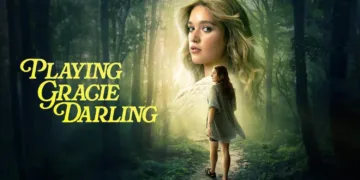











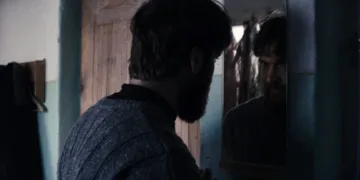









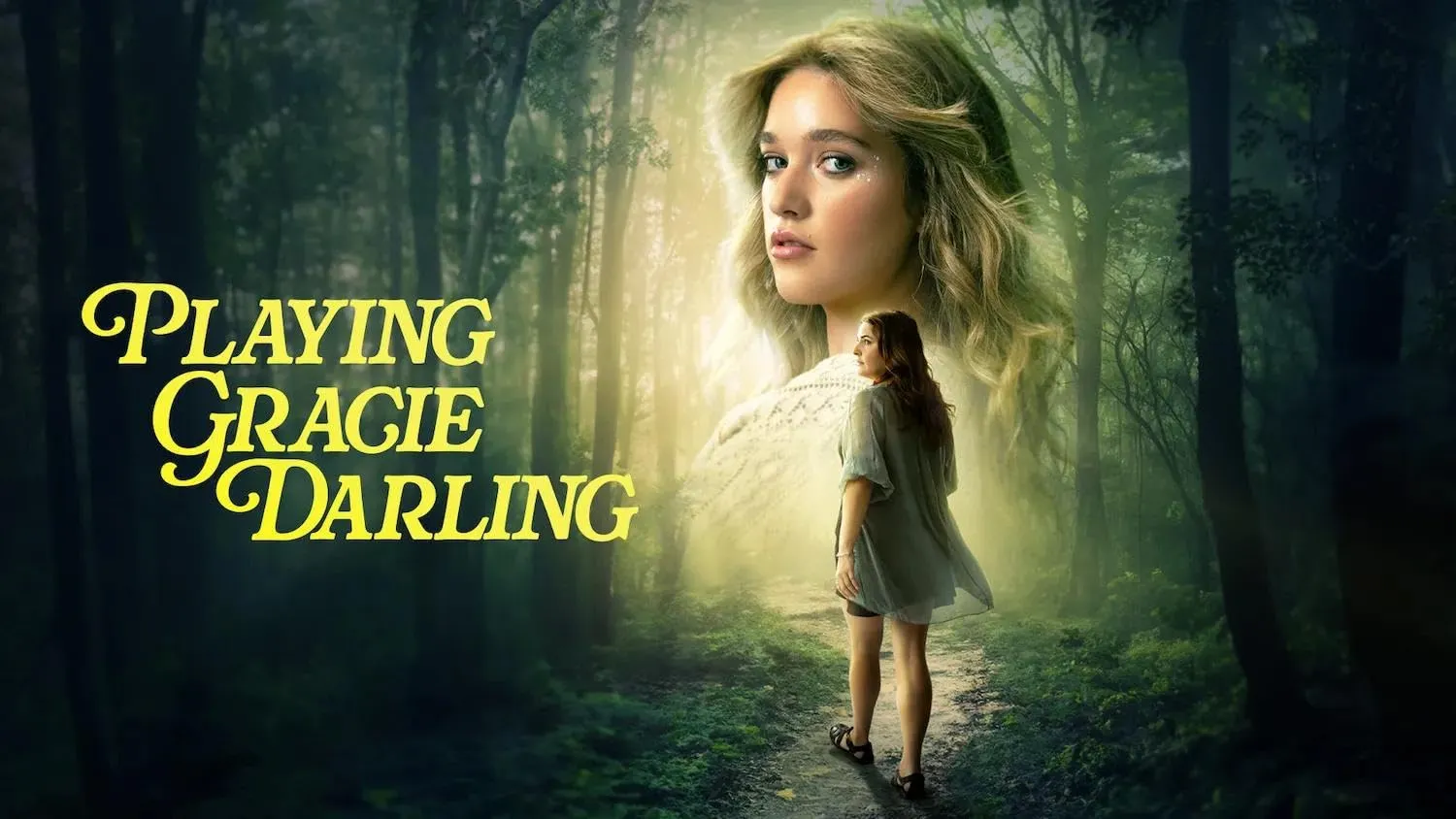

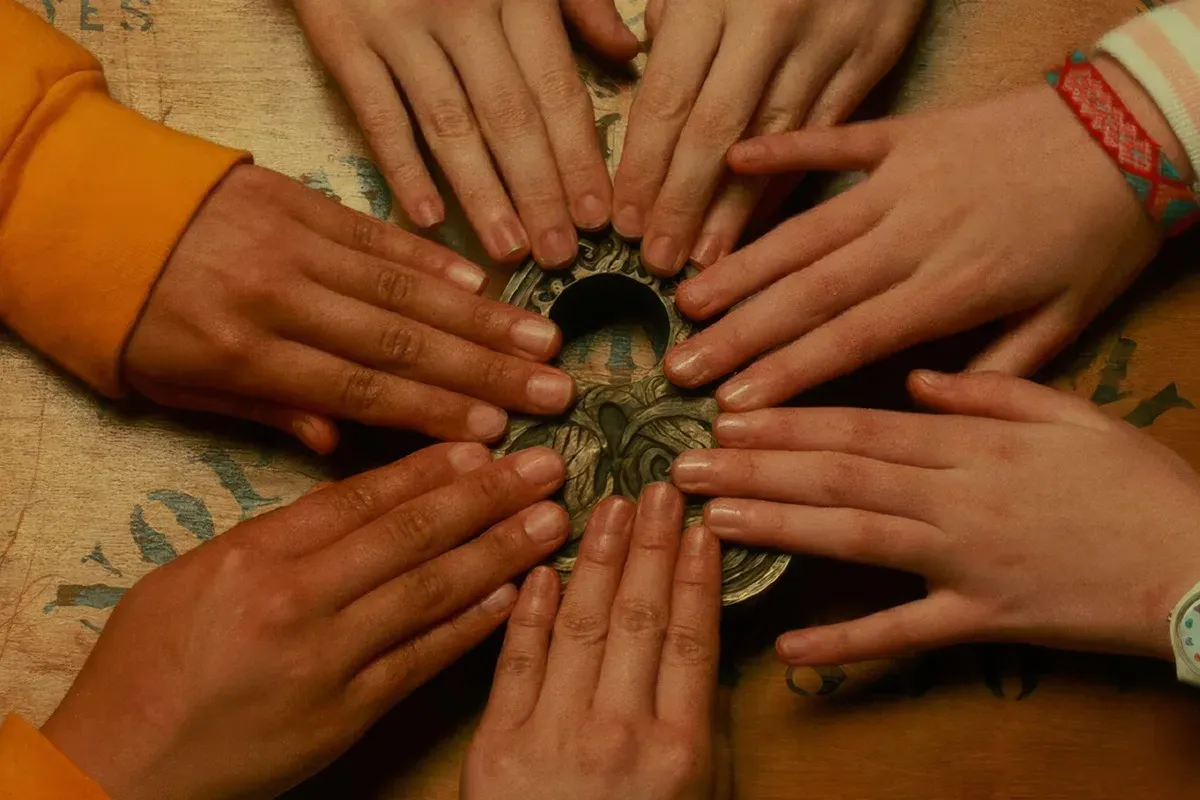
Australian television has a fondness for small-town mysteries, but Playing Gracie Darling adds a supernatural layer to the familiar formula. The story opens in 1997 with a teenage séance in a shack, a scenario whose disastrous outcome is practically a narrative requirement. The séance’s host, Gracie Darling, vanishes after the ritual goes awry.
The series then shifts to the present, 27 years later, reintroducing Gracie’s friend Joni Grey. A survivor of that night, Joni is now a child psychologist, seemingly detached from her past. The past returns with a phone call. Another girl, Gracie’s niece Frankie, has disappeared from the same shack.
The local teens have since codified the original event into a dark game named after the first victim. This new disappearance pulls Joni back into her hometown’s orbit, setting up a mystery where a current crime is inseparable from an old, unhealed wound.
The Protagonist and a Fractured Town
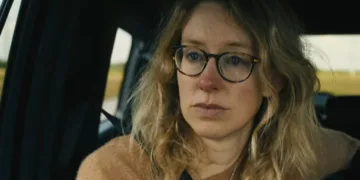
The story is anchored by Joni, played with a grounded anxiety by Morgana O’Reilly. Her character is built on a compelling internal contradiction. As a child psychologist, her professional life is dedicated to demystifying trauma, translating fear and pain into diagnostic language and treatment plans. She represents a modern, clinical approach to healing.
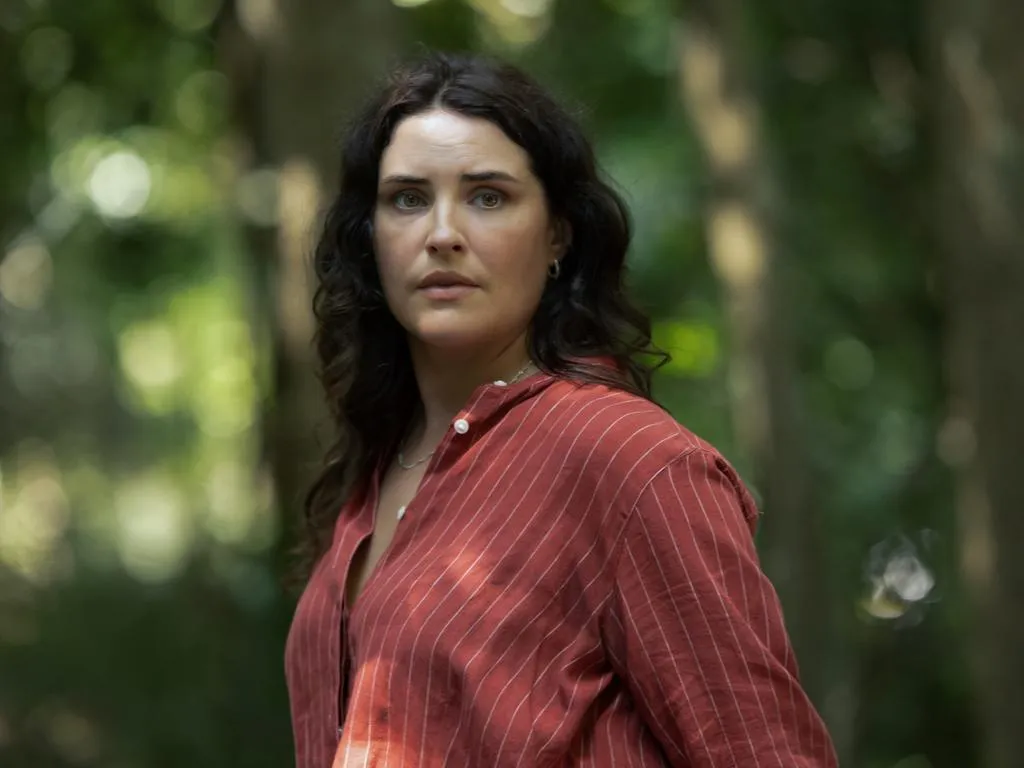
This identity is immediately challenged upon her return home, where events defy easy categorization and resist scientific explanation. Her expertise becomes a liability, a set of intellectual blinders that may prevent her from seeing the truth of what is happening. Her attempts to apply rational frameworks to a situation steeped in the irrational create a central tension that drives her character arc. She is not just solving a mystery; she is confronting the limits of her own worldview.
She finds a reluctant ally in Jay Rajeswaran (Rudi Dharmalingam), a local police officer who offers a different perspective on the past. He was also at the 1997 séance, and his presence provides a necessary counterweight to Joni’s more introspective struggle. Where Joni internalizes the trauma, Jay represents the town’s institutional memory and its official, often inadequate, response to tragedy.
Their shared history gets them officially removed from the case, a standard narrative device that serves its purpose here. It frees them from procedural constraints and forces their investigation into the more intimate spaces of the community: awkward kitchen-table conversations, tense reunions, and visits to grieving families. Their dynamic is not one of simple friendship but of two people bound by a moment in time, each processing its fallout in their own way.
The supporting cast is instrumental in building the town’s complex social ecosystem. Joni’s mother, Pattie (Harriet Walter), with her tarot cards and intuitive pronouncements, is a direct thematic counterpoint to Joni’s clinical mindset. This mother-daughter relationship is a microcosm of the show’s larger conflict between faith and reason, superstition and science.
Ruth Darling (Celia Pacquola), the mother of the newly missing girl, projects a raw, immediate grief that contrasts with the carefully managed historical trauma of the older generation. The town itself feels like a character burdened by secrets. A background subplot involving a controversial wind farm does more than add local color. It establishes a pre-existing state of division among the residents.
The constant, low hum of the turbines is a fitting soundtrack for a community simmering with unspoken resentments, grounding the supernatural conflict in tangible, mundane disputes. This detail suggests that the evil haunting the town may find fertile ground in the ordinary fractures of human society.
The Grammar of Unease
Playing Gracie Darling constructs its mood with methodical precision, favoring a persistent, unsettling atmosphere over the cheap currency of jump scares. Director Jonathan Brough understands that true dread comes not from what is shown, but from what is withheld. The horror is located in the periphery, in the quiet moments between events.
The camera might linger on a dark forest path or a child’s empty bedroom, allowing the viewer’s imagination to populate the space with menace. The sound design appears to work in concert with this visual strategy, contrasting the unnerving silence of the woods with the industrial drone of the wind turbines, creating a soundscape where nature and machine are in a state of conflict.
The supernatural is not a vague suggestion; it is a core mechanism of the plot. The central ritual, “playing Gracie Darling,” is a fascinating piece of world-building. It has evolved from a specific, traumatic event into a piece of local folklore, a dark game passed down by a new generation of teenagers who are disconnected from the original pain.
This speaks to the way communities mythologize tragedy, turning it into a story that is both a warning and a dare. The menacing spirit at the center of the ritual, named Levi, is kept deliberately obscure, making him a more effective vessel for the characters’ and the audience’s fears.
This atmosphere of unease is reinforced through a steady pattern of disturbing signs, a visual language of impending doom. The recurring sight of dead birds is a classic gothic trope, a clear signal that the natural order has been disrupted. A secret symbol that Joni and Gracie created in their youth reappears, a piece of their private history that has been co-opted and made sinister.
A flaming effigy in the middle of town externalizes the community’s buried anger, directing it toward the Darling family and complicating the search for a single villain. These are not random occurrences but carefully placed narrative beats that contribute to a sense that something is fundamentally wrong. The tension emerges from the show’s central ambiguity: is this the work of a human antagonist using superstition as a cover, or has an ancient evil truly been awakened? The series skillfully avoids providing a clear answer, letting the uncertainty fester.
Trauma as a Narrative Engine
The series uses the framework of a mystery to conduct a deeper examination of how past trauma functions as a story’s main driver. For Joni, the investigation into Frankie’s disappearance is simultaneously an excavation of her own psyche.
The narrative structure reflects this internal process. The use of flashbacks is not simply a tool for exposition; it is a formal choice that fragments the timeline, mirroring the intrusive, nonlinear experience of post-traumatic memory.
Joni’s journey forward requires a constant, spiraling return to the past. She cannot solve the present crisis without first reassembling the broken pieces of her own history. The show suggests that some events do not end when they are over; they continue to exert an influence, shaping decisions and perceptions for years to come.
This leads to the story’s most sophisticated theme: the unreliability of perception. The series consistently places the audience in a state of uncertainty, questioning the boundary between a shared reality and individual delusion. We see most of the events through Joni’s perspective, but her reliability as a narrator is compromised by her personal history.
Is she seeing genuine supernatural portents, or are her experiences a form of shared psychosis, a psychological contagion spreading through a community primed by suggestion and fear? The script gives weight to both possibilities. Her professional training offers clinical terms like “mass sociogenic illness,” but these rational explanations feel sterile and inadequate when set against the visceral strangeness of the events.
The strength of the show, at least in its initial episodes, lies in its commitment to this ambiguity. It denies the audience the simple catharsis of a solved crime or a vanquished ghost. Instead, it leaves us with the same lingering discomfort that plagues its characters.
By refusing to provide easy answers, the narrative makes a more thoughtful point. It suggests that the obsessive search for “what happened” can sometimes obscure the more important work of understanding how to live with the consequences. The real horror may not be the monster in the woods, but the haunting, unanswerable questions that tragedy leaves behind.
The new Australian mystery drama series Playing Gracie Darling, created by Miranda Nation, premiered today, August 14, 2025, on Paramount+. The six-part series, produced by Curio Pictures, delves into the disappearance of Gracie Darling during a séance 27 years ago and the resurgence of the unsettling mystery when another girl vanishes.
Full Credits
Director: Jonathan Brough
Writers: Miranda Nation, Anya Beyersdorf
Producers: Rachel Gardner, Jo Porter, Sophia Mogford, Laura Nagy, Miranda Nation
Executive Producers: Rachel Gardner, Jo Porter, Sophia Mogford, Miranda Nation
Cast: Morgana O’Reilly, Rudi Dharmalingam, Celia Pacquola, Annie Maynard, Anne Tenney, Dan Spielman, Harriet Walter, Chloe Brink
Director of Photography (Cinematographer): Martin McGrath
Editors: Mat Evans, Andrew Chaplin, Kyan Woodpower
The Review
Playing Gracie Darling
Playing Gracie Darling is a thoughtfully constructed supernatural mystery that succeeds through its commitment to atmosphere and psychological depth. While its premise uses familiar genre elements, the series distinguishes itself with a patient, unsettling tone and a compelling exploration of how trauma shapes perception. It’s a slow-burn thriller that prioritizes mood over jump scares, making for a genuinely haunting watch.
PROS
- Builds a genuinely unsettling and effective atmosphere.
- A strong, grounded lead performance from Morgana O’Reilly.
- Thoughtfully explores themes of past trauma and perception.
- Uses narrative ambiguity to create lasting tension.
CONS
- The setup relies on some familiar small-town mystery tropes.
- Its deliberate pacing may not appeal to all viewers.
- Some secondary plot points, like the wind farm dispute, feel conventional.