





























What would you do with a €17 million windfall? For four 17-year-old friends in sun-drenched Marseille, the answer is simple: panic. Young Millionaires kicks off with a premise as brilliant as it is cruel. David, Jess, Samia, and Léo hit the lottery jackpot, a ticket to escaping their teenage anxieties and modest lives. Their celebration is immediate, lavish, and deeply irresponsible.
The problem arrives with the hangover. As minors, they are legally barred from claiming their prize. With the ticket’s 60-day expiration clock ticking, their dream curdles into a frantic race against time. The series quickly establishes itself as a caper fueled by youthful recklessness and mounting desperation, where every ill-conceived plan to secure the cash only digs their hole deeper. The French Riviera has never looked so stressful.
The Kids Are Not Alright
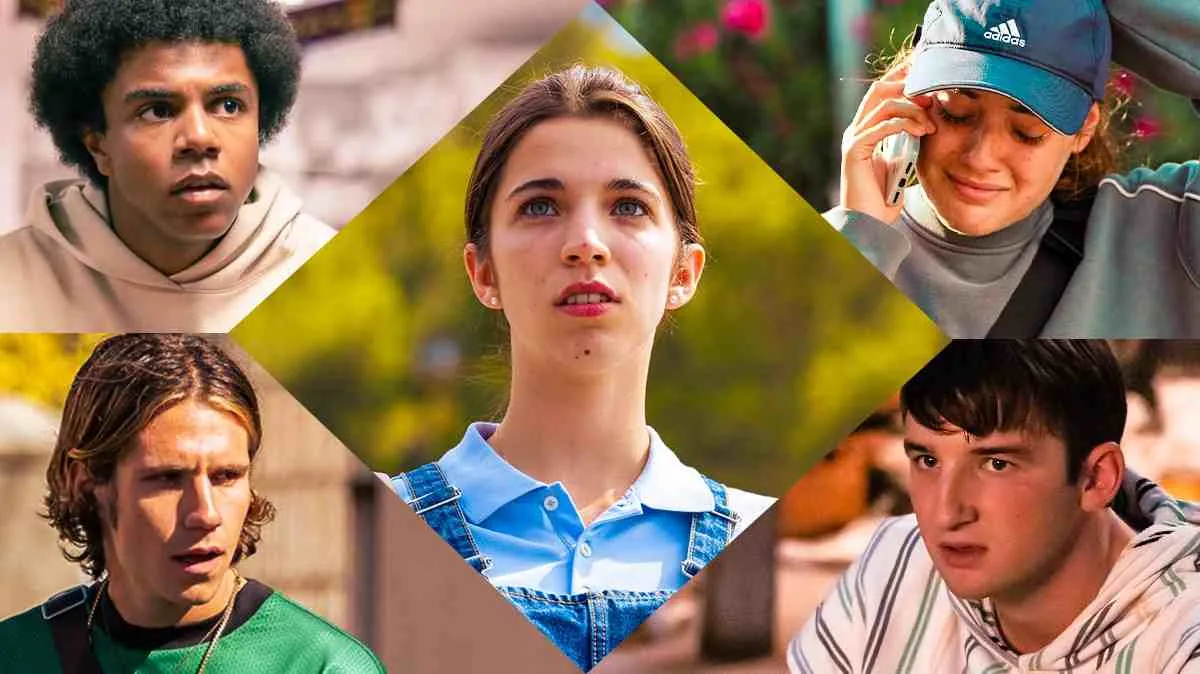
A show about terrible decisions needs characters capable of making them, and Young Millionaires delivers a quartet of flawed, frustrating protagonists whose collective chemistry is the single sturdiest plank in a rickety narrative structure.
Their dynamic feels authentic, a lived-in friendship captured in quick banter and shared glances, a testament to the young cast. The problem is that this believable bond is in service of characters whose individual arcs crumble under scrutiny. They are less characters than collections of teen-drama tropes, each amplifying the others’ worst impulses.
David, played with a tightly wound energy by Abraham Wapler, is the group’s de facto leader and primary catalyst for chaos. As an orphan living in a group home, his narrative is built on a foundation of abandonment, fueling a desperate need for identity and control.
The show hints at this depth, particularly in his reluctance to unseal the files on his birth parents, but it uses his backstory mostly as a shortcut to justify his impulsive behavior. His ambition to become a rapper feels less like a passion and more like a grab for status, a way to be seen.
When he recklessly borrows money from local drug dealers to rent a G-Wagon before the lottery ticket is even cashed, it’s a decision so monumentally foolish that it strains credulity, positioning him as a figure of pity rather than a compelling anti-hero. Wapler does his best with the material, but David remains a frustratingly shallow engine for the plot.
Jess (Sara Gançarski) is saddled with the “popular party girl with a secret heart of gold” archetype, though the show forgets to include the gold. Her family’s financial precarity is meant to give her actions weight, but it functions more as an excuse. Her decision to drain her mother’s meager savings for a night of celebration is a point of no return for her likability.
It’s a moment of profound selfishness that the series papers over without any meaningful consequence or self-reflection from Jess herself. Gançarski brings a defiant fragility to the role, yet the script rarely allows her to explore the conflict between her desire for social status and her family’s reality. She is a character defined by her immediate wants, a symbol of the show’s broader inability to connect action with consequence.
Meanwhile, Samia (Malou Khebizi) is the sidelined athlete, a promising soccer star whose future is destroyed by a physical ailment. This tragedy should make her the most sympathetic of the bunch, the one for whom the money represents a genuine, if complicated, second chance.
Yet, the show struggles to integrate her story into the main plot. Her internal conflict is pushed to the periphery in favor of more heist-of-the-week antics. Her dissolving relationship with her boyfriend and a tepid, awkward romantic angle with Léo feel like afterthoughts, narrative threads left to dangle. Khebizi imbues Samia with a quiet desperation, but the character feels underserved, a potentially rich story of loss and adaptation that is instead used as simple motivation.
Rounding out the group is Léo (Calixte Broisin-Doutaz), the soft-spoken, unadjusted nice guy. In a group of sharks, he is meant to be the guppy, the moral compass whose loyalty is constantly tested. Unfortunately, he often reads as simply passive, a follower dragged along by his more dominant friends.
His primary contribution to the plot is making mistakes that require fixing, and his character is further diluted by the grating comedic subplot involving his idiotic brother, Tom. Léo represents a missed opportunity to explore the pressure of peer dynamics and the difficulty of maintaining integrity when millions are on the line. Broisin-Doutaz portrays his uncertainty well, but Léo is ultimately too inert to ground the chaotic narrative.
Genre Soup, Served Lukewarm
Young Millionaires suffers from a profound identity crisis, lurching between genres with the grace of a runaway forklift. The series begins as a lighthearted teen comedy, replete with quick cuts and a pop-infused soundtrack designed to signal fun. But as the teens’ schemes become more desperate, the show awkwardly pivots into a light thriller.

The editing becomes choppier, the score more ominous, and the sunny Marseille setting starts to feel menacing. This tonal whiplash is never properly reconciled. Instead of creating a unique hybrid genre, it results in a show that does neither comedy nor thrills particularly well. The shifts are jarring, preventing any consistent atmosphere from taking hold.
One moment, we are expected to laugh at a broad, slapstick gag; the next, we are supposed to feel genuine tension as the characters face legal peril. The show wants to have it both ways, and ends up with very little.
The failure of its comedy is particularly glaring. The humor relies on tired archetypes and easy jokes that feel airlifted from a far less sophisticated sitcom. The character of Tom, Léo’s brother, is a black hole of comedic energy. He is written as so profoundly stupid that his scenes become exercises in patience.
His inability to grasp basic math or social cues is not funny; it is simply tedious, a lazy writing choice that grinds the narrative to a halt whenever he appears. This is indicative of the show’s broader comedic sensibility, which favors broad shtick over clever wit. The frank, R-rated dialogue between the teenagers aims for an edgy authenticity but often comes off as trying too hard, missing the natural rhythm of actual teen conversation.
As a thriller, the series is hobbled by its reliance on absurd contrivances. The plot progresses not through clever planning or character ingenuity, but through a relentless cascade of coincidences and deus ex machina moments. The teacher they choose to cash their ticket just happens to be struck by multiple cars. A crucial piece of evidence always appears at the most convenient time.
The blackmail subplot, introduced midway through, does inject a needed sense of urgency, yet its execution feels clumsy. It channels a budget version of teen mysteries like Pretty Little Liars or Élite, but lacks their suspenseful pacing and intricate plotting. The eventual reveal of the blackmailer feels more like a soap opera twist than a satisfying conclusion to a mystery.
This plot-heavy approach is enabled by the show’s structure. Each 30-minute episode barrels forward, prioritizing momentum above all else. While this makes for an easy, frictionless binge-watch, it leaves no room for scenes to breathe or for emotional stakes to build.
Character development is sacrificed for the next plot point. We are told about their anxieties and desires, but we rarely feel them because the show is already rushing to the next frantic scheme. The direction and cinematography capture the beauty of the Marseille coastline, but it’s a superficial travelogue beauty that feels disconnected from the gritty desperation of the teens’ story. The visuals offer a pleasant distraction, a sunny veneer on a hollow core.
Rich in Premise, Poor in Execution
The central, unfixable problem with Young Millionaires is that it asks its audience to invest in characters who are almost impossible to root for. The show exists in a television landscape populated by charismatic anti-heroes, from Walter White to Fleabag, but it fails to grasp what makes those figures work.
An anti-hero needs a compelling worldview, a sharp wit, or a deep, relatable vulnerability to offset their moral failings. The protagonists of Young Millionaires have none of these things. They are simply selfish, impulsive, and frequently unkind, driven by the most basic desire for money without any larger, more interesting philosophy.
Their flaws are not presented as complex psychological traits to be explored, but as simple plot devices to create complications. As their bad decisions pile up without any meaningful self-awareness, audience empathy curdles into active annoyance.
This failure is amplified by the show’s place within the broader Netflix teen series formula. It ticks all the boxes: a high-concept premise, a photogenic young cast, a plot fueled by wealth and status, and a pace engineered for binge-watching. Like many of its predecessors, it prioritizes a glossy aesthetic and narrative velocity over substance.
The series hints at potentially rich themes—class struggle, the corrupting nature of wealth, the meaning of friendship when tested by extreme circumstances—but it is too preoccupied with its own convoluted plot to ever engage with them seriously. Every opportunity for reflection is cast aside in favor of the next chase, the next argument, the next ill-fated plan. It is a show that is deeply cynical about its audience’s attention span.
Ultimately, Young Millionaires is a perfect specimen of disposable streaming content. The high-concept premise is strong, and the chemistry between the four leads provides fleeting moments of charm. The blackmail subplot generates a temporary surge of tension. These positive elements, however, are buried under an avalanche of weak writing, inconsistent tone, and frustratingly thin characters.
The resolution wraps everything up in a neat, unbelievable bow, leaving a trail of unanswered questions and unearned redemptions. It is a show built to be consumed quickly and forgotten just as fast, a sugar rush of plot that provides a momentary high before fading into nothingness. The series asks what you would do with 17 million euros, but the more pressing question is what a better show might have done with such a golden premise.
The new French Netflix dramedy Young Millionaires, created by Igor Gotesman, Carine Prévôt, Mahault Mollaret, and Olivia Barlier, premiered on Netflix on August 13, 2025. The series follows a group of teenagers in Marseille who win the lottery but are too young to claim their prize, leading to a series of chaotic events and challenges to their friendship.
Full Credits
Director: Igor Gotesman, Tania Gotesman, Théo Jourdain, Mohamed Chabane
Writers: Igor Gotesman, Tania Gotesman, Steven Mitz, Mahault Mollaret, Carine Prevot, Olivia Barlier
Producers: Five Dogs
Cast: Abraham Wapler, Sara Gançarski, Malou Khebizi, Calixte Broisin-Doutaz, Jeanne Boudier, Florian Lesieur
Editors: Stéphanie Pelissier
Composer: Léa Castel, Yoan Chirescu
The Review
Young Millionaires
Young Millionaires squanders a brilliant, high-stakes premise on a foundation of shallow, unlikable characters and an inconsistent tone. While the strong chemistry of its leads and a fast-paced, bingeable structure provide fleeting entertainment, the series is ultimately a forgettable affair. It prioritizes contrived plot twists over meaningful character development, resulting in a show that is frustrating in the moment and leaves no lasting impression once the credits roll. It’s a perfect example of a fleeting streaming confection that is rich in concept but poor in execution.
PROS
- An engaging, high-concept premise about teens winning the lottery.
- Strong, believable chemistry between the four lead actors.
- Fast-paced, 30-minute episodes make for an easy binge-watch.
- The sunny, cinematic Marseille setting provides a visually appealing backdrop.
- A mid-season blackmail plot introduces some effective tension.
CONS
- The main characters are largely selfish and unsympathetic.
- An inconsistent tone that shifts awkwardly between unfunny comedy and a weak thriller.
- The plot relies heavily on unbelievable coincidences and contrived resolutions.
- It fails to explore its deeper themes of class, friendship, and morality.
- The story and characters are ultimately shallow and forgettable.