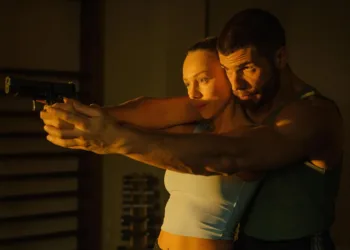




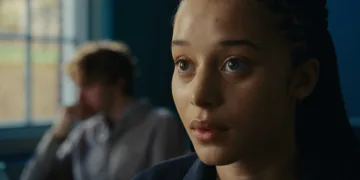















A strange 999 call begins the story. On the other end of the line is Sophie, a young mother whose voice betrays a confusing lack of panic after she has just stabbed her boyfriend, Ryan, with a kitchen knife. This single piece of evidence becomes a central puzzle in The Jury: Murder Trial, a series that pulls back the curtain on one of society’s most guarded rituals.
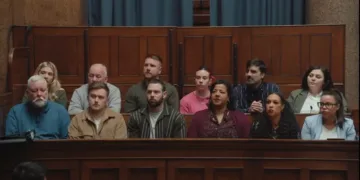
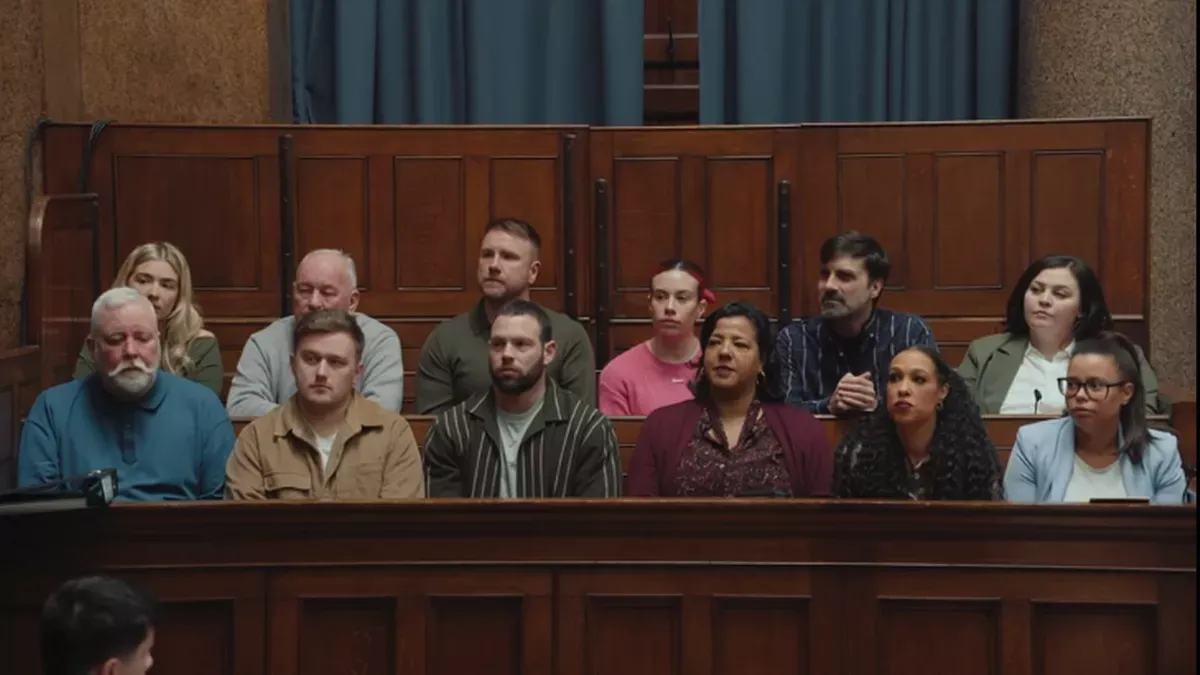
The show’s architecture is simple: it meticulously recreates a real murder case, word for word from court transcripts, and presents it to twelve new jurors. Their task is to deliberate on camera, giving viewers access to a process that is legally hidden from sight.
The question before this jury is deceptively straightforward. Sophie admits she killed her partner, but she insists it was self-defense against a man who was strangling her. Was this a final, desperate act of survival, or something else entirely? The series hangs on their answer, turning a legal proceeding into a profound examination of human judgment.
A Trial of Competing Realities
The case presented to the jury is not a clean narrative but a fractured mosaic of competing truths, each piece contested and clouded by ambiguity. The prosecution builds its argument around Sophie’s behavior, methodically constructing a portrait of a woman whose actions seem out of step with those of a terrified victim.
Her composure during the emergency call is presented as a damning inconsistency, a calm that feels calculated. They parse her statements to the police, highlighting omissions and contradictions that suggest a fabricated story.
The prosecution’s strategy is to dismantle the idea of a spontaneous act of defense, replacing it with a more sinister image of a deliberate, controlled killing. They argue that the physical evidence does not align with a desperate struggle for air, but points toward a conscious decision to use lethal force.
The defense counters this narrative with one of protracted suffering and imminent threat. They paint a grim picture of the couple’s shared life, presenting evidence of Ryan’s past violent behavior and controlling nature. Their argument is that the stabbing was not an isolated event but the culmination of a long history of abuse that conditioned Sophie to fear for her life.
The act of grabbing the knife, they contend, was an almost instinctual response to the immediate, terrifying sensation of being strangled. The defense asks the jury to look beyond the moments following Ryan’s death and consider the psychological context that preceded it. They introduce testimony that recasts Sophie not as a cold-blooded killer, but as a cornered individual who finally fought back.
Key pieces of evidence become interpretive battlegrounds. The shocking CCTV footage from earlier in the evening shows a heated argument, but it is just ambiguous enough to support either side’s claims. Does it depict a woman at her breaking point or a couple engaged in a typical, albeit volatile, dispute? Each juror sees something different.
The trial becomes a lesson in the slipperiness of facts when viewed through the prism of human storytelling. The legal concept of self-defense, with its requirements of reasonable force and imminent danger, is a complex standard for legal professionals, let alone twelve ordinary citizens.
The show skillfully demonstrates how these laypeople must grapple with arcane legal definitions while processing a flood of emotionally charged information, turning the courtroom into a stage for two powerful, mutually exclusive stories.
The Crucible of Deliberation
When the courtroom doors close and the twelve jurors are left alone, the formal, structured conflict of the trial dissolves into a far messier human drama. The deliberation room becomes an intense crucible, a pressurized environment where logic, emotion, prejudice, and empathy collide. From the outset, it is clear that the jurors are not blank slates.

They are carriers of their own histories, and these histories immediately begin to shape their interpretation of the evidence. A man who proudly identifies with the struggles of the working class instinctively sides with the defendant.
Jurors who have had personal encounters with domestic violence see Sophie’s actions through a lens of shared experience, either defending her fiercely or judging her for not leaving sooner. These pre-existing frameworks become the dominant force in the room, often eclipsing the judge’s instructions to remain impartial.
The group dynamics quickly become as fascinating as the trial itself. Factions form not just around opinions of guilt or innocence, but around personalities. Confident, outspoken individuals assume leadership roles, driving the conversation and attempting to sway the undecided. Quieter members recede, their doubts perhaps unspoken, their influence muted by the force of more dominant voices. The debate is rarely a dispassionate sifting of facts.
It is a series of emotional appeals, impassioned arguments, and frustrated outbursts. Tempers flare as jurors accuse one another of failing to listen or of being blinded by their own biases. Moments of genuine connection and understanding are punctuated by episodes of intense disagreement, with alliances shifting as new points are raised.
The camera captures the subtle shifts in body language, the exasperated sighs, and the looks of steadfast conviction. This season’s focus on a single jury provides a sustained, claustrophobic look at this process, revealing how a unanimous verdict is forged not always through consensus, but sometimes through attrition, persuasion, and the immense psychological weight of holding a person’s future in one’s hands.
Justice Under the Microscope
By putting the jury itself on trial, the series forces a wider reckoning with the ideals of the justice system. It stages a direct confrontation between the legal fiction of a dispassionate jury of one’s peers and the observable reality of twelve deeply biased individuals.
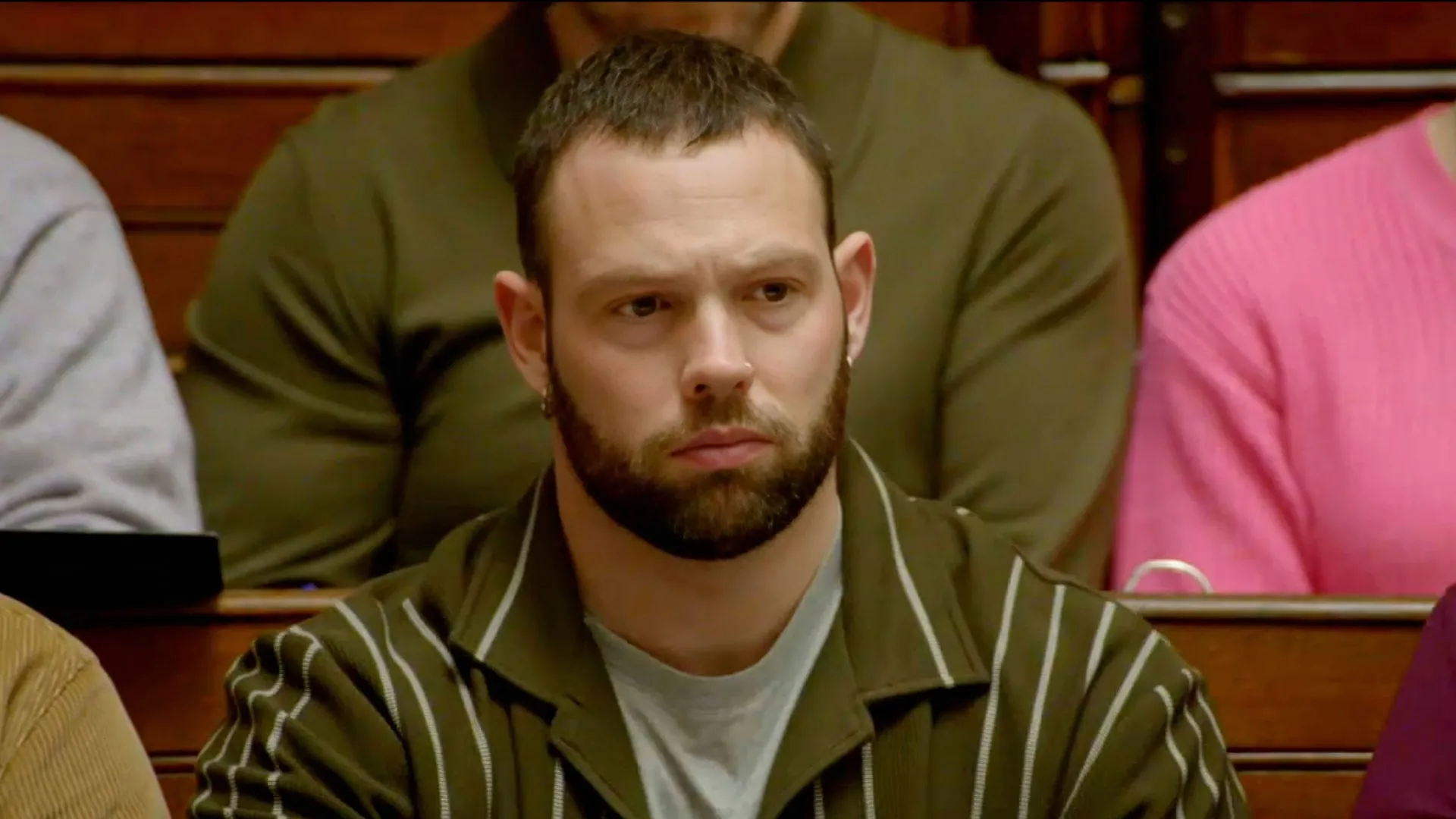
The program functions as a powerful, if unsettling, piece of social commentary. It suggests that the verdicts reached in courtrooms every day may be more contingent on the random assortment of personalities in the jury box than on the objective weight of the evidence.
The experiment arrives at a moment when the very existence of jury trials is being questioned for its cost and inefficiency. The show provides a compelling, visceral argument for their value, even as it exposes their profound flaws. It demonstrates that the process, for all its imperfections, involves a kind of collective moral struggle that could never be replicated by a single judge.
Simultaneously, the program’s format raises its own set of ethical and philosophical questions. There is an inherent paradox in using the highly constructed medium of reality television to reveal something “true” about justice. Every camera angle, every editorial choice, shapes the viewer’s perception, making us participants in a new form of trial by public opinion.
The real tragedy of a young man’s death and a young woman’s trial is repackaged as a serialized drama, complete with cliffhangers and character arcs. Does this scrutiny illuminate the process, or does it merely turn human suffering into a spectacle?
The show offers no simple resolution. It presents the jury system as a mirror to society itself: a messy, imperfect, yet essential human endeavor. It reveals that the search for justice is not a clean, linear path to a final truth, but a difficult negotiation between law, morality, and the unpredictable contents of the human heart.
The Jury: Murder Trial is a British docu-drama television series that recreates a real-life murder trial with a fictional cast and two randomly selected juries, who are tasked with reaching a verdict without knowing the outcome of the original case. The four-part second season of the show premiered on Channel 4 on Tuesday, August 26, 2025, with episodes airing nightly until Friday, August 29. The episodes are also available for streaming on the Channel 4 on-demand platform.
Full Credits
Directors: Misha Manson-Smith, Carys Lewis
Writers: Ed Kellie, Harry Smyth, Will Stanbridge
Producers: Calum Bowen, Nikkita Punia, Tom Swingler, Emma O’Mara
Executive Producers: Ed Kellie, Max Shapira, Bruce Goodison, Fiona Fletcher
Cast: Georgia Hughes, Mikey Fantham, Sam Alexander, Katie Sheridan, Caroline Gruber, Jordan Mifsud, Ben Dilloway, Harry Anton, Ellouise Shakespeare-Hart
Director of Photography (Cinematographer): Richard Mott, Rik Burnell, Ben Richards, Graham Smith
The Review
The Jury: Murder Trial Season 2
The Jury: Murder Trial is a gripping and necessary piece of television. It masterfully reveals the chaotic, human-driven reality behind the idealized concept of justice by one's peers. The series is an unflinching examination of how personal history shapes legal outcomes, making for an uncomfortable yet profoundly insightful viewing experience. Its exploration of the jury system's inherent vulnerabilities is both its greatest strength and its most troubling revelation.
PROS
- Provides a rare and fascinating window into the secret process of jury deliberation.
- Functions as a powerful social experiment, revealing how personal bias influences judgment.
- The recreation of a real case creates high stakes and compelling human drama.
- Raises important questions about the effectiveness and fairness of the legal system.
CONS
- The reality TV format can feel manipulative and risks turning a real tragedy into a spectacle.
- Ethical questions arise from dramatizing a real person's trial for entertainment.
- The focus on interpersonal conflict may occasionally overshadow the complex legal details of the case.