








![Kingdom Hearts Collection [I-III] Review](https://gazettely.com/wp-content/uploads/2026/10/Kingdom-Hearts-Collection-I-III-1-360x180.webp "Kingdom Hearts Collection [I-III] Review: KHII Holds Steady as Newer Entries Fluctuate 33")






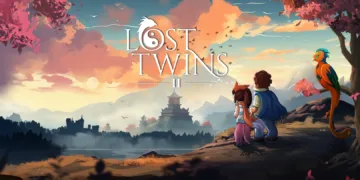
Lost Twins 2 opens with a quiet sense of wonder, immediately placing players into a painterly world with its twin protagonists, Abi and Ben. After the pair is pulled through a mysterious portal in their home, they find themselves in a series of magical landscapes.
Their goal is simple: navigate the environment and reunite at the exit portal of each stage. Guiding them from a distance is an enigmatic, phoenix-like bird, a creature based on the Fenghuang from Chinese mythology. It waits patiently at every exit, though its true purpose remains unclear. Is it helping the twins find their way home, or does it have another plan?
This narrative ambiguity sets a gentle, inquisitive tone. The game’s visual presentation strongly evokes the works of Studio Ghibli, calling to mind the art direction of games like Ni no Kuni. The hand-painted quality creates a soft, inviting atmosphere for a thoughtful puzzle adventure, one that operates without the pressure of enemies or timers.
The Art of Shifting Worlds
At its foundation, Lost Twins 2 presents itself as a straightforward puzzle-platformer. The controls are immediately familiar to anyone versed in the genre. The platforming feels responsive yet forgiving, designed to facilitate puzzle-solving rather than to test twitch reflexes. There are no punishingly precise jumps or demanding dexterity checks.
Players guide Abi and Ben to run, jump, and interact with simple objects like pushable boxes and climbable ropes. In the solo experience, a single button press seamlessly swaps control between the two siblings. This character-swapping is not a minor feature; it is integral to the puzzle design.
It requires a specific kind of mental juggling, forcing the player to constantly track the positions and potential actions of two separate characters to solve a single, cohesive puzzle. The true innovation, however, lies in the game’s central mechanic, which fundamentally alters the player’s relationship with the environment.
With the press of a button, the player can zoom out to a “design view,” revealing the level is constructed from large, movable blocks. This view transforms the game space from a static stage into a dynamic, malleable object. Here, the player can slide entire chunks of the environment left, right, up, or down along fixed paths, much like a classic sliding tile puzzle.
This system is conceptually similar to the map manipulation in the top-down adventure Carto, but its application in a side-scrolling platformer creates a unique set of vertical and horizontal challenges. The constraints are key; pieces cannot be moved freely but are locked into specific rotational or linear paths, preventing brute-force solutions and demanding foresight. Success depends on a careful blend of spatial reasoning and meticulous character placement.
A typical puzzle might require you to position Abi on a seemingly isolated platform. Then, you must zoom out to the design view, slide that entire section across the screen to connect with a different part of the level, and then switch back to Abi to have her proceed.
These sequences grow increasingly complex. Imagine a scenario where Ben must push a box onto a pressure plate on one tile. This action might lower a temporary bridge on a completely separate tile. You would then need to guide Abi across that bridge before the timer expires. Afterward, you might need to slide Abi’s entire section upwards to align with a ledge containing a necessary key.
This multi-step process, involving both twins acting in concert across disconnected spaces, is the intellectual core of Lost Twins 2. The game builds upon this foundation at a steady pace, introducing new elements like energy walls that collapse when a switch is held down, or water gates that alter liquid physics. Each new mechanic forces the player to re-contextualize the core tile-shifting system, ensuring the challenge evolves throughout the journey.
Sights and Sounds of a Gentle Place
The aesthetic of Lost Twins 2 is a masterclass in using visual and audio design to support gameplay. The immediate comparison is to the works of Studio Ghibli, and the inspiration is clear in every frame. It is not just a superficial resemblance; the game captures the specific sense of quiet wonder found in films like My Neighbor Totoro and the dreamlike mystery of Spirited Away.

The painterly backgrounds and soft, expressive character models evoke the “playable storybook” quality seen in games like Ni no Kuni, creating an atmosphere that is consistently gentle and inviting. This artistic direction is the result of a deliberate technical choice: combining 2D, hand-drawn characters with 3D, polygonal environments.
This approach serves a critical gameplay purpose, creating a clear visual distinction between the interactive characters and the static background. This clarity is essential, especially when the player is zoomed out in the design view, planning their next move.
According to the developers, maintaining this visual coherence between the zoomed-in character view and the zoomed-out puzzle view was a significant challenge. The team employed techniques like baked lighting and modular environment kits to give the 3D worlds a non-repetitive, hand-crafted feel that would match the 2D art. The results are impressive.
The twins travel through several distinct worlds, each with its own strong thematic identity. A frozen castle is filled with crystalline structures and cold, ambient light, conveying a sense of beautiful solitude. An enchanted forest feels alive with dappled sunlight filtering through a dense canopy. A world made of toys is vibrant and chaotic, with puzzles cleverly integrated into its playful theme.
The audio design is just as thoughtfully implemented. The game practices a form of ludomusical harmony, where the soundtrack is designed explicitly to enhance the intended gameplay experience. The score is composed of gentle, thematic pieces, carried by soothing piano lines and airy strings. In a genre that can sometimes induce frustration, the music here does the opposite.
It is intentionally minimalist and calming, creating the mental space necessary for players to concentrate on complex spatial problems without feeling rushed or stressed. It never becomes intrusive or repetitive. Instead, it fades into a pleasant background hum that supports the on-screen action perfectly. The ambient sound effects, from the soft patter of the twins’ feet to the gentle whoosh of a shifting platform, all contribute to this tranquil and deeply focused atmosphere.
Deeper Puzzles and Shared Paths
The game’s structure is built around 33 distinct puzzle levels, which are divided among three main zones accessible from a central overworld hub. While the primary goal is simply to reach the exit of each stage, the design encourages deeper engagement through secondary objectives. Each level contains three strategically placed feathers, often located in hard-to-reach spots that require a more advanced understanding of the mechanics to collect.

Their purpose is to unlock pieces of concept art, offering a reward for players who explore every nook and cranny. A more substantial layer of challenge comes from the game’s achievement system, which is external to the game itself.
Nearly every level has an associated meta-objective, such as completing it using only one of the twins or grabbing all the feathers with a specific character. These tasks function as a form of embedded difficulty scaling. They transform a straightforward puzzle into a devious brain-teaser, forcing a complete reevaluation of a level’s solution and adding significant replay value for dedicated puzzle solvers.
This thoughtful design extends to the game’s play modes. The solo experience is a meditative and methodical affair. It is a game of internal coordination, where you must visualize a sequence of actions for both characters in your mind before executing them one by one.
The co-op mode, however, changes the dynamic completely. Here, two players each control one twin, and communication becomes the central mechanic. The challenge shifts from internal planning to external collaboration. A puzzle that was a test of personal logic for a solo player becomes a test of teamwork and shared understanding for a duo. This design allows the same set of puzzles to offer two distinct experiences.
The game’s overall pacing feels best suited for shorter, more focused sessions. The puzzles can be mentally taxing, and because the narrative is minimal, the primary reward loop is the intrinsic satisfaction of solving a difficult challenge. Playing in short bursts prevents mental fatigue and keeps the “aha!” moments feeling fresh and rewarding.
The replay value comes not from a branching story, but from revisiting levels to hunt for collectibles, tackling the difficult achievement-based challenges, or experiencing the entire game again with a friend. Whether played alone or with a partner, Lost Twins 2 offers a well-crafted and intellectually stimulating puzzle experience.
The Review
Lost Twins 2
Lost Twins 2 is a beautifully crafted and intellectually rewarding puzzle-platformer. Its central tile-shifting mechanic is a genuine innovation, providing a deep and satisfying challenge that evolves perfectly across its many stages. While its story is minimal, the game's gorgeous Ghibli-inspired visuals and calming atmosphere create a memorable experience. It is a thoughtful adventure that respects the player's intelligence, offering a superb experience for both solo puzzle enthusiasts and co-op partners.
PROS
- Innovative and mentally engaging core puzzle mechanic.
- Stunning, Ghibli-inspired art style and world design.
- Relaxing atmosphere supported by a soothing soundtrack.
- Well-designed for both solo and local co-op play.
- High replay value through collectibles and difficult secondary objectives.
CONS
- Minimalist narrative offers little motivation beyond the puzzles themselves.
- Puzzles can be mentally demanding, making the game better in short sessions.
- Secondary challenges are not tracked within the game itself.