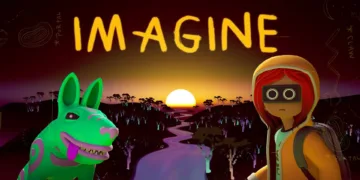












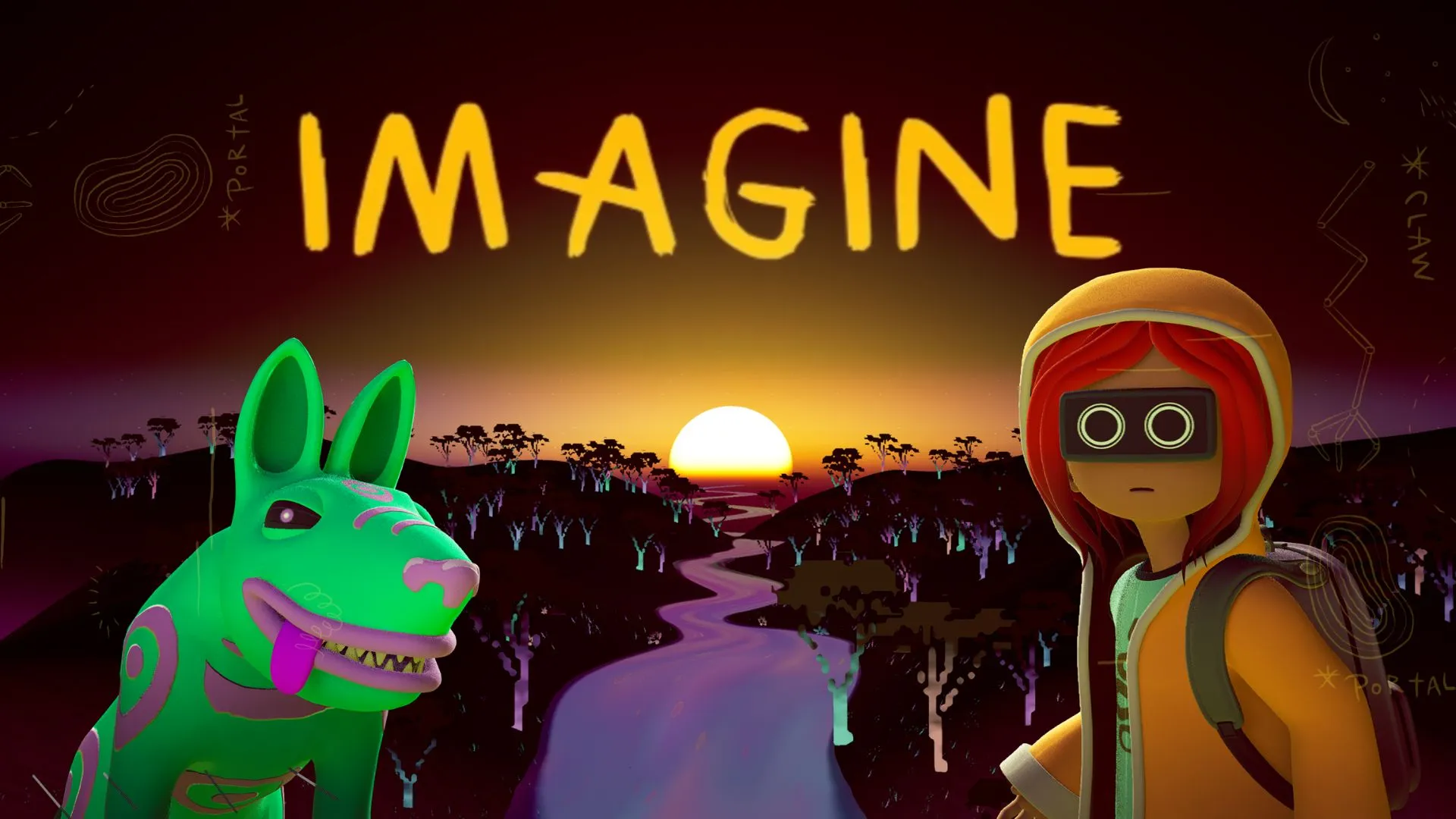

To say one has seen Imagine is like saying one has seen a fever dream. Attempting a linear explanation is a fool’s errand. The film begins, and you are immediately pulled into its chaotic current. We follow a teenager named Kim, accompanied by Jeff, a bright green alien dog, as they are unceremoniously yanked from reality into a surreal alternate universe.
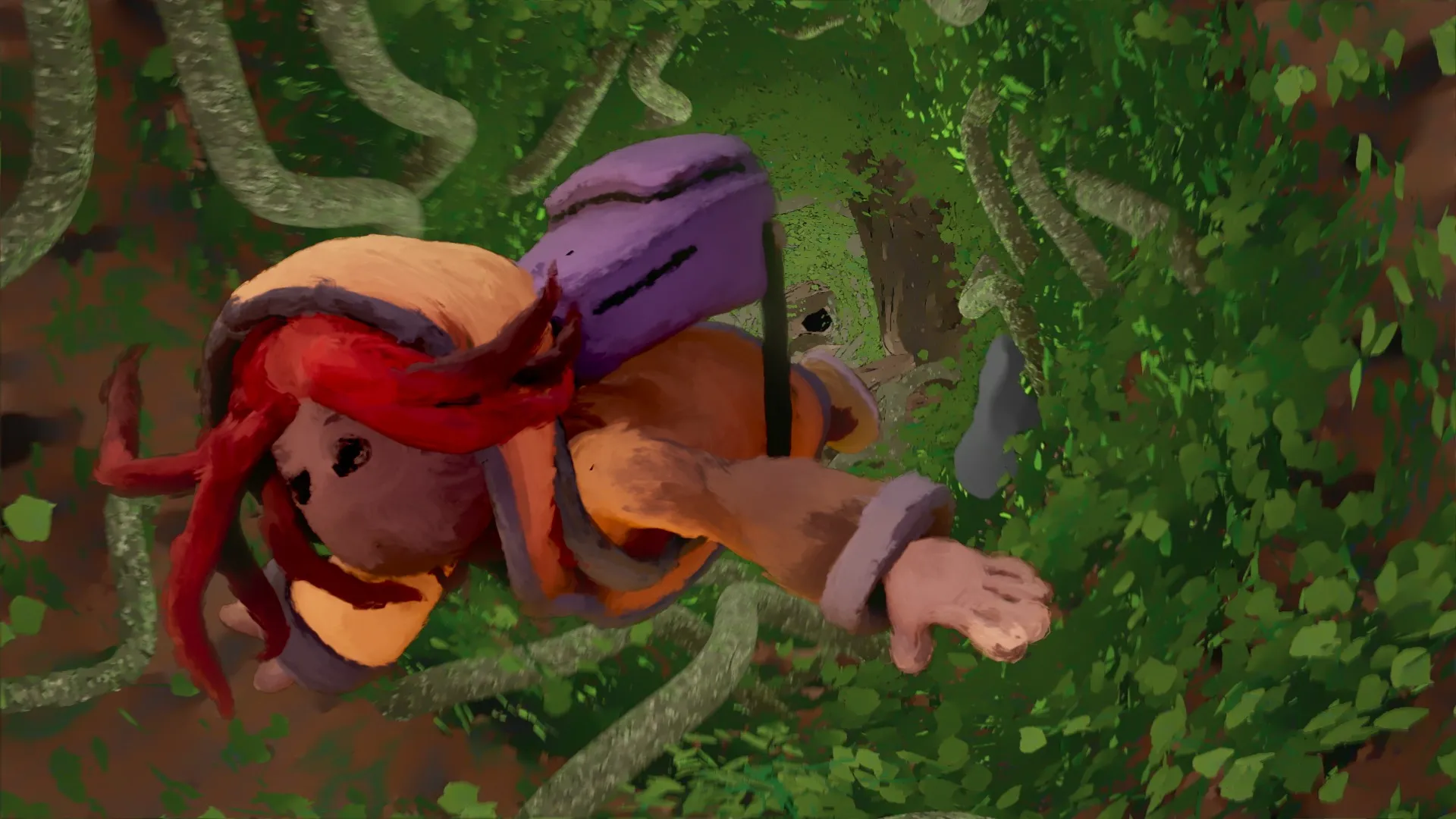
The entry is a vortex of swirling colors and bizarre patterns. Kim floats past a giant glowing Buddha and rides a psychedelic dragon-like snake, because in this world, why not? This is not a story in the conventional sense. It is an experience, a head trip, a visual rant that makes you question if you accidentally consumed something you should not have beforehand. It defies simple summary.
Narrative as a Pinball Machine
The film discards traditional plot structure entirely. Its narrative functions like a pinball, bouncing frantically between five different islands without much rhyme or reason. This structure feels less like a deliberate choice and more like a symptom of the film’s genesis, a collection of disparate ideas from many contributors fused into a single, hyperactive entity.
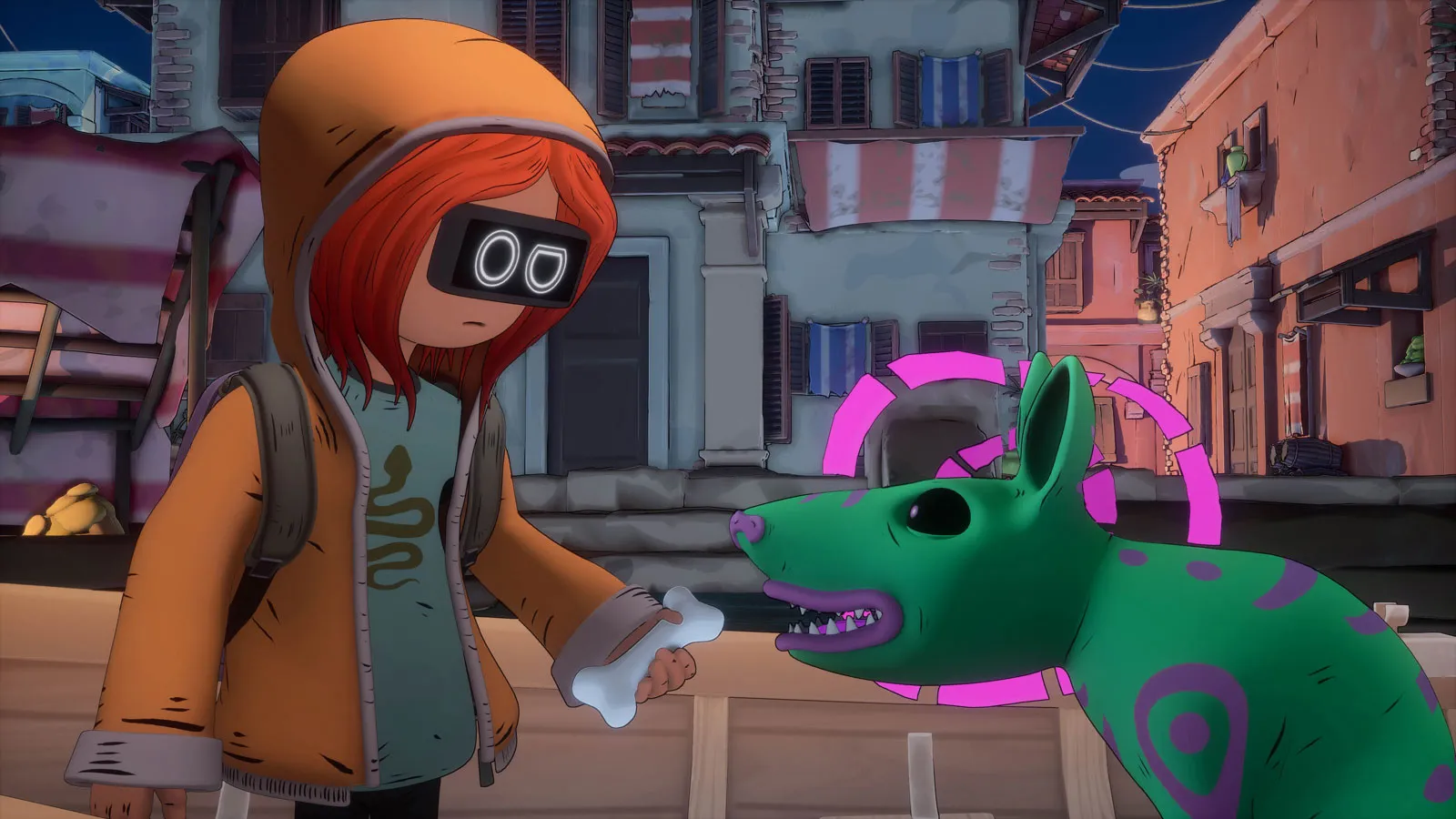
Kim serves less as a protagonist with agency and more as a sponge, a passive vessel through which we absorb the strange happenings. Like the protagonist of Waking Life, Kim is a perpetual observer, moved through candy-colored bizarro worlds with some input but no real personal arc. This character design keeps the audience at a distance, preventing any deep emotional connection. We are not on a journey with Kim; we are simply watching Kim’s journey.
The pacing is relentless, creating a sense of narrative whiplash. The film has a peculiar habit of introducing visually arresting concepts, like pirate-like rats riding jetskis or a Viking engaging in deep philosophical debate, only for them to vanish before they can make an impact. They are firecrackers of imagination that pop and then disappear into some unseen dimension.
This constant churn of ideas prevents any single concept from being properly explored. The whole affair feels like being whisked through a series of amazing environments in a speeding car, never slowing down enough to have a proper look around. It is a form of cinematic tourism where the sights are profound, but the tour guide refuses to stop the bus. Any chance for deeper engagement is lost in the rush to the next spectacle.
An Eclectic Animation Style and Disjointed Soundscape
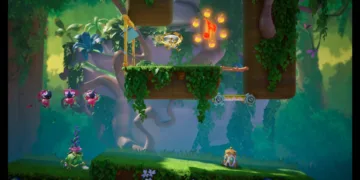
Visually, the film is a work of eclectic and sometimes stunning imagination. The world-building is its strongest asset, filled with eccentric creations like a wise rainbow serpent and curious insect-like beings who listen to Taika Waititi, appearing as himself, give a speech in a Thriller jacket. The animation style itself is a mixed bag, a deliberate collage of different techniques.
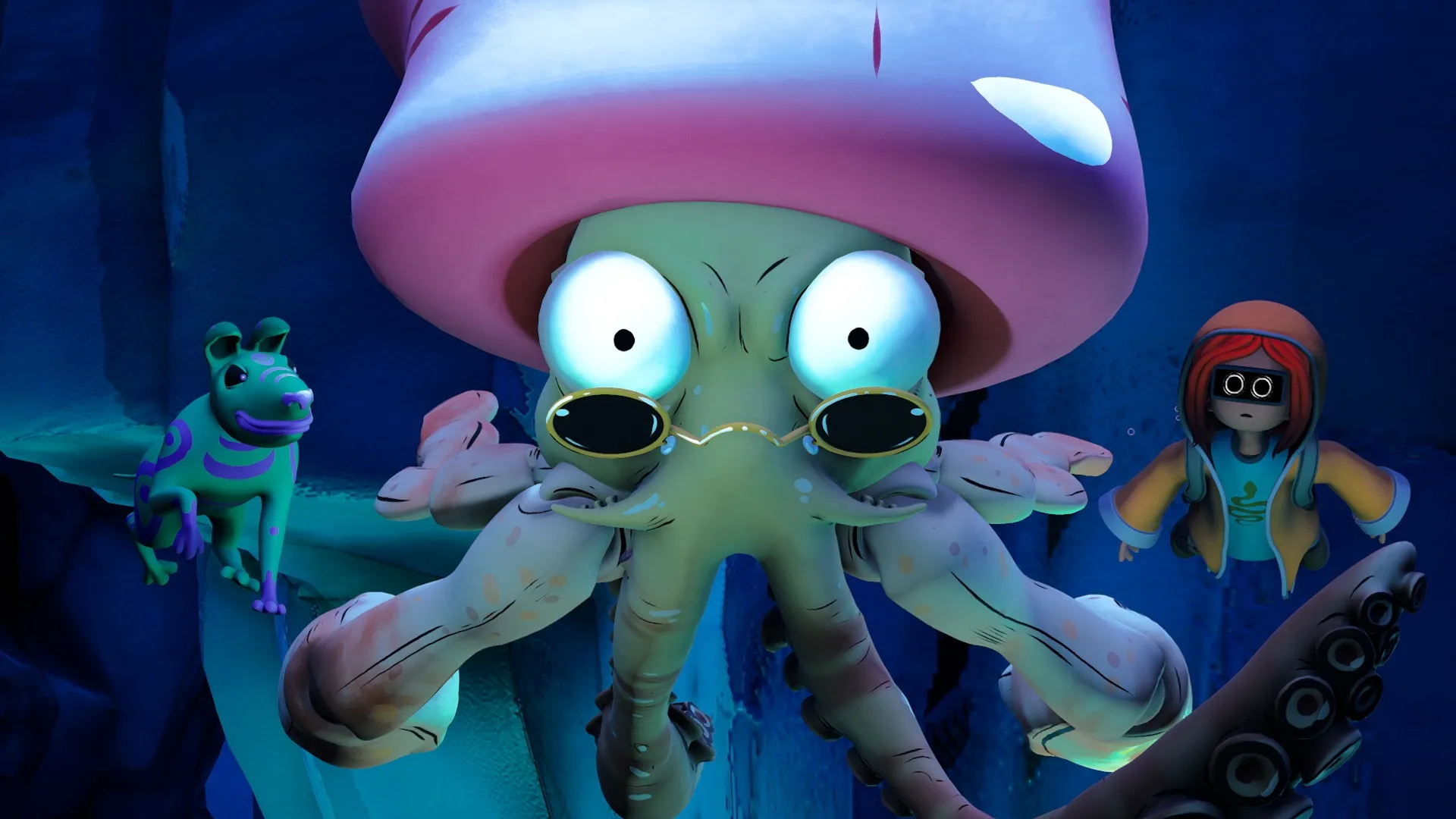
It shifts between beautifully vivid, polished sequences that could belong in a mainstream feature and moments that are intentionally scratchy and lo-fi, as if sketched in a notebook. This visual dynamism is certainly interesting, but it contributes to the feeling of incoherence, a film at war with its own aesthetic. The sheer creativity is undeniable, yet it is a creativity without a firm anchor.
This visual inventiveness is unfortunately hampered by a disjointed soundscape. Much of the dialogue sounds as if it were recorded remotely over a spotty internet connection, an artifact of its pandemic-era production. This creates a distracting disconnect, a sonic amateurism that clashes with the visual ambition.
The problem is compounded when dense, philosophical monologues are laid over extravagant on-screen movements. The viewer is forced into a difficult choice of what to focus on. You can either listen to the words about institutional praxis or watch the psychedelic visuals, but doing both at once is a genuine challenge. The film speaks to you and shows you things simultaneously, ensuring you fully grasp neither.
A Collision of Profound Ideas and Hectic Execution
Herein lies the film’s central paradox. It is filled with big, meaty ideas. The script tackles cyborg shamanism, economic portfolios, and complex geopolitical issues with the casualness of a daytime talk show. This intellectual density is the film’s greatest asset and its most significant flaw.
One powerful scene set in a museum offers a sharp Indigenous perspective on history, where an elder explains how colonizers took memories, called them artifacts, and put them behind glass. This is a moment of profound, necessary commentary, a critique of how Western culture curates and sanitizes the past. It could have been a magnificent centerpiece. Instead, the film’s ever-frantic approach boots us out of the museum before the idea can fully land, rushing off to the next curiosity.
This mismatch between the animated medium and the academic discourse raises questions about its intended audience. The visuals suggest a family film, yet the dialogue feels like a university lecture delivered at triple speed. It is almost pretentious in its assumption that viewers, particularly younger ones, can absorb these complex topics when presented in such a chaotic fashion.
Imagine is a one-of-a-kind production, an ambitious experiment that is memorable for its frenetic energy. Its ambition is clear, but its execution prevents it from reaching the depths it so clearly wants to explore. It is a film that will linger in the memory, not for its story, but as a beautiful, frustrating, and utterly strange puzzle.
The Australian animated drama film Imagine, blending Indigenous knowledge and animation, had its world premiere in Australia on August 17, 2025.
Full Credits
Director: Jack Manning Bancroft, Tyson Yunkaporta
Writers: Jack Manning Bancroft, Tyson Yunkaporta
Producers and Executive Producers: Leia Alex, Jack Manning Bancroft, Mark Grentell, Anne Robinson
Cast: Yael Stone, Tai Hara, Wayne Blair, Jake Speer, Dane Simpson, Tyson Yunkaporta, Waangenga Blanco, Radical Son, Irmin Durand, Stephani Beck, Rune Hjarnø Rasmussen, Yolande Brown
The Review
Imagine
Imagine is a cinematic paradox. It is a visually stunning and intellectually ambitious experiment that drowns its own profound ideas in a relentless current of chaotic energy. The film's frantic pacing and disjointed structure prevent any deep engagement, leaving the viewer with a sense of whiplash. It is a memorable and singular creation, a beautiful, frustrating, and utterly strange puzzle that you will think about long after, even if you do not fully understand it.
PROS
- Exceptionally creative and imaginative world-building.
- Tackles profound philosophical and political ideas.
- Presents a powerful and necessary Indigenous perspective on history.
CONS
- The narrative is incoherent and lacks a clear structure.
- Frantic pacing undermines its own thematic depth.
- Poor audio quality creates a distracting viewing experience.
- A significant mismatch between the complex subject matter and the chaotic, child-like animation style.