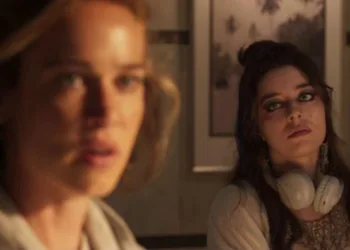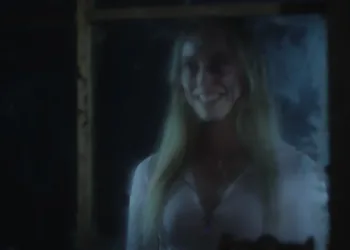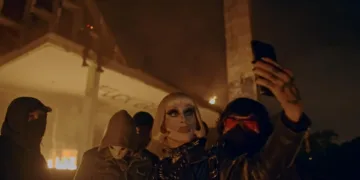

















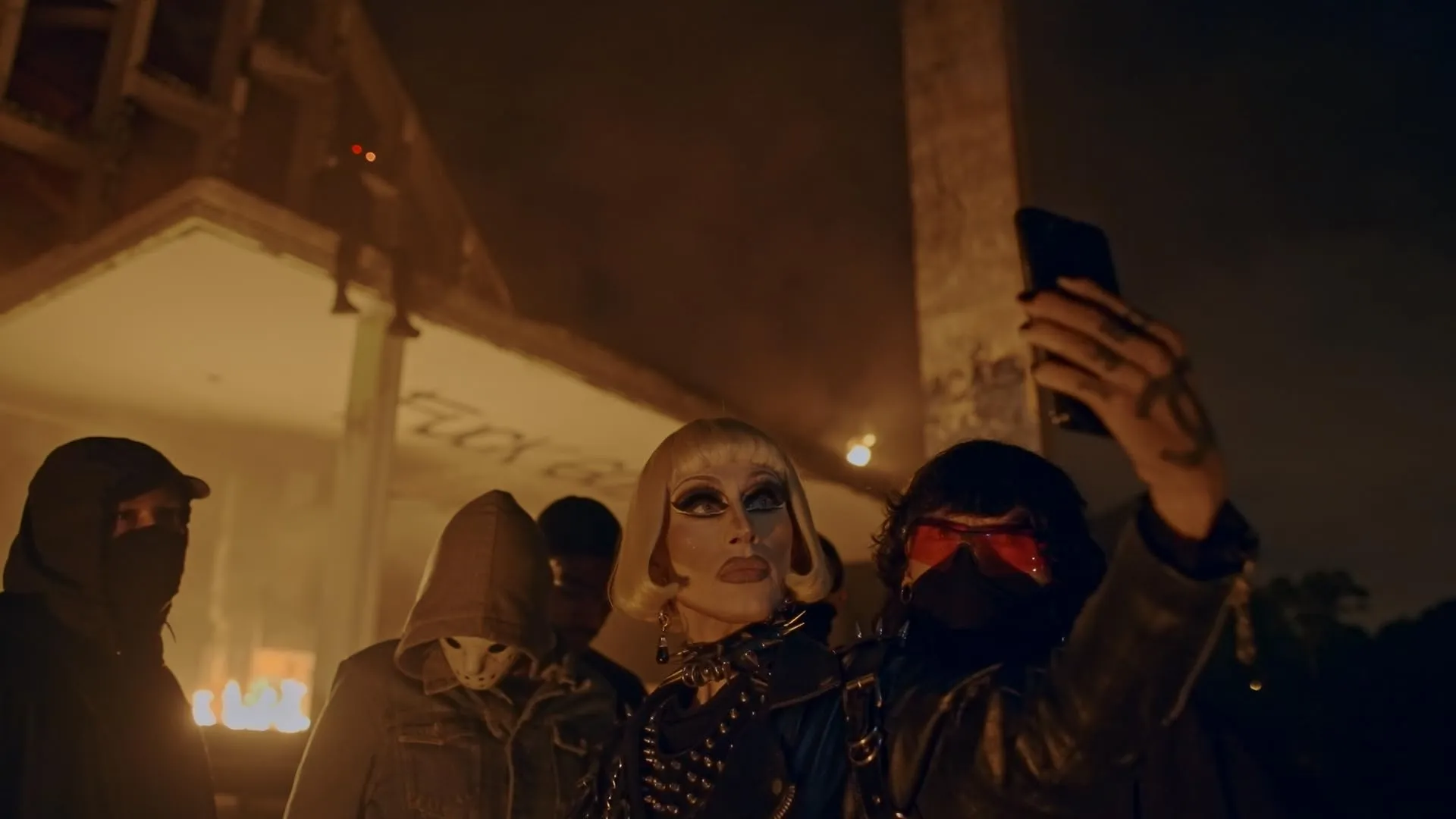

The film opens with a hearse cutting through the nocturnal streets of Medellín, Colombia. From inside an open casket, director Theo Montoya narrates his own story and that of his city. This morbid framing immediately sets the tone for Anhell69, a deeply personal and somber cinematic artifact. The film is a portrait of Medellín’s queer youth, a generation living within a landscape defined by its enclosing mountains and shadowed by a history of profound violence.
What begins as Montoya’s attempt to cast a fictional B-movie becomes an unintentional elegy. It is a memorial for a circle of friends and artists, many of whom were lost to suicide and drug overdoses before the film could be completed. The project was irrevocably reshaped by the very real tragedies it ended up documenting.
The Hybrid Form: Blurring Life, Death, and Cinema
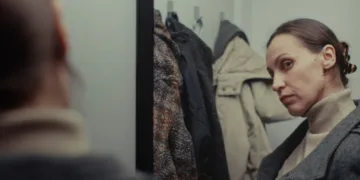
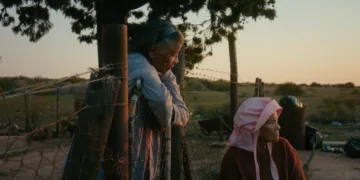
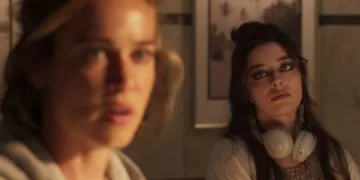
Anhell69 rejects conventional structure, mixing raw documentary footage with stylized scenes from a planned fictional movie. The documentary portions consist largely of unpolished audition tapes and interviews.
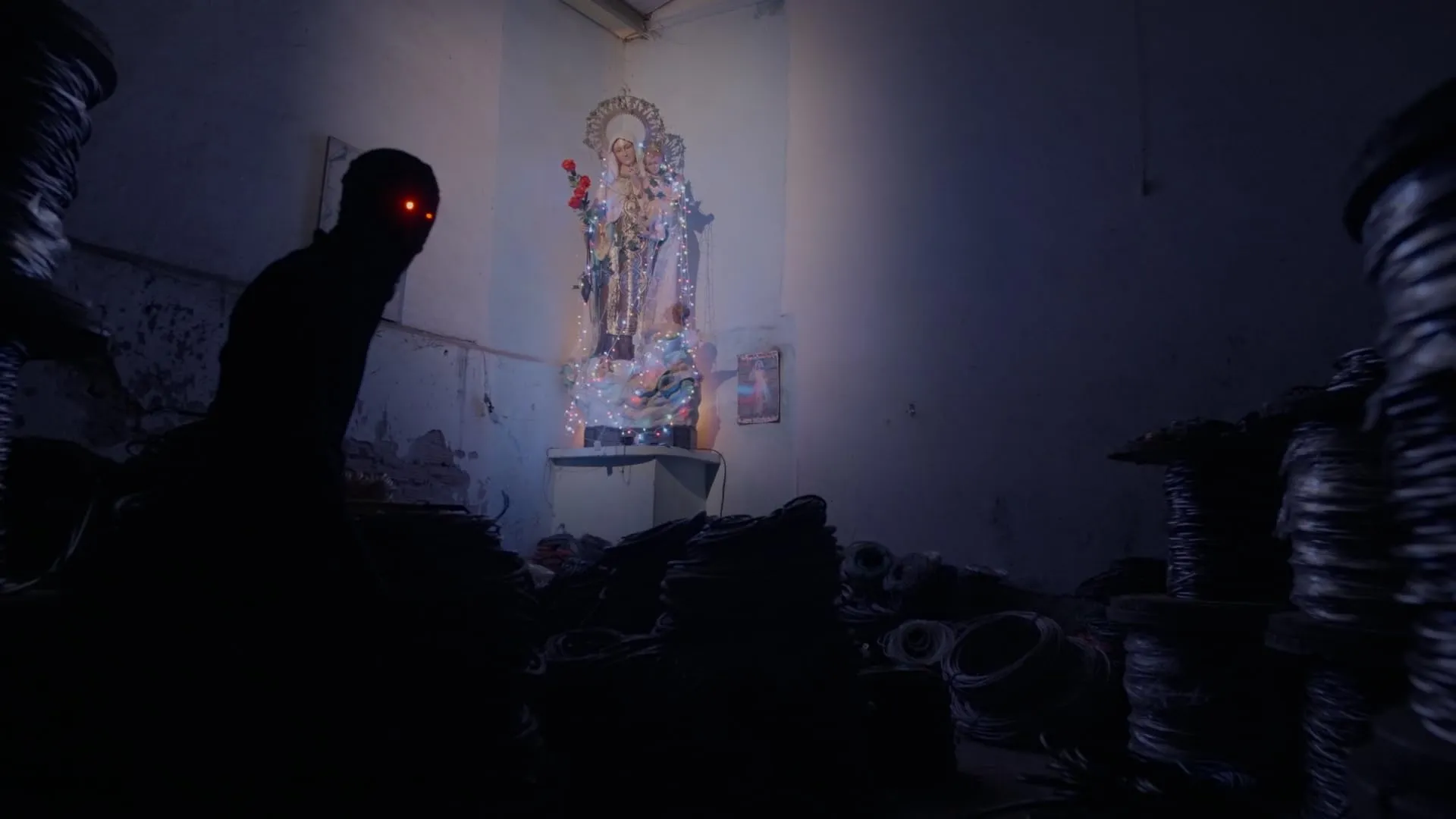
These are not performances but candid confessions, capturing Montoya’s friends before tragedy reframed their words as final statements. This reality is spliced with a B-movie plot set in a dystopian Medellín where the cemeteries are full, forcing ghosts to cohabit with the living. In this world, “spectrophilia,” or sexual love between humans and phantoms, becomes a common practice.
This fictional narrative is a direct, potent metaphor. In the film-within-a-film, the state and church pathologize this love, creating “spectrophile hunters” to eliminate those who engage in it. This mirrors the real-world persecution of queer people, whose love is often deemed unnatural or a threat to the social order. Loving a ghost is an act of defiance against a society that refuses to make space for you.
Montoya calls his work a “trans film,” a label significant beyond its inclusion of trans subjects. It describes the work’s transgression of boundaries: between documentary and fiction, art and memorial, life and death. The film itself has a fluid identity, embodying a rejection of the rigid binaries that its subjects fight against in their own lives.
A Portrait of Medellín’s Queer Youth
The film’s subjects are a generation convinced they have no future. While they did not live through the worst of the cartel wars, they inherited its aftermath: a society steeped in conservative values and normalized violence. Their nihilism is a direct response to this specific cultural context, a belief that the only viable option is to exist intensely in the present moment.
They find this existence in the temporary freedom of goth-raves, drugs, and radical self-expression. At the center of this group is the 21-year-old Camilo Najar, whose quiet charisma leads Montoya to cast him as the star. Camilo, who used the screen name ANHELL69, becomes the film’s spectral muse.
His death from a heroin overdose shortly after filming began is the tragedy that shatters the project’s original intent. Several other cast members would also die before completion, transforming Anhell69 from a piece of fiction into a painful act of remembrance.
Montoya’s work becomes a memorial built around the voids left by his friends. While bleak, the film also captures a community forged in shared marginalization. The nightclubs are shown as fleeting sanctuaries where identity can be freely expressed, making it all the more devastating that these spaces cannot protect them from their despair.
Visual Language and Somber Atmosphere
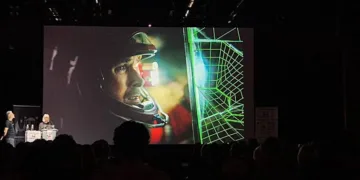
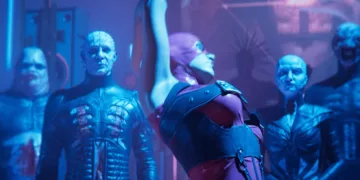
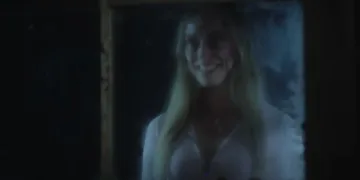
The aesthetic of Anhell69 is as fragmented as its narrative. Montoya employs a distinct film-noir style for the city scenes, using deep shadows to create a sense of pervasive dread. This is contrasted with the chaotic, strobing edits of nightclub sequences that capture the manic, fleeting energy of the youth culture. The fictional “spectrophilia” scenes possess their own visual grammar.
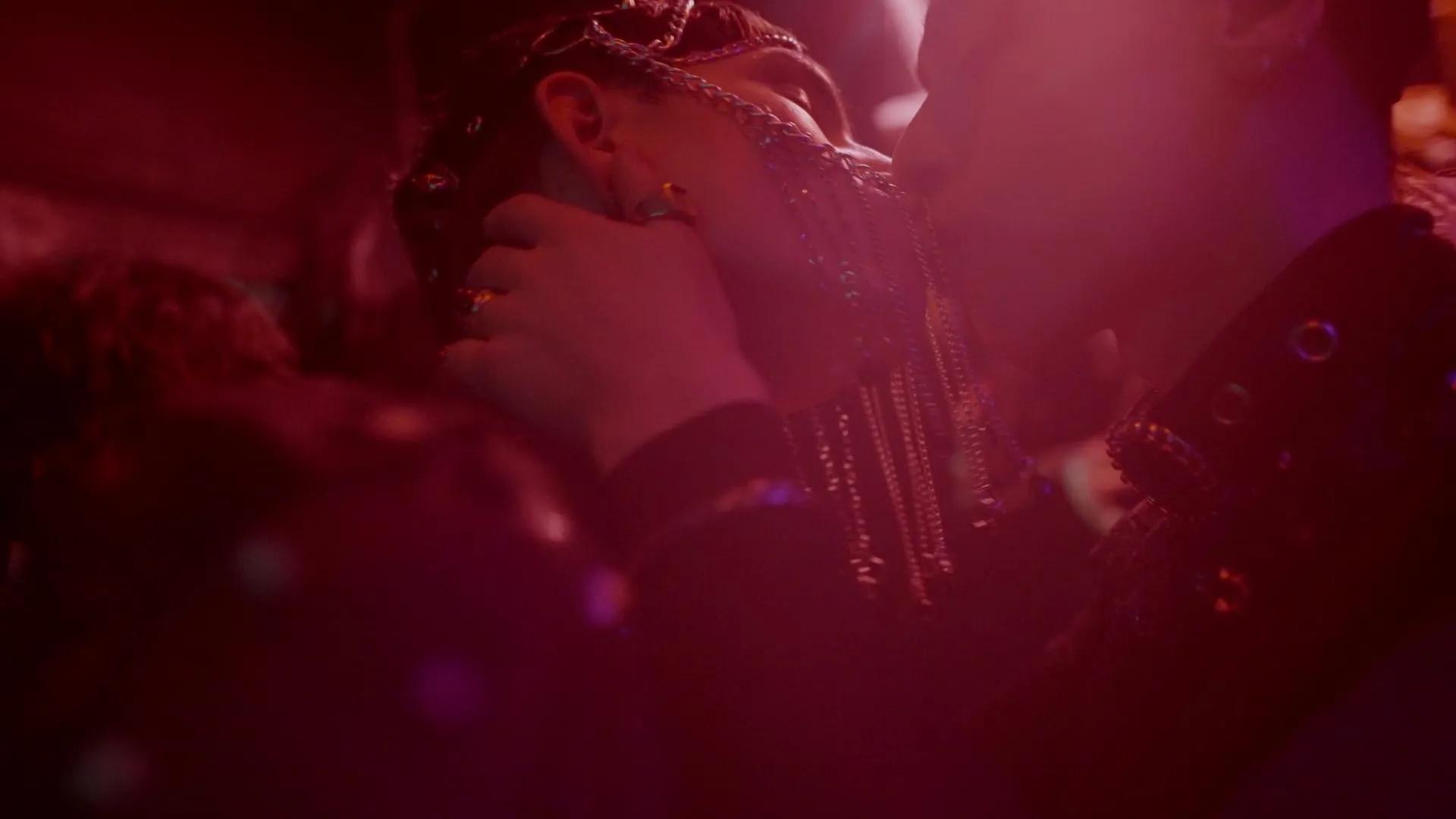
They are filmed with a hazy, dreamlike quality and saturated with deep reds and blacks, making the ghosts and their lovers appear unstuck from reality. This visual separation between the metaphorical world and the grainy, handheld style of the documentary footage is stark.
The cinematography reinforces a sense of alienation. High-altitude drone shots render Medellín at night as an abstract pattern of lights, a beautiful but impersonal entity indifferent to the lives within it. The pulsating, otherworldly electronic score acts as the film’s nervous system, its rhythm mimicking an anxious heartbeat. The final shot, which shows the surviving friends huddled together in a cemetery, provides a potent closing image. It is a quiet tableau of a community that has found itself, far too soon, living among the dead.
Anhell69 is a 2022 film that blends documentary and fiction. It was directed by Theo Montoya and premiered at the Venice Film Festival. It explores the lives of queer youth in Medellín, Colombia, and serves as a tribute to those who have died. The film has been featured at various festivals and received several awards.
Full Credits
The Review
Anhell69
Anhell69 is a difficult, uncompromising piece of filmmaking. It operates as a raw elegy for a lost generation, blending documentary reality with a ghostly, metaphorical narrative. While its fragmented structure may challenge some viewers, its emotional force is undeniable. It's a painful yet essential look at a queer community caught between a violent past and a nonexistent future. The film is a transgressive act of memory that lingers long after the credits roll.
PROS
- Innovative structure blending reality and fiction.
- Deeply affecting personal and emotional story.
- Distinctive and memorable visual aesthetics.
- Apt and creative use of metaphor.
- Provides a rare window into Medellín's queer youth scene.
CONS
- Its disjointed narrative may prove difficult for some.
- Assumes viewer knowledge of Colombian socio-political history.
- The relentlessly grim atmosphere can be draining.
- Its meditative pace might feel slow to certain audiences.