












Paul Thomas Anderson’s One Battle After Another is an explosive thriller that throws warring ideologies into a generational conflict. This film marks Anderson’s most direct venture into the action genre, and he holds nothing back. The core story follows Bob, a former revolutionary played by Leonardo DiCaprio, who has traded his bomb-making days for a quiet, paranoid life raising his teenage daughter, Willa.
Their world is upended when a malevolent figure from his past, the vengeful military officer Steven J. Lockjaw, reappears with an old score to settle. The ensuing cat-and-mouse chase is a frantic fight for survival.
It is also a deep look at family, the weight of legacy, and the steep price of political conviction, with a 16-year time jump that allows the past to violently crash into the present. The film is an ambitious, tonally wild ride, mixing visceral action with dark, absurdist humor to create a potent commentary on the contemporary American political scene.
A Tale of Two Timelines
The film’s first act throws you directly into the fire with the militant revolutionary group “The French 75.” Their world is one of passionate idealism channeled through bank robberies and bombings against what they see as a fascist power structure. Anderson captures an electric, anarchic spirit, seducing the audience with the group’s daring raids on detention centers and passionate love affairs conducted between acts of rebellion.
The story here focuses on the dynamic between a young, energetic Bob, then called Pat, and his lover, Perfidia, a charismatic force of nature played by Teyana Taylor. Their initial confrontation with Colonel Lockjaw sets the stage for everything that follows. Perfidia’s complete humiliation of the officer during a raid is the inciting incident. She mocks his manhood, captures him, and toys with his infatuation. This single act lights a fuse of obsession in Lockjaw that burns for decades, a personal vendetta that will subsume his entire existence.
Then, the narrative makes a hard cut 16 years into the future. The anarchic energy of the past is replaced by the quiet paranoia of a sleepy small town. The shift in tone is immediate and effective. We find Bob as a burnt-out pothead, a ghost of his former self, whose fiery rhetoric has faded into jittery anxiety spent on a couch watching old political films. His relationship with his daughter Willa is strained. She is annoyed by his reclusive habits and polite confusion over her friends’ pronouns; he is terrified of the questions she has about the mother she never knew.
This fragile peace is shattered when Lockjaw re-emerges, reigniting the conflict and forcing the father and daughter duo on the run. The film’s pacing is relentless. For a movie approaching three hours, it moves with the speed of a 90-minute thriller. The editing is razor sharp, cutting between high-stakes action and quiet character moments without ever losing its propulsive momentum.
The Faces of a Fractured Nation
The characters in this film are a collection of broken idealists and monstrous zealots. Leonardo DiCaprio’s Bob undergoes a fascinating devolution. We see him first as a posturing revolutionary, full of bravado he may not possess. Later, he is a weak and frightened father whose past has finally caught up to him.
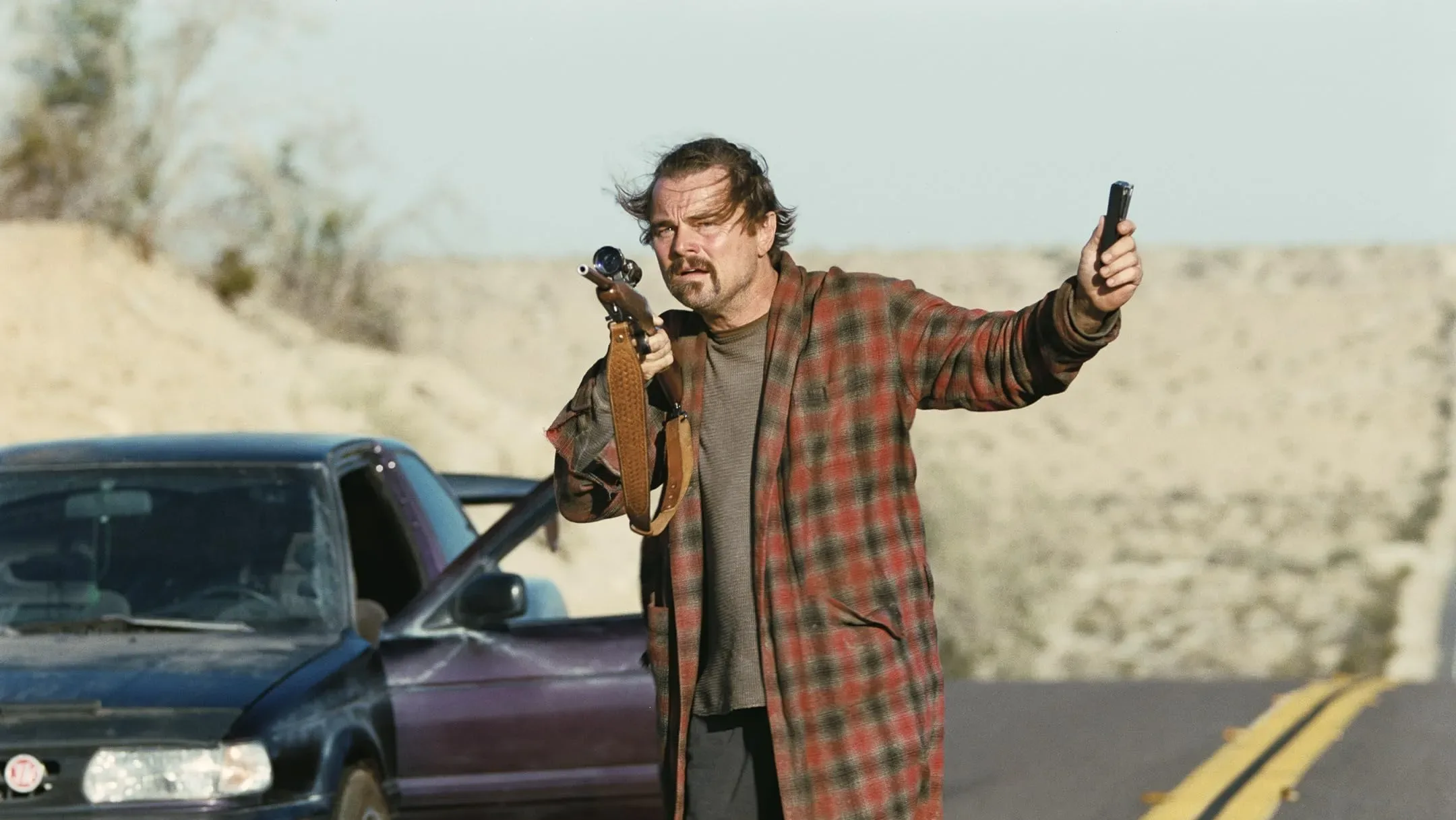
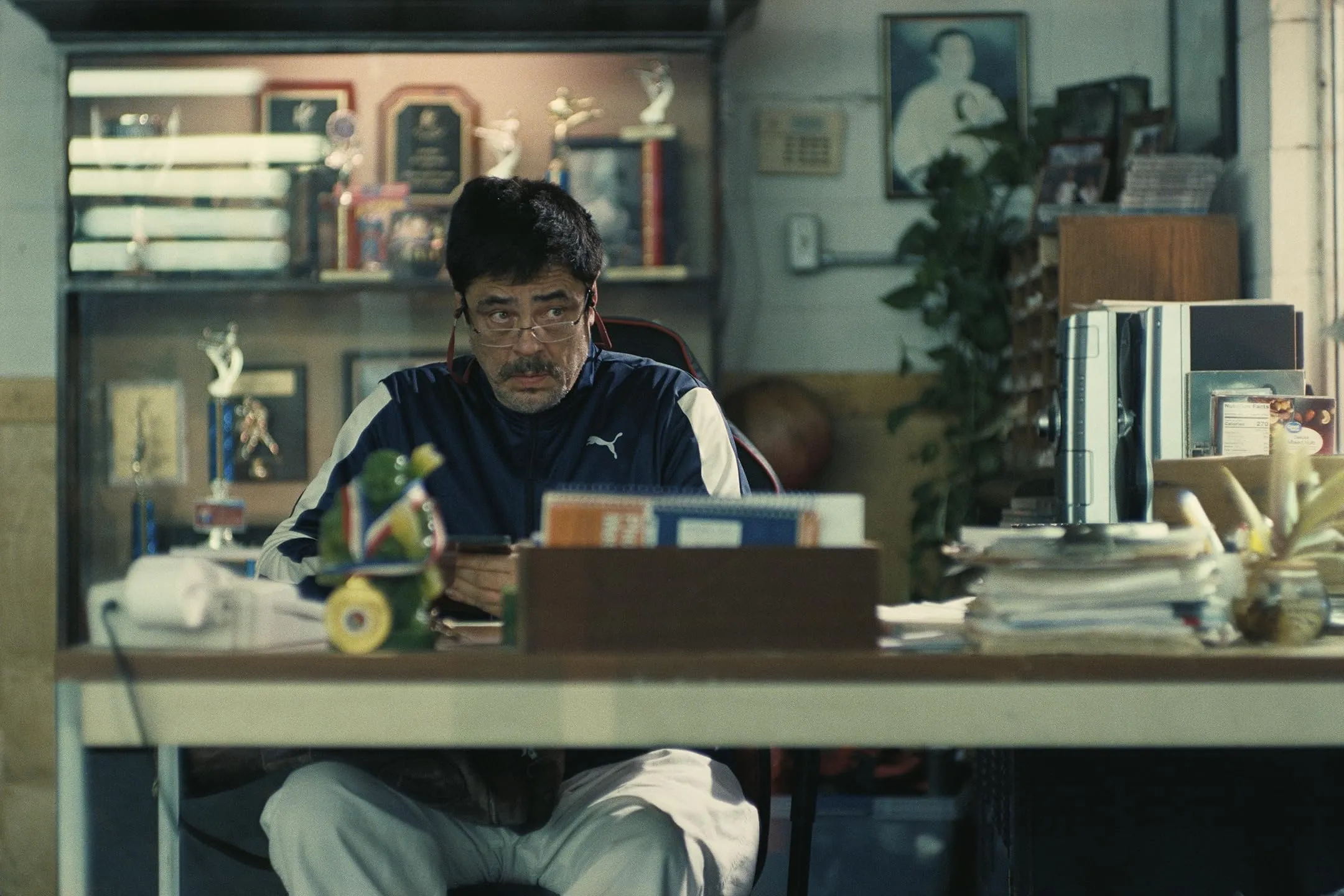
DiCaprio’s performance leans into the character’s pathetic nature, making him a comedic figure who must find a strength he only ever pretended to have. His frantic, bumbling attempts to evade capture, particularly with the help of Benicio Del Toro’s stoic sensei Sergio St. Carlos, provide moments of brilliant physical comedy.
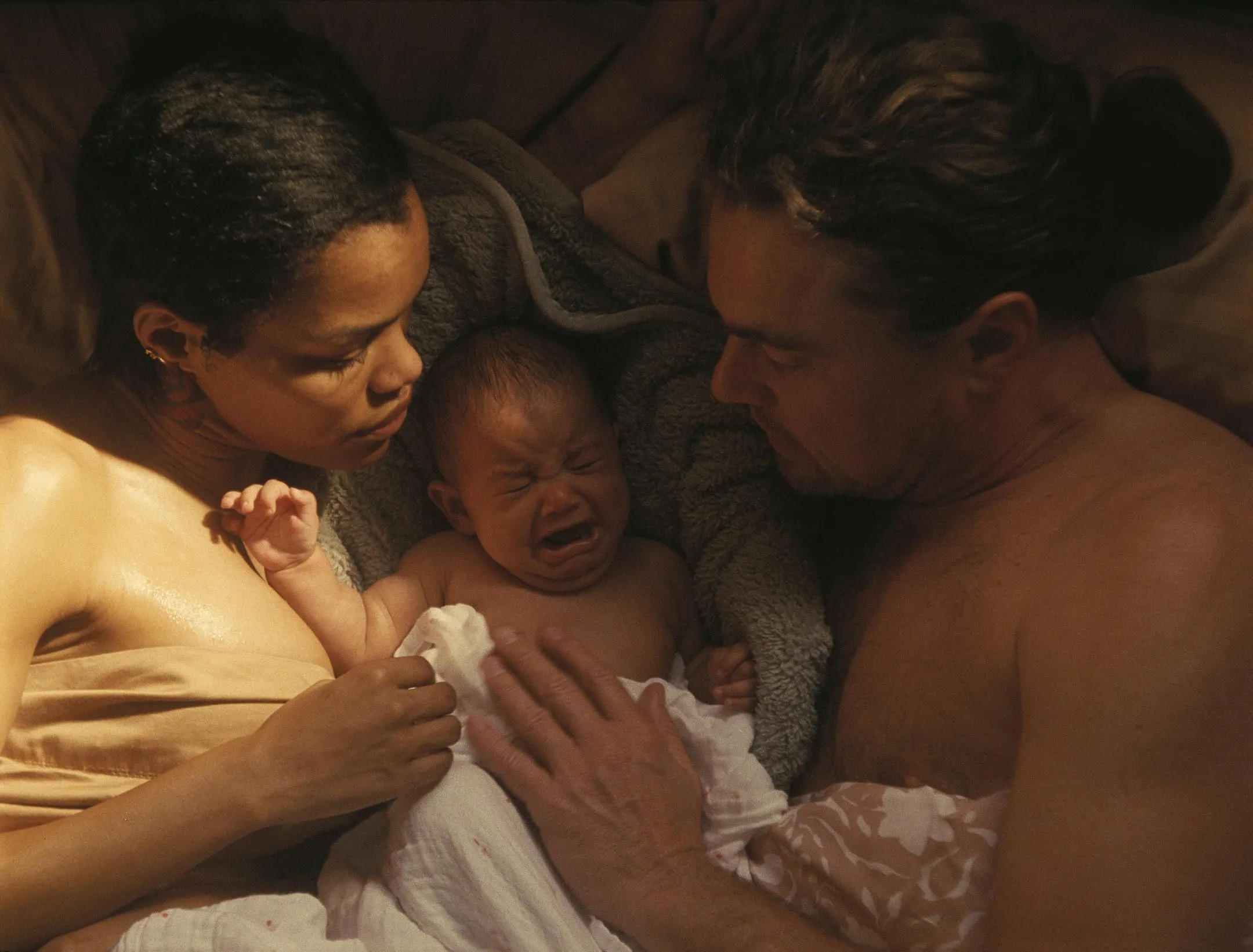
Watching him scramble in a bathrobe because he is too stoned to remember a 16-year-old password is both hilarious and deeply sad. The role feels personal for Anderson, a filmmaker exploring the fears of a white father raising a Black daughter in a nation where her existence is politicized.
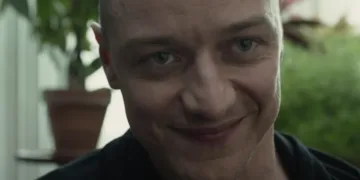
Opposite him is Sean Penn’s Colonel Steven J. Lockjaw, a truly monstrous antagonist. He is a racist and deeply obsessive man whose personal grudge against Perfidia has curdled into a demented, almost demonic quest. Penn plays him with a stiff, unsettling physicality, a man coiled with repressed violence.
Lockjaw’s ambition to join a secret society of white nationalists called the Christmas Adventurers allows the film to swing into sharp satire. Their outrageous, repellent conversations expose the absurdities of right-wing extremism, mocking the self-importance of such dangerous groups.
While the men are locked in their struggle, the film’s spirit is carried by its women. Teyana Taylor’s Perfidia is on screen for only the first act, but she is an unforgettable presence. She is the true revolutionary: magnetic, fearless, and utterly unpredictable, brandishing a weapon while nine months pregnant. Her performance casts a long shadow over the entire film, creating a legend that her daughter must live up to. In the second half, the story’s heart becomes Willa, played by newcomer Chase Infiniti.
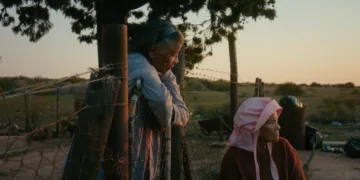
Willa is no damsel in distress; she is a warrior forged in the legacy of a mother she never met. Her journey from a frustrated teenager, shocked by the sudden violence that erupts at her school dance, into a resourceful survivor is the film’s emotional core. Infiniti’s performance powerfully captures this transformation as Willa is forced to confront her family’s violent past to secure her own future.
The Mechanics of Mayhem
Paul Thomas Anderson directs this film with a confidence that blends muscular action sequences with his signature attention to character. The film’s tone is a difficult balancing act, mixing a serious political thriller with an action movie and a dose of absurdist comedy. At times, its satirical edge feels reminiscent of a film like Dr. Strangelove.
Both works use absurdity to critique a reality that seems to be spiraling into madness itself. Anderson masterfully balances scenes of intense, shocking violence with moments of unexpected comedy, a choice that reflects the absurd and dangerous nature of our current climate. A brutal shootout might be followed immediately by Bob fumbling for his phone charger, a small human moment that highlights the chaos.
The film’s aesthetic is shaped by its use of VistaVision, a format that gives the images a unique texture and expansive scope. The energetic and sometimes chaotic camerawork in the early revolutionary scenes mirrors the characters’ anarchic spirit. In the present-day sequences, the style becomes more grounded and tense, trapping you in Bob’s paranoia.
The technical craft is on full display in the film’s set pieces. The thrilling and disorienting final car chase across winding, hilly highways is a masterclass in building suspense, putting the audience directly into the seats of both the pursued and the pursuer for a truly stomach-flipping experience. Jonny Greenwood’s score is a key part of the experience.
It is a tense, jolting, and nerve-shredding composition, using dissonant piano chords and syncopated rhythms that feel like a panic attack set to music. It perfectly matches the film’s paranoid atmosphere. The music amplifies the on-screen chaos, while the sound design makes every gunshot and explosion feel deafeningly real, creating a visceral and unforgettable cinematic event.
One Battle After Another is scheduled for theatrical release in the United States on September 26, 2025. It had its world premiere in Los Angeles on September 8, 2025. Distributed by Warner Bros. Pictures, the film will be available to watch in theaters, including in IMAX.
Full Credits
Director: Paul Thomas Anderson
Writers: Paul Thomas Anderson, Thomas Pynchon
Producers and Executive Producers: Paul Thomas Anderson, Sara Murphy, Adam Somner, Will Weiske
Cast: Leonardo DiCaprio, Sean Penn, Benicio del Toro, Regina Hall, Teyana Taylor, Chase Infiniti, Alana Haim, Wood Harris, Shayna McHayle, Starletta DuPois, D.W. Moffett
Director of Photography (Cinematographer): Paul Thomas Anderson, Michael Bauman
Editors: Andy Jurgensen
Composer: Jonny Greenwood
The Review
One Battle After Another
Paul Thomas Anderson's chaotic action-thriller is a dizzying, brilliant, and deeply American film. It successfully merges high-octane spectacle with razor-sharp political satire and a surprisingly emotional core. Propelled by outstanding performances from its entire cast, particularly a monstrous Sean Penn and a revelatory Chase Infiniti, the film is a technically masterful and thematically rich look at a nation at war with itself. It is a frantic, funny, and essential piece of cinema.
PROS
- Confident and energetic direction from Paul Thomas Anderson.
- Exceptional performances across the board, with Sean Penn and Chase Infiniti as standouts.
- A sharp script that effectively balances thrilling action, absurdist humor, and social commentary.
- Relentless pacing that makes the nearly three-hour runtime fly by.
- Superb technical craft, from the VistaVision cinematography to Jonny Greenwood’s tense score.
CONS
- The jarring tonal shifts between dark comedy and brutal violence may not work for all viewers.
- Some of the humor centered on DiCaprio's pathetic character can feel overly broad.
- The absence of Teyana Taylor’s powerful character after the first act is strongly felt.