


















![Kingdom Hearts Collection [I-III] Review](https://gazettely.com/wp-content/uploads/2026/10/Kingdom-Hearts-Collection-I-III-1-360x180.webp "Kingdom Hearts Collection [I-III] Review: KHII Holds Steady as Newer Entries Fluctuate 33")







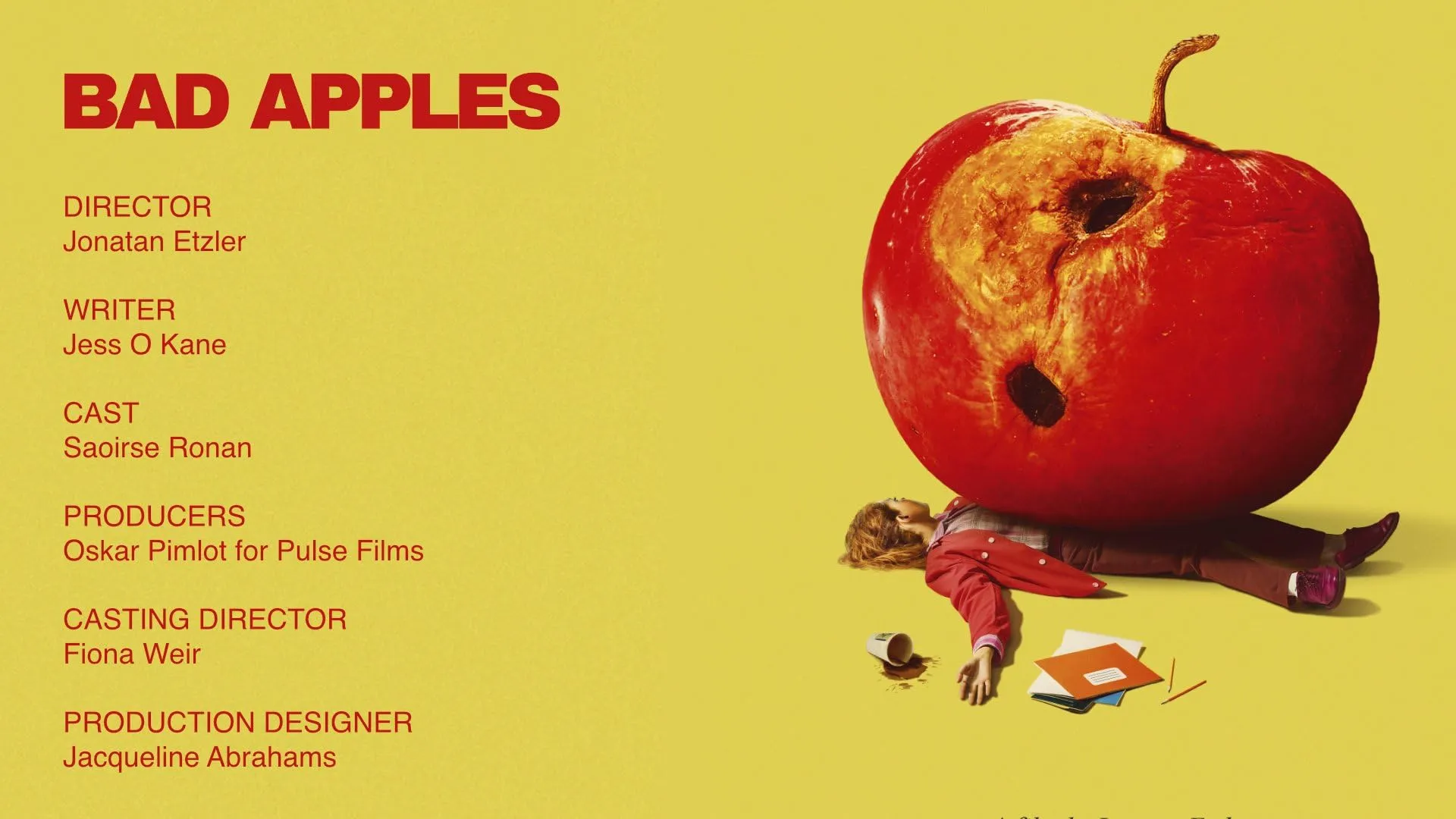

Jonatan Etzler’s Bad Apples is a very dark comedy with a sharp satirical bite set in a British primary school in Somerset. Jess O’Kane adapts Rasmus Lindgren’s novel De Oönskade into a story that treats ethics like a pressure cooker.
Maria, played with cool precision by Saoirse Ronan, is a tired teacher who believes in rules, patience, and the basic promise of school. Danny, a disruptive 10-year-old played by Eddie Waller, keeps wrecking that promise. After a cascade of incidents, Maria makes one reckless choice that locks her into an ethical spiral she cannot admit to anyone.
The film’s sense of humor starts with a concrete, visual gag that doubles as theme. On a class trip to a cider factory, a single sneaker rides a conveyor among glossy apples. Rot, hygiene, and blame are already in play. When Danny later vanishes and the classroom suddenly thrives, the laughter grows jagged. Order improves, metrics rise, and a community relaxes. The joke lands, then lingers: comfort often has a cost, and the bill is easy to hide when institutions reward calm over care.
Performers and Pressure Points
Ronan shapes Maria through restraint. Small flinches, a clipped smile, the measured cadence of a teacher who will not let her voice crack. Her soft Irish lilt marks her as slightly outside the local rhythm, and the body language reads controlled at first, then clenched. The performance makes a shocking decision feel like a step taken from habit rather than madness, which is scarier.
Waller gives Danny a switchback energy. One moment he is a boulder rolling through a lesson, the next he is a kid studying an adult face for clues. A basement scene with a harness limits his movement, yet a later quiet exchange reveals an unmet need, including a gap in reading that reframes earlier chaos as frustration. He is hurt and hurtful in the same breath.
Nia Brown’s Pauline watches everything. Her bargaining over what she hears in Maria’s house pushes the film into a sly power game. The long holiday-song bit at a parents’ meeting starts cute, then turns into a negotiation conducted in plain sight. Robert Emms, as Josh, plays a father stretched thin by delivery shifts and guilt. He searches, prints posters, stares at his phone, and never seems to find the right door. Around them, Sylvia the headteacher and deputy head Sam embody systems and histories that shape choices. Moral judgment stays cool; behavior, silence, and consequence do the talking.
Ethics by Design: Writing and Direction
Etzler manages tonal whiplash with clear beats. Classroom noise spikes, a sudden restraint follows, then the film settles into quiet domestic routine. Public meetings play like polite theater, with minutes, tea, and a storm under the surface. O’Kane’s script frames an ethical puzzle: community benefit against individual care, convenience against duty, and the seductive ease of a classroom that runs smoothly once a single body is removed.
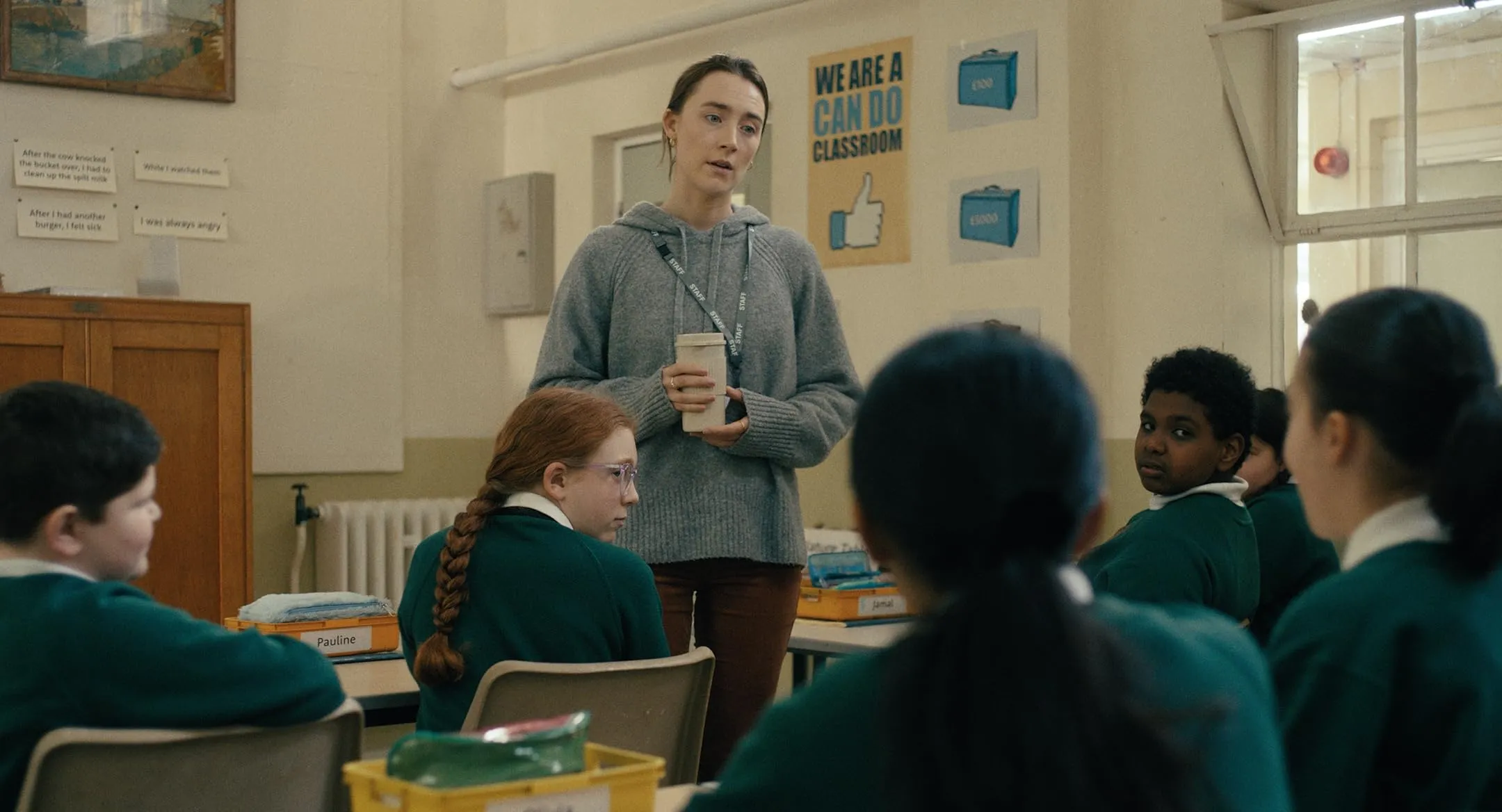
The third act asks for faith. Certain turns stretch credibility, yet the stretch sharpens the satirical line. The source is Swedish, the setting British, and that relocation matters. Inspection culture, budget squeezes, and a belief in keeping things tidy shape how adults act. The school rewards visible calm. Paperwork and praise flow where noise decreases.
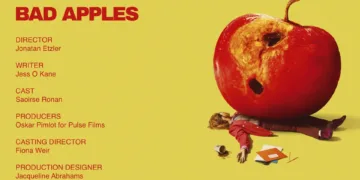
Apple imagery keeps pricking the frame. The conveyor full of fruit, the out-of-place sneaker, the shine that hides bruises. The title reads like a warning about labels, not a verdict on one child. Pacing in the middle section relies on repetition and clandestine routine. The same walk downstairs, the same careful tray, the same nervous glance at a front door. Dread grows inside a loop that feels like a game system built for quiet wins.
The Tools of Satire: Image, Cut, and Sound
Nea Asphäll’s images prize clean lines in corridors and staff rooms, then box Maria into corners of her modernist home. Cool daylight flattens emotion until a small detail pops, like a controller cable or a scuffed shoe. Framing places Maria at thresholds and edges, a person who keeps choosing the border rather than the center.
Editing favors firm pivots. Cuts land on reversals or withheld reactions, which keeps the comedy dry and lets tension simmer. A rainstorm scuffle snaps into a hospital turn, then into a retreat that should not happen. The parents’ meeting uses shot duration as a joke engine; each extra verse becomes a tiny hostage situation.
Sound pulls double duty. A classroom exercise unpacking Rickie Lee Jones lyrics promises culture and reflection, then collapses under noise. The hum of institutional spaces builds a low-grade headache. Pauline’s holiday song weaponizes cheer, turning seasonal warmth into leverage. The inspection day has the rhythm of a stealth game, with corridors, line-of-sight worries, and a prize for clean surfaces.
Set pieces stack into a civic cover story. The first basement lock-in, a doorbell at the wrong time, the inspection’s relieved smiles. The final images are bleak and funny in the same breath, crystallizing communal complicity and Maria’s self-preservation. Certain motivations blur, and a few logistical steps wobble. The satirical design still lands, because the film treats systems like mechanics that reward order over care, then shows how quickly people learn to play.
The film had its world premiere at the Toronto International Film Festival (TIFF) on September 7, 2025, and also screened at the BFI London Film Festival. It is scheduled for a theatrical release on October 9, 2025. It is being distributed by Republic Pictures and FilmNation Entertainment.
Full Credits
Director: Jonatan Etzler
Writers: Jess O’Kane, Rasmus Lindgren
Producers and Executive Producers: Oskar Pimlott, Judy Counihan, Jamie Hall, Paul Grindey, Charles Moore, Peter Watson, Marie-Gabrielle Stewart
Cast: Saoirse Ronan, Eddie Waller, Jacob Anderson, Rakie Ayola, Robert Emms, Sean Gilder, Kerry Howard, Jaye Jacobs
Director of Photography (Cinematographer): Nea Asphäll
Editors: Robert Krantz
Composer: Chris Roe
The Review
Bad Apples
Etzler crafts a caustic dark comedy where institutional calm trumps care. Ronan’s contained turn and Waller’s volatile debut anchor an ethical puzzle that lingers after the credits. Credibility strains late, yet the satire stays precise, the images clean, the sound cues nervy, and the ending lands with a quiet chill.
PROS
- Ronan’s restrained, finely calibrated performance
- Electric debut from Eddie Waller
- Nia Brown’s sly, scene-shaping Pauline
- Tight tonal control mixing dread and deadpan humor
- Crisp framing and cool daylight palette
- Smart sound motifs that turn cheer into leverage
- Memorable closing images
- Bold ethical inquiry with a sharp satirical edge
CONS
- Third-act plausibility stretch
- Maria’s inner logic turns opaque in spots
- Institutional critique can feel schematic
- Some staff characters remain lightly sketched