
























![Kingdom Hearts Collection [I-III] Review](https://gazettely.com/wp-content/uploads/2026/10/Kingdom-Hearts-Collection-I-III-1-360x180.webp "Kingdom Hearts Collection [I-III] Review: KHII Holds Steady as Newer Entries Fluctuate 37")



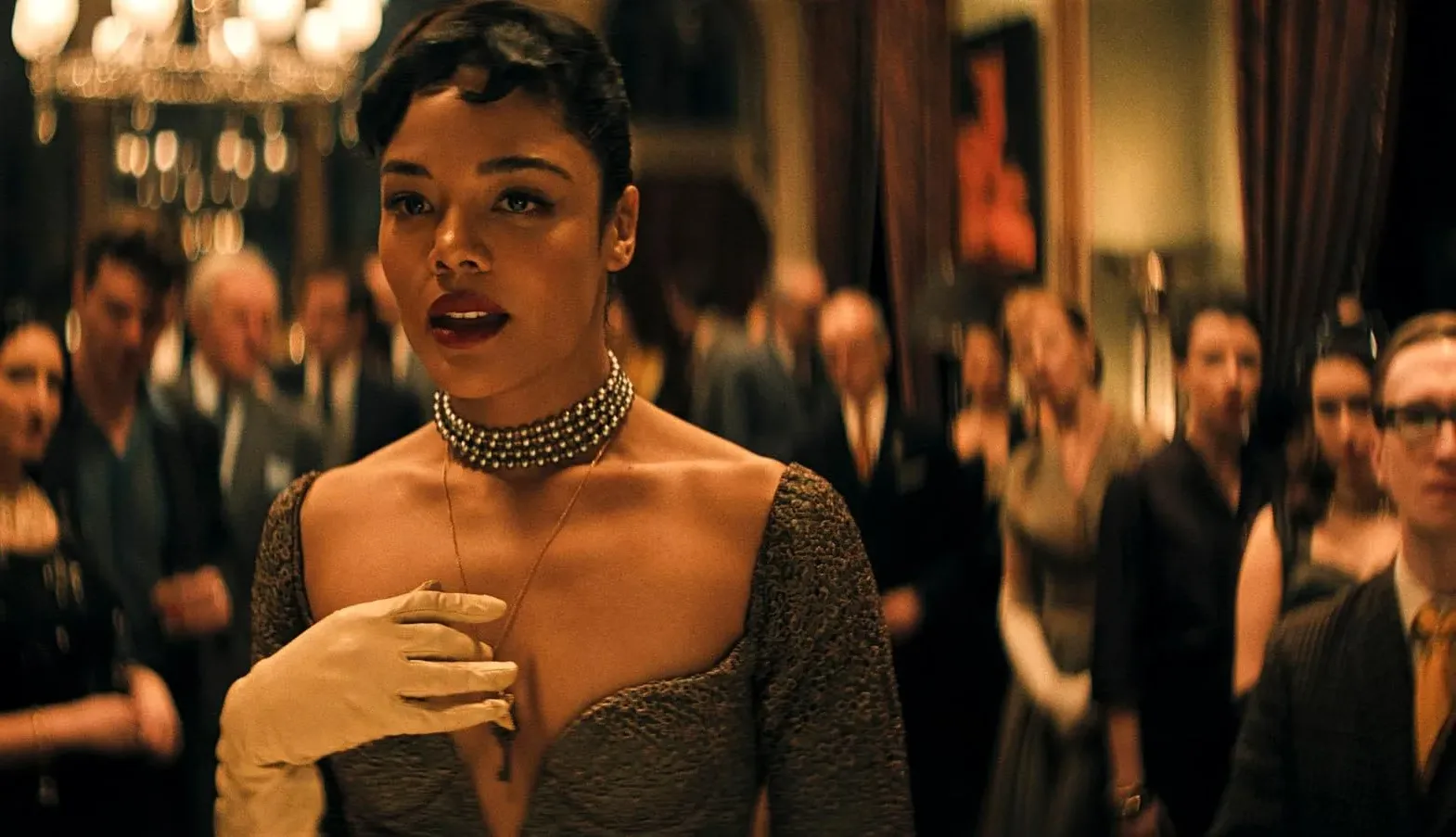

Nia DaCosta refits Henrik Ibsen’s play for 1950s England and confines the drama to a single, spiraling party inside a lavish country estate. Hedda Gabler (Tessa Thompson) has returned from an extended honeymoon with George Tesman (Tom Bateman), an academic who needs a university post to keep their new life afloat.
The guest list folds in family confidant Judge Brack (Nicholas Pinnock) and power broker Professor Greenwood (Finbar Lynch). The mood shifts when Hedda’s former lover Eileen Lovborg (Nina Hoss) arrives, trailed by Thea Clifton (Imogen Poots).
Hedda curates rooms, music, and conversation with the precision of a stage manager, and her father’s prized guns sit in a gleaming case that feels less like décor and more like foreshadowing. The film runs on five titled chapters and opens with a stinger that signals where the night is headed, locking the story into a pressure-cooker frame. Release dates: theaters October 22, 2025, Prime Video October 29, 2025.
Control, Desire, and the Party as Arena
DaCosta treats the party like a systems test. Food, music, and traffic through doorways form a loop that Hedda tries to control. She steers introductions, regulates access to Greenwood, and uses small provocations to tune the room. The motives at play read like a knot of status anxiety, fear of exposure, hunger for agency, and a thrill in moving pieces on the board. Tenderness sits deep under the surface and rises in quick flashes around Eileen.
Eileen’s entry flips the board. She arrives sober, carrying a new manuscript and a new partner. That trio of changes threatens Hedda’s design, stirs old desire, and pricks jealousy that soon leaks into sabotage. The film’s mid-century setting turns glances, fingertip touches, and coded exchanges into live wires, since public rules are rigid and private need is strong. Liquor becomes both lure and trap, the telephone a remote detonator, the manuscript a trophy and a wound. The gun case anchors the theme of power held at a distance until someone reaches for it.
Chapter cards mark each descent and the opening stinger alters suspense, shifting attention from what might happen to how choices steer an already signposted end. Character notes keep the dynamics sharp: Hedda’s charm cuts as much as it dazzles, Eileen’s magnetism bends the room, Thea’s empathy exposes costs, and the men carry a mix of entitlement, naïveté, and institutional leverage that hems Hedda in.
How It’s Built: Direction, Image, Sound, Cutting, Design
DaCosta stages the house as a grid of pockets where control can be won or lost. Early scenes ride social sparkle, then tip toward menace once Eileen crosses the threshold. Sean Bobbitt’s camera glides through corridors and doorways, stitching rooms into a continuous field of pressure. A double-dolly move tracks Hedda toward Eileen across the dance floor and translates attraction into motion.
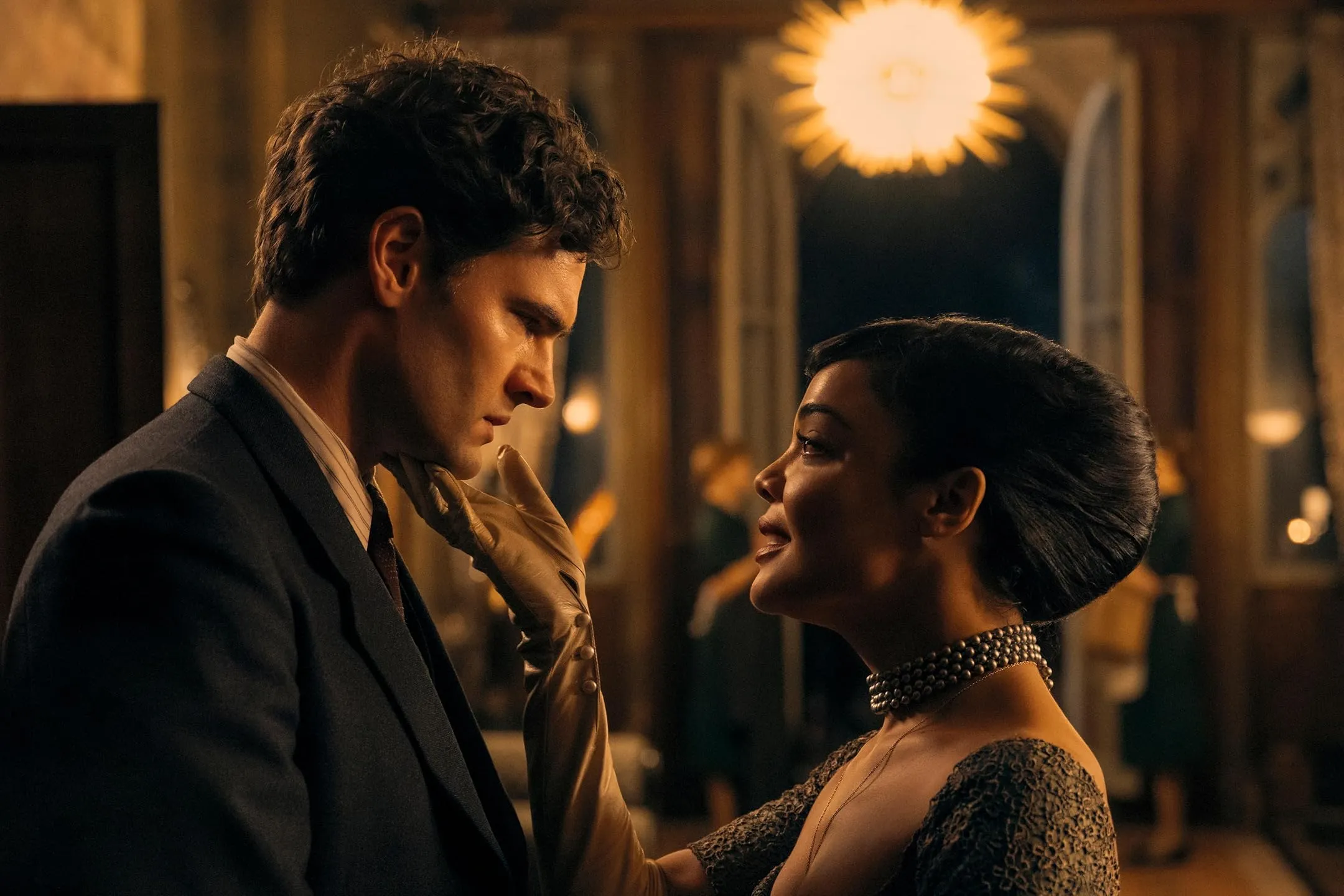
Color and light favor saturated warmth for glamour, with shadowed corners where deals and betrayals trade hands. Certain passages look lush; others turn murky and blunt the clarity of faces at key beats. Editing leans on musical cadence. Held distance in some charged conversations reduces the punch an intimate close-up might have delivered, which matters in a story driven by micro-expression. The preface scene that flashes a late-night outcome resets the viewer’s state, turning each cut into another tick toward a known endpoint.
Hildur Guðnadóttir’s score layers breathy textures over the din of the party, ratcheting unease; at times it steers emotion rather than amplifying what is already present. Cara Brower’s production design frames rooms as both trophies and cages, while Lindsay Pugh’s costumes telegraph status, restraint, and rebellion. Concrete beats to anchor description: Hedda loans a pistol as if it were a party favor, a spilled drink restarts an old habit, a manuscript changes hands like contraband, and a single glance slices through a crowded ballroom.
Performances and Final Assessment
Tessa Thompson shapes Hedda through crisp diction and sudden voltage shifts. She smiles as she sets traps, then lets brief fractures show a hurt that never gets full voice. The performance tilts toward villainy by design; the flash of a wounded core arrives in flickers rather than extended beats.
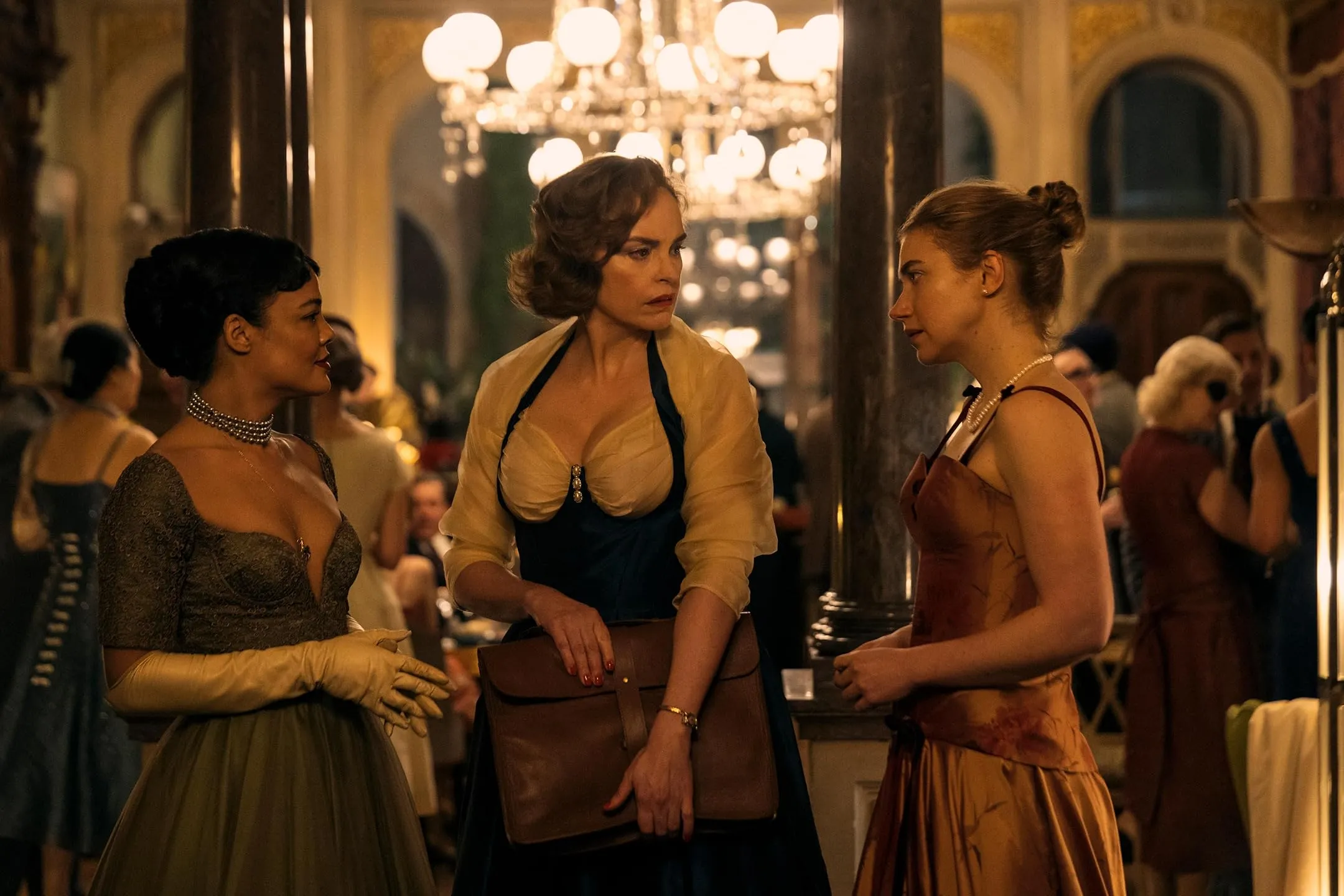
Nina Hoss gives Eileen an entrance that reorients the camera and the room. Sobriety reads in posture and breath, and the slip from poise to crash lands with weight. Imogen Poots brings a tremor that doubles as conscience, a barometer for the harm spreading across the floor.
Tom Bateman sketches George as comfort without courage, Nicholas Pinnock’s Brack exudes transactional interest, and Finbar Lynch’s Greenwood holds the gate Hedda keeps trying to pry open. Some motivations sing clearly. Others feel under-explained, which softens the impact of late choices. The chapter device provides spine; the early stinger trims mystery and trades it for inevitability.
Verdict: viewers drawn to character studies that operate like clockwork will find a tense night worth dissecting. Craft work in camera movement, design, and performance stands out. Occasional murk, a steering score, and withheld intimacy may frustrate some. The mid-century, queer-centered frame adds heat to Ibsen’s themes and gives the party the feel of a game whose rules were written for someone else.
The film “Hedda” premiered on September 7, 2025, at the Toronto International Film Festival. It is scheduled for a limited theatrical release in the United States on October 22, 2025, and will be available to stream on Amazon Prime Video starting October 29, 2025.
Full Credits
Director: Nia DaCosta
Writers: Nia DaCosta
Producers and Executive Producers: Gabrielle Nadig, Tessa Thompson, Dede Gardner, Jeremy Kleiner
Cast: Tessa Thompson, Imogen Poots, Tom Bateman, Nicholas Pinnock, Nina Hoss, Kathryn Hunter, Finbar Lynch, Mirren Mack, Jamael Westman, Saffron Hocking
Director of Photography (Cinematographer): Sean Bobbitt
Editors: Jacob Secher Schulsinger
Composer: Hildur Guðnadóttir
The Review
Hedda
DaCosta’s midcentury refit plays like a tense social game where desire, status, and control keep shifting the board. Thompson’s Hedda cuts with charm and venom, while Hoss and Poots give the night its pulse, and the house turns into a gilded trap. Some choices blunt impact, from murky images to a score that leans too hard, and the early reveal trades surprise for inevitability. Even with those limits, the party grips.
PROS
- Tessa Thompson’s precise, shape-shifting lead
- Nina Hoss’s commanding entrance and arc
- Imogen Poots as moral barometer with real ache
- Bobbitt’s fluid camera and standout double-dolly moment
- Production design and costumes that signal power and constraint
- Queer longing integrated into the period frame
- Strong use of motifs like the gun case and manuscript
CONS
- Early stinger reduces suspense
- Occasional murky lighting in key beats
- Score that steers emotion too directly
- Withheld close-ups dilute performance impact
- Some motivations under-explained
- Male roles feel thinly sketched







