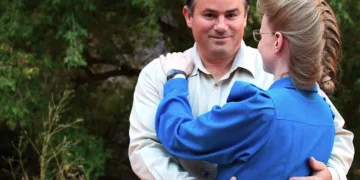































Trust Me: The False Prophet arrives on Netflix as a four-part true crime docuseries set in Short Creek, the FLDS stronghold that straddles Utah and Arizona, and it wastes little time announcing its real subject. Samuel Bateman may be the face of the present crisis, yet the series is equally interested in the conditions that made him possible. Warren Jeffs is in prison, but the culture he ruled has not vanished. It has merely been left in suspension, waiting for another man to climb into the costume and call it revelation.
Rachel Dretzin approaches this material with a grave steadiness. The hook is immediate and unnerving. Cult expert Christine Marie and her husband, videographer Tolga Katas, move inside the community and gather footage from within Bateman’s orbit. That level of access gives the series an intimacy that feels almost improper, which is partly why it works. We are watching abuse, coercion, and spiritual blackmail from inside the machinery rather than from a safe external perch. It is ghastly viewing.
Yet the series carries real moral urgency because it never loses sight of the women and girls trapped inside Bateman’s rule. Its power lies in the link between investigative suspense and a colder idea: once obedience becomes a social habit, the next false prophet rarely has to build much from scratch.
A Thriller Built From Real Access
Dretzin structures the series like a tightening ratchet. Each episode clicks forward with methodical force. Suspicion becomes contact, contact becomes evidence, evidence becomes exposure, and exposure brings arrests, federal attention, and a raid. The escalation feels earned because the docuseries does not lunge for sensation. It lets discoveries accumulate through footage, recordings, interviews, small shifts in trust, and the slow corrosion of Bateman’s authority.
The access is the great weapon here. Christine Marie and Tolga Katas are not stationed outside the story with a solemn narrator’s distance. They are inside homes, vehicles, workspaces, group gatherings, and private conversations. Bateman, one of those men whose vanity keeps stepping on his own shoelaces, performs for the camera with unnerving ease. He preaches, fantasizes, boasts, and drifts into self-exposure. The camera becomes a kind of accidental truth serum. He thinks he is authoring his myth. He is really recording his indictment.
That dynamic gives the series an eerie historical echo. Failed messiahs, petty autocrats, and charismatic frauds often share one weakness: they want an audience. Bateman is plainly one of them. He desires the trappings of power, the cars, the wives, the reverence, the image. He behaves like a man auditioning for sainthood through self-promotion, which is a very modern form of religious theater.
The episode flow remains clear throughout. The first chapter establishes the world left behind after Jeffs and traces Bateman’s rise. The second deepens the investigation and opens new lines of cooperation. The third follows Bateman’s first arrest and the fervent reaction among his followers. The fourth brings the FBI raid and the collapse of the operation, though never the illusion that collapse repairs the people broken along the way.
Clarity is one of the series’ finest qualities. The case is complicated, the emotions are chaotic, and the institutional failures are maddening, yet the storytelling stays lucid. It keeps returning to the same central problem: how do you prove systematic abuse inside a sealed religious order where silence has been trained like muscle memory? The answer comes piecemeal. A recording. A confession. A frightened glance. A mother stepping out of line. That precision gives the docuseries shape without sanitizing its horror.
Christine Marie and the Price of Intervention
Christine Marie is the series’ most surprising asset because Dretzin allows her to remain difficult to classify. Early on, she carries the aura of an American eccentric, a figure with enough unusual biographical texture to make a viewer pause and wonder what sort of guide this will be. Then the episodes keep unfolding, and that first impression gives way to something sturdier. What emerges is discipline, intelligence, patience, and a startling fluency in the psychology of submission.

Her presence matters because the series is about two related struggles. One concerns Bateman’s crimes. The other concerns Marie’s attempt to expose them before more damage is done. She is a cult expert, an advocate, an investigator, and an on-camera participant whose own past under coercive religious control gives her insight into the women she is trying to reach. The series uses that history carefully. It does not mine her pain for melodrama. It gives her a way of seeing.
That way of seeing changes the tone of the docuseries. Marie does not approach these women as gullible curiosities. She understands the grammar of domination from the inside. Her academic work in cult psychology gives her one kind of authority. Her lived experience gives her another. Together they allow the series to treat indoctrination as a condition with emotional, social, and spiritual dimensions, rather than as a punchline for outsiders.
Tolga Katas is vital here as well. He is the quiet counterpart, the witness with the camera, the collaborator whose steady presence keeps the operation grounded. Their partnership creates a rare intimacy. They are not distant chroniclers dropping in for interviews. They are physically present, emotionally implicated, and at moments plainly in danger.
The ethical tension never disappears. Marie and Katas gain trust under false pretenses. They enter homes and relationships with an investigative purpose. The series is smart enough to leave that discomfort intact. Yet it also makes plain why ordinary routes had stalled. Evidence was slow to move institutions. Victims feared retaliation. Authority figures hesitated. Within that climate, covert filming starts to look like emergency ethics, compromised, uncomfortable, necessary.
The Mediocre Tyrant and His Kingdom of Fear
Samuel Bateman is presented as the embodiment of opportunism, vanity, and predatory authority. He is delusional, status-hungry, sexually abusive, and absurdly certain of his cosmic entitlement. The series gives him enough room to expose himself, which proves far more damning than any caricature could.
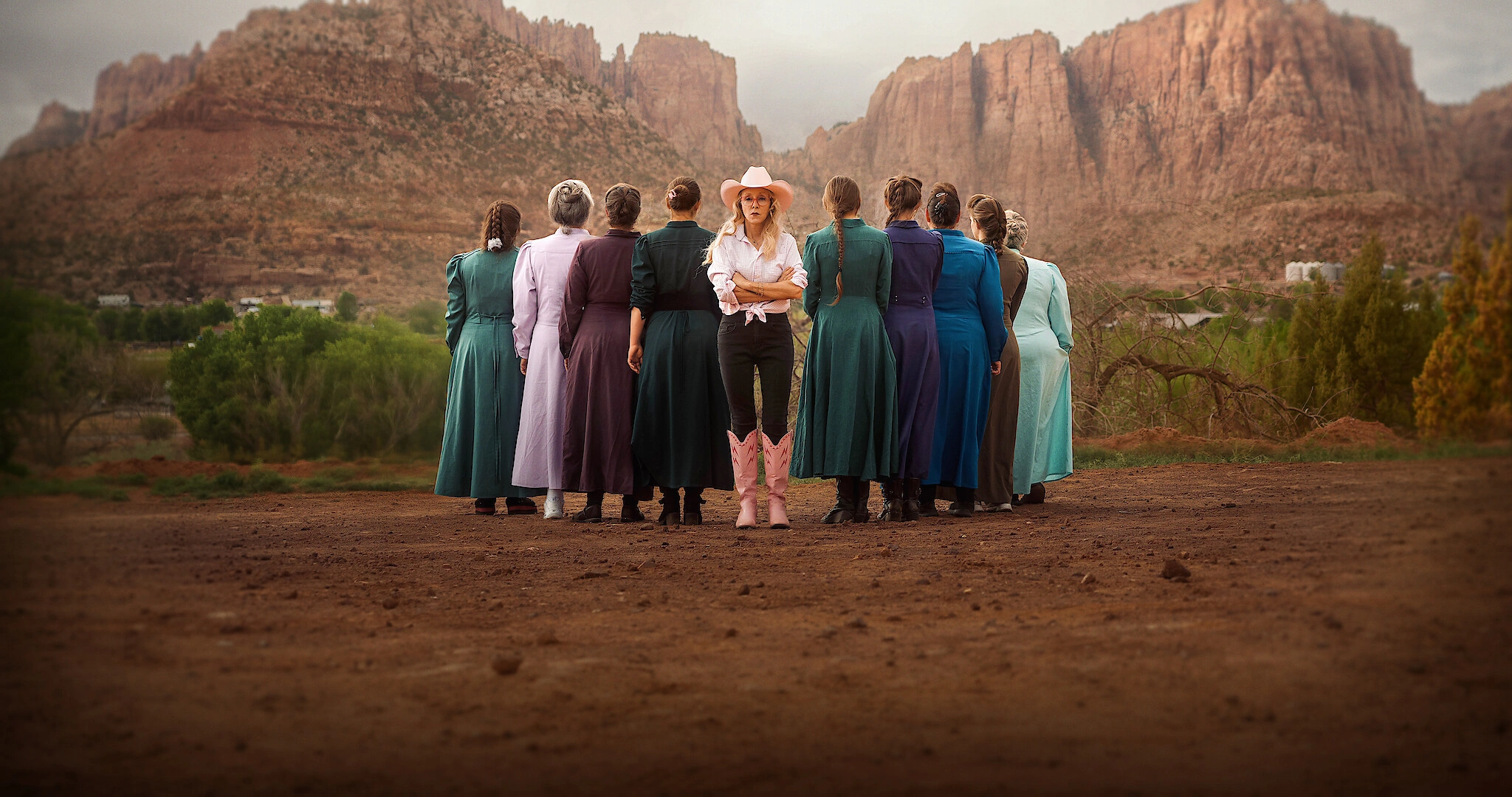
He wants luxury cars, fame, wives, children, reverence, and absolute obedience. He makes grandiose claims about prophetic succession and talks with the confidence of a man who has mistaken appetite for destiny. At one point, his fantasies edge into a level of grandeur that would be funny if the surrounding cruelty were not so appalling.
One of the series’ sharpest insights is that Bateman does not invent the system he exploits. He inherits it. Jeffs’ imprisonment leaves behind a damaged community trained for submission and stranded inside doctrinal chaos. Bateman steps into that vacancy with the oldest authoritarian tactic available. He claims exclusive access to truth. Once followers accept that claim, every abuse can be reframed as sacred duty.
That is why the docuseries avoids treating his followers as cartoon fools. It studies the habits that make surrender feel righteous. Fear, dependency, isolation, religious conditioning, and patriarchal custom all feed the same engine. Several men of standing back Bateman, finance his lifestyle, and hand over wives and daughters. Abuse spreads through communal compliance. One monster is never the whole story.
The treatment of women and girls is where the series finds its moral clarity. It addresses underage marriages, sexual abuse, trafficking, emotional domination, and the raising of children inside a system that normalizes submission. Dretzin handles this material with care.
These women and girls are framed as victims of indoctrination and coercion, people whose choices have been narrowed for years by spiritual terror and social enclosure. The series understands that evil in such places rarely arrives wearing a villain’s badge. It arrives dressed as duty, faith, purity, obedience.
Voices from Julia Johnson, Warren Levi, former members, skeptical locals, and law enforcement expose the cracks in Bateman’s world. Those cracks matter, yet they do not by themselves free anyone. Fear keeps people quiet. Loyalty keeps them trapped. Dependency keeps them near the source of harm. The series keeps pressing a brutal truth: abuse survives through habit, structure, and communal dread. Charisma helps. Structure lasts longer.
Witness, Style, and the Long Aftershock
Rachel Dretzin handles the material with admirable control. Interviews, undercover footage, recordings, and contextual detail are assembled with a steady editorial hand, allowing the series to move from intimate witness to public case file without losing emotional force. The pacing is urgent, though never gaudy. The series knows when to stay close to testimony and when to widen its view so the scale of the case becomes visible.
The visual choices have their own eerie power. Real roads, real houses, real gatherings, real faces. These spaces do not need atmospheric decoration. They already feel haunted by obedience. The choice to digitally replace the faces of minors rather than blur them is deeply strange, and I was unsure about it at first. Later, the uncanniness began to feel oddly apt. Identity itself has been violated in this world. The visual distortion turns that theft into an image.
Emotionally, the series is exhausting in the intended way. Its harshest moments do not come from manipulative editing tricks. They come from hearing abuse explained in the language of faith and hearing domination defended as obedience to God. That is the series’ bleak philosophical point. Moral vocabulary can become camouflage. History has supplied many versions of that trick, from cult compounds to political movements to institutions that preach purity while protecting power.
What lingers after the final episode is not simple outrage, though outrage is certainly earned. It is the recognition that fallen leaders leave methods behind. They leave scripts behind. They leave a population trained to mistake submission for salvation. Trust Me: The False Prophet understands that grim inheritance with unusual clarity, and it forces viewers to sit with a hard fact many societies prefer to avoid: rescue, if it arrives at all, arrives late and leaves scars.
Trust Me: The False Prophet is a four-part investigative docuseries that premiered on Netflix on April 8, 2026. Directed by Emmy and Peabody Award-winning filmmaker Rachel Dretzin, the series acts as a chilling continuation of the FLDS story, exploring how a power vacuum allowed Samuel Bateman to rise as a dangerous new “prophet” in Short Creek. Told through the eyes of cult expert Christine Marie and her husband Tolga Katas, the production utilizes undercover footage and firsthand survivor accounts to expose Bateman’s manipulative tactics and crimes. You can watch the full series exclusively on Netflix.
Where to Watch Trust Me: The False Prophet Online


Full Credits
Title: Trust Me: The False Prophet
Distributor: Netflix
Release date: April 8, 2026
Rating: TV-MA
Running time: 40-50 minutes
Director: Rachel Dretzin, Elise Coker
Writers: Rachel Dretzin, Elise Coker
Producers and Executive Producers: Jamila Ephron, Jeff Skoll, Courtney Sexton, Miura Kite, Rachel Dretzin, Dorin Razam, Zachary Herrmann, Tolga Katas
Cast: Christine Marie, Tolga Katas, Naomi “Nomz” Bistline, Samuel Bateman, Julia Johnson, Moretta Johnson
Director of Photography (Cinematographer): Tolga Katas, Elise Coker, Nick Ramey
The Review
Trust Me The False Prophet
This docuseries offers a chilling look at the mechanics of religious manipulation and the ethical weight of undercover reporting. Rachel Dretzin maintains the tension of an active investigation while prioritizing the victims. The footage feels immediate and raw. It exposes the narcissism of a man who exploited faith for personal gain. The production serves as a stark reminder of how isolation breeds control.
PROS
- Includes rare, first-hand undercover footage.
- Prioritizes the survivors' perspective and their path toward healing.
- Exposes the specific tactics used by Bateman to indoctrinate followers.
- Examines the moral complexity of documentary filmmaking as a tool for justice.
CONS
- Pacing slows during the middle segments.
- Focuses on Bateman's bumbling nature, which sometimes distracts from the severity of his actions.
- Leaves some questions about the long-term impact on the community unanswered.







