







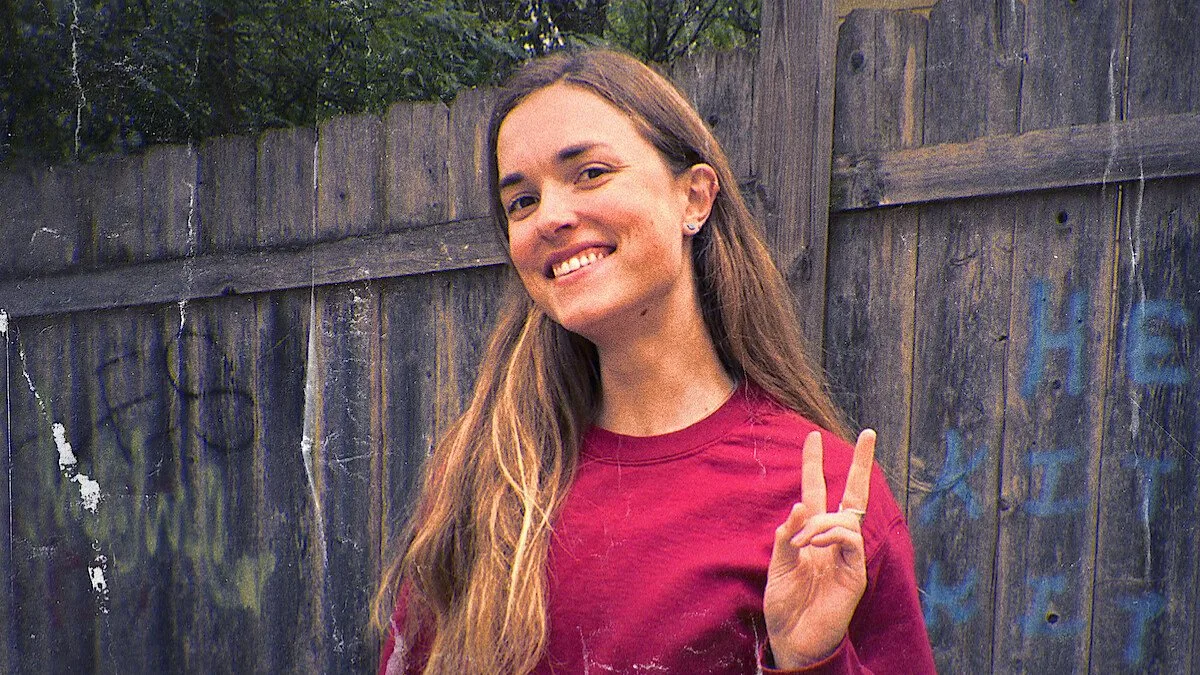

Marina Zenovich’s The Truth and Tragedy of Moriah Wilson, which premiered at SXSW 2026 before landing on Netflix, arrives with an unusual purpose for a true crime documentary: it would rather you remember a life than solve a mystery. Moriah “Mo” Wilson was a 25-year-old professional cyclist, rising fast through the grueling world of gravel racing, when she was murdered in Austin, Texas, on May 11, 2022, the night before she was to compete in the Gravel Locos race.
The case carried all the ingredients of tabloid fascination: a love triangle, a fleeing suspect, a cross-border manhunt. Kaitlin Armstrong, the on-and-off girlfriend of fellow cyclist Colin Strickland, whom Wilson had also been close to, was convicted of first-degree murder in 2023. The facts are damning and largely unambiguous.
Zenovich, known for documentaries that press against received narratives, chooses a different pressure point here. The pull the film never quite escapes is between honoring a person and recounting a crime, and that tension, left unresolved, shapes everything that follows.
Learning to See Mo Wilson
The film’s most deliberate investment is in Wilson herself, and the tools Zenovich uses to build that portrait deserve close attention. Home videos track her from a babbling infant through an athletic adolescence. Her parents, Karen and Eric, and her brother Matt sit for interviews that carry genuine emotional weight. Actress Olivia Sinnott reads from Wilson’s journals, a sensible choice that sidesteps the increasingly common and ethically murky practice of AI voice recreation.
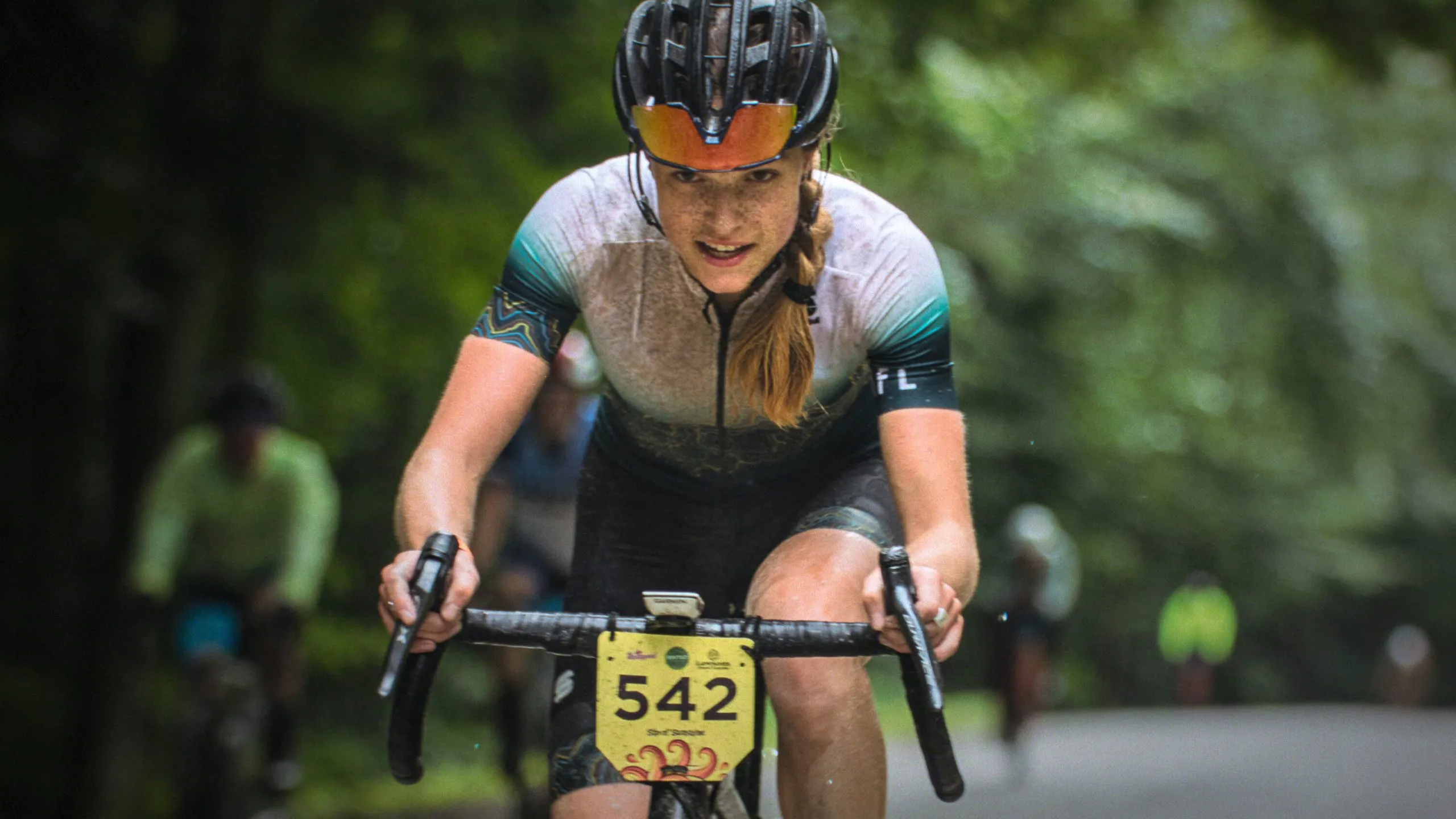
What emerges is a picture of someone who began as an elite skier, transitioned to cycling after a knee injury, and found her calling in gravel racing, a hybrid discipline demanding both road endurance and mountain bike instinct. She won frequently, and by large margins. Her brother Matt offers the film’s most haunting observation: that “her body or her soul knew she had less time than most people.” It is the kind of line that lands differently once you know what happened.
The photography scattered through the film reinforces this warmth. Wilson appears in image after image, smiling, mid-race, arms raised. She seemed to draw cameras toward her.
The honest limit of this portrait, though, is that it tends toward the affectionate and general. Friends speak fondly but rarely with the specific detail that makes a person three-dimensional on screen. The film also leaves a factual gap: gravel racing as a discipline is barely explained, and general audiences may come away admiring Wilson’s dedication without quite understanding what she was dedicating herself to.
The Pursuit and Its Silences
The criminal spine of the film begins on the night of May 11, 2022, when Caitlin Cash returns to her Austin apartment to find Wilson shot three times. The film opens with Cash’s 911 call, and the sound of her performing chest compressions on her friend is one of those documentary moments that bypasses analysis entirely. You simply feel it.
The investigation draws on police body camera footage, interrogation room recordings of Cash, Strickland, and Armstrong, alongside interviews with detectives and district attorneys. Strickland had spent the evening with Wilson and stored her number under a different name because Armstrong routinely checked his phone. A warrant for Armstrong’s arrest was issued on May 17. She was already gone.
What follows has the structure of a thriller. Armstrong fled to Costa Rica on a fraudulent passport, then underwent plastic surgery to alter her appearance. The tracking operation that eventually brought her to justice gives the film’s midsection a pulse it had been steadily building toward.
The courtroom scenes complete the procedural arc. But Strickland’s presence remains a persistent frustration. He appears, visibly worn, and says very little of substance. His reluctance mirrors what prosecutors described experiencing in court, and the silence around what he knew and felt leaves a significant gap. The tonal distance between dry testimony from investigators and the raw grief of Wilson’s family never fully closes.
What Holds, and What Doesn’t
Zenovich’s firmest and most defensible choice is to keep Wilson, and the people who loved her, as the film’s primary subject. True crime as a genre has a well-documented gravitational pull toward perpetrators. Entire productions have been named after killers. By contrast, The Truth and Tragedy of Moriah Wilson consistently asks its audience to stay with the person who was lost.
Cash is the film’s most quietly affecting presence. From the 911 call through her lingering guilt over a text she sent Wilson’s mother that morning, a message assuring her that her daughter was safe, her emotional arc gives the film a personal anchor that holds. Karen Wilson achieves something similar through restrained eloquence. Her description of her daughter’s murder as “stupid” carries far more force than elaborate grief could.
There are genuine limitations. The film gestures at the wider effects of Wilson’s death on the cycling community and the race she never ran, then moves on before those threads develop. Armstrong, who declined to participate, remains opaque, and no one in her circle provides real insight. The inability to explain her may be honest, but it leaves the procedural half feeling incomplete.
The tonal inconsistency between elegy and procedural never resolves into anything fully coherent. The film wants to do two things and does each only partially. What remains, and it is enough, is a record of someone who deserved far more time.
The Truth and Tragedy of Moriah Wilson is an intimate and moving documentary that premiered globally on Netflix on April 3, 2026, following its initial debut at the SXSW Film & TV Festival. Directed by Emmy-winning filmmaker Marina Zenovich, the film centers on the life and legacy of professional cyclist Moriah “Mo” Wilson, whose rising career was tragically cut short by her murder in 2022. Rather than focusing solely on the sensationalized true-crime elements of the case, the documentary serves as a poignant tribute to Wilson’s athletic brilliance and the profound impact she had on the cycling community. Viewers can currently stream the documentary exclusively on Netflix.
Where to Watch The Truth And Tragedy Of Moriah Wilson Online


Full Credits
Title: The Truth and Tragedy of Moriah Wilson
Distributor: Netflix
Release date: April 3, 2026
Rating: TV-14
Running time: 95 minutes
Director: Marina Zenovich
Writers: Rowan Moore Gerety
Producers and Executive Producers: Evan Hayes, Dani Dufresne, Marina Zenovich, Ayesha Rokadia, Justin Barocas, P.G. Morgan, M.J. Grogan, Jano Janosik, Molly Oswaks
Cast: Moriah Wilson, Eric Wilson, Cassondra Wilson, Matthew Wilson, Cash Callaway, Colin Strickland, Kaitlin Armstrong
Director of Photography (Cinematographer): Ben Bloodwell, Nick Higgins, Clair Popkin
Editors: Greg Finton, Poppy Das
Composer: Marco Beltrami
The Review
The Truth and Tragedy of Moriah Wilson
The Truth and Tragedy of Moriah Wilson is a documentary with its heart in the right place and its structure only partially holding together. Zenovich's commitment to centering the victim over the crime is admirable, and the emotional core, built around Cash, Karen Wilson, and Mo's own words, lands with quiet force. The procedural elements are competent but tonally mismatched. The film is worth your time, though it leaves you wanting more depth in almost every direction.
PROS
- Keeps Wilson, the victim, as the film's true subject
- Caitlin Cash and Karen Wilson deliver emotionally resonant interviews
- Armstrong's flight and capture provide genuine tension
- Restrained, dignified handling of grief
- Smart choice to use an actress for journal readings
CONS
- Gravel cycling as a discipline is poorly explained
- Strickland's presence is frustratingly thin
- Tonal gap between elegy and procedural never closes
- Armstrong remains opaque with no meaningful insight
- The cycling community's wider loss is barely explored