




























Corruption becomes easiest to live with once it acquires manners. An envelope is moved away from a hospital corridor. A worried father is guided toward a staircase where fewer eyes are watching. Marina, a maternity nurse in her sixties, accepts the money with the practiced discomfort of someone who still needs the ritual of secrecy, long after shame itself has disappeared.
Kristina Grozeva and Petar Valchanov understand the strange domesticity of moral compromise. Their Black Money for White Nights places Marina, played by Tanya Shahova, beside her husband Gosha, a railway worker who accepts cash for ignoring diesel siphoning. Neither considers themselves criminal. The money supplements poor salaries, helps colleagues, pays bills. Eventually, it fills a biscuit tin hidden behind a wood-burning stove. Inside that tin is St. Petersburg.
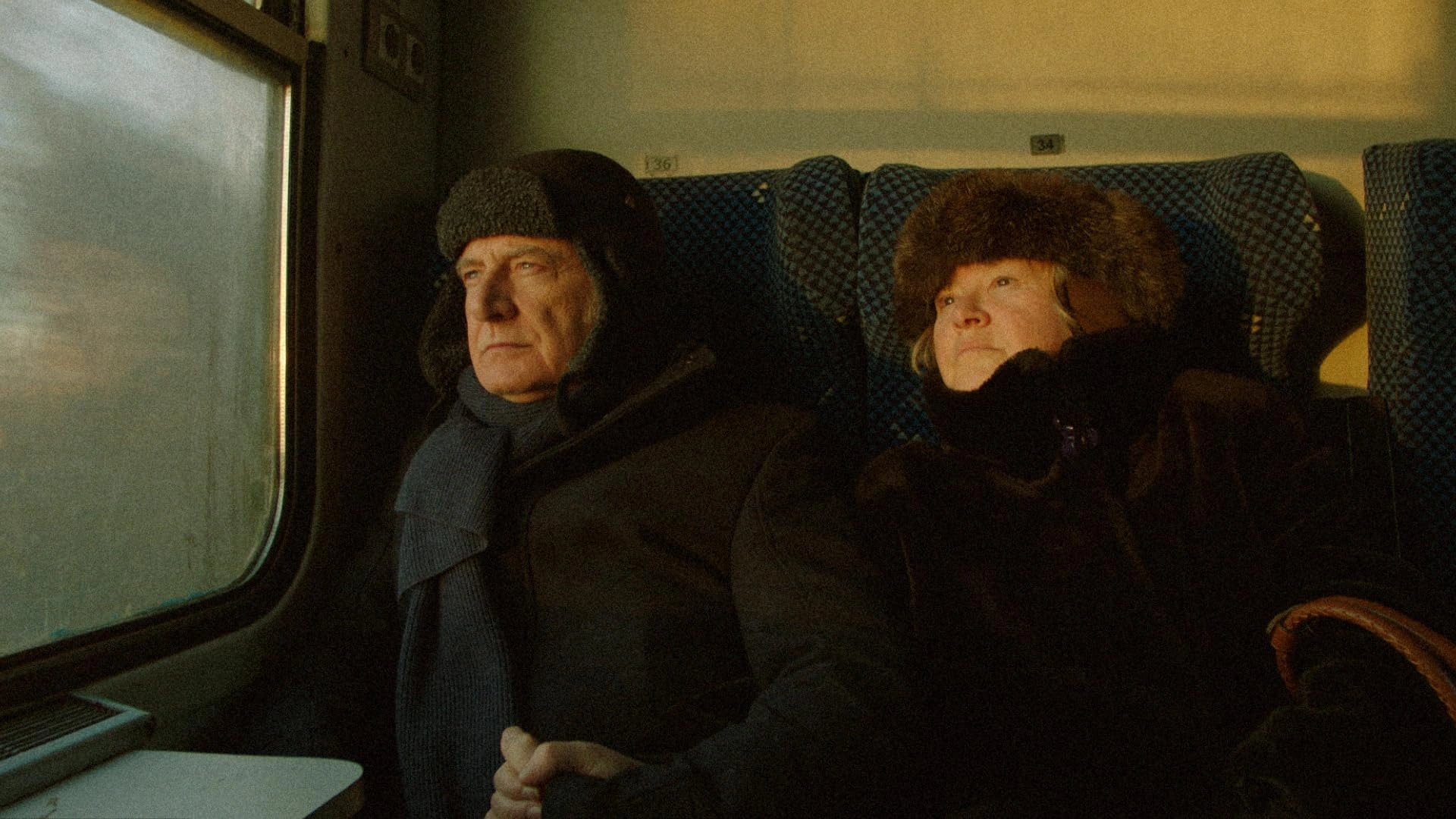
For three decades, Marina has dreamed of the White Nights, those summer days when darkness barely arrives. She and Gosha finally collect enough money for the trip, paying 10,000 leva in cash to Dream Tourism. Marina asks about the Neva River cruise. She prepares clothes for museums and afternoon tea. Then Russia invades Ukraine. Flights collapse. Plans become uncertain. Dream Tourism vanishes. The darkness arrives before the holiday does.
Everyone Knows the Price
Grozeva and Valchanov build their satire around an uncomfortable distinction between corruption and evil. Marina is capable of tenderness. Gosha can be funny, patient, affectionate. Their marriage carries the relaxed irritations of people who have spent decades occupying the same rooms. Yet both have learned to treat other people’s vulnerability as a small economic opportunity.
The hospital scene establishes an entire moral system through Marina’s movements. She refuses the envelope in public, then quietly relocates the transaction. Her colleagues receive their shares. Everyone understands the procedure. The offense has become so common that etiquette matters more than ethics.
Her sudden refusal to continue accepting payments after the holiday disaster causes friction at work. This is one of the film’s crueler jokes. A corrupt environment can accommodate greed quite comfortably. Conscience is disruptive.
Gosha reacts differently. Where Marina begins to suspect punishment, he sees a technical problem. Money has disappeared. Someone must know someone who can bring it back. Another favor, another room, another unofficial conversation. The same shadow economy that once seemed useful becomes a corridor without an exit.
The police offer little urgency. Gosha seeks men with dubious connections. Every promise of assistance demands another surrender. There is something painfully childish in Marina and Gosha’s initial inability to understand why the system has failed them. They paid their bribes. They accepted theirs. They followed the unwritten rules. Why, then, are they the victims?
Their failed attempt to leave Sofia captures this confusion with remarkable precision. Suitcases rattle across cobblestones while protests and public gatherings choke the city center. Marina and Gosha move from one bus stop to another, searching for the vehicle supposedly taking them toward Belgrade and, from there, Russia. The repetitive clacking of suitcase wheels grows increasingly oppressive. Two old people have packed for paradise and found themselves circling a square. Absurdity is rarely far from despair here.
The directors refuse to grant their characters innocence, which gives their suffering an unusual moral texture. Marina and Gosha occupy the lower floors of a corrupt structure. They have taken from people with less power at work, then discover figures who can take from them with far greater efficiency. Exploitation has a hierarchy. The couple merely misunderstood their position within it.
The film is occasionally too eager to clarify this social diagnosis. Marina’s Russophilia and her sister Lyudmila’s comparatively honest household create a division that can feel arranged for argument rather than discovered through character. Grozeva and Valchanov are sharp observers, yet sharpness can become a blade pressed too firmly against the outline. Still, the world they create feels worn by repetition. Everyone has seen the envelope before.
The Money Was Hiding Other Debts
Once the 10,000 leva disappear, the film quietly changes shape. The scam remains the engine of the plot, yet Marina and Gosha’s marriage becomes the place where the real damage accumulates.
Marina interprets their loss through religion. Gosha breaks her cross pendant and promises to repair it. He does not. She purchases another cross and seeks the blessing of a priest, whose warnings connect lies with pain and theft with itching. Gosha’s back, naturally, will not stop itching. The joke is almost embarrassingly direct, which somehow makes it work. Guilt has become dermatological.
Marina wants signs because signs are easier than responsibility. Divine punishment gives shape to chaos. If God has taken the holiday money, repentance might restore some invisible balance. The idea preserves the possibility of transaction. Sin enters. Suffering leaves. Accounts settle. But conscience has no cashier.
Shahova plays Marina’s spiritual panic without turning her into a fool. Watch the tension around her mouth as certainty begins to fail. Her faith and superstition occupy the same body, indistinguishable from one another. Church bells recur with a discordant insistence, sounding less like calls to prayer than noises from inside a guilty nervous system.
Gosha moves toward action. His male pride cannot tolerate helplessness, so each failed attempt at recovering the money creates another attempt. Ivan Savov gives him the physical weariness of a man still pretending he has authority. His shoulders sink before his voice does. When he seeks darker connections, the performance makes clear that revenge and humiliation have become entangled.
The couple’s arguments gradually lose their harmless rhythms. At first, Marina and Gosha bicker like veteran partners. Sentences overlap. Complaints sound familiar. Neither needs to explain the source of irritation because both have rehearsed these small conflicts for years. Then they begin selecting words designed to injure. Long marriages accumulate maps of weakness. Love knows where everything is buried.
Marina’s contact with her semi-estranged sister brings older resentments into the room, including questions surrounding Marina’s father and her belief in Russian ancestry. St. Petersburg has never been a simple tourist destination for her. The White Nights offer a fantasy of origin, a place where some uncertain part of her identity might suddenly become visible.
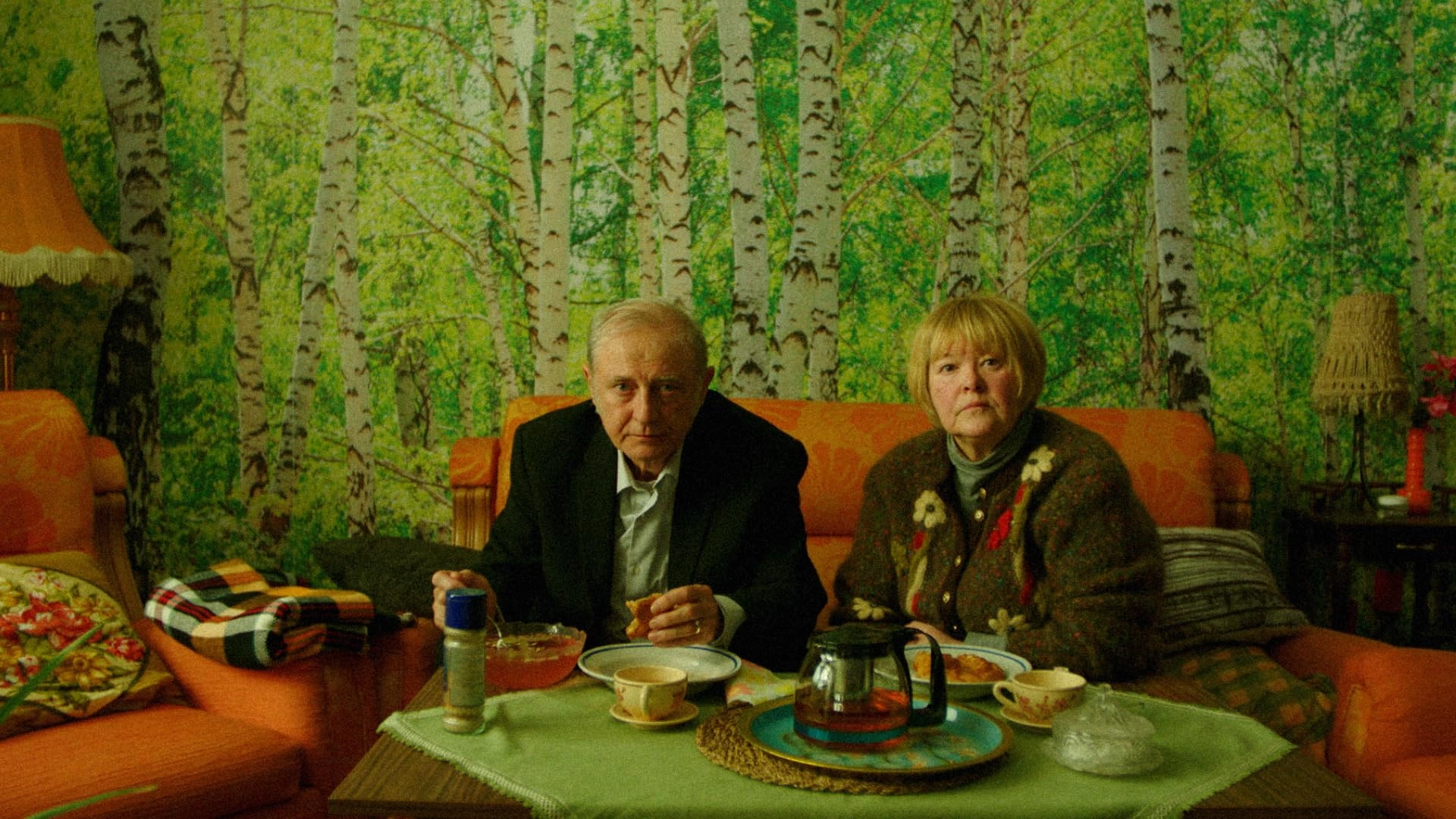
This makes her obsession sadder and stranger. Marina has built an emotional homeland from absence. The birch trees on her wallpaper are interior decoration, inherited ideology, and imagined genealogy at once.
Grozeva and Valchanov occasionally overstate these revelations in the final third. Secrets that were powerful as silences become less elegant when verbalized. Yet Shahova and Savov protect the marriage from becoming a thesis exercise. Even at their cruelest, they retain the muscle memory of affection. A food blender provides the final noise in one bitter exchange, its mechanical roar swallowing whatever language might have followed. Sometimes a marriage survives because the appliance is louder.
The Walls Know Where the Money Came From
Alexander Stanishev’s cinematography stays close to Marina and Gosha, following them through cramped domestic spaces and crowded streets with a restless, grainy fluidity. The camera rarely offers the comfort of distance. It seems caught in the same machinery as its characters.
Their apartment is the film’s richest psychological space. Green and orange tones give the rooms an almost aggressively cheerful quality. Marina displays the clothes intended for Russia, including a smart jacket and leopard-print fake fur, against enormous birch-forest wallpaper. The forest is already there.
Before Marina sees St. Petersburg, she has built an imitation of Russia inside her home. When news of the invasion plays on television, the birches remain behind the couple. Their romantic dream does not vanish. It becomes claustrophobic.
This is where Black Money for White Nights finds its most haunting image of self-deception. Marina has spent years looking at a printed forest and calling it memory. Her belief in Russian ancestry, her planned journey, her faith in signs, even the biscuit tin behind the stove all emerge from the same instinct: hide uncertainty somewhere physical. A wall. A cross. A tin.
The film’s sound design creates similar pressure. Discordant church bells return around Marina’s spiritual unease. Suitcase wheels hammer against Sofia’s cobblestones. The blender tears through a domestic quarrel. Ordinary noises become accusatory because Marina and Gosha are no longer capable of hearing the world innocently.
Editor Yorgos Mavropsaridis keeps the story moving with brisk, dry cause-and-effect cuts. A decision produces humiliation. Humiliation produces another decision. There is comedy in the rhythm, though laughter often arrives with a delayed sense of guilt. We are watching foolish people suffer. We are also watching a system consume two of its minor participants.
Grozeva and Valchanov eventually pull Marina and Gosha away from complete annihilation. Savings vanish. Jobs are threatened or lost. Dignity takes repeated beatings. Yet their conversations continue, including over the end credits, as if the marriage refuses to recognize where a conventional ending should be placed.
The White Nights promise a sky where darkness never fully takes hold. Marina never reaches them. What she receives instead is less beautiful and probably more honest: another human being still answering her after the lights should have gone out.
The internationally co-produced Bulgarian-Greek tragicomedy Black Money for White Nights made its official world premiere on July 6, 2026, in the main competition of the 60th Karlovy Vary International Film Festival. Audiences keeping up with contemporary cinema can experience the picture as it expands through the global film festival circuit under international sales distributor Cercamon. Laced with dark humor, the narrative follows an aging, working-class Bulgarian couple who lose their hidden life savings to a fraudulent travel agency right after Russia invades Ukraine, upending their dreams of visiting St. Petersburg and bringing long-buried domestic secrets to light.
Full Credits
Title: Black Money for White Nights
Distributor: Cercamon
Release date: July 6, 2026
Running time: 94 minutes
Director: Petar Valchanov, Kristina Grozeva
Writers: Petar Valchanov, Kristina Grozeva, Decho Taralezhkov
Producers and Executive Producers: Kristina Grozeva, Petar Valchanov, Konstantina Stavrianou, Irini Vougioukalou
Cast: Tanya Shahova, Ivan Savov, Margita Gosheva, Ivan Barnev, Sibila Petrova
Director of Photography (Cinematographer): Alexander Stanishev
Editors: Yorgos Mavropsaridis
Composer: Theodore Oikonomou
The Review
Black Money for White Nights
Black Money for White Nights watches two people discover that corruption feels ordinary only while the money moves in their direction. Kristina Grozeva and Petar Valchanov turn a vanished holiday fund into something darker: an excavation of guilt, superstition, pride, and the quiet lies that keep a marriage standing. Tanya Shahova and Ivan Savov give the film its wounded humanity, especially when familiar bickering sharpens into cruelty. The social argument occasionally grows too neat, yet the image of those birch-covered walls closing around Marina lingers like daylight that refuses to fade.
PROS
- Shahova and Savov's lived-in chemistry
- Bleak, precise social satire
- Expressive production and sound design
- Rich visual symbolism
- Dark humor with emotional weight
CONS
- Social divisions drawn too neatly
- Third-act dialogue turns blunt
- Some characters lean toward archetype