




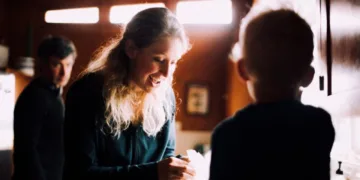






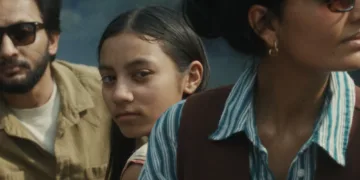










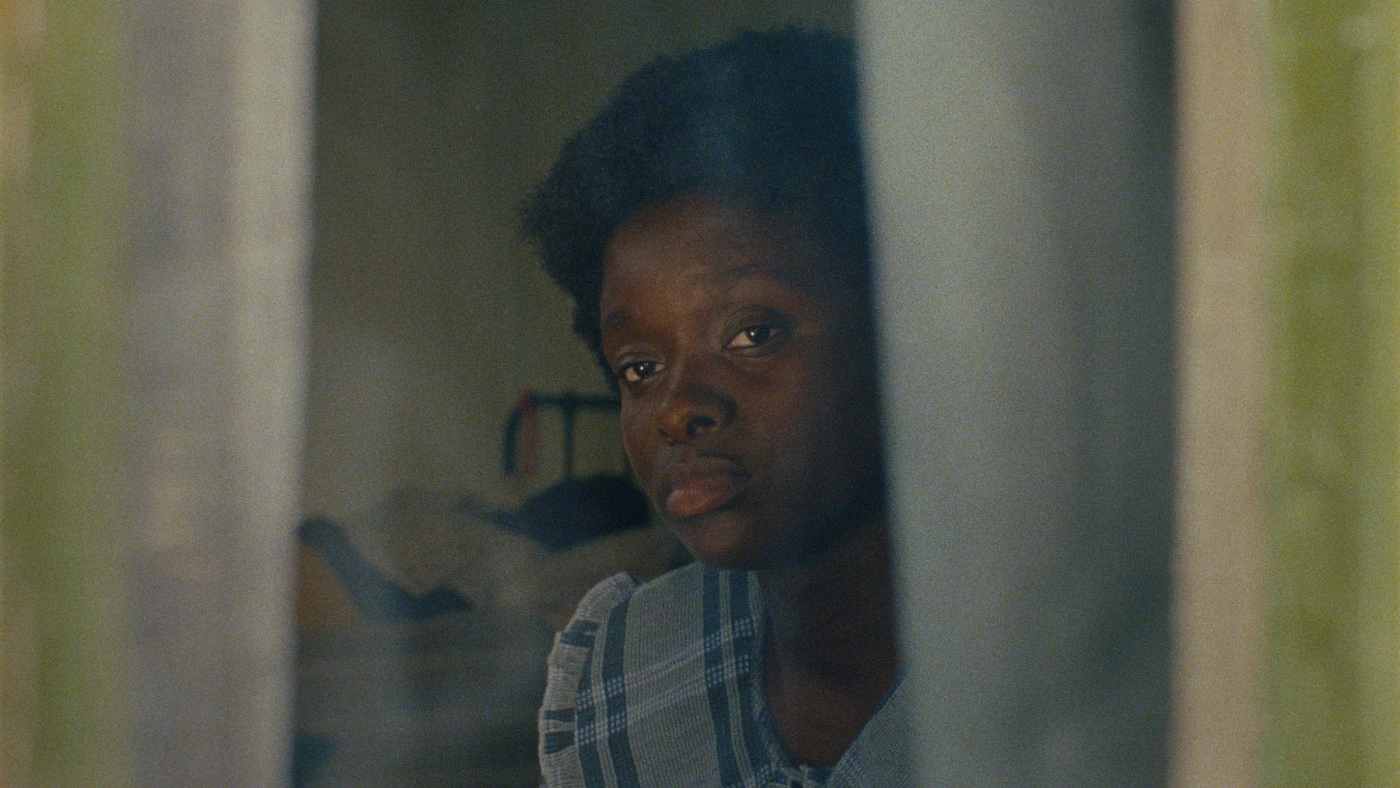
Turning 18 is supposed to widen a life. For Mariama, it closes a door. The Senegalese asylum seeker celebrates her birthday inside a Cypriot youth shelter, then is told she has aged out of the only stable home she knows. Her belongings fit inside plastic carrier bags. She even saves a metal fork, a detail that shows how narrow her margin for loss has become.
Tonia Mishiali gives The Lion at My Back a harsh premise, yet her second feature rarely treats suffering like a display case. Mariama, played by Sokhna Diallo, keeps sneaking back to the shelter because she has nowhere else to sleep.
Stella, Elena Kallinikou’s recovering addict and former sex worker, keeps throwing her out. Then need creates a bargain: Mariama wants a bed, and Stella needs a clean urine sample for a drug test tied to her custody battle. It is an uncomfortable arrangement. It is also where the tenderness begins.
Trust on Borrowed Time
Mishiali puts very little ceremony around the change between Mariama and Stella. There is no grand confession that suddenly makes them family. Stella bristles whenever Mariama thanks her, as if gratitude might become attachment and attachment might become another thing she can lose.
Their relationship changes through practical acts. Stella finds Mariama work at a butcher shop. Mariama studies Stella’s hostility long enough to recognize the shame beneath it. At different points, they resemble mother and daughter, sisters, or an exhausted aunt dealing with a niece who refuses to disappear. The lack of a fixed label helps.
Mishiali, writing with Dianne Jones and Simona Nobile, is especially sharp when showing Mariama solve problems in real time. A bank asks for proof of address from a young woman who is unhoused, so Mariama suggests the application move forward until she can provide a lease. At the butcher shop, an employer offers €1.50 an hour because her undocumented status leaves her few choices. She bargains him up to €2.50.
Those scenes explain Mariama better than a speech could. Diallo plays her optimism as a survival skill, not innocence. Stella underestimates her when she says Mariama is too innocent to understand self-destruction. Mariama’s line about crossing the sea with a lion at your back quietly corrects her. Stella knows what it means to ruin a life. Mariama knows what it means to run for one.
What the Body Remembers
Kallinikou makes Stella readable before Stella is willing to explain herself. Watch her hand shake as she lights Mariama’s birthday candles. Her shoulders seem permanently prepared for confrontation. She admits to doing terrible things to herself and the people she loves, then closes the subject before Mariama can press further.
The dance-therapy sequence is one of the film’s best uses of performance and camera. Stella says the sessions help her “stay normal,” and Mishiali lets movement take over from dialogue. This is visual characterization in its cleanest form: posture and rhythm communicate emotional information the screenplay leaves unspoken. Kallinikou turns the scene into a record of anger, shame, and fatigue.
Manu Tilinski shoots on 16mm, and the grain gives skin, walls, and sunlight a tactile roughness. The handheld camera stays close to both women, shifting perspective without chasing documentary neutrality. Around Stella, that movement often feels restless. On the beach, the frame can finally breathe.
I kept noticing the contrast between Stella’s dim apartment and those open coastal spaces. Her home is cramped, murky, and crowded by other damaged lives. The beach gives Mariama a clear horizon. It gives Stella room to lower her guard for a few minutes.
The film is less graceful when it explains the refugee crisis directly. By then, Mariama’s plastic bags, housing problem, bank application, low wages, and memories of a dinghy have already done the work. The dialogue arrives carrying a highlighter.
Magenta Changes the Movie
Stella’s return to her former pimp is painfully easy to understand. She needs money for housing, therapy, and the custody process. Conventional work will take too long. One night with an old client can offer what weeks of low-paid labor cannot.
Mishiali has spent enough time showing Stella’s economic trap that “one last job” does not feel cheap. The connection between addiction, sex work, shame, and money has already been built through Stella’s behavior. Her old world offers cash at exactly the moment respectable survival becomes financially absurd. Then the visual language changes.
The BDSM punishment dungeon glows in aggressive magenta. Men become grotesque figures. A maze pushes the imagery toward nightmare logic, while heightened music replaces much of the earlier restraint. I understand the impulse. After two thirds spent inside close, textured realism, Mishiali wants Stella’s return to feel like entering a different state of consciousness.
The symbols become louder than the characters. The dungeon and maze turn systemic pressures into theatrical menace, and Mariama’s involvement pulls the film toward thriller machinery. The specificity that made the butcher shop, bank, shelter, and apartment so effective begins to blur.
Kallinikou and Diallo keep individual beats credible. Neither actress plays the bond as a cure. Stella cannot erase Mariama’s legal and economic precarity, and Mariama cannot repair Stella’s history with addiction or motherhood. In the heightened final stretch, a glance held too long or a body positioned protectively beside the other still carries the human detail the surrounding symbolism keeps trying to overpower.
The Cypriot social realist drama The Lion at My Back made its world premiere in the main competition at the 60th Karlovy Vary International Film Festival on July 5, 2026. Audiences tracking its international rollout can view the feature as it travels through global cinematic events and special film showcases represented by sales agent The Yellow Affair. The story follows a teenage Senegalese asylum seeker who formulates an unexpected mother-daughter bond with a forty-year-old local recovering drug addict, tracking their shared fight for survival and sisterhood on the margins of society.
Full Credits
Title: The Lion at My Back
Distributor: The Yellow Affair, Bark Like a Cat Films, Karlovy Vary International Film Festival
Release date: July 5, 2026
Running time: 106 minutes
Director: Tonia Mishiali
Writers: Tonia Mishiali, Dianne Jones, Simona Nobile
Producers and Executive Producers: Tonia Mishiali, Émilie Dudognon, Stelios Kammitsis, Radovan Sini
Cast: Sokhna Diallo, Elena Kallinikou, Prokopis Agathocleous, Herodotos Miltiadous
Director of Photography (Cinematographer): Manu Tilinski
Editors: Emilios Avraam
Composer: Fredrika Stahl
The Review
The Lion at My Back
The Lion at My Back is strongest when Tonia Mishiali trusts Sokhna Diallo and Elena Kallinikou to build their relationship through gestures, awkward favors, and shared silence. The handheld 16mm photography makes their growing affection feel wonderfully immediate. I wish the final third showed the same confidence. Its magenta dungeon and maze imagery turn subtle social pressures into loud symbols, yet the two leads remain emotionally credible through every tonal lurch. Their performances give this uneven drama a genuine pulse.
PROS
- Excellent central performances
- Intimate 16mm cinematography
- Detailed social observation
- Natural evolving relationship
CONS
- Abrupt final-act tonal shift
- Heavy-handed symbolic imagery
- Some overly explicit political dialogue