













Milk becomes a moral instrument the moment a calf is denied it. Ian Findlay’s A Dairy Story understands that the standard dairy practice of separating calves from their mothers within hours of birth is presented as routine precisely because routine discourages scrutiny. At Rainton Farm in Dumfries and Galloway, David and Wilma Finlay interrupt that logic by keeping calves with their mothers for five or six months, allowing suckling, attachment, and gradual weaning to shape the working day.
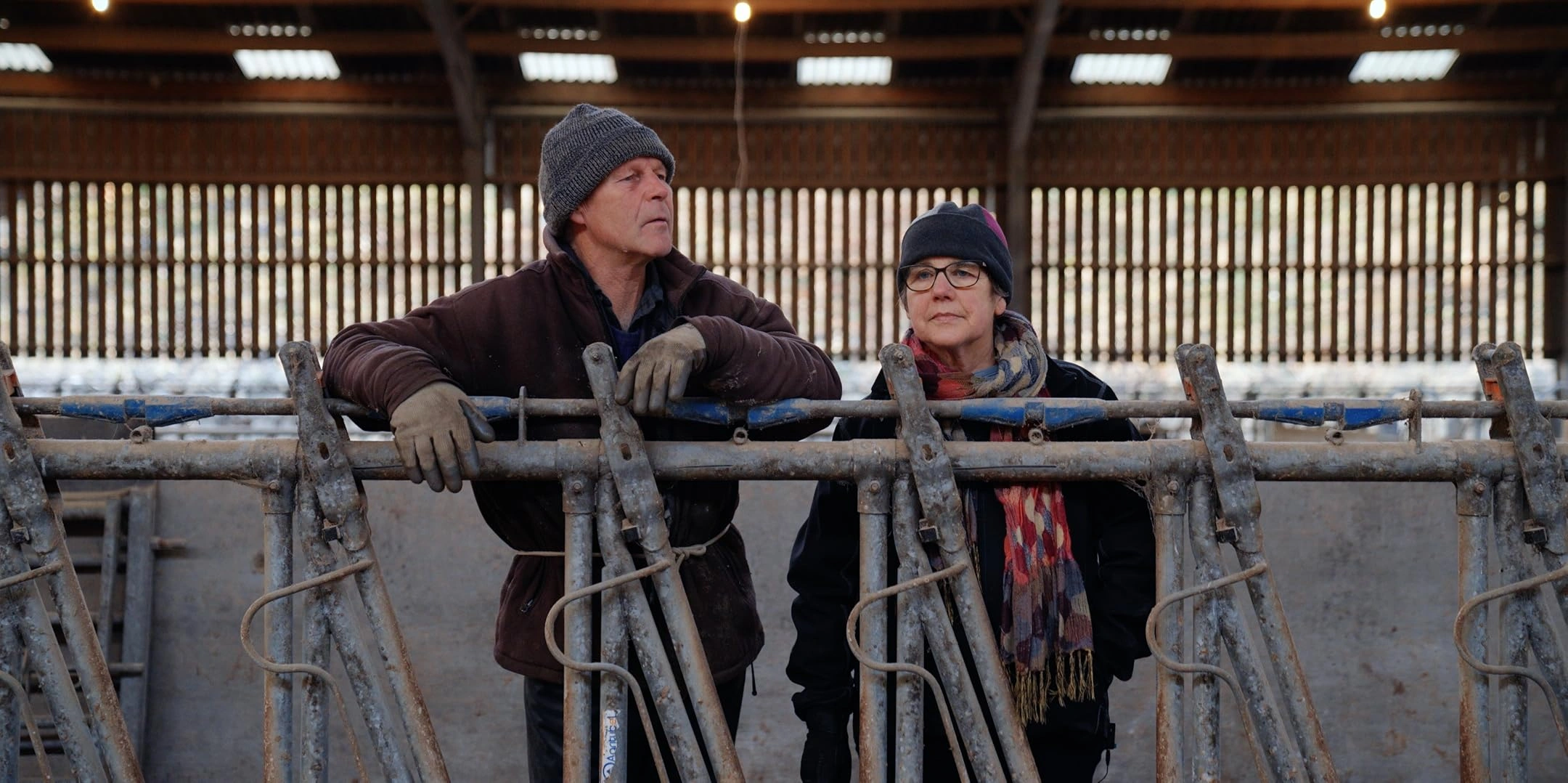
Findlay films this experiment across two years, observing a 340-hectare organic farm where roughly 120 cows are managed through a cow-with-calf system first tested in 2012 and adopted permanently in 2016. The documentary treats Rainton as a functioning argument.
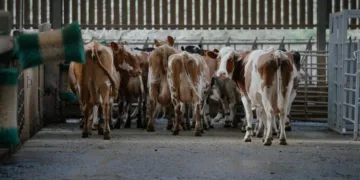
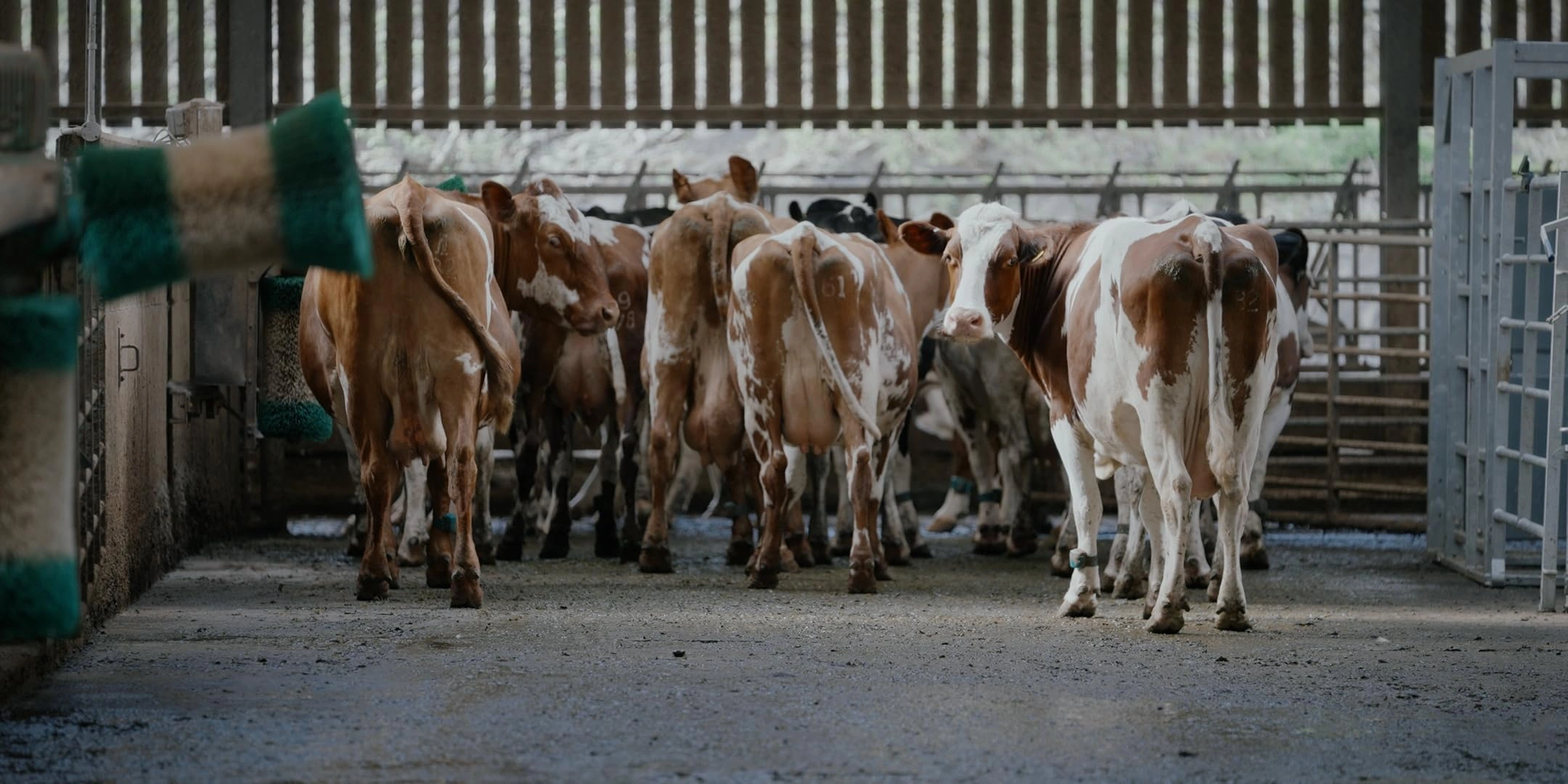
Calves feed beside their mothers. Cows groom their young. The herd moves across pasture without the visual language of industrial confinement. These images carry a political charge because they restore behaviours that commercial agriculture has trained consumers to consider economically inconvenient.
The Cost of Changing Routine
The Finlays’ system did not arrive as pastoral common sense. During the 2012 pilot, cows accustomed to losing their calves became unsettled when the newborns remained. Milk yields fell. Neighbouring farmers doubted the project, and David recalls a period when the farm had committed itself to a controversial method while others appeared to be waiting for its collapse.
This is where the documentary is most persuasive. Ethical reform is shown as a material disturbance, not a matter of changing labels on a carton. A cow-with-calf system alters milking schedules, labour patterns, feed calculations, veterinary routines, and the amount of milk available for sale.
Later trials produced stronger yields once the herd adjusted, with extra suckling stimulating production, but Findlay does not turn the reversal into a miracle. The Finlays spent years refining the model while carrying the financial risk themselves.
The farm’s reported gains are substantial: reduced labour, lower antibiotic use, less dependence on fertilisers and purchased feed, stronger calf growth, improved herd health, increased biodiversity, and better soil conditions. Once-daily milking and pasture feeding place maternal behaviour inside the production system rather than treating it as an obstacle. The radical gesture is almost embarrassingly basic. The animals are allowed to behave like animals.
Looking at the Herd
Findlay’s camera gives the farm time to reveal its own social order. Drone shots map the green scale of Rainton, but the closer footage matters most: a calf pressing toward its mother, a cow pausing to groom her young, bodies gathering and separating across the field. Individual temperaments emerge because the film waits long enough for repetition to become recognition.
That patience also changes the meaning of the landscape. The fields are handsome, yet they are never neutral decoration. Their condition reflects decisions about fertiliser, grazing, soil carbon, feed, and animal movement. The documentary links agricultural beauty to agricultural policy without reducing every image to a lecture. Its strongest sequences let the daily arrangement of bodies explain the system before testimony supplies the language.
The human bond at the farm carries equal weight. Wilma appears as a central force behind the ethical shift, and filming began after her terminal cancer diagnosis. Her illness gives the project urgency, though the film resists converting her into a sentimental emblem.
The work she and David built continues through routines, herd behaviour, and the growing interest of farmers and researchers. Her absence changes the meaning of every claim about care. Care here is never abstract. It requires time, labour, and the acceptance that attachment creates grief.
The Limits of the Model
The documentary’s advocacy sometimes narrows its field of vision. Welfare and regenerative farming claims recur after the images have already established them. Repetition turns conviction into insistence, and insistence can make a film appear less confident in evidence that is already powerful.
The economic account remains the larger omission. David openly acknowledges that commercial balance is still being refined, yet the film provides limited detail about debt, pricing, lost milk sales, capital requirements, or the conditions another farm would need to reproduce the system.
Rainton’s influence through European research networks suggests the model has moved beyond private experiment, but influence is not the same as easy adoption. A farm with different land, herd size, labour costs, or market access may face a harsher equation.
Rainton’s beef production receives similarly cautious treatment. A film built around maternal bonds cannot avoid the eventual destination of some animals simply by keeping the camera in the pasture. The contradiction does not invalidate the welfare improvements, but it belongs inside the ethical picture. By softening it, A Dairy Story protects the purity of its case when a messier argument would have carried greater force.
A Dairy Story is a documentary feature film that premiered at the IndieCork festival on October 11, 2025. Set in southwest Scotland, the film follows dairy farmers Wilma and David Findlay as they risk everything to implement the first large-herd commercial cow-with-calf dairy farming system. Audiences can watch the film through special independent cinema screenings and festival showcases.
Full Credits
Title: A Dairy Story
Distributor: Central Scotland Documentary Festival, IndieCork
Release date: October 11, 2025
Running time: 78 minutes
Director: Ian Findlay
Producers and Executive Producers: Lorna Young
Cast: Wilma Findlay, David Findlay
Director of Photography (Cinematographer): Ian Findlay
The Review
A Dairy Story
A Dairy Story makes its clearest argument through the sight of calves nursing beside mothers that industrial farming would have removed within hours. Ian Findlay’s patient images expose separation as an economic convention disguised as necessity, while David and Wilma Finlay turn ethical conviction into a working agricultural system. The film repeats its case and keeps difficult questions about beef production and financial viability at a cautious distance. Still, its record of care, risk, and resistance carries real force, sharpened by Wilma’s death and the legacy she leaves across Rainton Farm.
PROS
- Patient observational photography
- Concrete animal-welfare evidence
- Strong ecological argument
- Moving portrait of the Finlays
- Valuable record of farming reform
CONS
- Repetitive advocacy
- Limited financial scrutiny
- Beef production receives little attention
- Commercial scalability remains uncertain